Artwork
Les Roses: Rosa Gallica
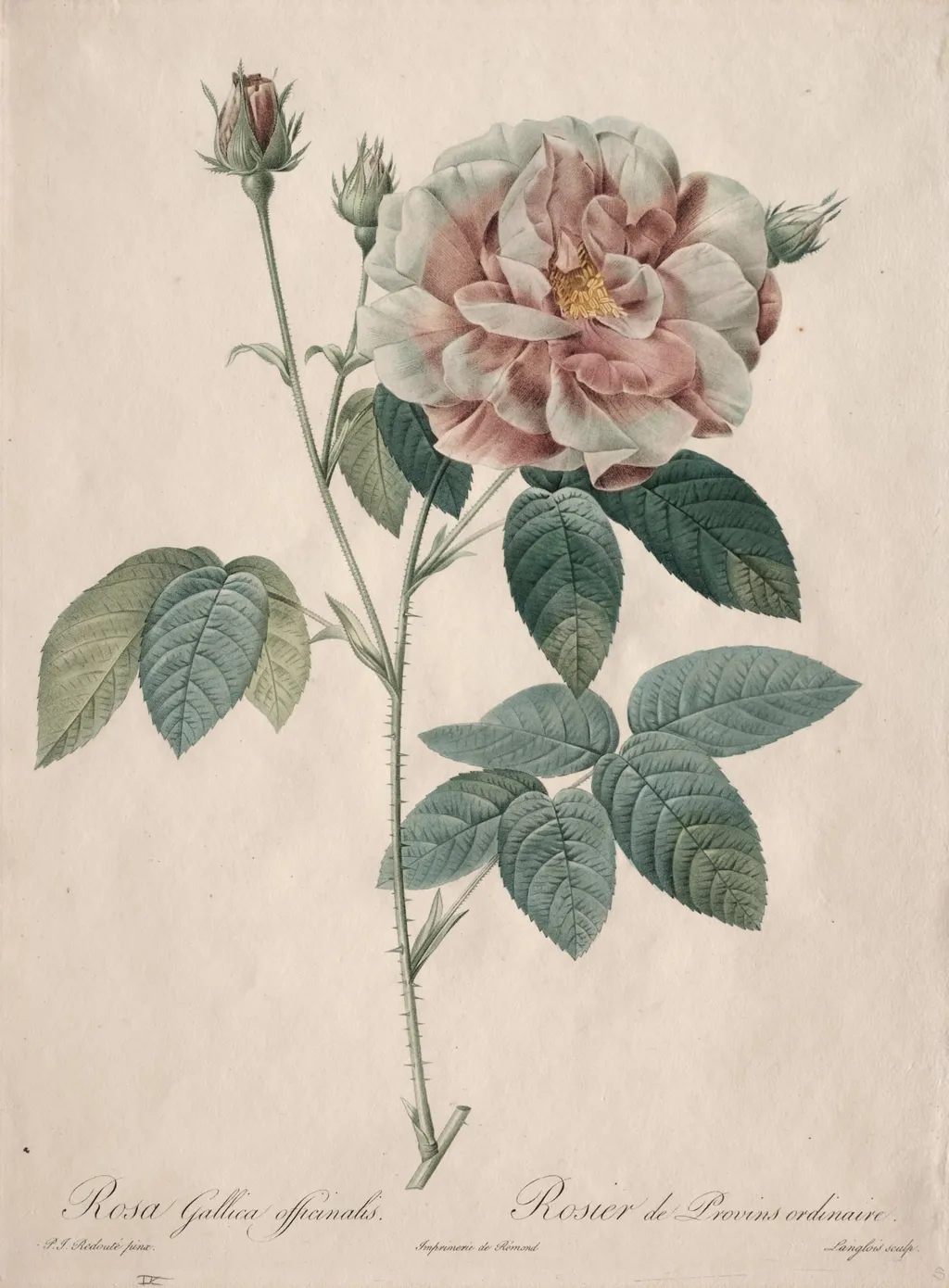
Les Roses: Rosa Gallica is a print by the Romanticist artist Pierre Joseph Redouté. It dates from 1820 and is held in the collection of the Cleveland Museum of Art.
About this work
Overview
This print, like others in the series, was intended for scholarly and horticultural use, combining precision with aesthetic restraint.
Pierre-Joseph Redouté produced *Les Roses: Rosa Gallica* in 1820 as part of a series documenting rose varieties. A trained botanist and artist, he specialized in scientifically accurate floral illustrations rendered in watercolor and later translated into stipple engravings. This print, like others in the series, was intended for scholarly and horticultural use, combining precision with aesthetic restraint. It remains part of The Cleveland Museum of Art’s collection.
Subject & Meaning
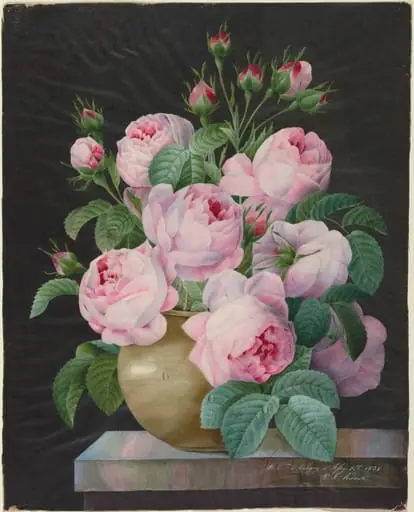
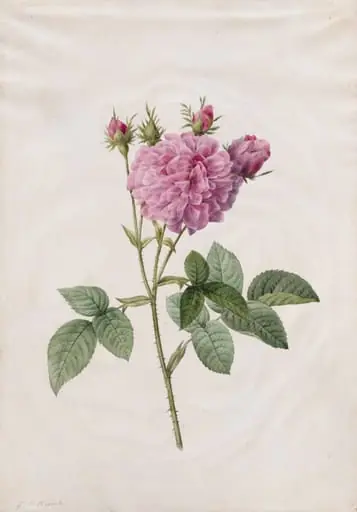
The image depicts a single stem of Rosa gallica, featuring a fully opened bloom and several developing buds. The composition emphasizes botanical clarity over symbolic narrative, reflecting the 19th-century interest in classifying plant life. The rose’s natural form—its layered petals, thorny stem, and delicate leaves—is presented without ornamentation, underscoring its value as a specimen for study rather than allegory.
Technique & Style
Redouté employed stipple engraving, a method using fine dots to create tonal gradations, to reproduce his watercolor studies. The print’s soft background isolates the rose, enhancing its three-dimensional presence. Each petal and vein is rendered with meticulous line work, demonstrating his mastery of both botanical observation and printmaking. The palette is restrained, relying on subtle shifts in pink and green to convey texture and light.
History & Provenance
Redouté began his career under the patronage of Marie Antoinette and continued working through the French Revolution, serving successive regimes without political affiliation. His rose illustrations, published in the 1810s and 1820s, gained international acclaim for their accuracy. *Les Roses: Rosa Gallica* was one of many plates in a multi-volume work that became a standard reference. The print entered The Cleveland Museum of Art’s collection through documented acquisition in the 20th century.
Context
During the early 19th century, botanical illustration flourished as scientific exploration expanded. Redouté’s work aligned with efforts to catalog global flora, supported by institutions and collectors. His images were used in horticultural manuals and private gardens, bridging art and science. Unlike Romantic landscapes emphasizing emotion, his focus remained on objective representation, reflecting Enlightenment ideals still influential in natural history.
Legacy
Redouté’s prints set a benchmark for botanical accuracy in print media. His technique influenced generations of scientific illustrators, and his rose series remains a primary visual record of 19th-century cultivars. Institutions continue to reference his work for historical plant identification. Though not widely known to the public, his contributions are foundational in the history of botanical art and taxonomy.
Artist & collection
Artist
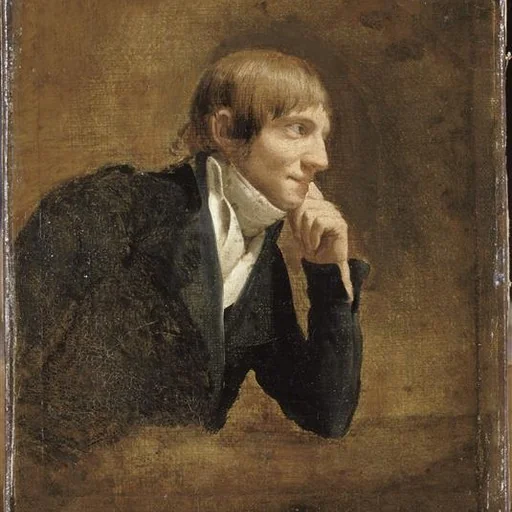
Pierre-Joseph Redouté (French pronunciation: , 10 July 1759 – 19 June 1840), was a painter and botanist from the Austrian Netherlands, known for his watercolours of roses, lilies and other flowers at the Château de…

 Agatha Rose (Rosa Gallica Agatha)
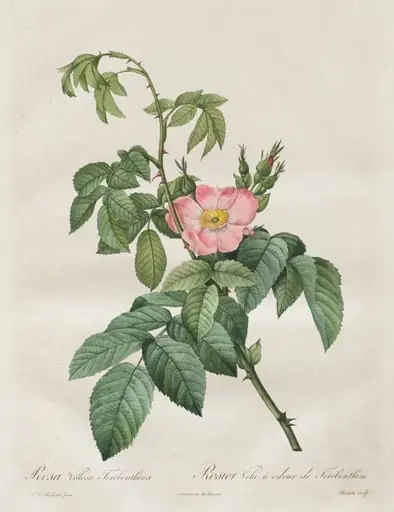 Les Roses: Rosa Villosa Terebenthina
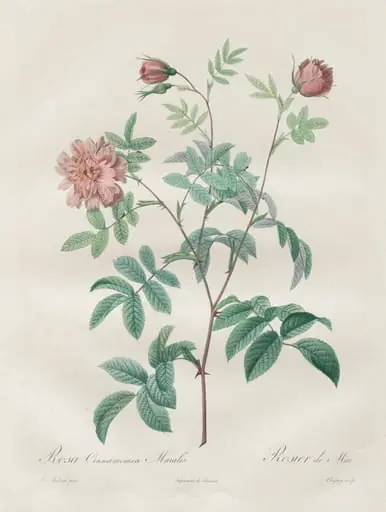 Les Roses: Rosa cinnamomea
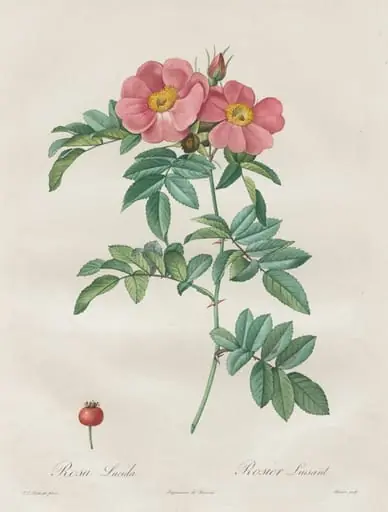 Les Roses: Rosa Lucida
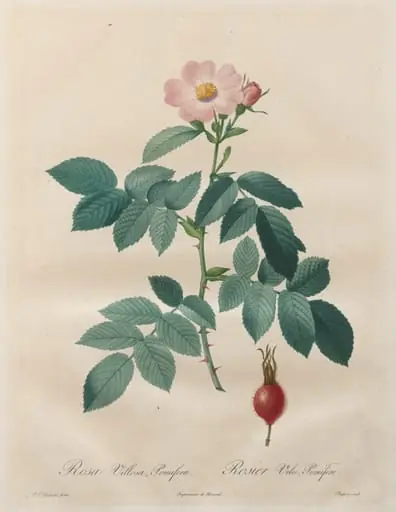 Les Roses: Rosa villosa, pomifera
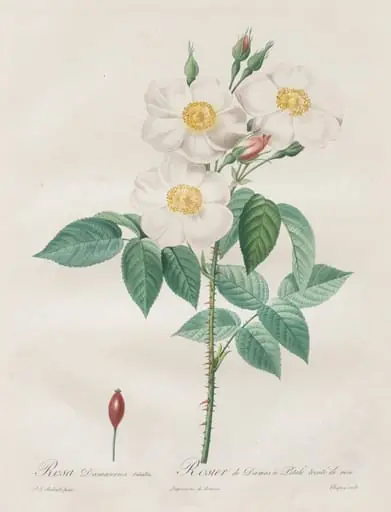 Les Roses: Rosa Damascena, subalba
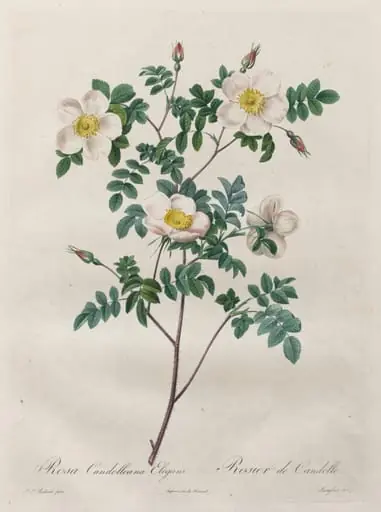 Les Roses: Rosa Candolleana Elegans
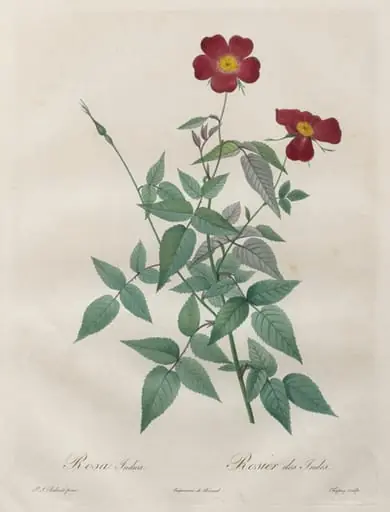 Les Roses: Rosa indica
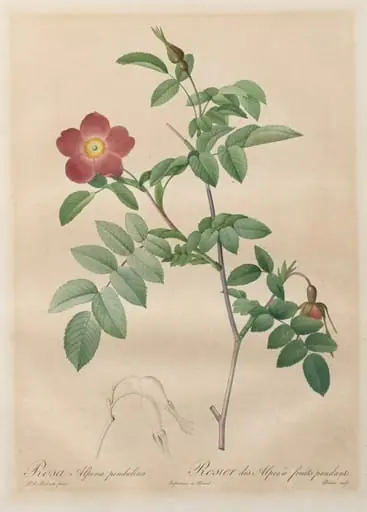 Les Roses: Rosa alpina pendulina
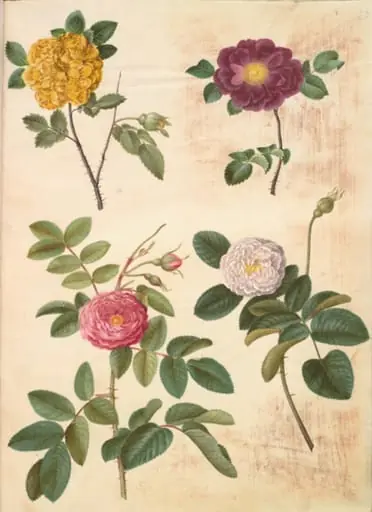 Rosa hemisphaerica (svovlgul rose); Rosa gallica (fløjls-rose); Rosa ×damascena (damascener-rose)