Artwork
Via Appia
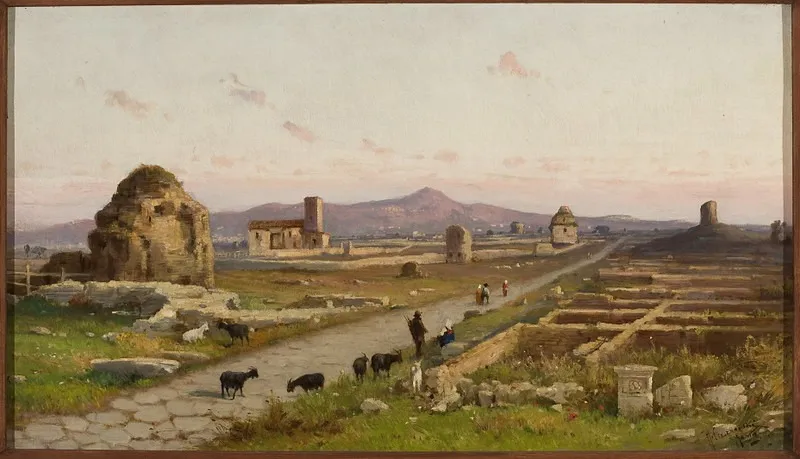
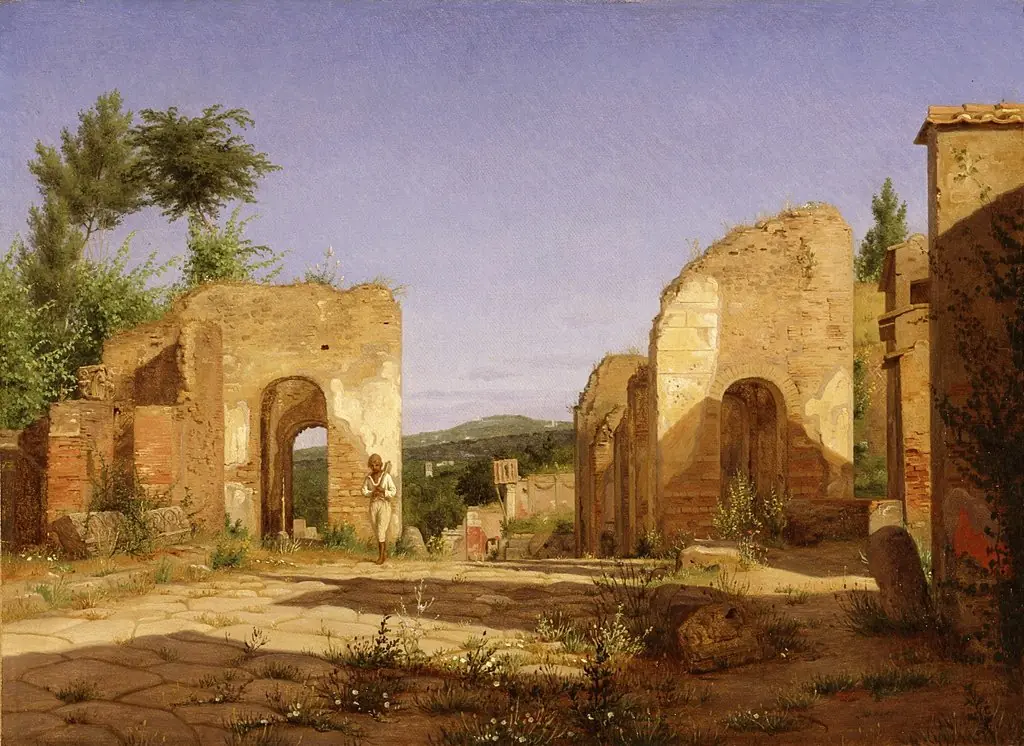
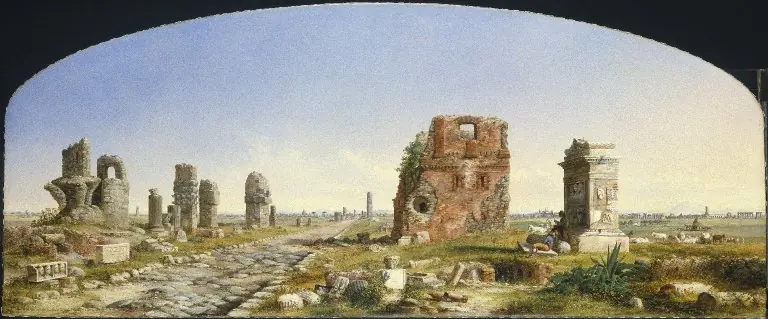
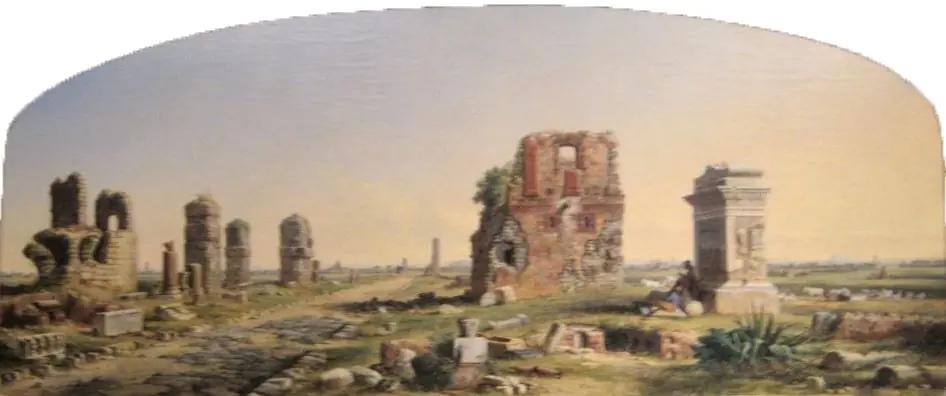
Via Appia is an oil painting by Henryk Cieszkowski. It dates from 1875 and is held in the collection of the National Museum in Warsaw.
About this work
Overview
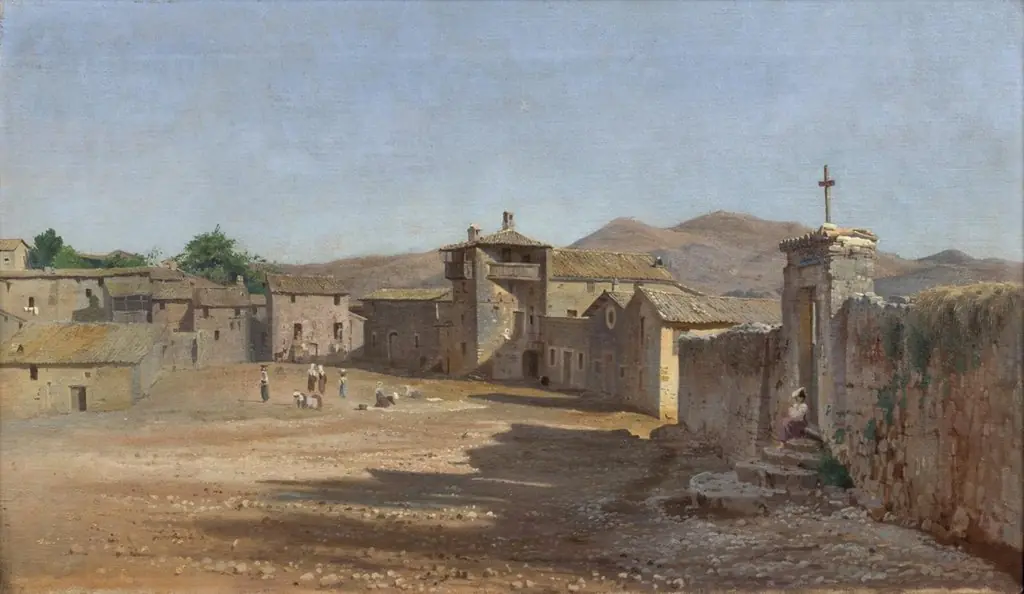
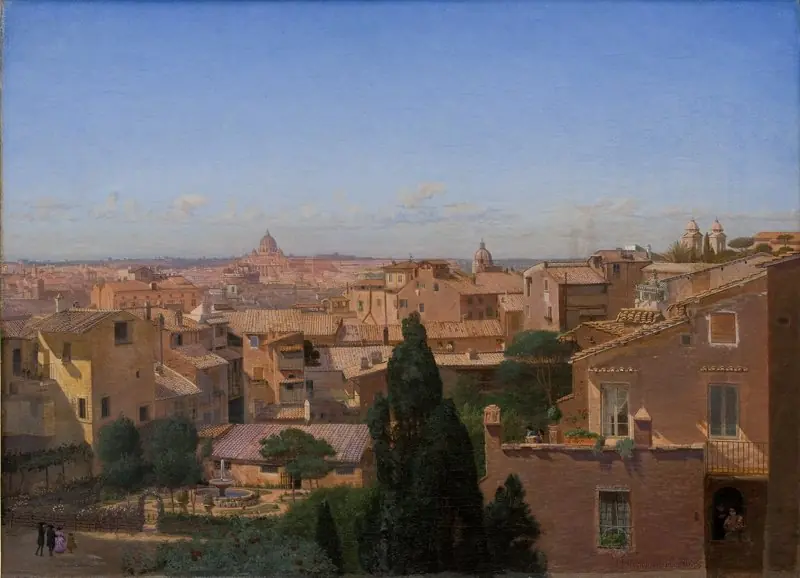
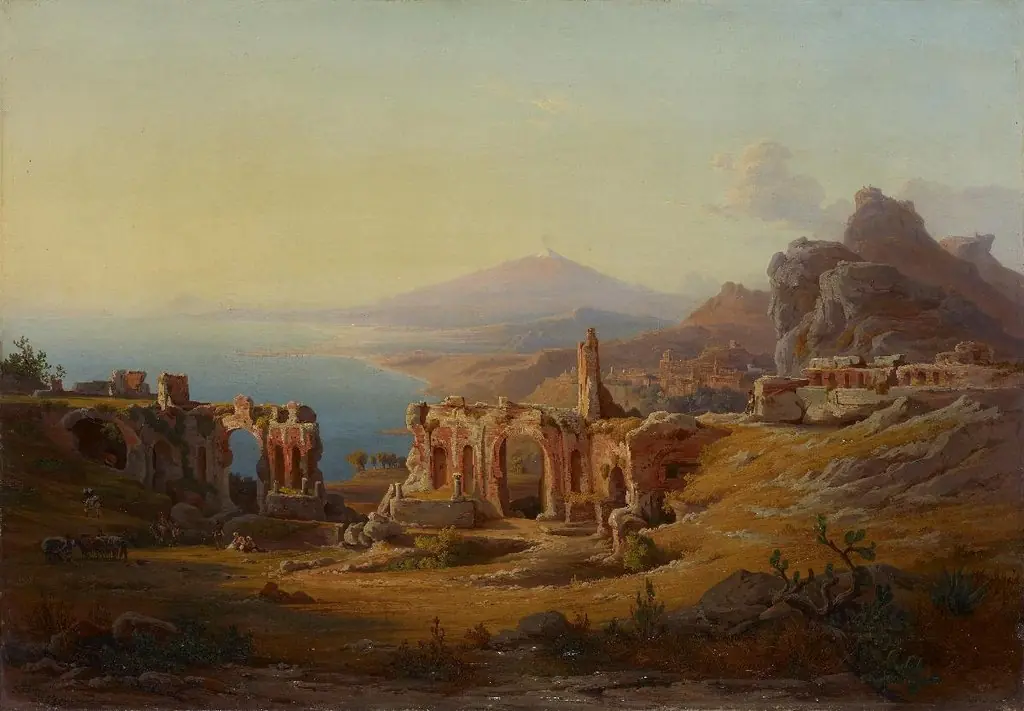
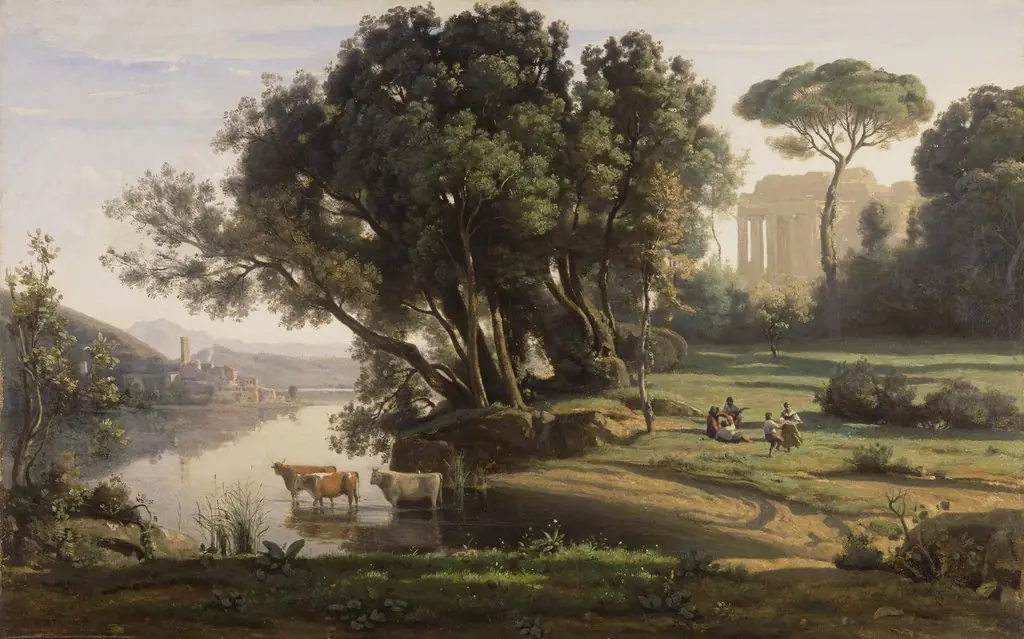
Via Appia is an oil on canvas painting created by Polish artist Henryk Cieszkowski around 1875. Now part of the National Museum in Warsaw, it captures a serene Italian landscape.
Subject & Meaning
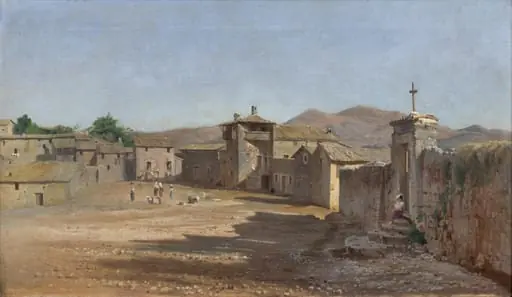
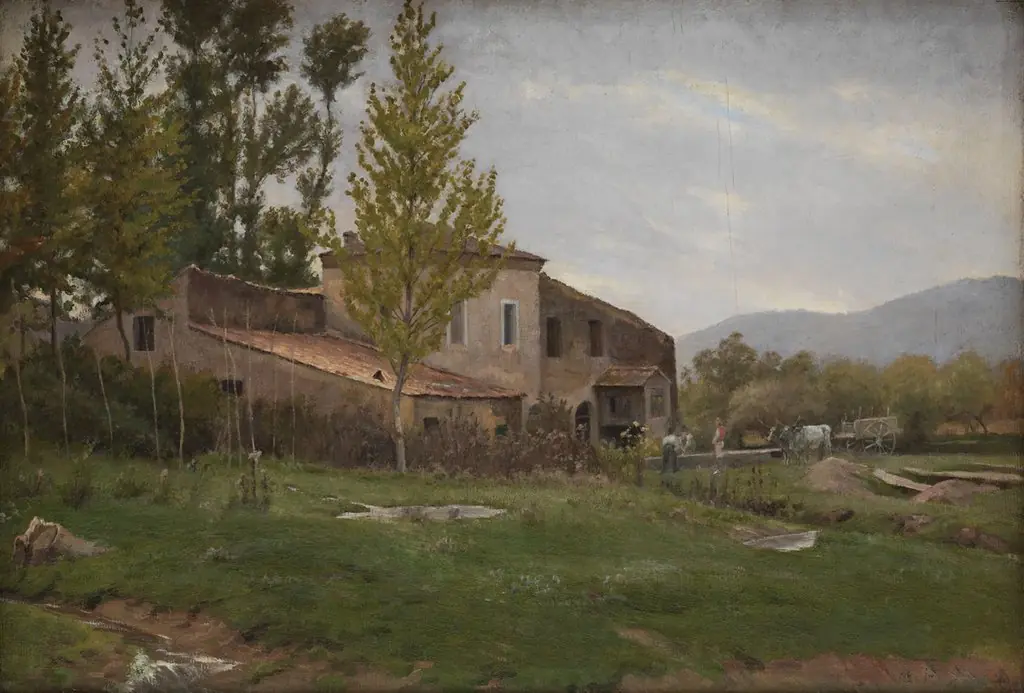
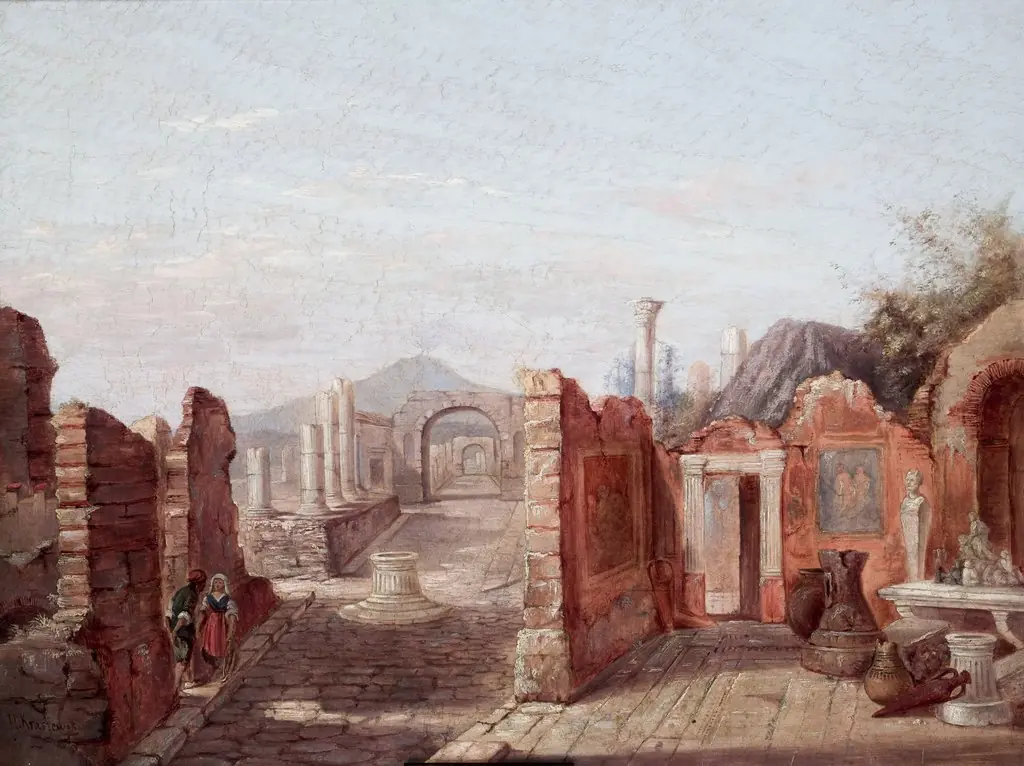
The painting depicts the historic Roman road, Via Appia, set amidst ancient ruins, scattered trees, and a majestic mountain range. Figures and animals in the foreground add a sense of everyday life.
Technique & Style
Cieszkowski employed muted tones for the ruins and trees, contrasting with softer pastel hues for the sky and distant mountains. This color palette, combined with the artist’s use of light, creates a deep sense of atmosphere and depth.
History & Provenance
After training in Warsaw, Cieszkowski moved to Rome in 1858, where he focused on Italian landscapes and classical themes. Via Appia reflects this period, later returning to Warsaw as part of the National Museum’s collection.
Context
Created during Cieszkowski’s long sojourn in Rome, the painting exemplifies the 19th-century European fascination with Italian antiquity and landscapes, appealing to both artistic and historical interests of the time.
Artist & collection
Artist
Henryk Cieszkowski (born 1835 in Płock, died 1895 in Rome) was a Polish painter. Henryk Cieszkowski completed his secondary education in Lublin, between the years of 1848 to 1856 he studied at the Schools of Fine Arts…