Artwork
Faun's pond
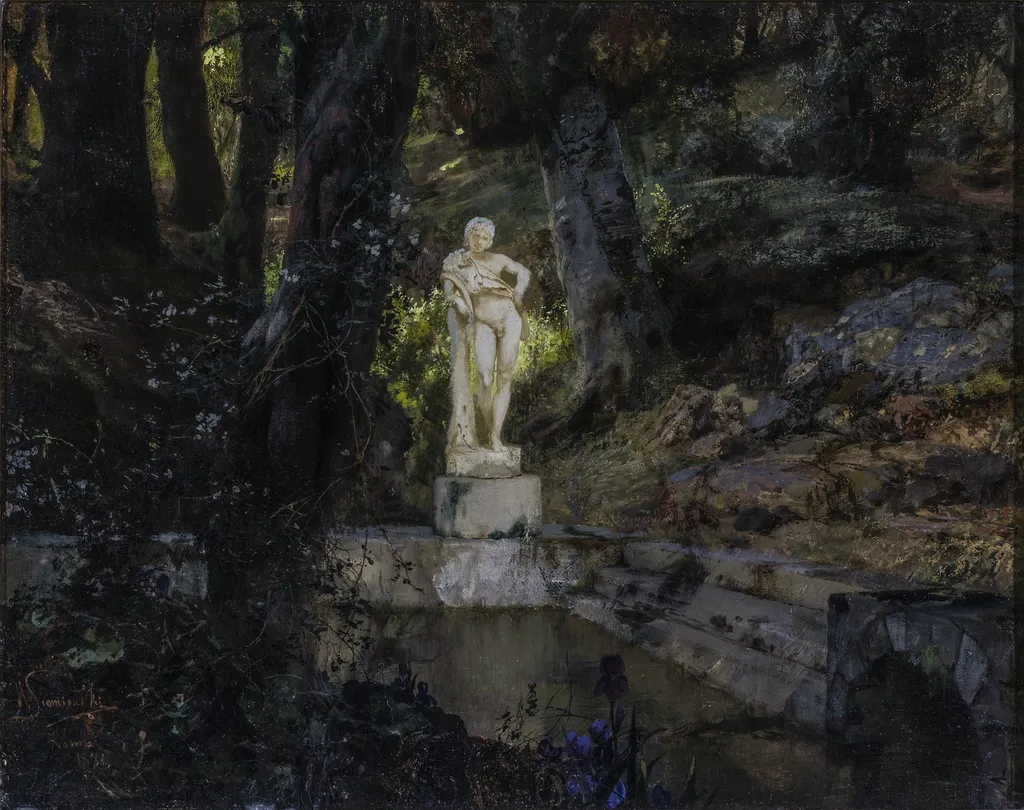
Faun's pond is an oil painting by the Impressionist artist Henryk Siemiradzki. It dates from 1891 and is held in the collection of the National Museum in Warsaw.
About this work
Overview
Created in 1891, Faun’s Pond is an oil painting on canvas by Henryk Siemiradzki. The work is part of the collection of the National Museum in Warsaw and is generally linked to the Impressionist tendency, though it retains the academic rigor characteristic of the artist’s broader oeuvre.
Subject & Meaning
The composition centers on a white marble faun perched on a pedestal within a tranquil pond. Leaves are draped around the statue, while dark‑green foliage and deep‑purple blossoms frame the scene, suggesting a quiet, idyllic moment that merges classical mythology with a natural, pastoral setting.
Technique & Style
Siemiradzki employs a luminous palette, allowing light to shimmer across the water’s surface and illuminate the marble figure. Soft brushwork conveys atmospheric effects, while the rendering of the foliage and flowers retains a degree of academic precision, creating a balance between detailed form and impressionistic ambience.
History & Provenance
Born in 1843, the Polish artist spent much of his professional life in Rome, where he became known for large historical canvases and antiquarian subjects. Faun’s Pond reflects his ongoing interest in sun‑lit, classical landscapes and was eventually acquired by the National Museum in Warsaw, where it remains on display.
Context
The painting belongs to a period when Siemiradzki frequently explored themes drawn from ancient mythology, integrating them into serene natural environments. This approach aligns with a broader 19th‑century fascination among European artists with idealized pastoral scenes that evoke both nostalgia for antiquity and contemporary aesthetic trends.
Own this work as a print
Artist & collection
Artist
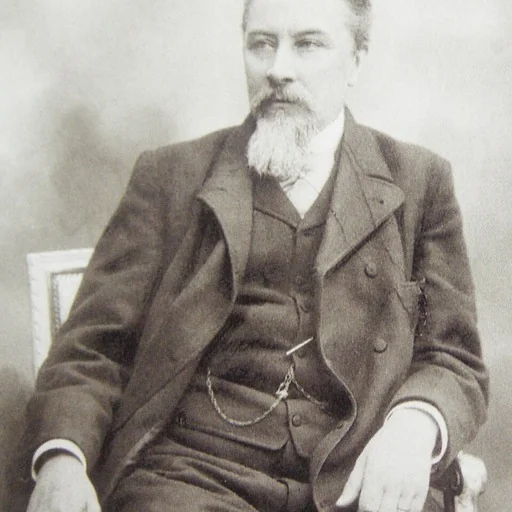
Henryk Hektor Siemiradzki (24 October 1843 – 23 August 1902) was a Polish painter.

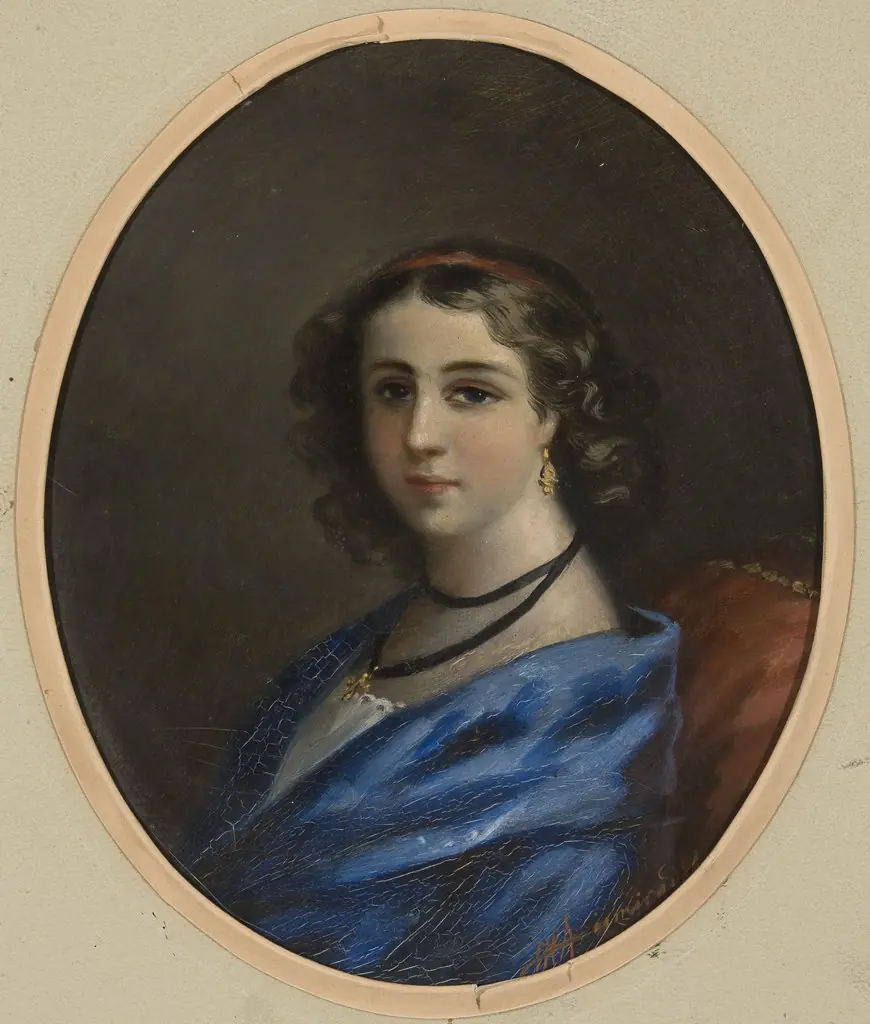 Portrait of a woman
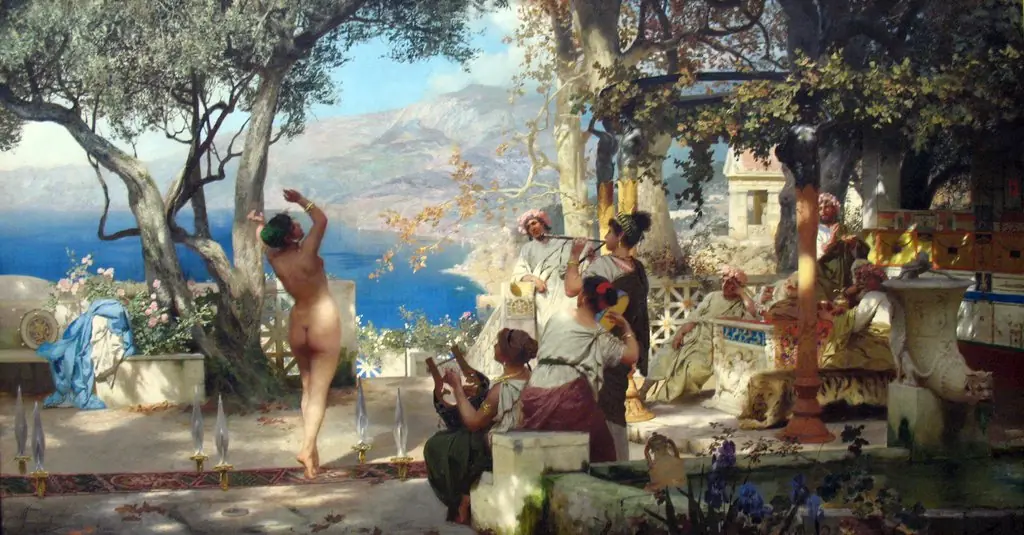 Dance amongst swords
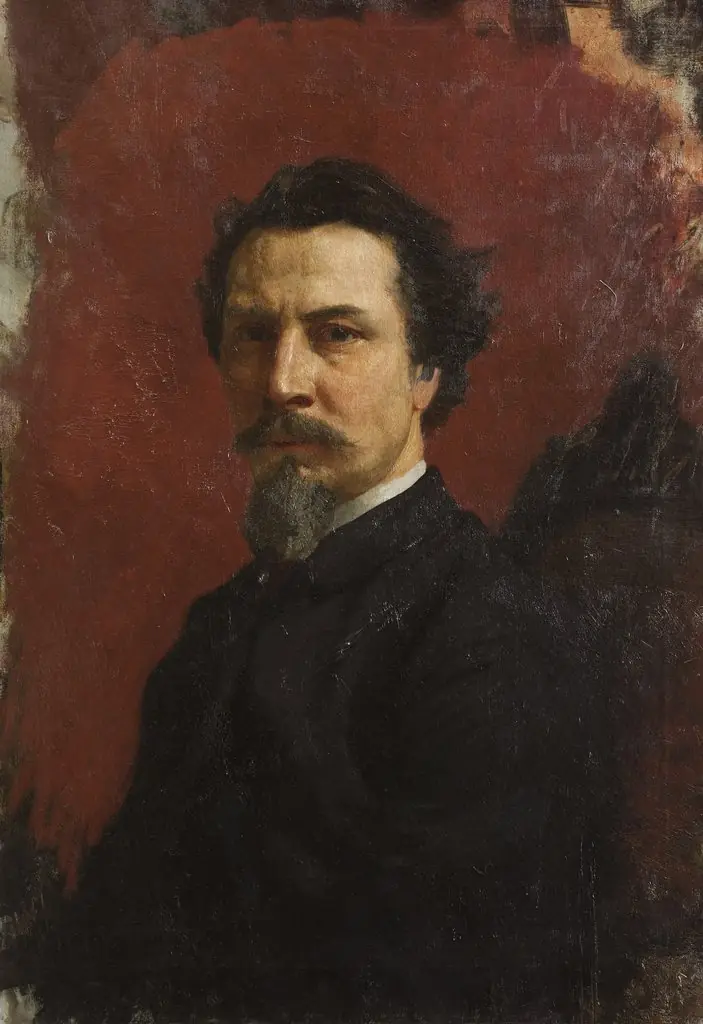 Self-Portrait
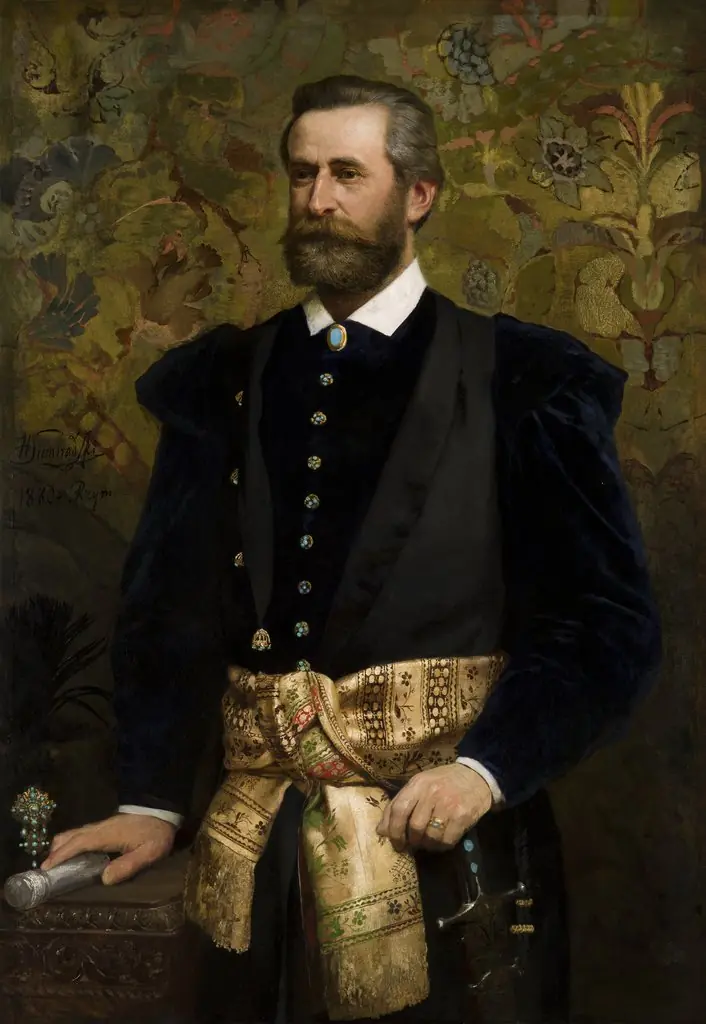 Portrait of Ludwik Wodzicki (1834–1894), Marhal of the Galician Seym
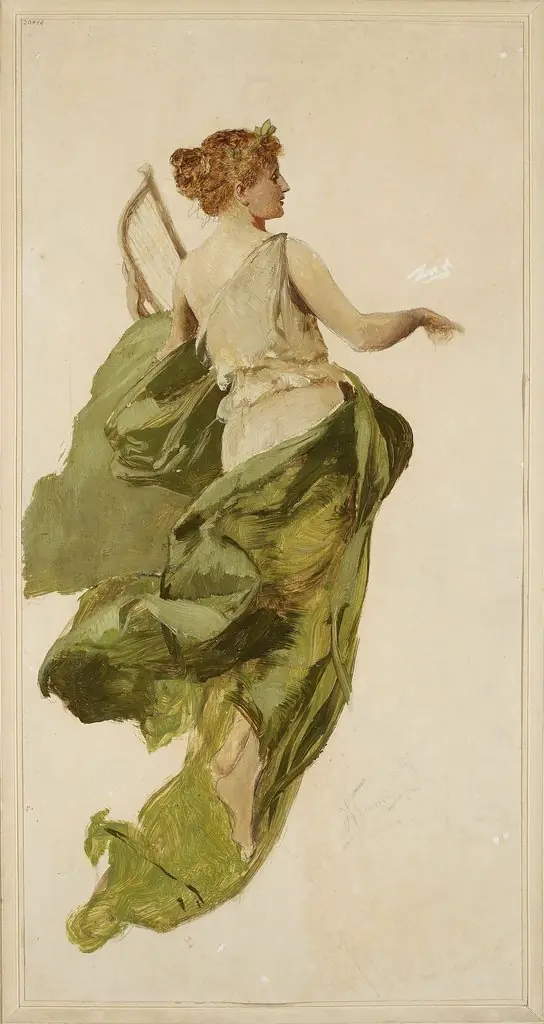 Allegory of Music, sketch for the project of the stage curtain of the Słowacki Theatre in Kraków
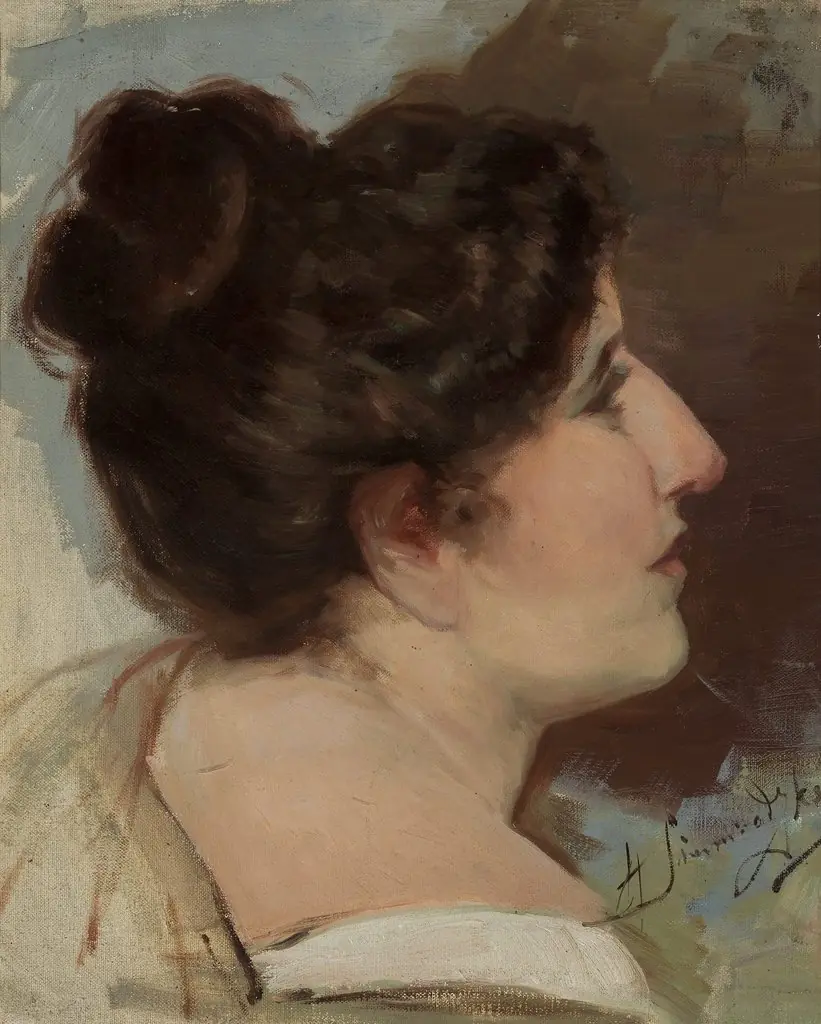 Study of a head
 Candlesticks of Christianity, sketch
 "Aurora" ("Goddess of the Dawn") – Sketch to a Plafon at the House of Jura Nieczajew-Malcew in Sanktt Petersburg
 Sacred grove (II)
 Parc din Luxemburg
 The Gardens of the Villa d'Este, Tivoli
 Source
 Path in the Forest
 Morning
 Vista de los jardines de la Casa de Campo con la estatua de Felipe III
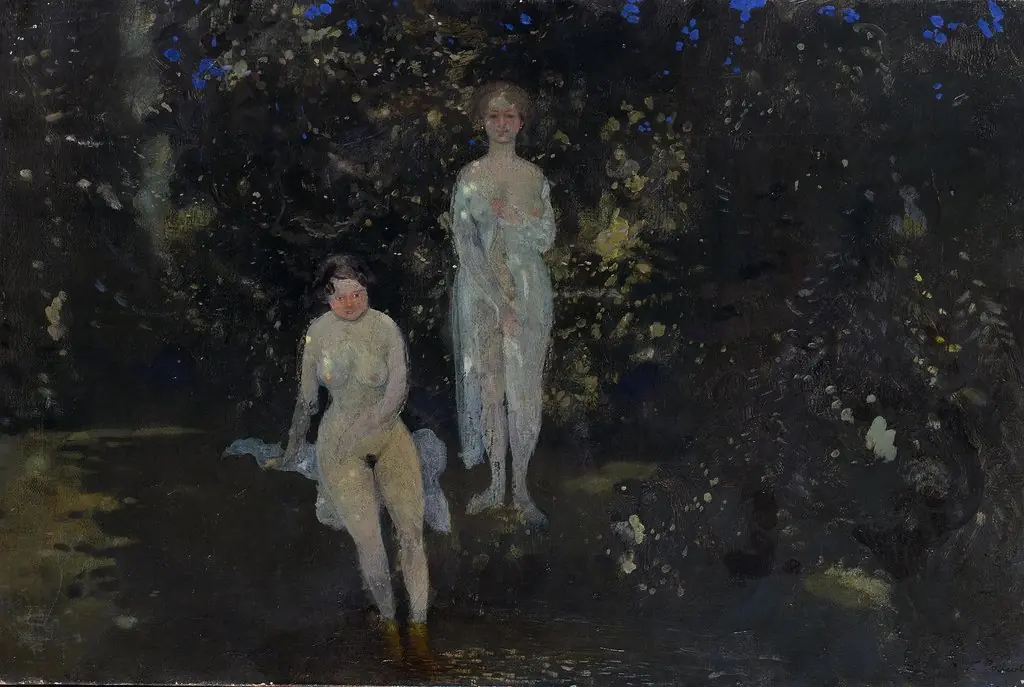 Women Bathing
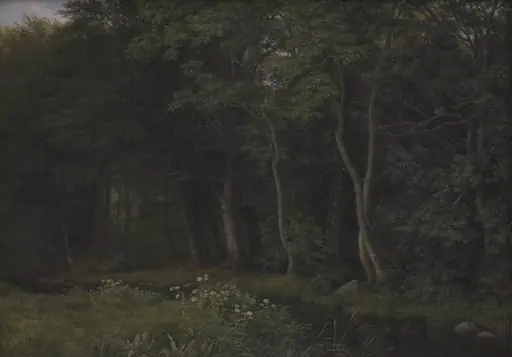 Twilight Setting in a Wood near Iselingen Manor, Zealand
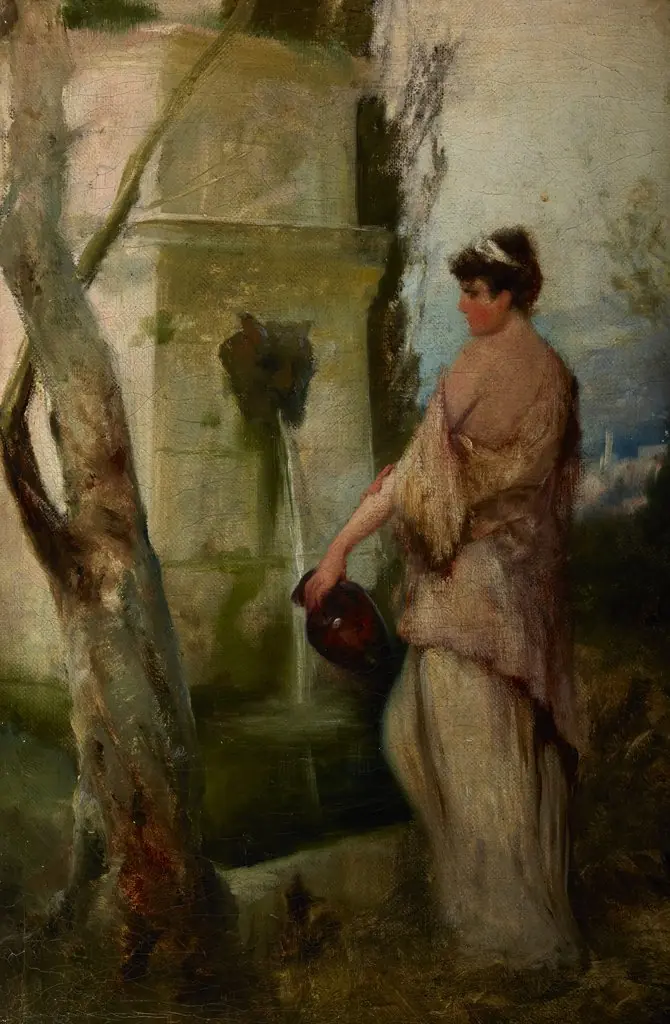 Girl at the Well
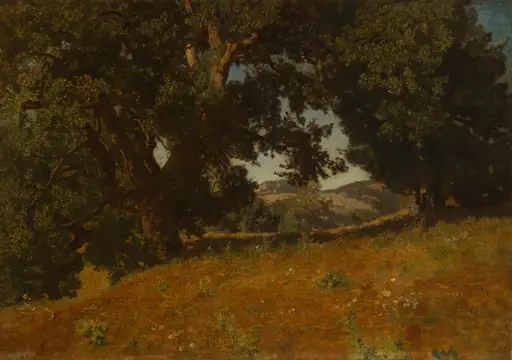 Landscape
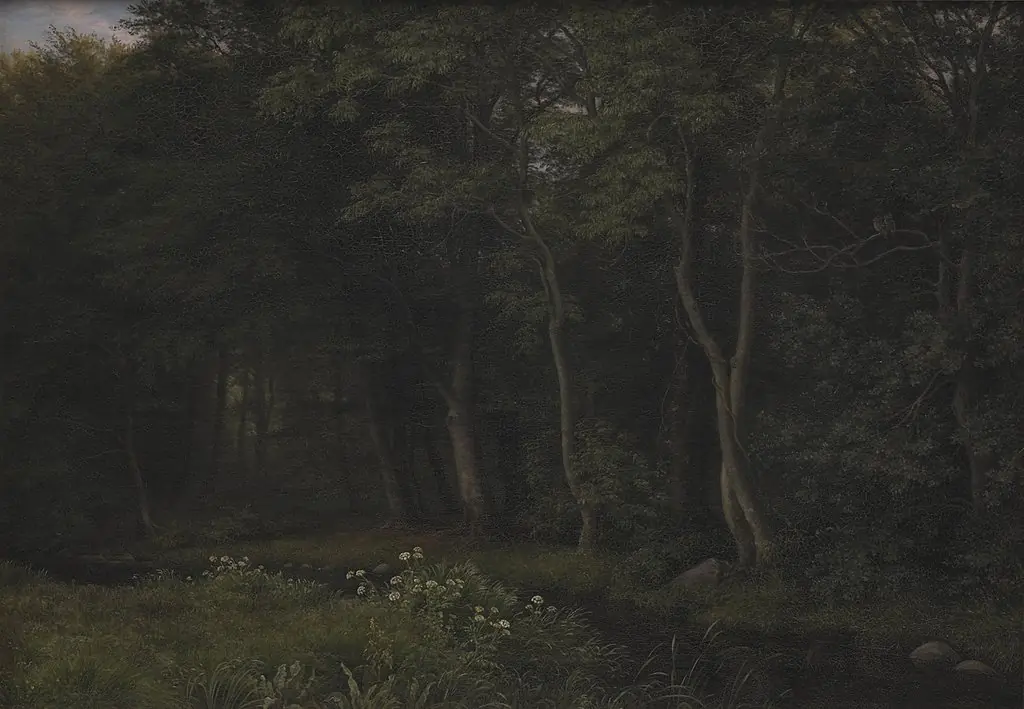 Twilight Setting in a Wood near Iselingen Manor, Zealand