Artwork
Tomb of Zobeida wife of Haroon ool Rashid in distance
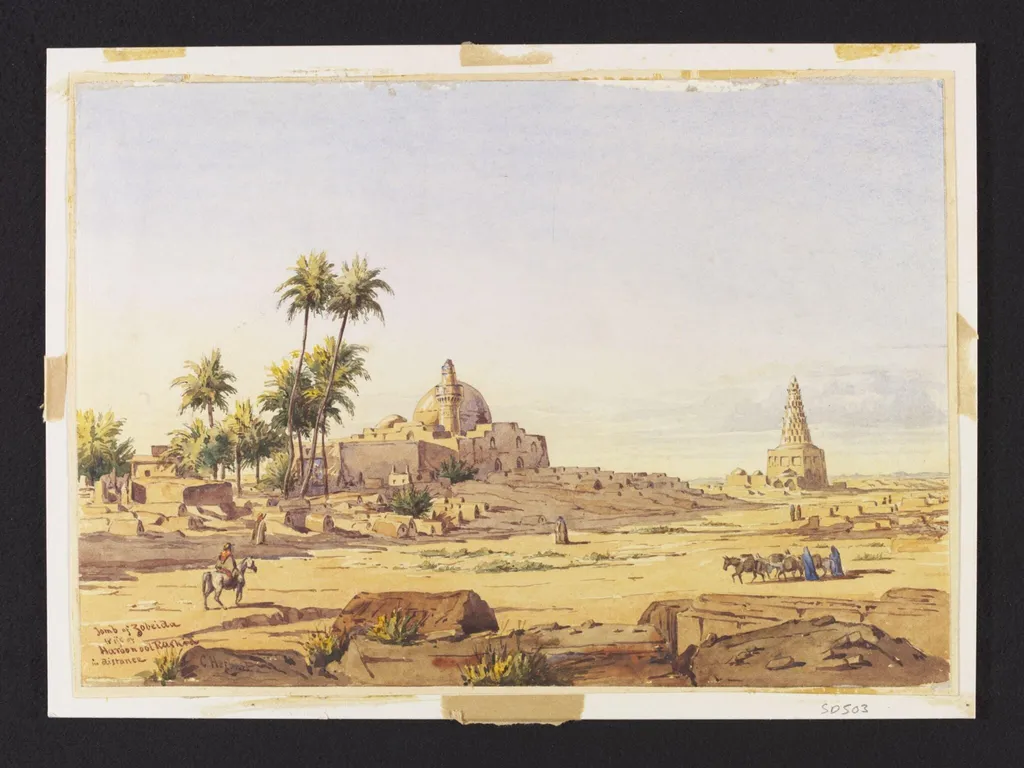
Tomb of Zobeida wife of Haroon ool Rashid in distance is a watercolor work on paper by the Orientalist artist Herbert, C.. It dates from 1850 and is held in the collection of the Victoria and Albert Museum. Created around 1850 by C.
About this work
Overview
Rendered in delicate, muted tones, the scene captures a desolate desert landscape with ancient stone structures, two prominent minarets, and sparse vegetation.
Created around 1850 by C. Herbert, this watercolor depicts a distant view of what is identified as the tomb of Zobeida, consort of the Abbasid caliph Harun al-Rashid. Rendered in delicate, muted tones, the scene captures a desolate desert landscape with ancient stone structures, two prominent minarets, and sparse vegetation. The work is part of the Victoria and Albert Museum’s collection, reflecting 19th-century British interest in Middle Eastern antiquities through topographical art.
Subject & Meaning
The painting presents a romanticized vision of a legendary Islamic burial site, though the actual tomb of Zobeida is not definitively located in this region. The inclusion of travelers and riders suggests human presence amid decay, evoking themes of time, memory, and the passage of empires. The title, inscribed by the artist, anchors the scene in historical narrative, even as its accuracy remains uncertain.
Technique & Style
Executed in watercolor, the work employs soft washes and restrained pigments to convey atmospheric distance and arid light. Forms are rendered with gentle lines, emphasizing texture over detail—worn stone, dry earth, and slender palm trunks emerge through layered transparency. The composition directs the eye toward the distant towers, using scale and haze to reinforce the sense of remoteness and antiquity.
History & Provenance
The painting entered the Victoria and Albert Museum’s collection in the 19th century, likely acquired during a period of expanding British interest in Orientalist subjects. Its creator, C. Herbert, remains a little-documented artist, suggesting the work may have been produced for private or educational use rather than public exhibition. The piece reflects the broader trend of travelers and artists documenting perceived historical sites across the Islamic world.
Context
In mid-19th-century Britain, watercolors of Middle Eastern ruins were popular among amateur artists and collectors drawn to exoticism and antiquity. This work aligns with a genre that blended observation with imagination, often conflating real sites with legendary associations. The depiction of Zobeida’s tomb reflects contemporary fascination with Abbasid history, even as geographic and historical details remained loosely interpreted.
Legacy
Though not widely known today, the painting contributes to a visual archive of how Western artists imagined Islamic heritage during the colonial era. It stands as a quiet example of how historical memory was shaped through art—where fact, folklore, and aesthetic preference converged. Its preservation in the V&A ensures continued access to this nuanced, if imperfect, record of 19th-century perception.
Artist & collection
Artist
This watercolorist spent a lifetime chasing a mirage. While Baghdad’s streets hummed with Ottoman bureaucracy, Herbert kept packing his brushes for the desert edges, always arriving too late for the caravans. His skies…

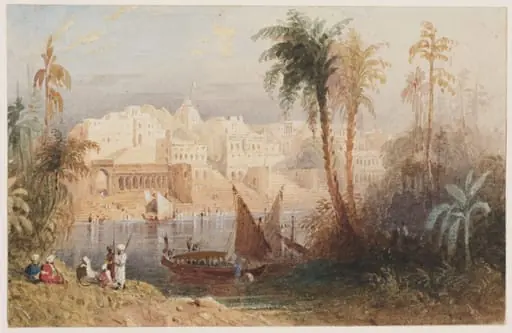 A view of an Indian city beside a river
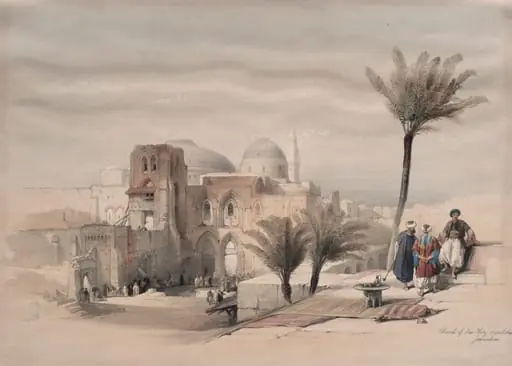 Church of the Holy Sepulchre, Jerusalem
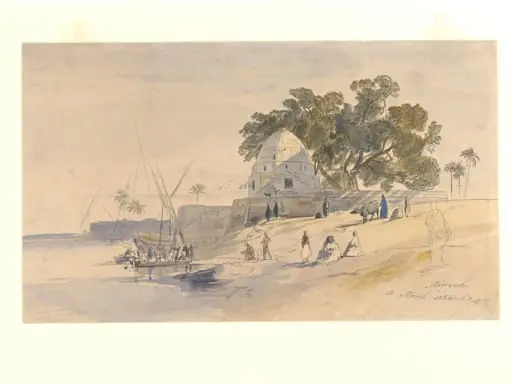 Minyeh, Egypt
 View from the Loggia of the Summer Reception Room (Makad) in the House of the Memluk Raduan Bey, Cairo
 A Road outside Algiers
 Grand Cairo
 Tombs of the Khalifs, Cairo
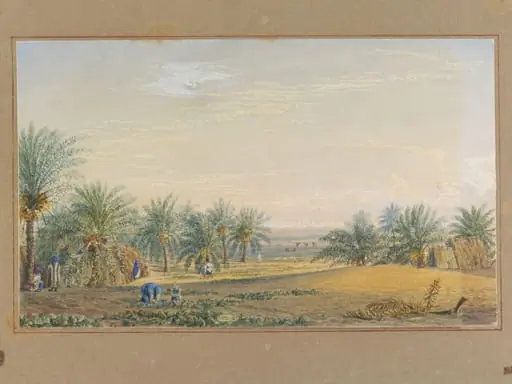 Distant View of Bushire in the Persian Gulf
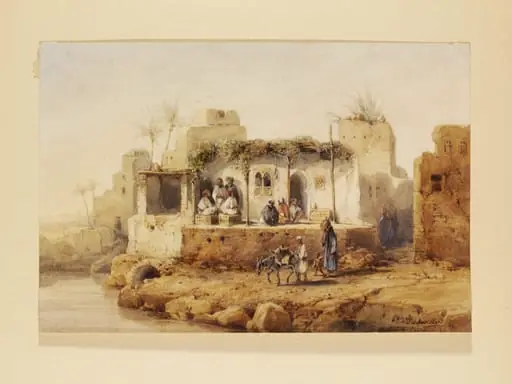 à Minieh, Egypte
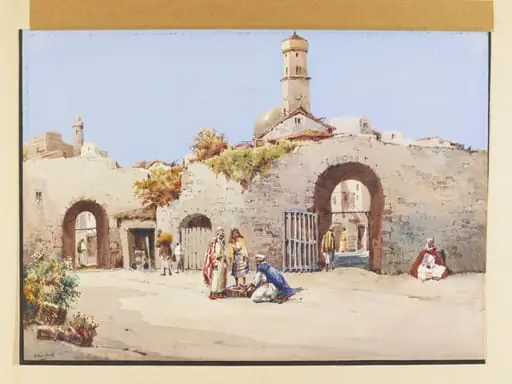 The City Walls, Jaffa, Palestine