Artwork
à Minieh, Egypte
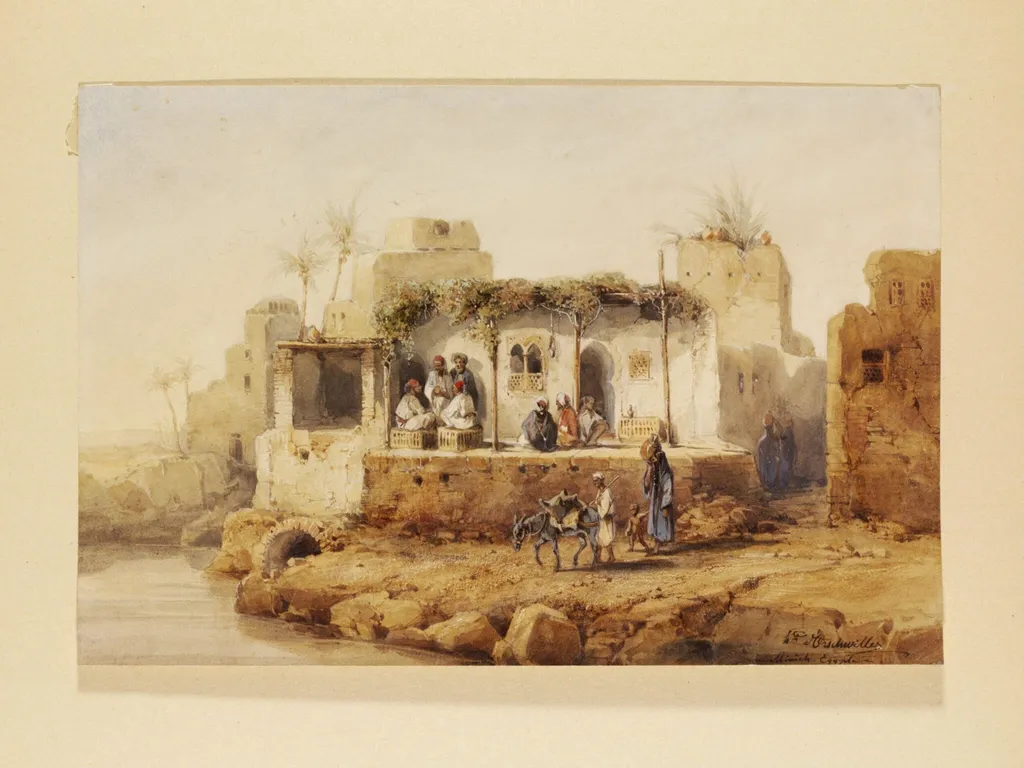
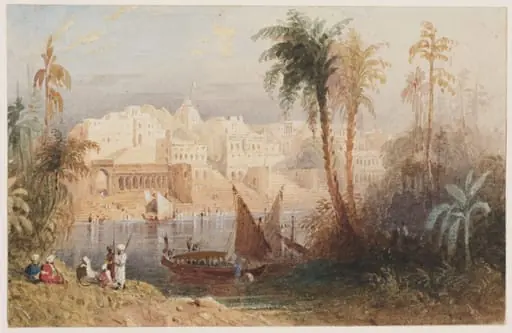
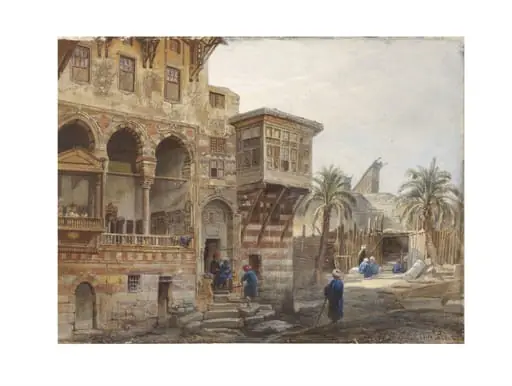
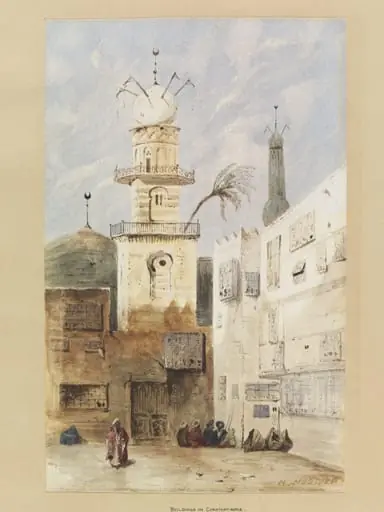
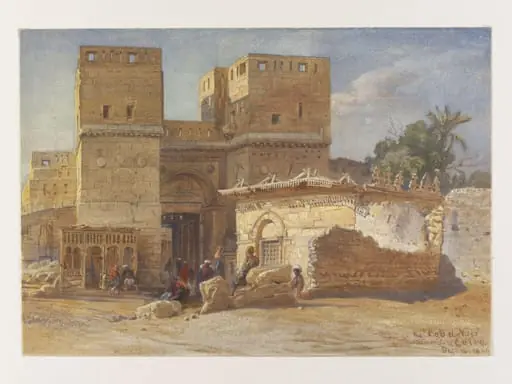
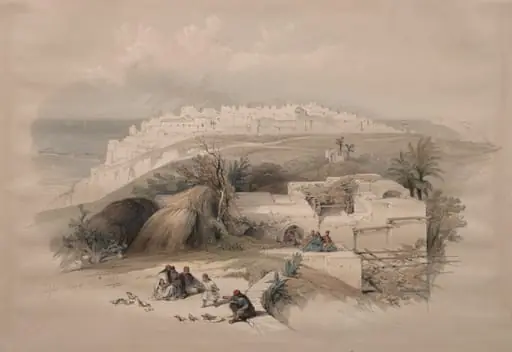
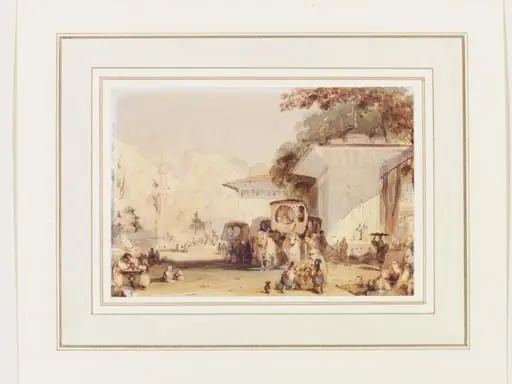
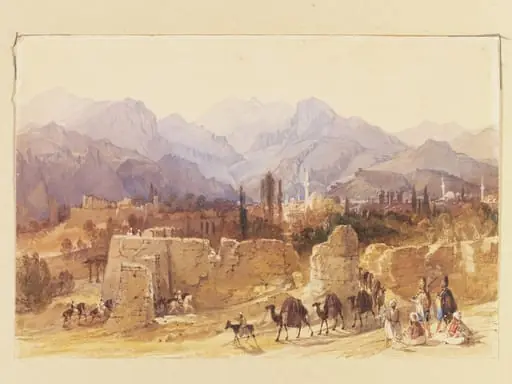
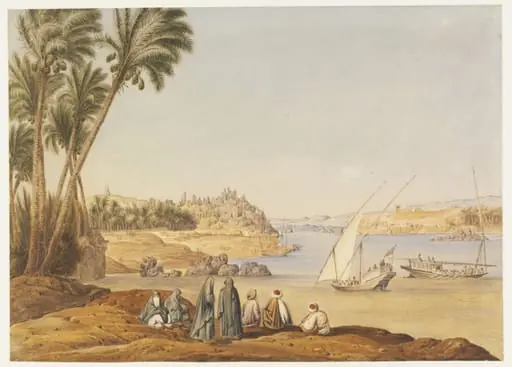
à Minieh, Egypte is a watercolor work on paper by the Orientalist artist Hippolyte de Bourg d' Orschwillier. It dates from 1848 and is held in the collection of the Victoria and Albert Museum. Created in 1848 by Hippolyte de Bourg d’Orschwillier, this watercolour depicts a quiet scene near Minieh in Egypt.
About this work
Overview
Executed in delicate washes, the work captures a moment of daily life against a backdrop of arid landscape and architecture.
Created in 1848 by Hippolyte de Bourg d’Orschwillier, this watercolour depicts a quiet scene near Minieh in Egypt. Executed in delicate washes, the work captures a moment of daily life against a backdrop of arid landscape and architecture. It was once part of the Duc de Montpensier’s collection and later catalogued as number 26 in the 'Carpeta Egipto.' The piece entered a public collection in 1968 after acquisition from the Schidlof estate.
Subject & Meaning
The scene portrays a group of figures near a whitewashed structure with arched openings, suggesting a local residence or communal space. A man leads a donkey, while a child walks beside him, evoking routine movement through a rural setting. The stillness of the figures and the calm environment suggest an emphasis on quiet observation rather than narrative drama, aligning with 19th-century European interest in everyday life in North Africa.
Technique & Style
The artist employs transparent watercolour washes to suggest the haze of the Egyptian sky and the texture of sun-baked surfaces. Light falls gently across the building’s façade and the rocky foreground, creating subtle contrasts that imply volume without heavy outline. The foliage is rendered with loose, fluid strokes, enhancing the sense of atmosphere. The composition avoids dramatic tension, favoring a restrained, observational tone.
History & Provenance
The watercolour was held in the private collection of the Duc de Montpensier, a French royal with a documented interest in Egyptian subjects. It was later catalogued in the 'Carpeta Egipto,' a thematic compilation of travel-related works. In June 1968, it was acquired by a public institution from the Schidlof collection for £30, marking its transition from private to institutional stewardship.
Context
Produced during a period of heightened European fascination with Egypt following Napoleon’s campaign, the work reflects a trend of topographical and ethnographic observation. Unlike grand historical scenes, this piece focuses on modest, unidealized details of local life. Its quiet tone aligns with Romantic-era tendencies to find dignity in the ordinary, even as it remains grounded in the conventions of travel sketching.
Legacy
The work contributes to a broader archive of 19th-century European watercolours documenting North African landscapes and communities. While not widely exhibited, its presence in institutional collections underscores its value as a record of visual engagement with Egypt during a time of shifting cultural perceptions. It remains a quiet example of how travel artists captured place through understated observation.
Artist & collection
Artist
Hippolyte de Bourg d' Orschwillier
French watercolorist in the mid-1800s who painted scenes from a journey to Egypt.