Artwork
Minyeh, Egypt
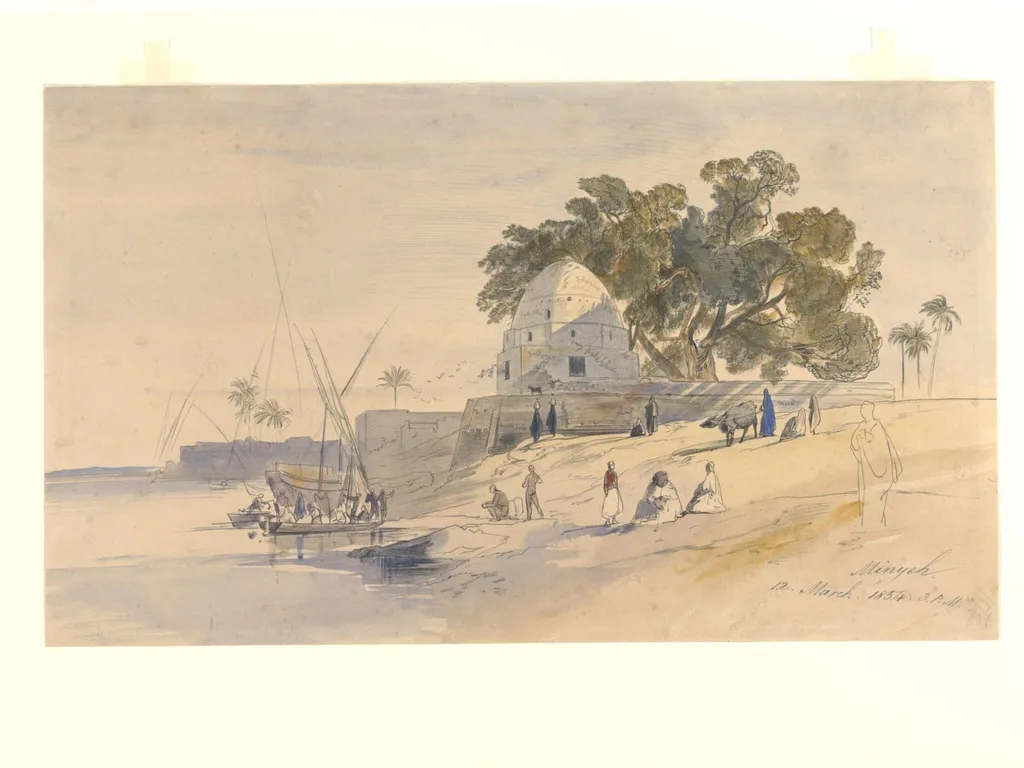
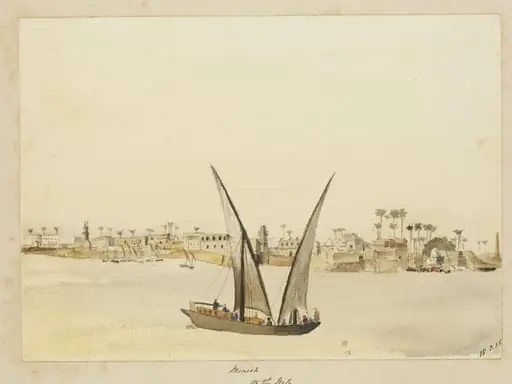
Minyeh, Egypt is a watercolor work on paper by the Impressionist artist Edward Lear. It dates from 1854 and is held in the collection of the Victoria and Albert Museum.
About this work
Overview
, is one of many precise observational records made during his second Egyptian expedition, capturing a quiet moment in the town of Minya along the Nile.
Edward Lear, primarily recognized for his literary nonsense, was also a dedicated topographical artist who traveled extensively across the Mediterranean and Middle East. Between 1849 and 1867, he made three extended journeys through Egypt, producing hundreds of on-site sketches. This watercolour, dated 12 March 1854 at 3 p.m., is one of many precise observational records made during his second Egyptian expedition, capturing a quiet moment in the town of Minya along the Nile.
Subject & Meaning
The scene depicts a qubba—a small domed tomb of a local saint—standing among low, flat-roofed buildings near the Nile’s edge. Figures move along narrow paths between structures, their presence subtle and unobtrusive. The composition conveys stillness and solitude, reflecting Lear’s interest in documenting sacred and vernacular architecture as integral to the landscape, rather than as exotic spectacle.
Technique & Style
Lear worked rapidly in pencil to record the scene’s structure and light, then returned later to apply watercolour washes and ink details. The painting retains a fresh, uncluttered quality, with soft tones suggesting the intensity of midday sun and the dryness of the air. Shadows stretch sharply across the ground, reinforcing the time of day noted in his inscription and demonstrating his commitment to observational accuracy.
History & Provenance
Created during Lear’s second Egyptian journey, the watercolour was made directly from life in Minya, with no later studio embellishment. Its inscription includes the exact date and hour, consistent with his method of meticulous documentation. The work remained within Lear’s personal collection until his death, later entering institutional holdings through his estate, preserving its original context and intent.
Context
In the mid-19th century, European artists and travelers increasingly turned to Egypt as a subject of scientific and aesthetic interest. Lear’s approach stood apart: he avoided romanticized or dramatic interpretations, instead focusing on quiet, everyday architecture and light. His work contributed to a growing body of topographical records that valued precision over spectacle, offering a grounded view of Egyptian life beyond colonial narratives.
Legacy
Lear’s Egyptian watercolours are valued today not for their artistic flourish, but for their documentary integrity. They provide a visual archive of places and structures that have since changed or vanished. His method—rapid sketching followed by careful colouring—set a standard for field-based observation, influencing later generations of artists and archaeologists who sought to record the world as they found it.
Artist & collection
Artist
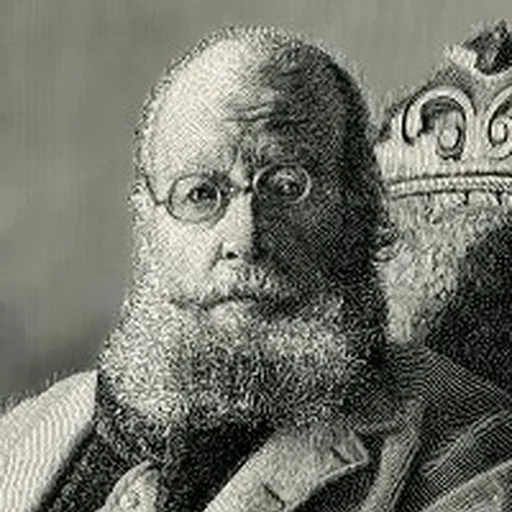
Edward Lear (12 May 1812 – 29 January 1888) was an English artist, illustrator, musician, author and poet, who is known mostly for his literary nonsense in poetry and prose and especially his limericks, a form he popularised but which term…

 `Minieh On the Nile'
 View of the Sea Castle (Sidon)
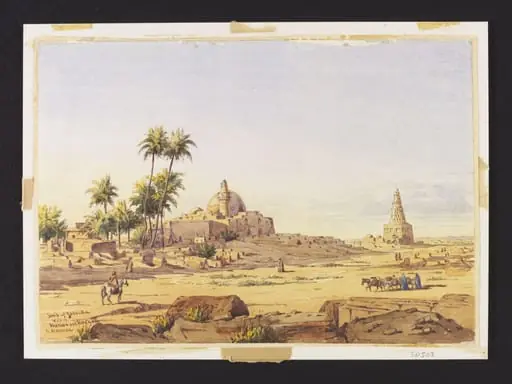 Tomb of Zobeida wife of Haroon ool Rashid in distance
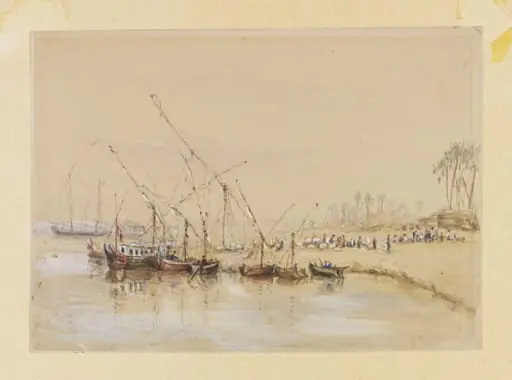 A Scene on the Nile: with dahabiyyahs and bales of cotton being loaded into feluccas
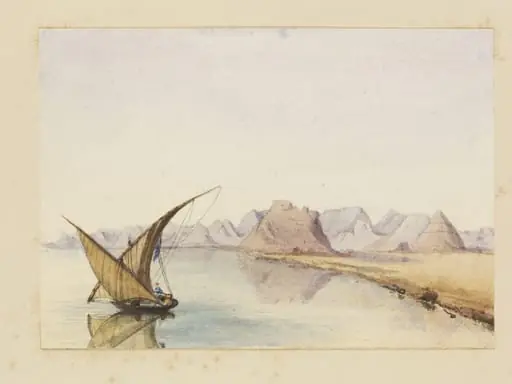 View of the Nile with boat
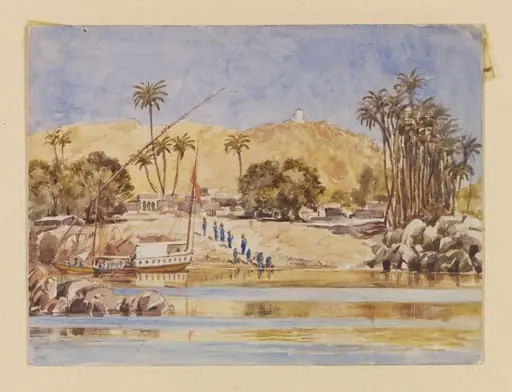 View on the Nile, opposite Aswan
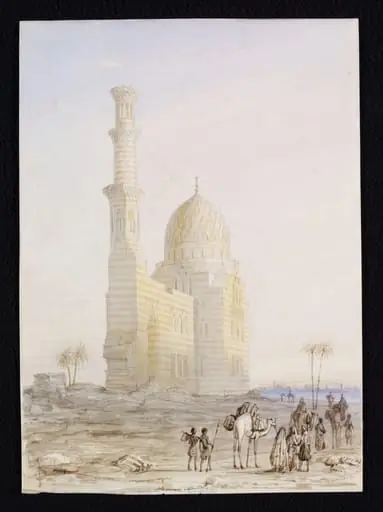 Tomb near Cairo
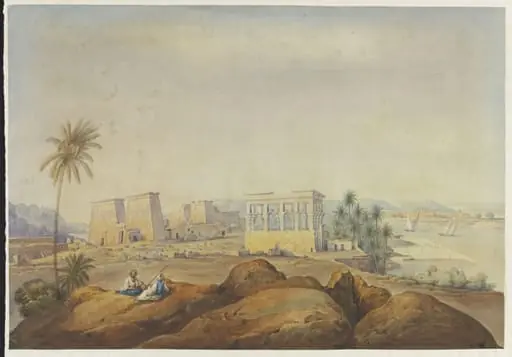 The Temple of Isis and Kiosk of Trajan on the Island of Philae
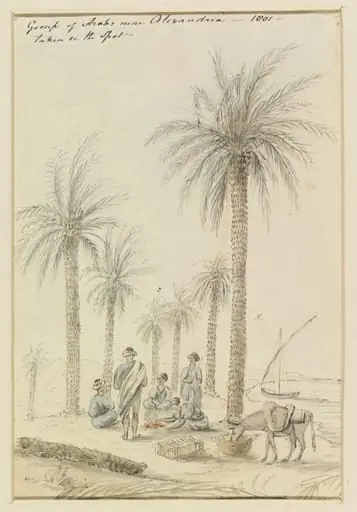 Group of Arabs near Alexandria - 1801 - taken on the Spot
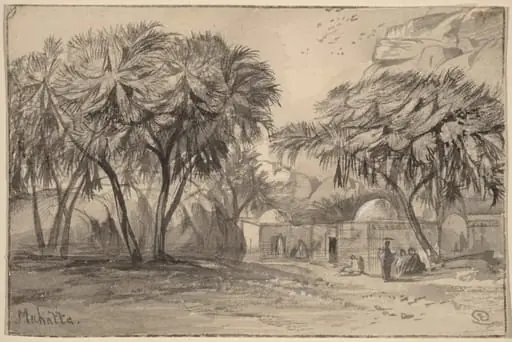 Mahatta
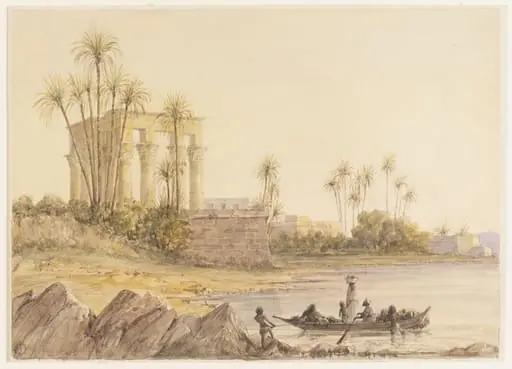 Landing Place. Philoe
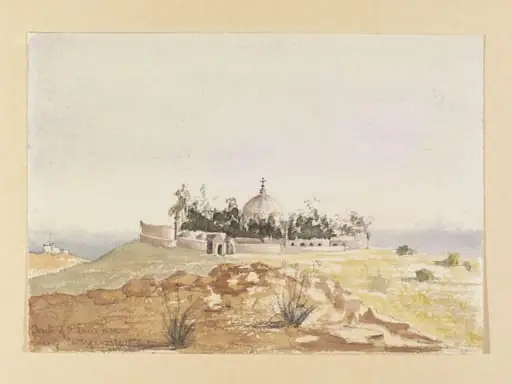 Tomb of St. Louis on the ruins of Carthage