Artwork
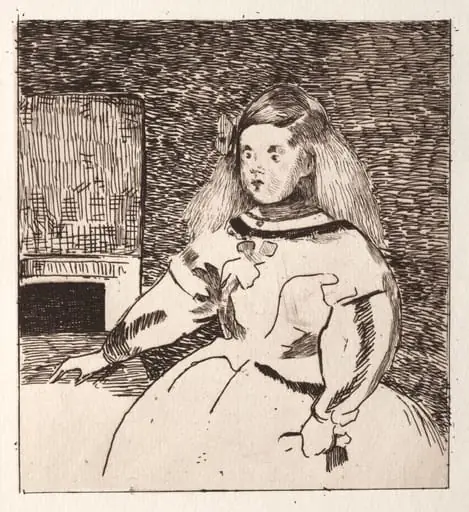
The Infanta Margarita
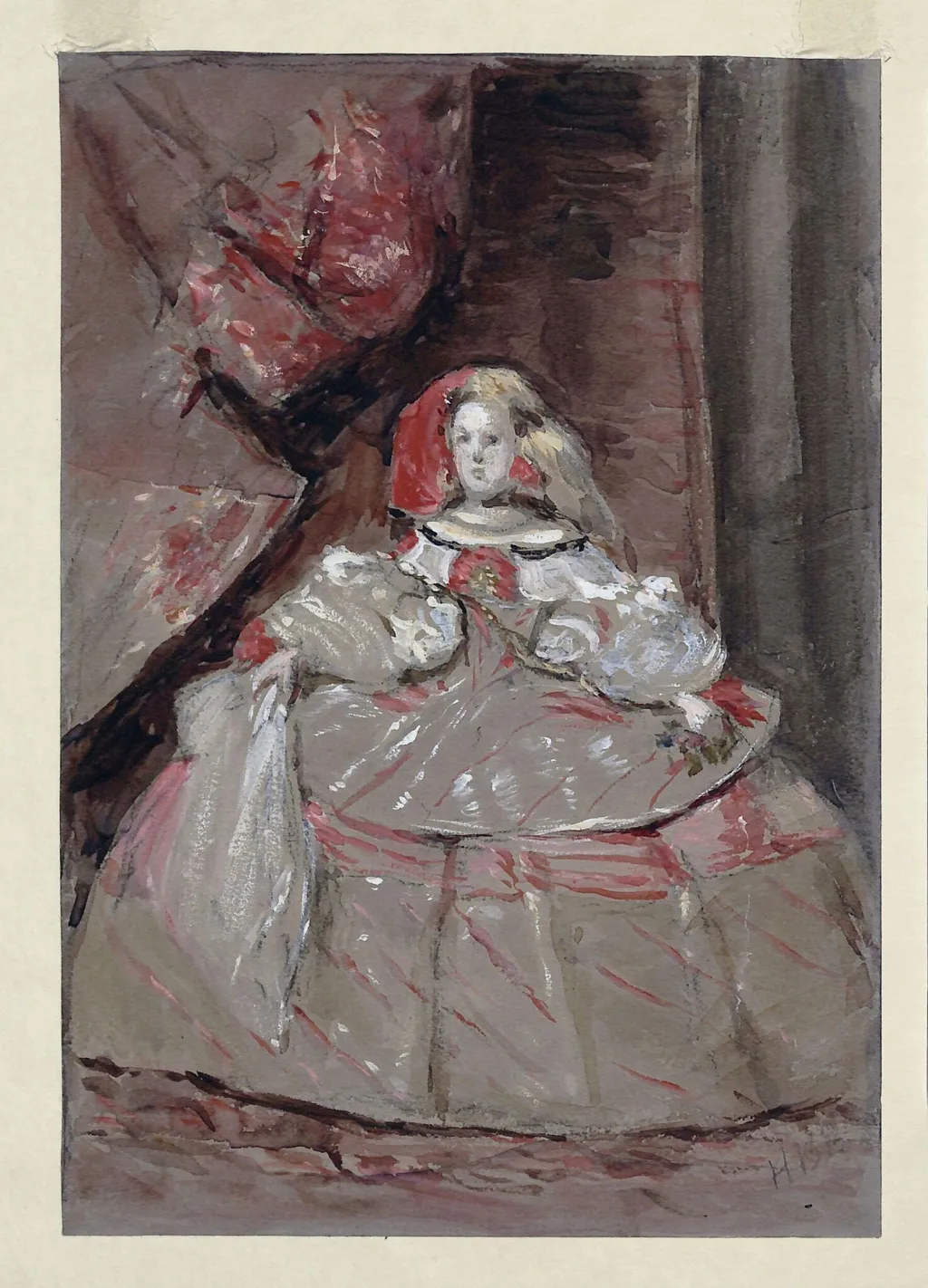
The Infanta Margarita is a watercolor work on paper by the British Romanticist artist Hercules Brabazon Brabazon. It dates from 1848 and is held in the collection of the Victoria and Albert Museum.
About this work
Overview
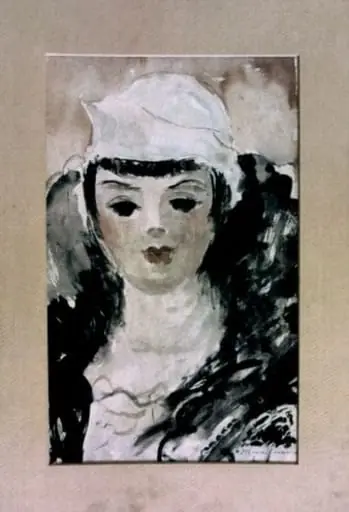
Created in 1848 by Hercules Brabazon Brabazon, this watercolour study depicts the Infanta Margarita, daughter of King Philip IV of Spain.
Created in 1848 by Hercules Brabazon Brabazon, this watercolour study depicts the Infanta Margarita, daughter of King Philip IV of Spain. Executed in red, grey, and white washes, the work is a direct response to Diego Velázquez’s original portrait. Brabazon signed the piece with his initials, affirming authorship while acknowledging its derivative nature. The medium and approach reflect a 19th-century British interest in Spanish Old Master works.
Subject & Meaning
The subject is Margarita Teresa of Spain, portrayed in a moment of quiet presence. Dressed in a white gown and red hood, she sits upright on a chair, her gaze directed outward. The composition emphasizes dignity and stillness, consistent with royal portraiture traditions. Brabazon’s choice to render her in watercolour, rather than oil, suggests an intimate, personal engagement with Velázquez’s vision rather than a formal reproduction.
Technique & Style
Brabazon employed loose, rapid brushwork and translucent washes to suggest form without precise definition. The background is muted and indistinct, enhancing the figure’s prominence. Edges are softly blurred, and details like lace and fabric are hinted at rather than rendered meticulously. This sketch-like quality aligns with Romantic-era values that prioritized expressive immediacy over polished finish, reflecting the artist’s focus on mood over accuracy.
History & Provenance
The watercolour was made during a period when British artists increasingly studied Spanish paintings through prints and copies. Brabazon, known for his watercolours of European subjects, likely encountered Velázquez’s original through reproductions or exhibitions. The work remained in private hands until its acquisition by the Victoria and Albert Museum, where it now serves as an example of 19th-century artistic dialogue with the Spanish Golden Age.
Context
In mid-19th-century Britain, watercolour was elevated as a serious medium, particularly among artists seeking to engage with continental traditions. Brabazon’s study reflects broader trends of artistic pilgrimage and homage, where copying Old Masters was not mere imitation but a method of learning and personal expression. His approach diverged from academic rigour, embracing fluidity and spontaneity as markers of artistic sensitivity.
Legacy
This watercolour stands as a quiet testament to cross-cultural artistic exchange. While not widely exhibited, it contributes to understanding how British artists interpreted Spanish portraiture outside the constraints of institutional training. Its informal technique and emotional resonance offer insight into the evolving role of copying in 19th-century art education and personal practice.
Artist & collection
Artist
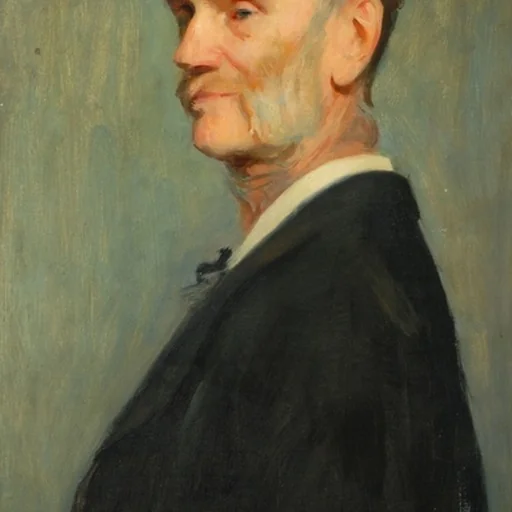
Hercules Brabazon Brabazon (born Hercules Brabazon Sharpe; 27 November 1821 – 14 May 1906) was an English artist, accomplished in Turner-manner watercolours.

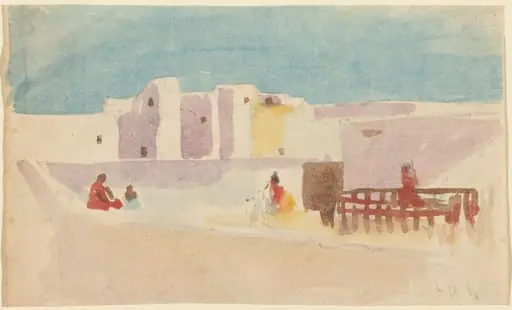 Walls of a North African City
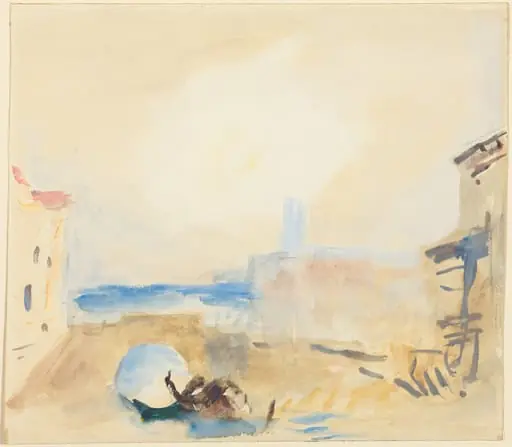 A Gondola Passing Under a Bridge in Venice
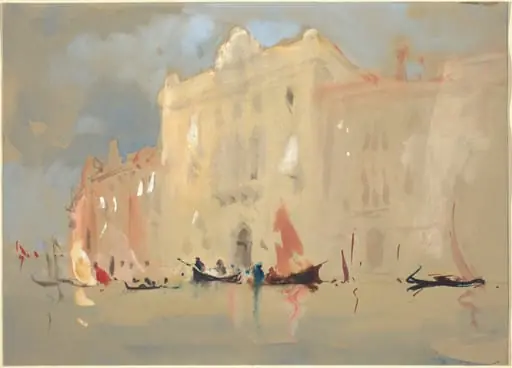 Gondolas Before a Palace on the Grand Canal in Venice
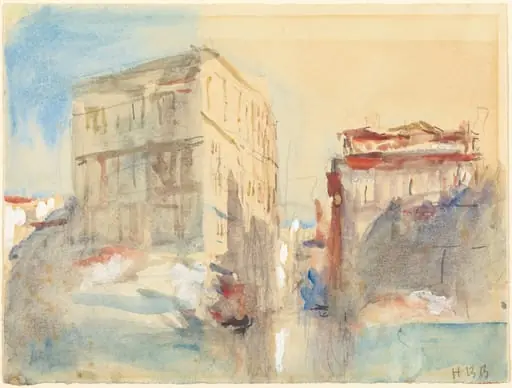 Palaces on the Grand Canal in Venice
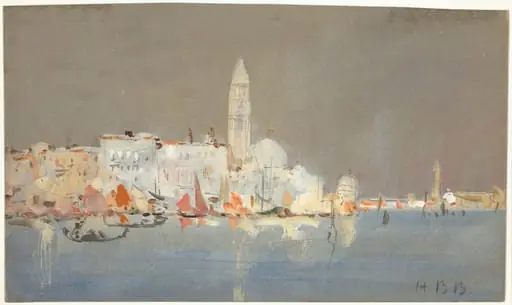 Venetian Capriccio with a Campanile
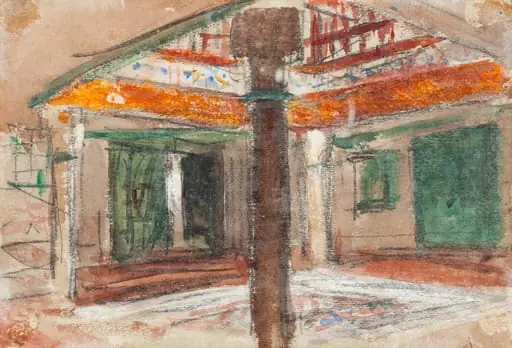 Interior of an Exotic Palace
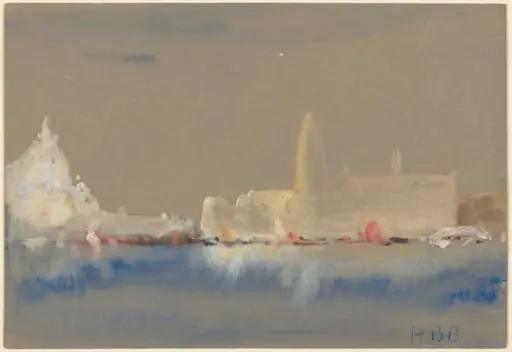 The Salute and the Palazzo Ducale from the Bacino di San Marco
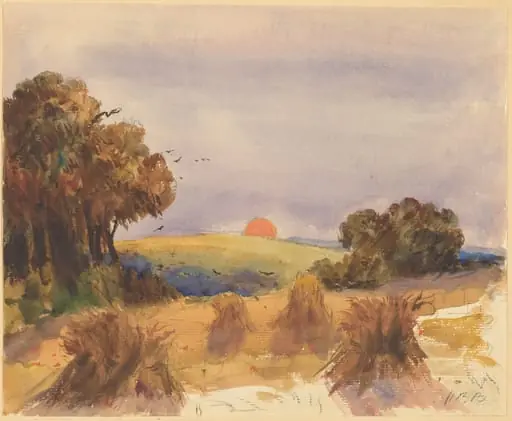 A Cornfield at Sunset