Artwork
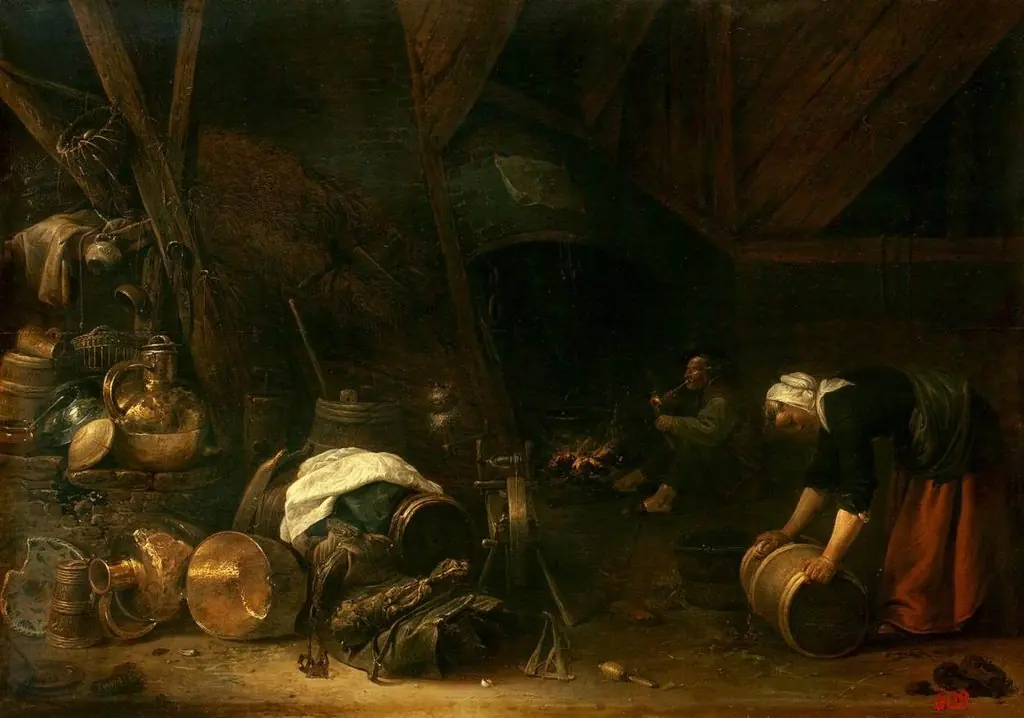
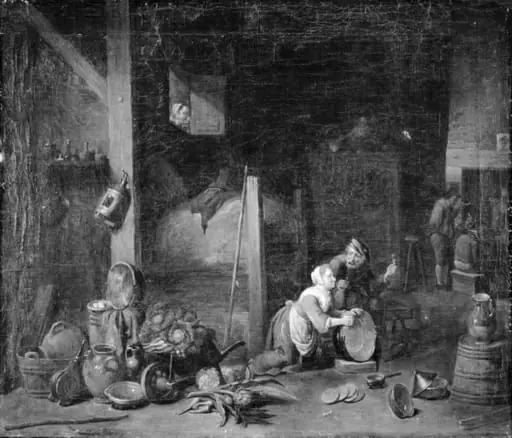
A Kitchen Maid at Work
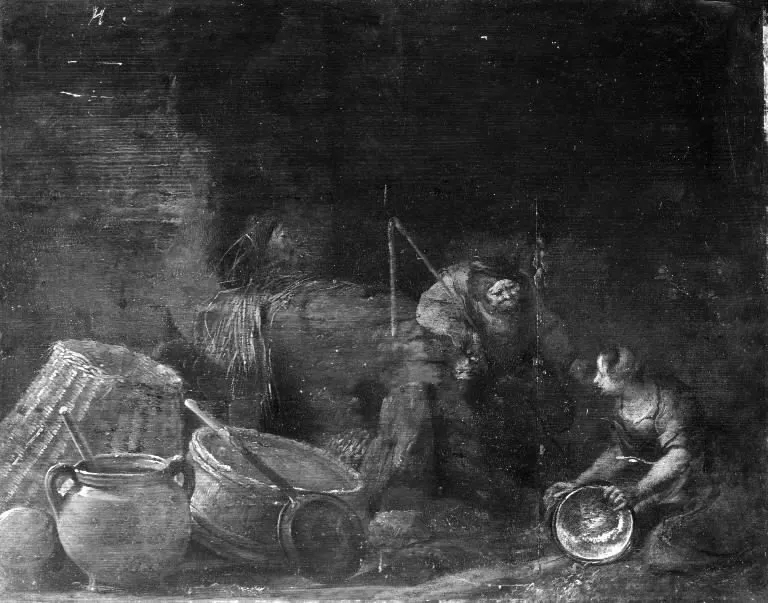
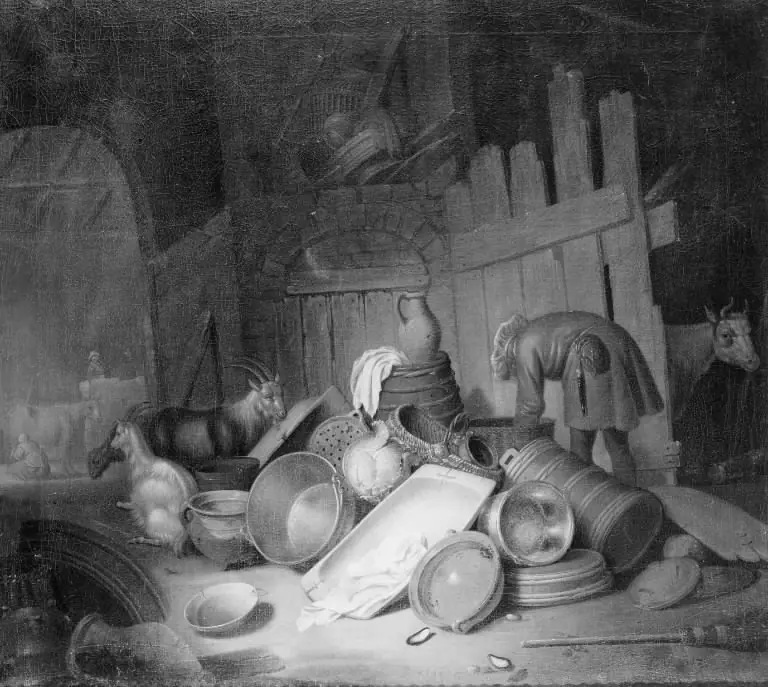
A Kitchen Maid at Work is an unspecified painting by the Dutch Golden Age artist Herman Saftleven. It dates from 1634 and is held in the collection of the Statens Museum for Kunst.
About this work
Overview
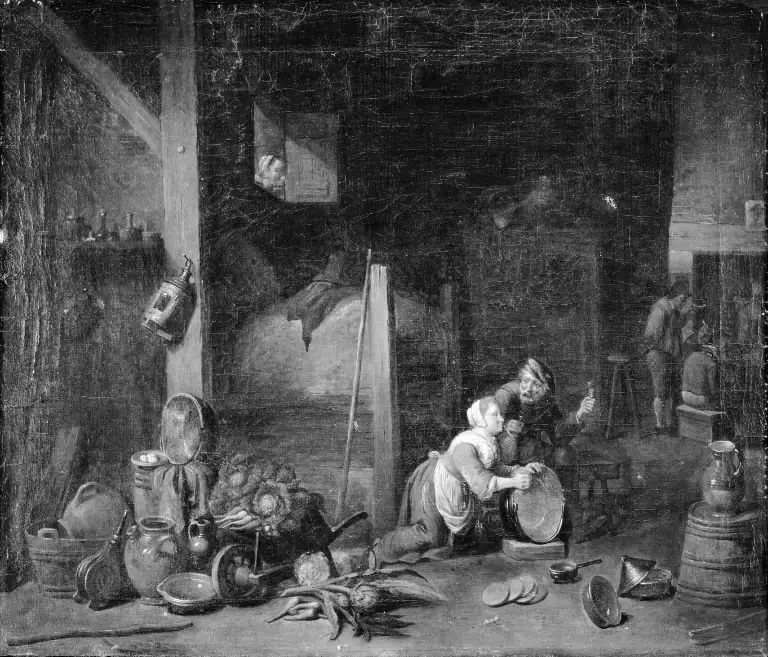
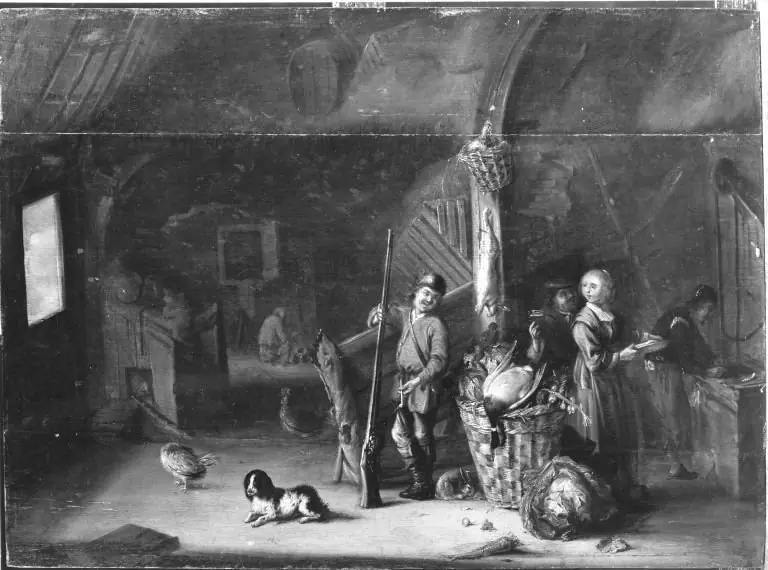
Painted in 1634 by Herman Saftleven, this work portrays a domestic servant in the midst of her daily labor. Executed in oil on panel, it resides in the collection of Statens Museum for Kunst in Copenhagen. The composition centers on a solitary figure immersed in routine tasks, rendered with quiet precision and a restrained palette that emphasizes texture and atmosphere over narrative drama.
Subject & Meaning
Her focused posture and modest attire reflect the social reality of domestic service in 17th-century Holland.
The kitchen maid is depicted not as an idealized figure but as a working individual, engaged in the unglamorous yet essential labor of food preparation or cleanup. Her focused posture and modest attire reflect the social reality of domestic service in 17th-century Holland. The absence of interaction or narrative context invites contemplation of the dignity in routine work, aligning with broader Dutch genre traditions that honored everyday life.
Technique & Style
Saftleven employs chiaroscuro to model form and define space, using subtle gradations of light to highlight the maid’s hands, apron, and the metallic surfaces of kitchen tools. The dim interior, illuminated by a single source near the fireplace, enhances the tactile quality of wood, ceramic, and fabric. Brushwork is controlled and deliberate, avoiding theatricality in favor of quiet realism and spatial coherence.
History & Provenance
The painting entered the Danish national collection in the 19th century, having passed through private hands in the Netherlands prior. Its attribution to Saftleven has been consistently supported by stylistic analysis and documentary evidence. Unlike many contemporary works, it lacks inscriptions or signatures, yet its technique and subject align closely with Saftleven’s known output from the 1630s.
Context
Created during the Dutch Golden Age, the painting reflects a cultural shift toward valuing domestic interiors and laborers as worthy subjects. While religious and mythological themes dominated elite commissions, genre scenes like this one appealed to middle-class patrons. Saftleven’s focus on a single figure in a functional space echoes the work of contemporaries such as Pieter de Hooch and Jan Steen, though with greater somber restraint.
Legacy
Though not widely exhibited outside Denmark, the painting contributes to scholarly understanding of how Dutch artists portrayed labor without sentimentality. Its quiet intensity influenced later 19th-century realists who sought to elevate ordinary life through careful observation. The work remains a quiet testament to the visual culture of domestic service in early modern Europe.
Artist & collection