Artwork
The Large Tree and the Cascade
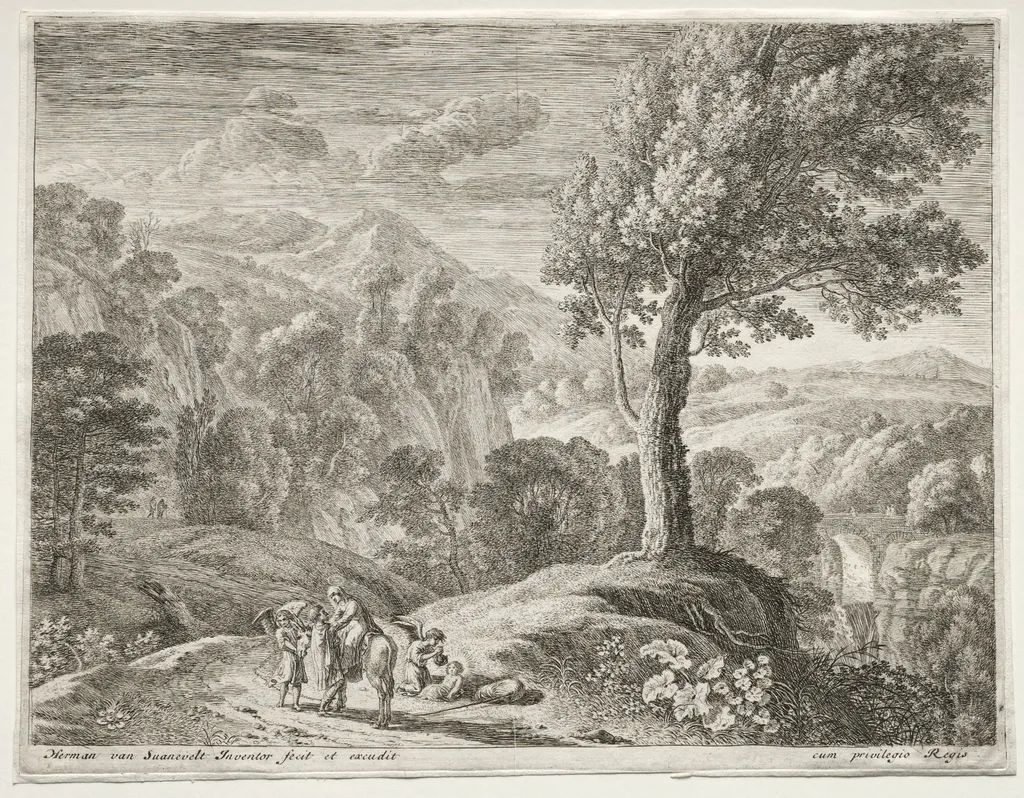
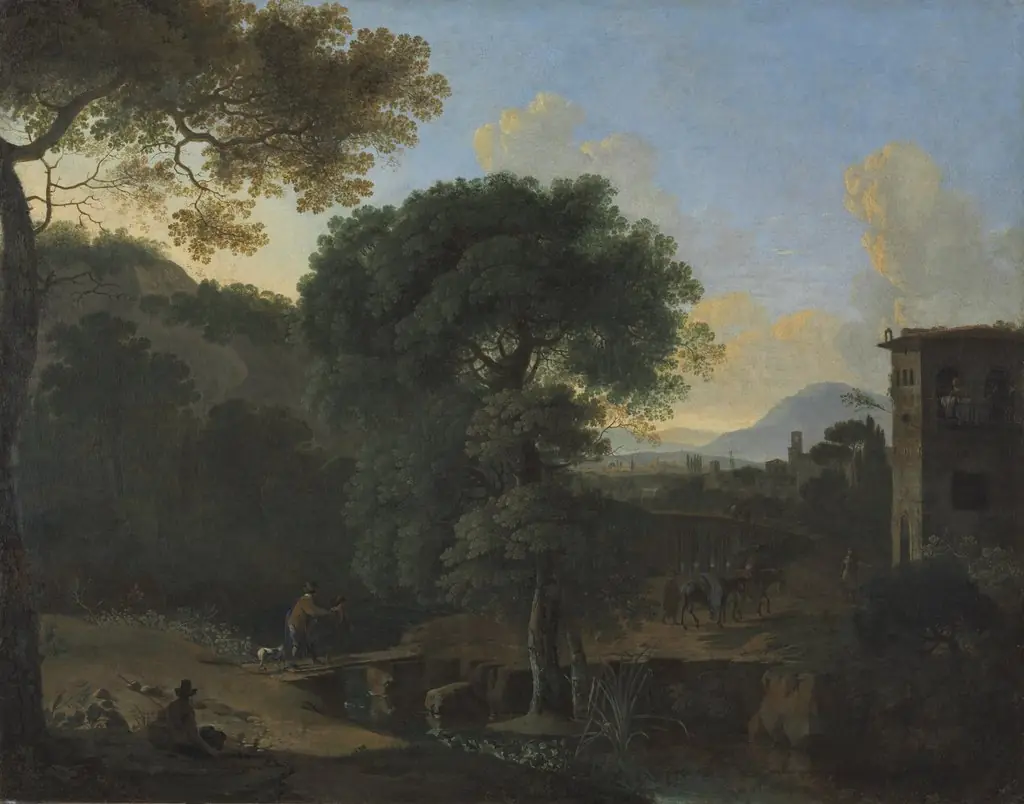
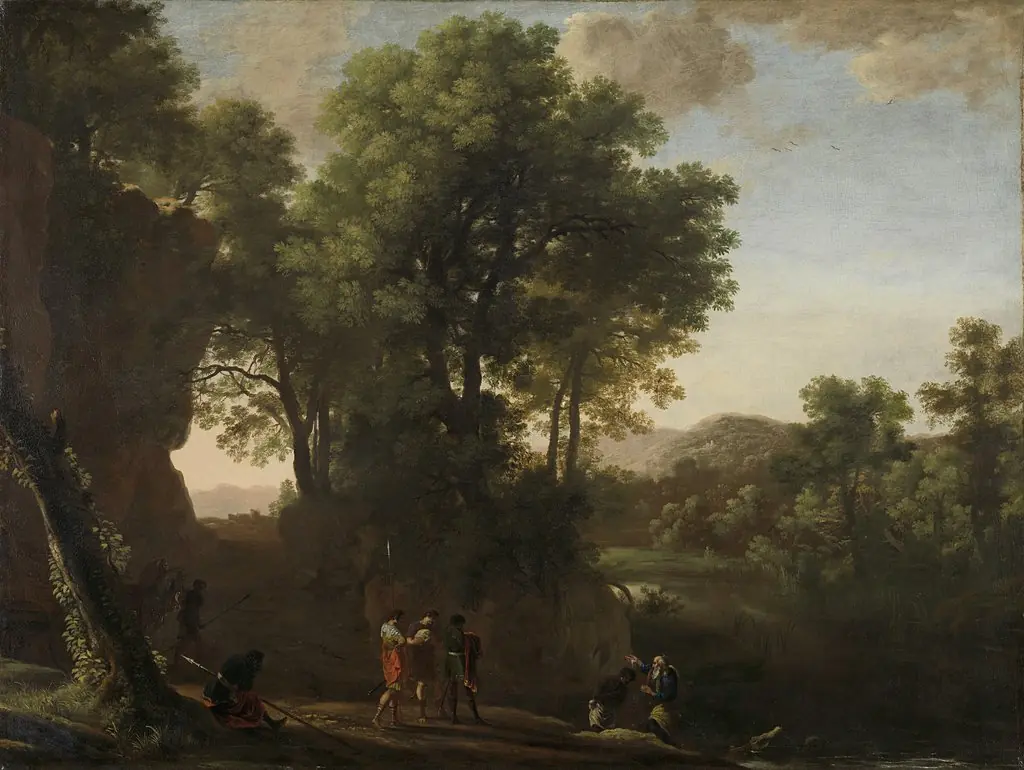
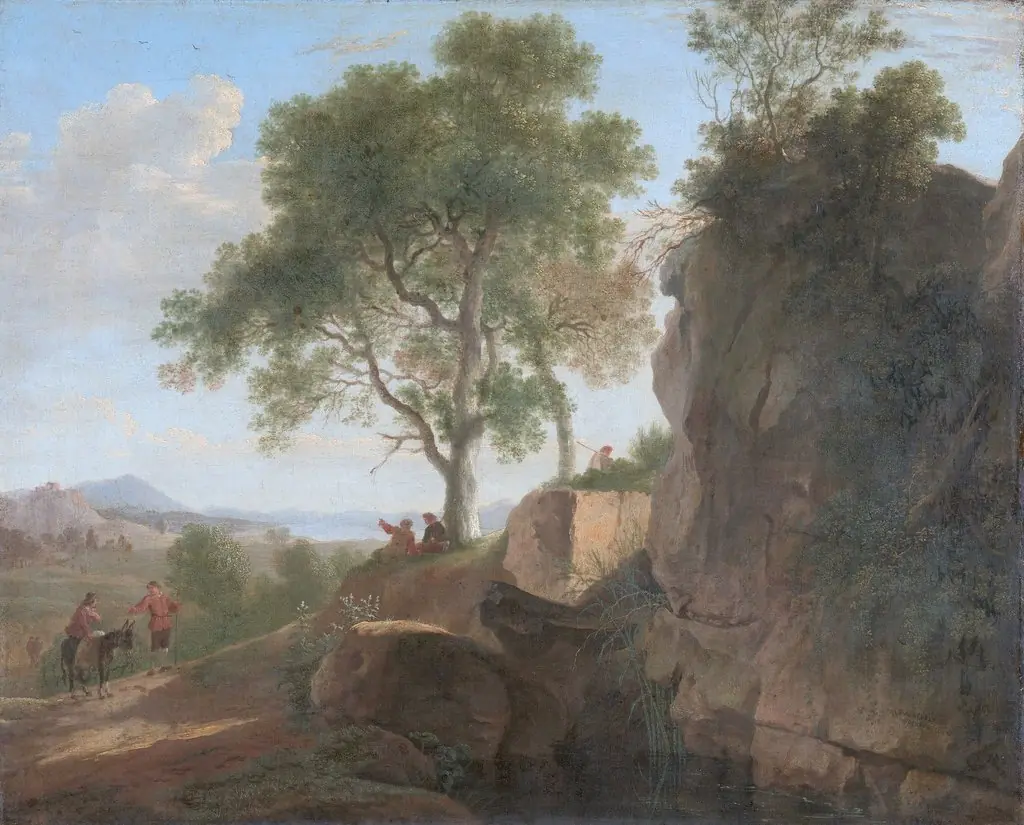
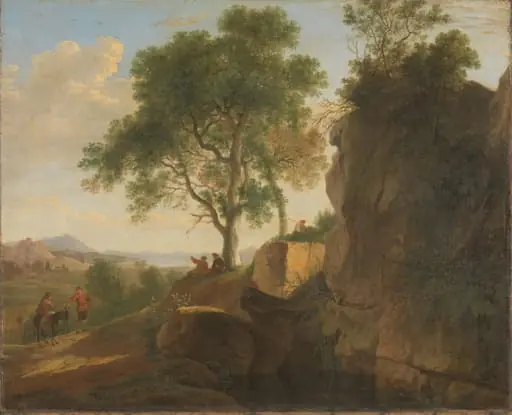
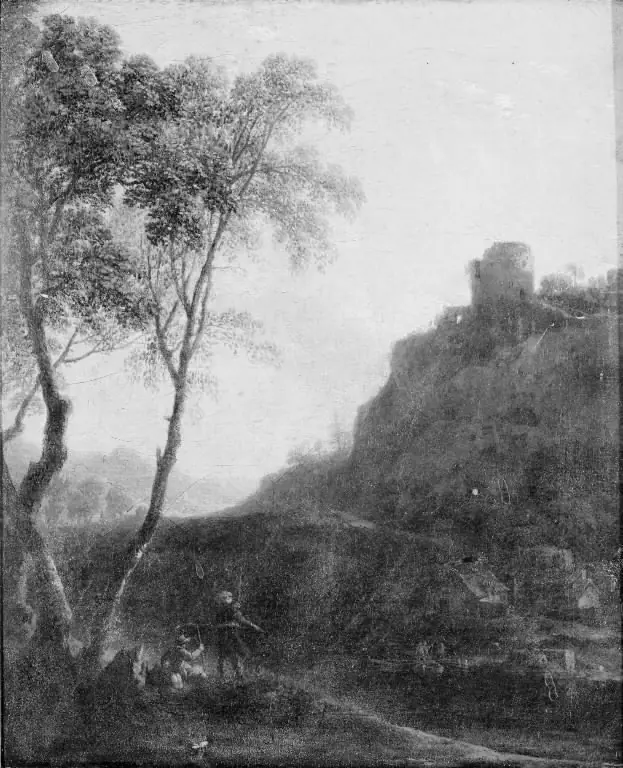
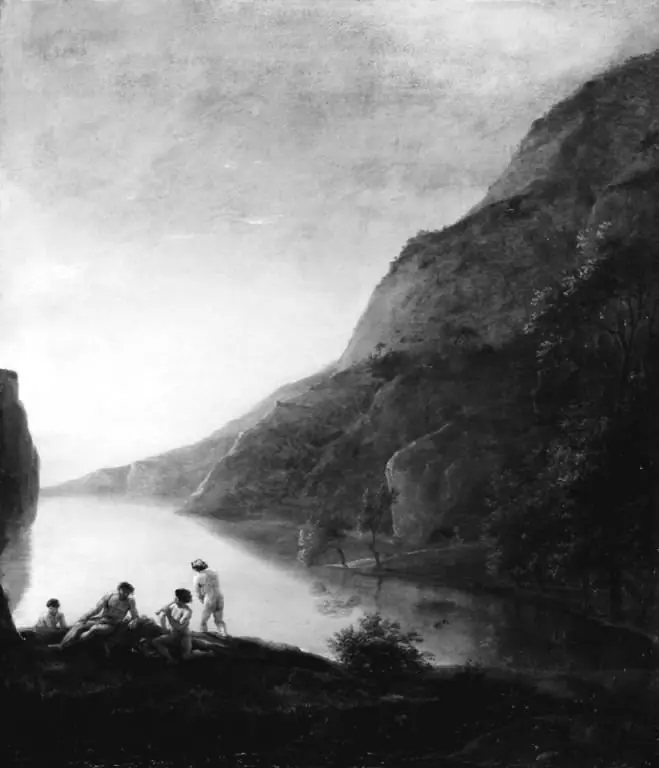
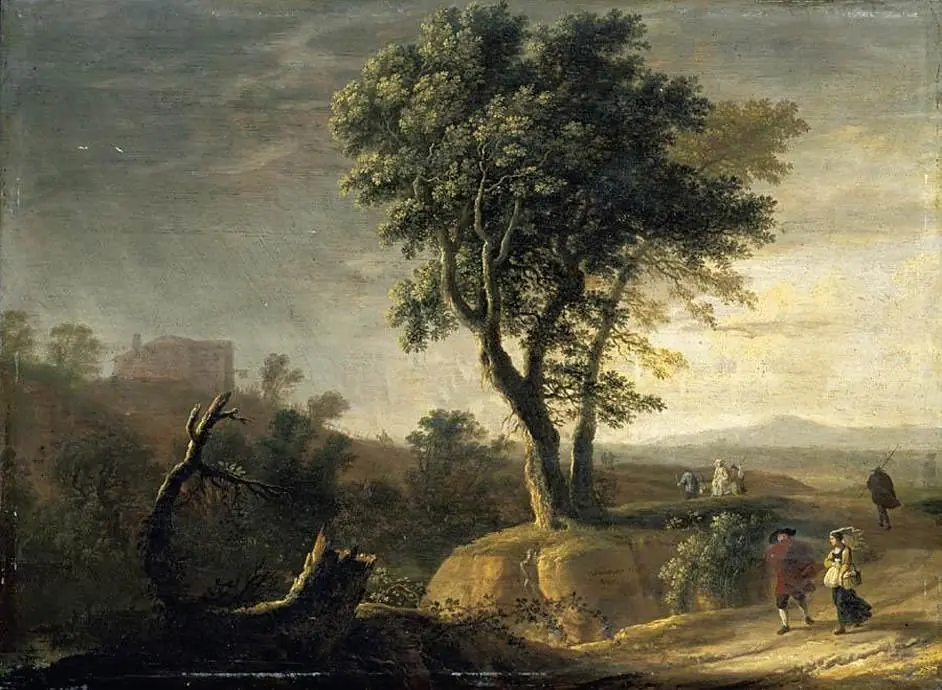
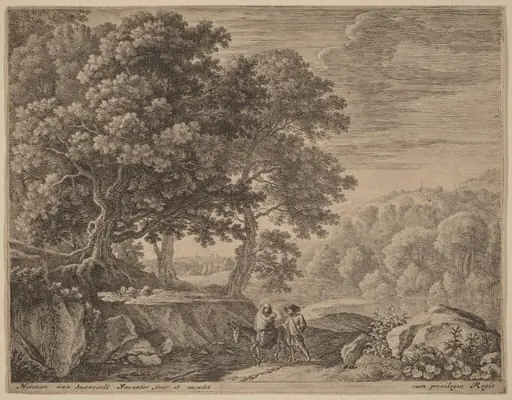
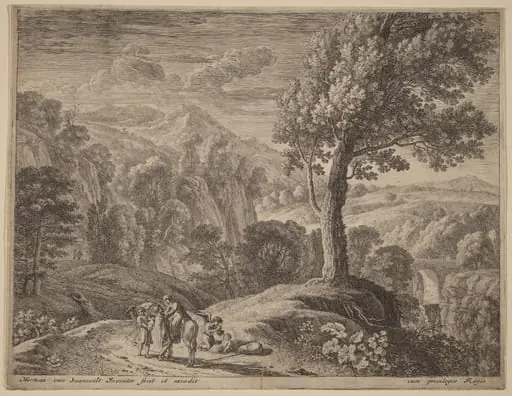
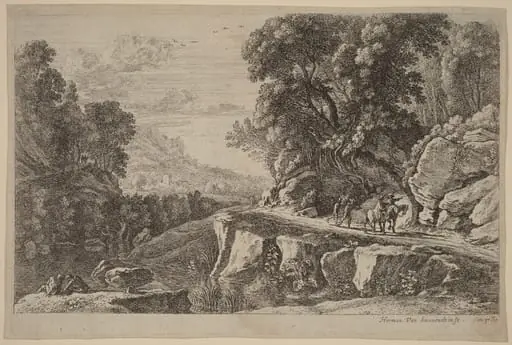
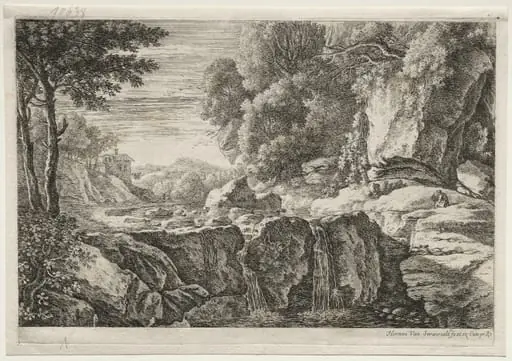
The Large Tree and the Cascade is a print by the Baroque artist Herman van Swanevelt. It dates from 1653 and is held in the collection of the Cleveland Museum of Art.
About this work
Overview
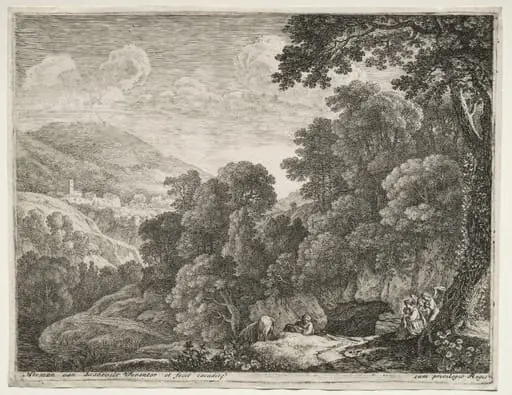
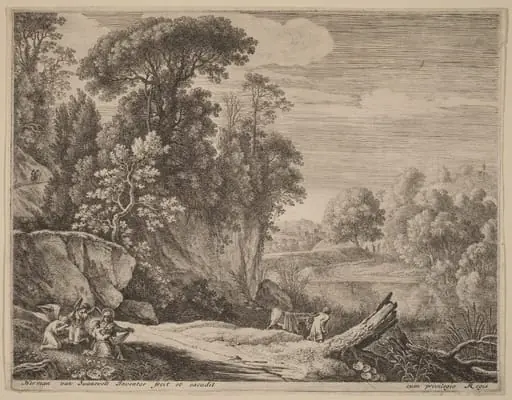
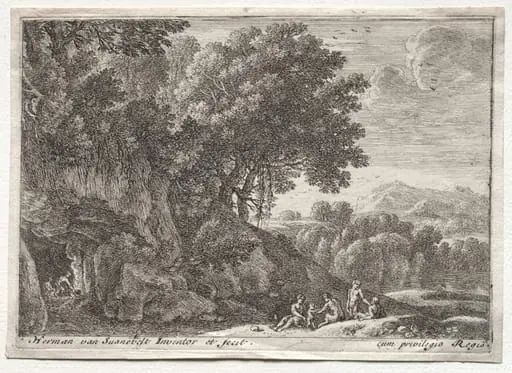
The composition unfolds from departure, to assistance, to watering, and finally to rest, linking narrative progression with a continuous natural setting.
Herman Swannevelt’s print series, titled The Large Tree and the Cascade, presents the biblical Flight into Egypt in four consecutive scenes. Each plate shows the Holy Family—Joseph, Mary, and the infant Jesus—travelling through a broad, sun‑lit landscape, accompanied by angels and a donkey. The composition unfolds from departure, to assistance, to watering, and finally to rest, linking narrative progression with a continuous natural setting.
Subject & Meaning
The work visualises the New Testament episode in which Joseph, Mary, and Jesus escape King Herod’s decree by fleeing to Egypt. Swannevelt expands the traditional single‑image depiction into a sequence, emphasizing the journey’s physical and spiritual dimensions. The recurring presence of angels underscores divine protection, while the tranquil scenery suggests a providential harmony between the sacred travelers and the surrounding world.
Technique & Style
Executed as a series of etchings, the prints display Swannevelt’s characteristic handling of light, rendering a warm, radiant atmosphere across the countryside. The artist’s Dutch origins blend with his Italianate influences, evident in the expansive, gently rolling terrain that resembles the Italian pastoral rather than an Egyptian desert. Fine line work and delicate shading convey the texture of foliage, water, and distant horizons.
History & Provenance
Although born in the Netherlands, Swannevelt spent the majority of his career in Paris and Rome, where he developed his landscape idiom. The four plates were produced in the mid‑17th century and later entered the collection of the Cleveland Museum of Art, where they are displayed together as a cohesive set illustrating his approach to narrative landscape.
Context
During the 1600s, landscape imagery rose to prominence, and Swannevelt’s series exemplifies this trend by placing biblical narrative within an idyllic natural framework. By fragmenting a single story into multiple views, he offered viewers a more immersive experience, influencing subsequent artists who sought to integrate narrative and environment in printmaking.
Artist & collection