Artwork
The Flight into Egypt: The Cave
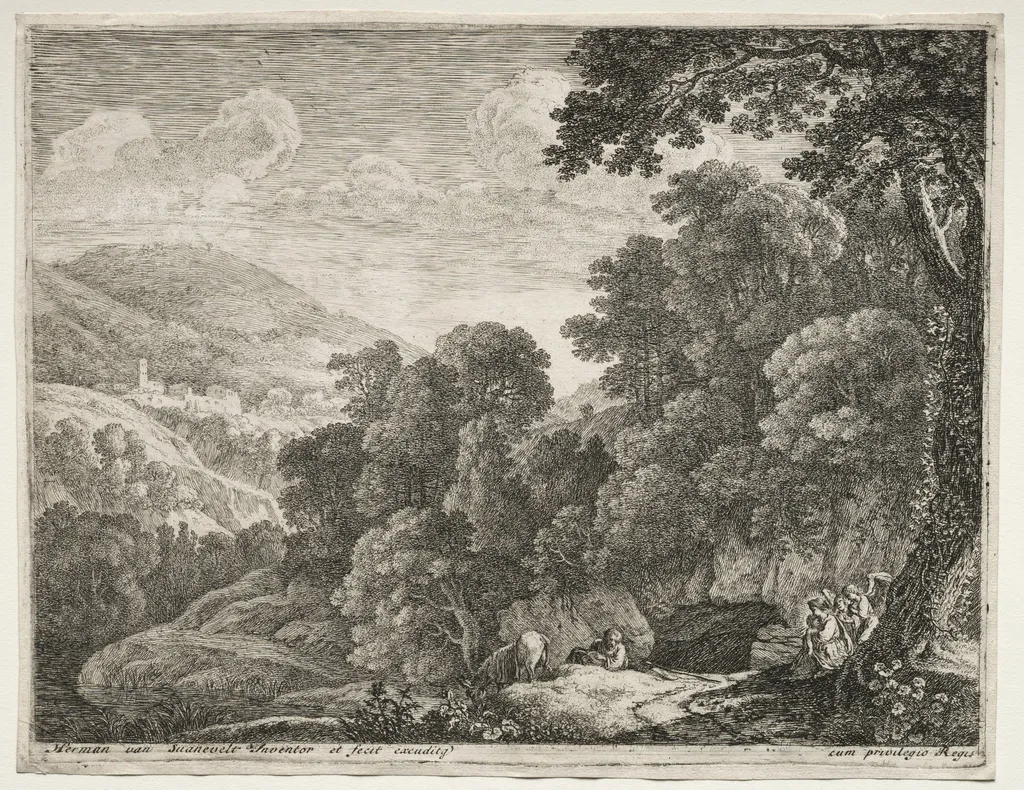
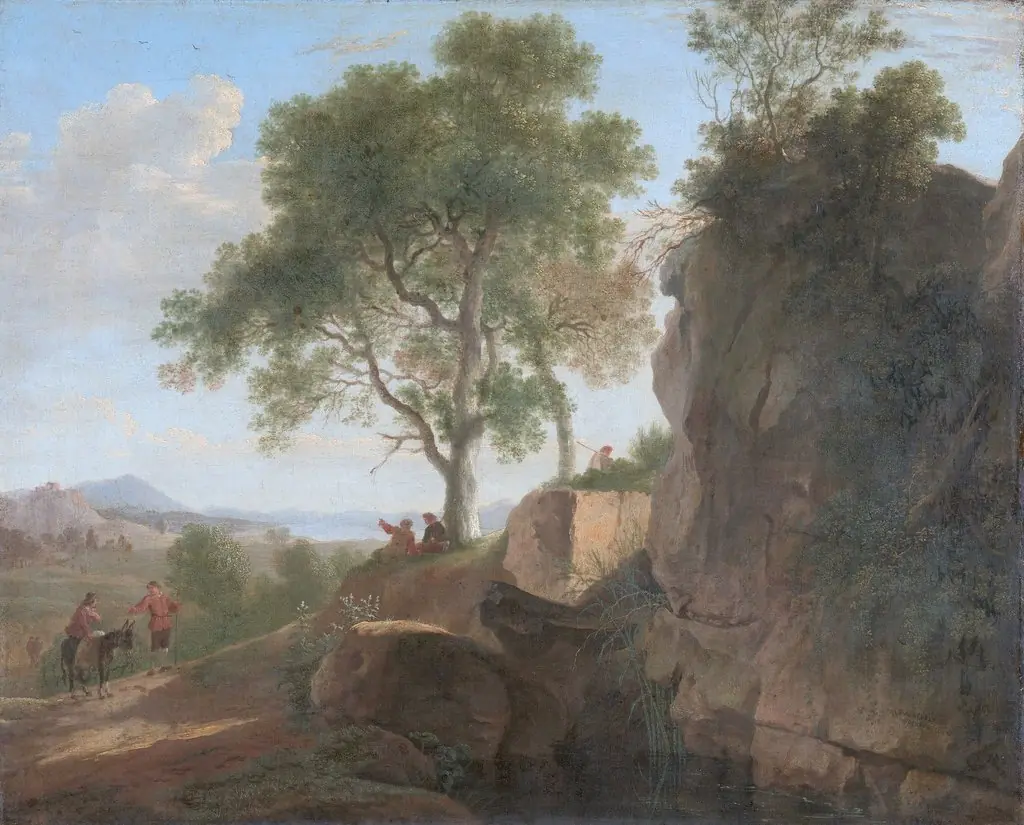
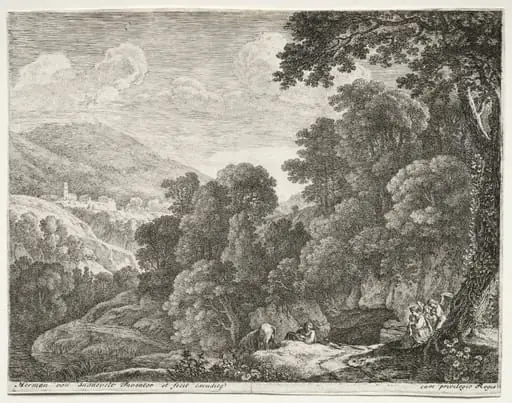
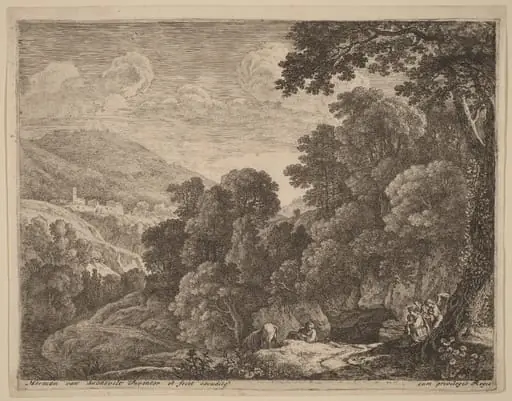
The Flight into Egypt: The Cave is a print by the Baroque artist Herman van Swanevelt. It dates from 1653 and is held in the collection of the Cleveland Museum of Art.
About this work
Overview
The composition emphasizes quiet solitude, with natural elements framing the figures and guiding the viewer’s eye along a faint path into the distance.
Created around 1653 by Herman van Swanevelt, this etching depicts a moment from the biblical Flight into Egypt. Rendered in fine linear detail, the scene unfolds in a secluded woodland setting centered on a modest cave. The composition emphasizes quiet solitude, with natural elements framing the figures and guiding the viewer’s eye along a faint path into the distance. The work is part of the collection at The Cleveland Museum of Art.
Subject & Meaning
The scene illustrates the Holy Family’s journey into Egypt, as recounted in the Gospel of Matthew. The figures within the cave—Mary with the infant Jesus and Joseph—are rendered with subtle dignity, their presence integrated into the landscape rather than dominating it. The isolation of the cave suggests refuge and divine protection, aligning the natural world with spiritual narrative without overt symbolism.
Technique & Style
Van Swanevelt employed etching to achieve delicate tonal gradations, using fine lines and controlled hatching to model form and depth. The interplay of light and shadow, particularly in the tree trunks and rocky outcrops, reflects an awareness of chiaroscuro. The atmospheric sky, partially veiled by clouds, enhances the sense of spatial recession, characteristic of Northern European landscape printmaking of the mid-seventeenth century.
History & Provenance
The print was produced during van Swanevelt’s mature period, following his time in Rome where he absorbed Italian landscape traditions. It entered the Cleveland Museum of Art’s collection in the 20th century, likely through a broader acquisition of Dutch and Flemish prints. Its preservation in good condition reflects careful handling and consistent scholarly interest in his graphic work.
Context
Van Swanevelt’s etchings contributed to a growing interest in biblical landscapes as subjects for private contemplation. In the mid-1600s, such scenes were popular among collectors who valued quiet, reflective imagery over dramatic narratives. His style bridges Dutch realism and Italianate idealism, reflecting the cosmopolitan influences of artists working across Europe during this period.
Legacy
Though less widely known than his contemporaries, van Swanevelt’s prints influenced later landscape etchers through their emphasis on mood and naturalism. This work exemplifies how religious themes were rendered with understated elegance, paving the way for 18th-century topographical and pastoral prints. Its quiet composition continues to be studied for its balance between narrative and environment.
Own this work as a print
Artist & collection

 The Cave
 The Cave
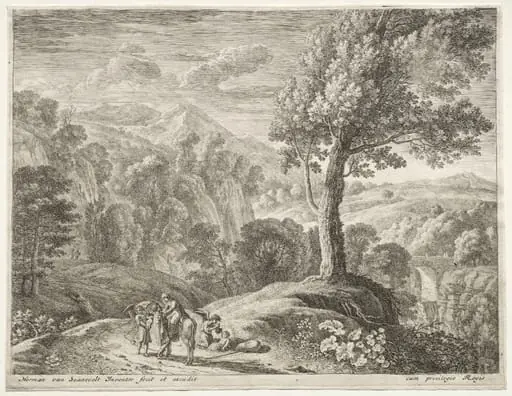 The Flight into Egypt: The Large Tree and the Cascade
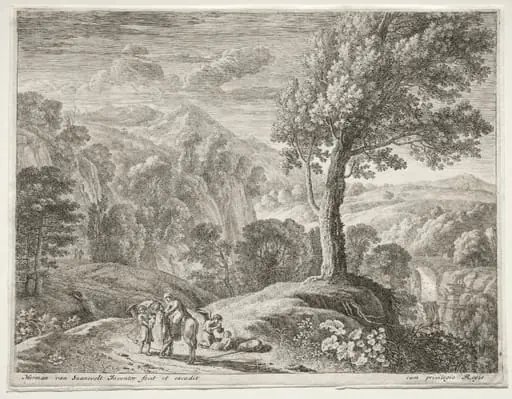 The Large Tree and the Cascade
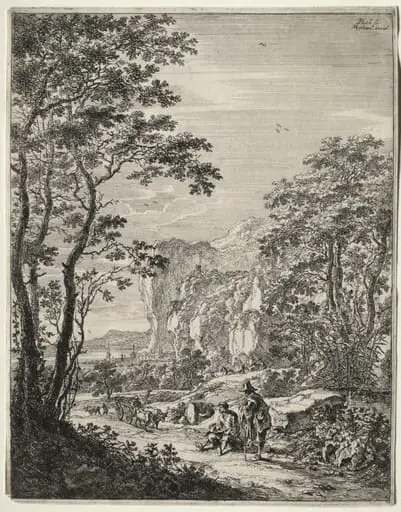 Ox-Cart. View between Ancona and Sinigaglia
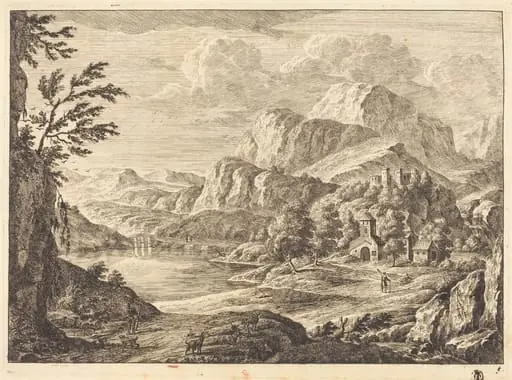 Mountainous Landscape with a Ruined Castle and an Arched Bridge in the Distance
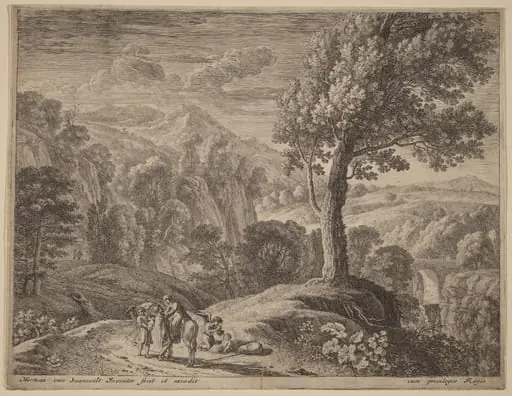 The Large Tree and the Cascade
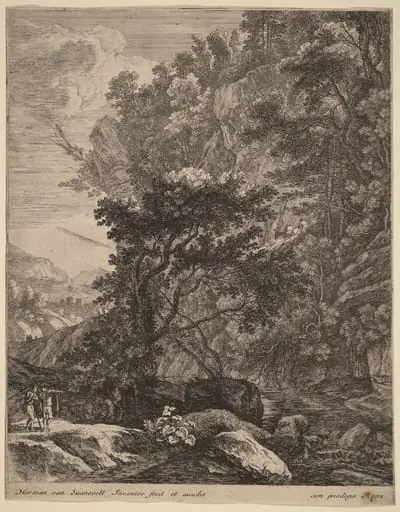 The Mountain
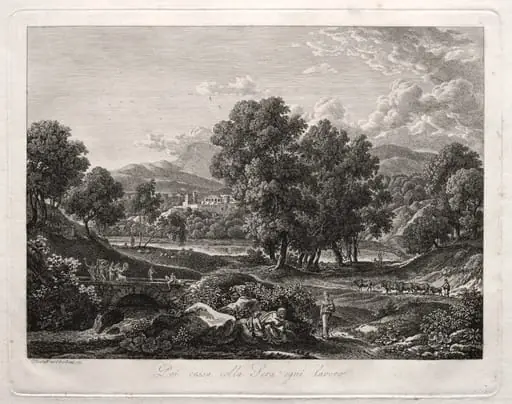 Heroic Landscape: The Shepherd's Dance on the Bridge
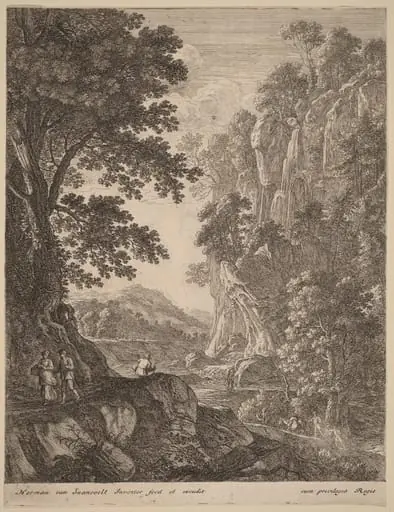 The Large Cascade
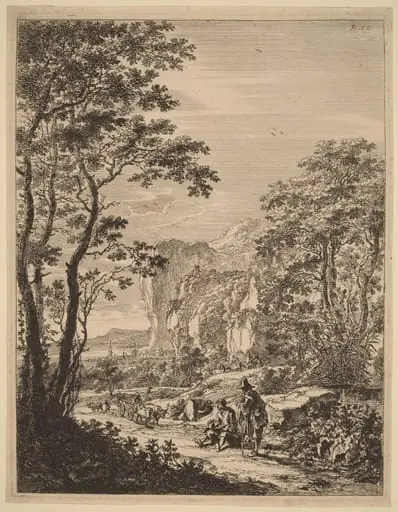 The Ox-Cart: View between Ancona and Sinigaglia
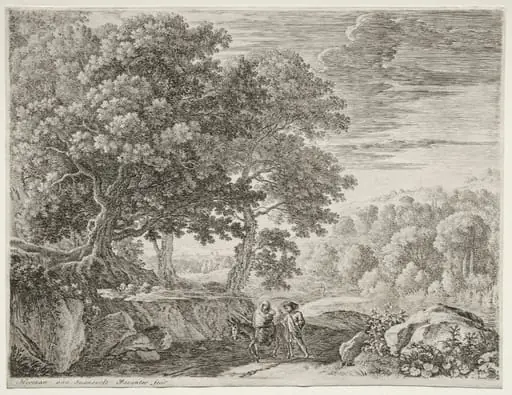 The Flight into Egypt: The Holy Family