Artwork
The Large Tree and the Cascade
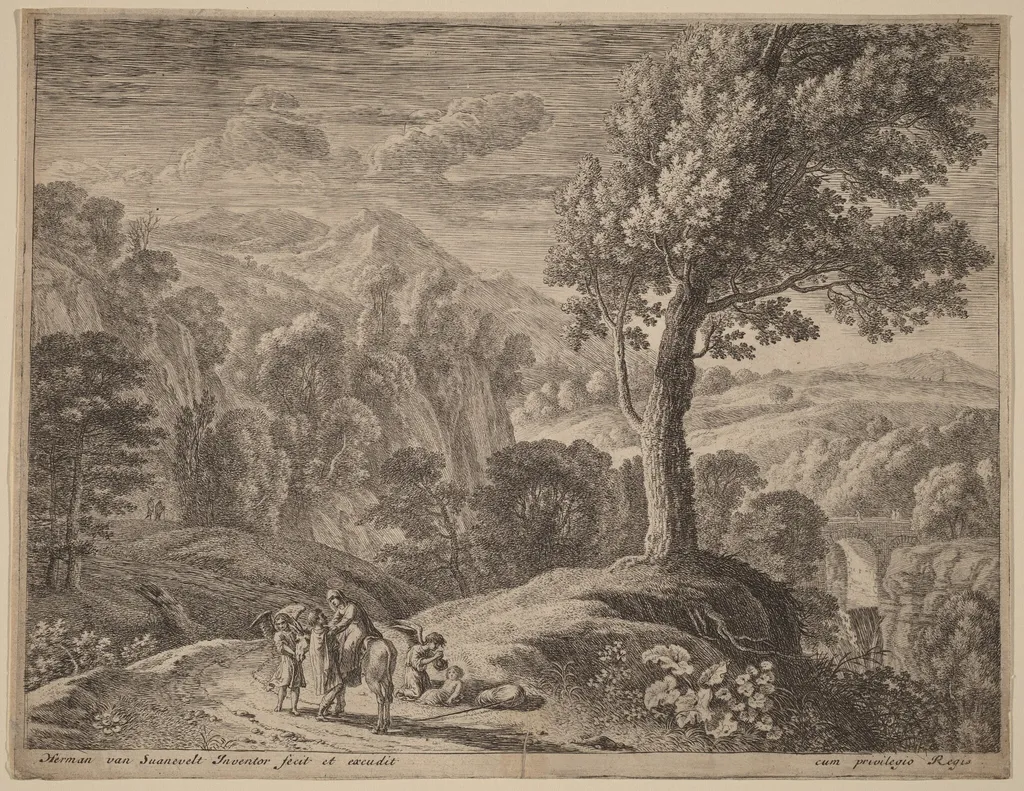
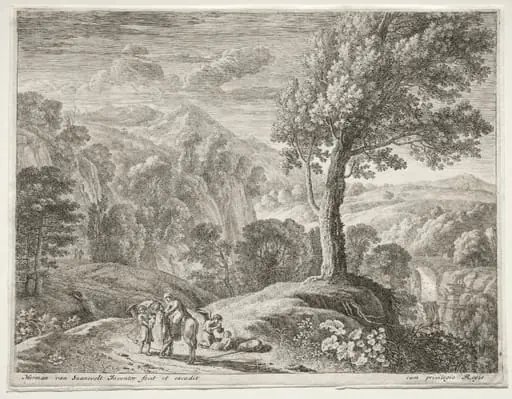
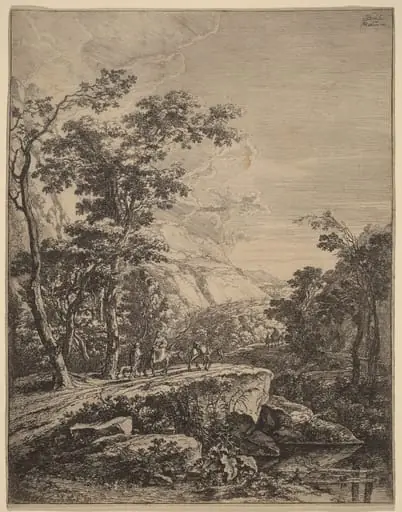
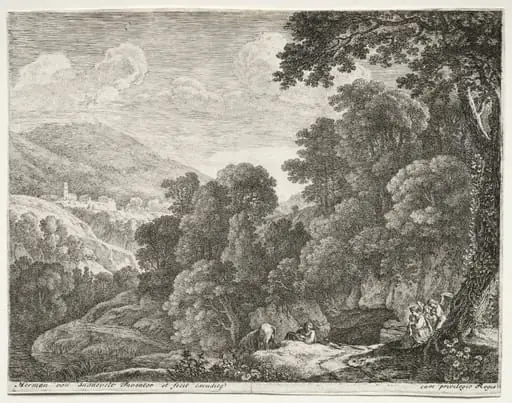
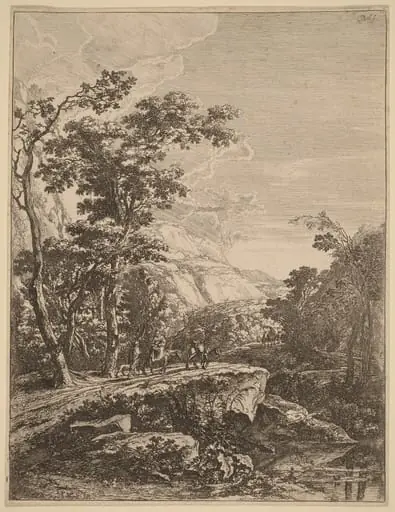
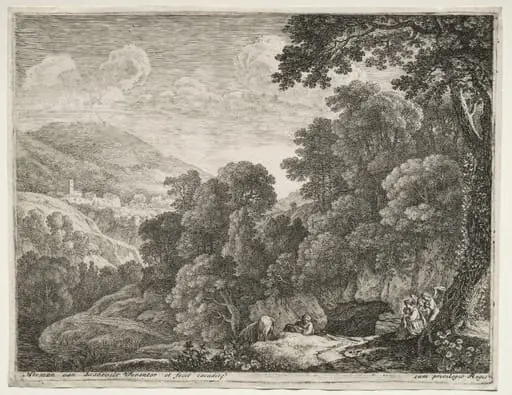
The Large Tree and the Cascade is an ink print by the Baroque artist Herman van Swanevelt. It dates from 1628 and is held in the collection of the National Gallery of Art.
About this work
Overview
Rendered in monochrome, the print captures a moment of stillness amid nature, with human figures and livestock placed subtly in the foreground.
Created in 1628, this etching by Herman van Swanevelt depicts a quiet woodland scene centered on a towering tree and a cascading waterfall. Rendered in monochrome, the print captures a moment of stillness amid nature, with human figures and livestock placed subtly in the foreground. The composition balances natural elements with faint traces of human habitation in the distance, reflecting a pastoral ideal common in 17th-century Northern European landscape prints.
Subject & Meaning
The scene presents a harmonious coexistence between humans, animals, and the natural world. A group of figures, relaxed near a cow, suggests rest or daily rural life, while the waterfall and dense foliage evoke a sense of secluded tranquility. The distant town hints at the proximity of civilization without disrupting the forest’s serenity. The image conveys no overt narrative, instead inviting contemplation of nature’s quiet rhythms.
Technique & Style
Van Swanevelt employed fine, controlled lines typical of etching to render texture in foliage, water, and bark. The waterfall is suggested through delicate, flowing strokes, while the tree’s leaves are built up with dense, cross-hatched marks. The background recedes through lighter, sparser lines, creating depth. The technique emphasizes atmospheric detail over bold contrast, aligning with the refined aesthetic of Dutch and Flemish printmakers of the period.
History & Provenance
The print dates from the early phase of van Swanevelt’s career, shortly after his move to Rome, where he absorbed Italian landscape traditions. Though produced in Italy, the work retains Northern European sensibilities in its subject matter. No documented early ownership records survive, but similar etchings by the artist circulated among collectors in the Low Countries and France during the 17th century.
Context
In the 1620s, etching emerged as a favored medium for landscape studies among Northern artists, particularly those influenced by Italian scenery. Van Swanevelt was part of a group of Dutch and Flemish painters who worked in Rome, translating local topography into intimate, detailed prints. This work reflects a broader trend of artists blending observed nature with idealized composition, bridging Northern realism and Italianate grandeur.
Legacy
Though less widely known than his contemporaries, van Swanevelt’s etchings contributed to the development of the landscape print as an independent genre. His delicate handling of natural elements influenced later printmakers interested in atmospheric depth and quiet rural scenes. This work remains a modest but representative example of early Baroque printmaking’s capacity to capture nature’s subtleties.
Own this work as a print
Artist & collection