Artwork
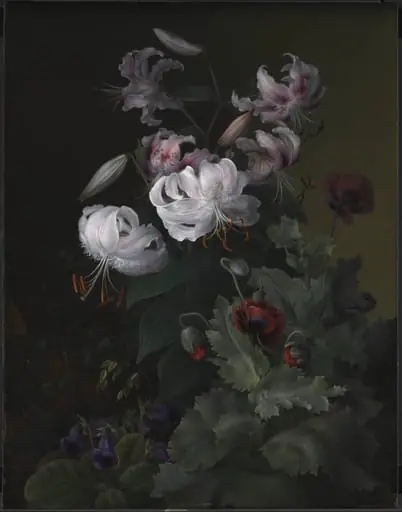
Blomstrende planter
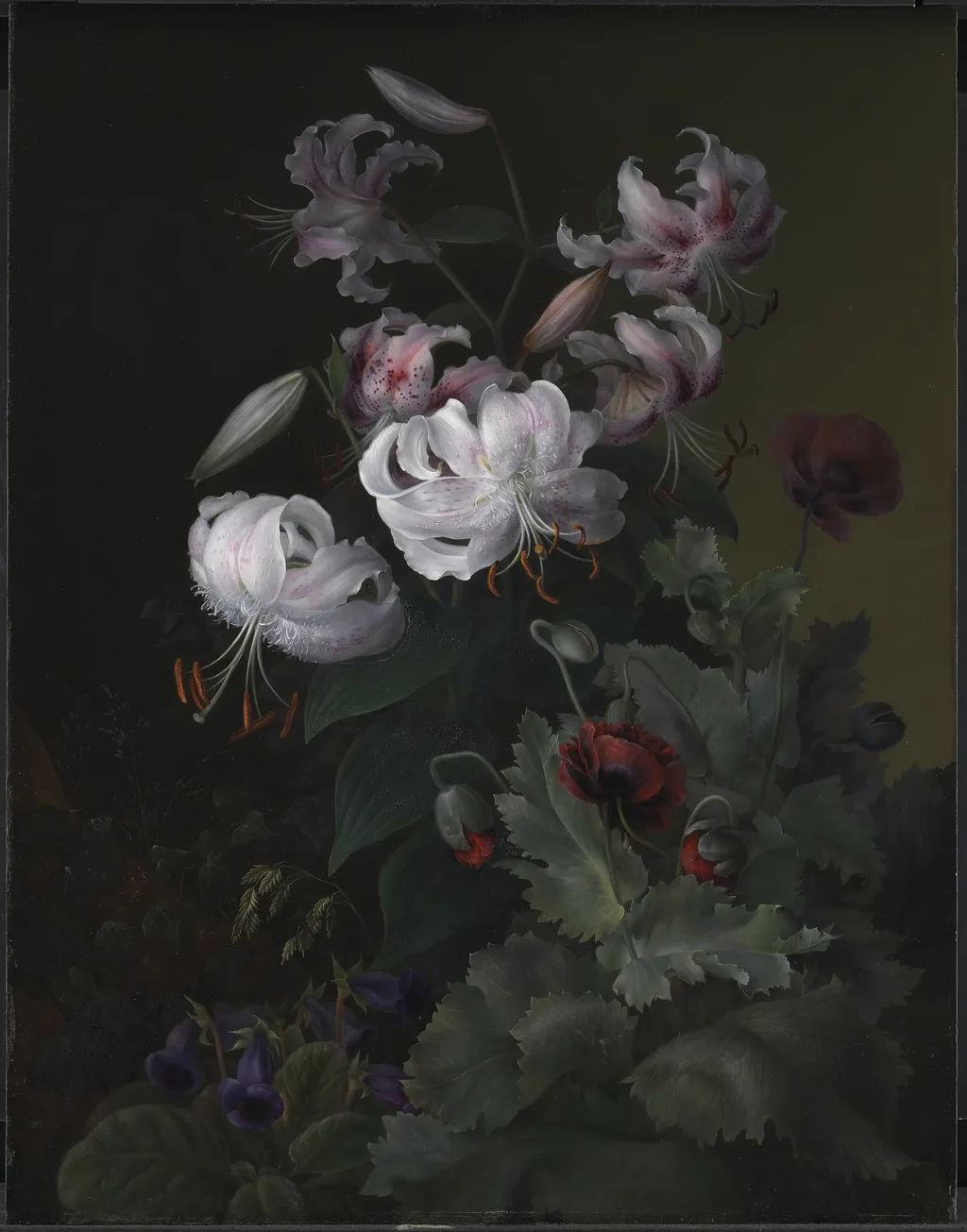
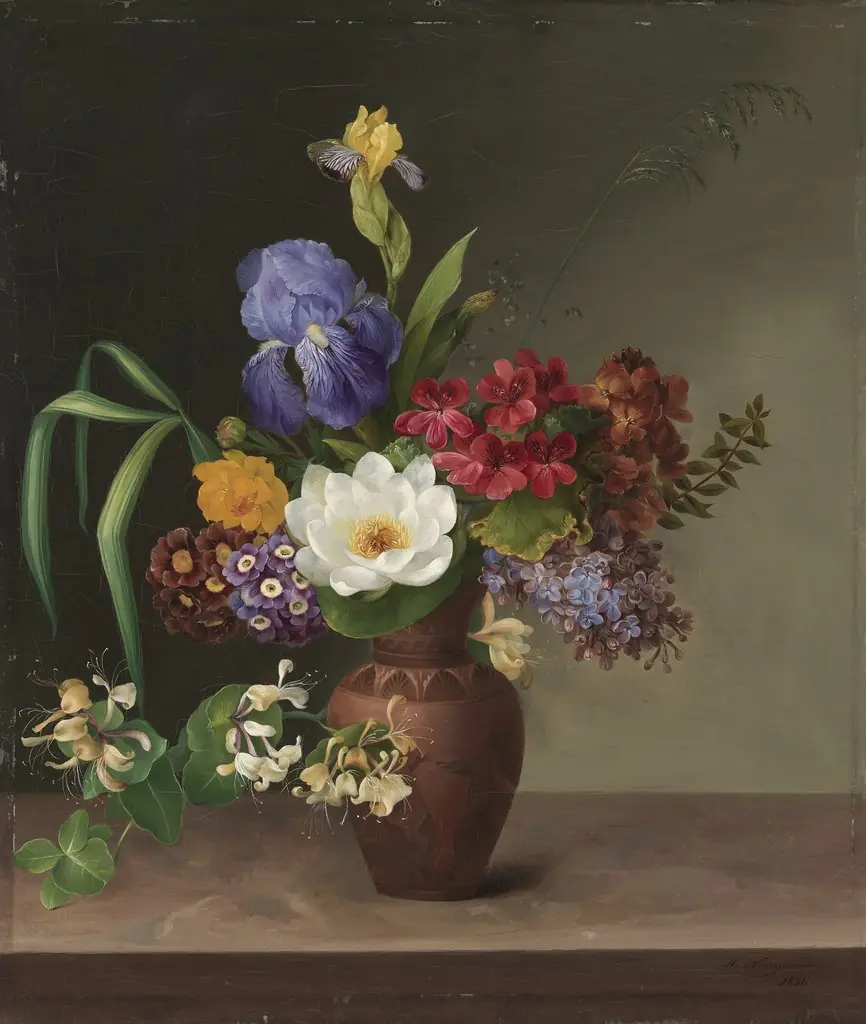
Blomstrende planter is an oil painting by Hermania Neergaard. It dates from 1845 and is held in the collection of the Statens Museum for Kunst.
About this work
The painting is called Blomstrende planter.
It was made with oil paint in 1845.
You can find it at the Statens Museum for Kunst, which might have more information about the artist and the painting's history, like how Hermania Neergaard worked with flowers as a subject.
Check out the technique of glazing to learn more about how oil paint can be used.
Overview
The work is part of the permanent collection at Statens Museum for Kunst, reflecting its recognition within Denmark’s artistic heritage.
Hermania Neergaard’s 1845 oil painting *Blomstrende planter* presents a carefully composed arrangement of blooming plants, executed in the Danish still-life tradition. Neergaard, active in mid-19th century Copenhagen, focused on botanical subjects and regularly exhibited at Charlottenborg. The work is part of the permanent collection at Statens Museum for Kunst, reflecting its recognition within Denmark’s artistic heritage.
Subject & Meaning
The painting features a selection of cultivated flowers and foliage arranged in a simple vessel, emphasizing natural form over symbolic narrative. Unlike allegorical floral works of earlier periods, Neergaard’s approach favors quiet observation, capturing the transient vitality of plants without overt metaphor. The composition invites contemplation of botanical detail rather than narrative interpretation.
Technique & Style
Neergaard employed oil paint with a restrained palette and layered glazing to achieve subtle tonal transitions and luminous petal surfaces. Brushwork is precise yet unobtrusive, allowing the textures of leaves and blossoms to emerge through thin, translucent layers. The lighting is even and diffused, minimizing shadows to enhance clarity and botanical accuracy.
History & Provenance
Created in 1845, the painting was likely exhibited at Charlottenborg, where Neergaard’s floral works attracted institutional attention. Records indicate that members of the Danish royal family acquired several of her paintings, suggesting her reputation among elite patrons. The work entered the collection of Statens Museum for Kunst at an early date, preserving its place in Denmark’s national art history.
Context
Neergaard worked during a period when botanical illustration and domestic still-life painting gained popularity among Danish women artists. Her training under Frederik Christian Camradt provided technical grounding, while the cultural emphasis on nature and domesticity shaped her subject matter. Unlike male contemporaries who pursued grand historical themes, Neergaard’s focus on flowers aligned with accepted artistic roles for women at the time.
Legacy
Though not widely known outside Denmark, Neergaard’s consistent output and institutional recognition helped establish floral painting as a legitimate genre within Danish art. Her works, including *Blomstrende planter*, remain examples of 19th-century Nordic still-life practice, valued for their technical discipline and quiet aesthetic rather than dramatic innovation.
Artist & collection
Artist
Hermania Sigvardine Neergaard (1799–1875) was a Danish flower and still-life painter. A student of Frederik Christian Camradt (1762–1844), she exhibited her paintings in Charlottenborg where several were bought by the royal family.

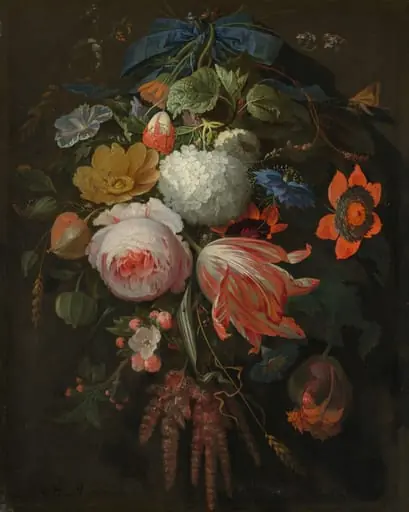 A Hanging Bouquet of Flowers
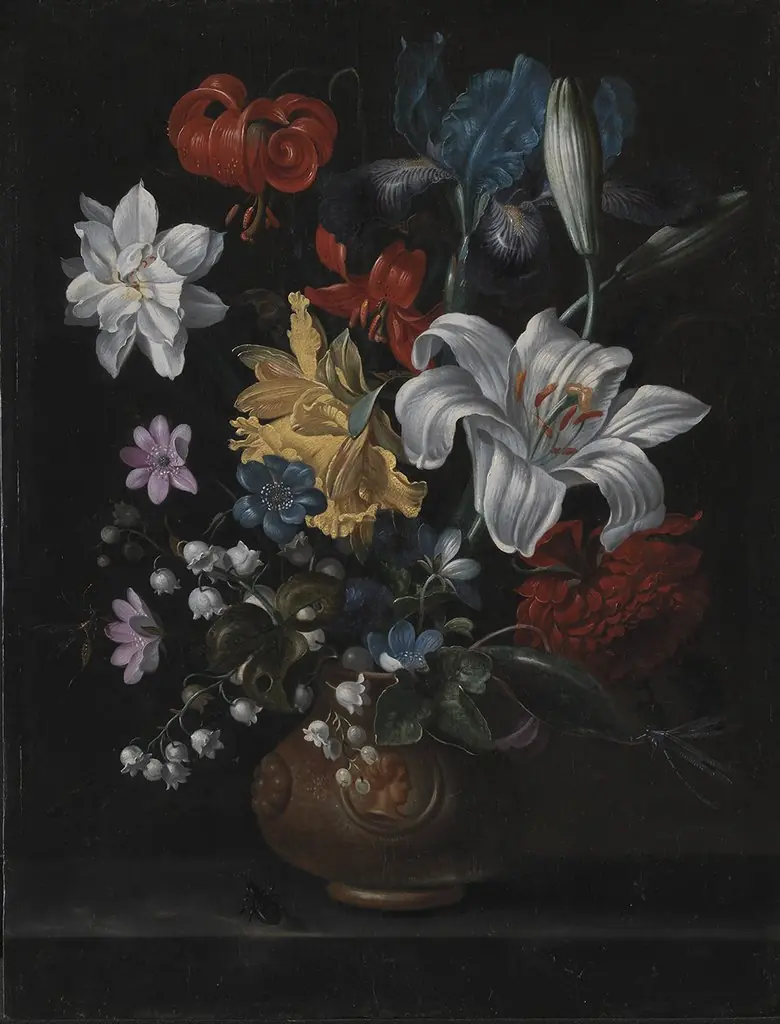 En stentøjskrukke med blomster
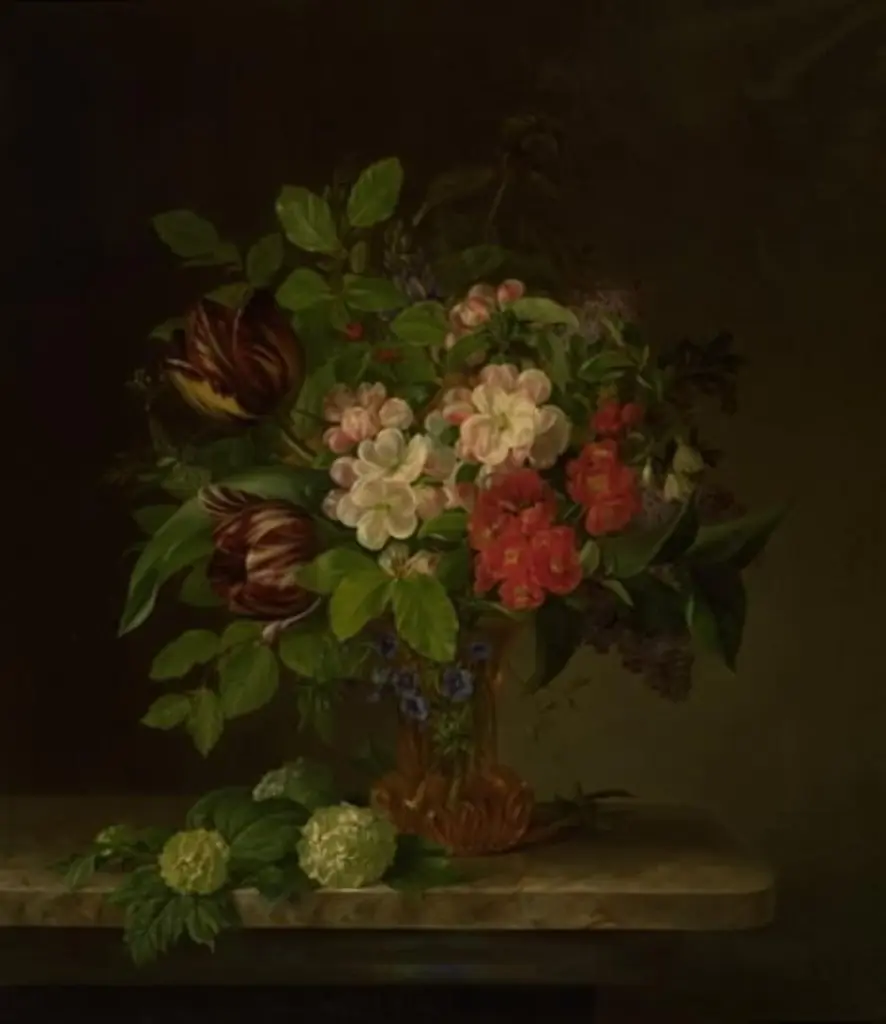 Et glas med forårsblomster
 Et glas med forårsblomster
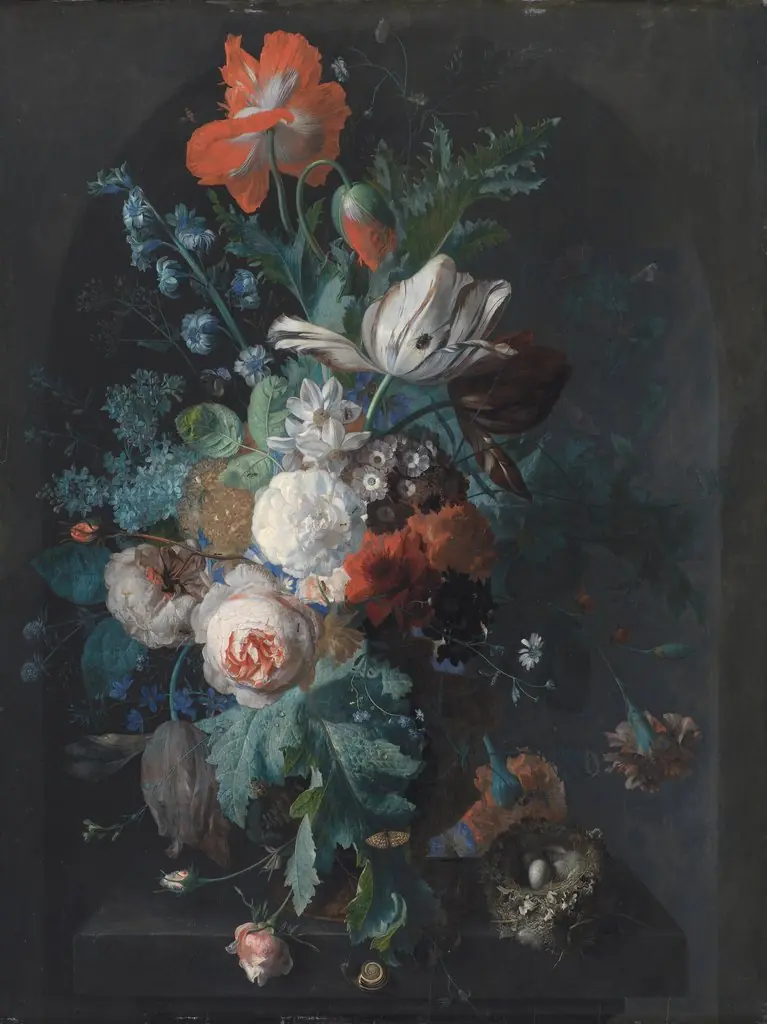 A Vase with Flowers
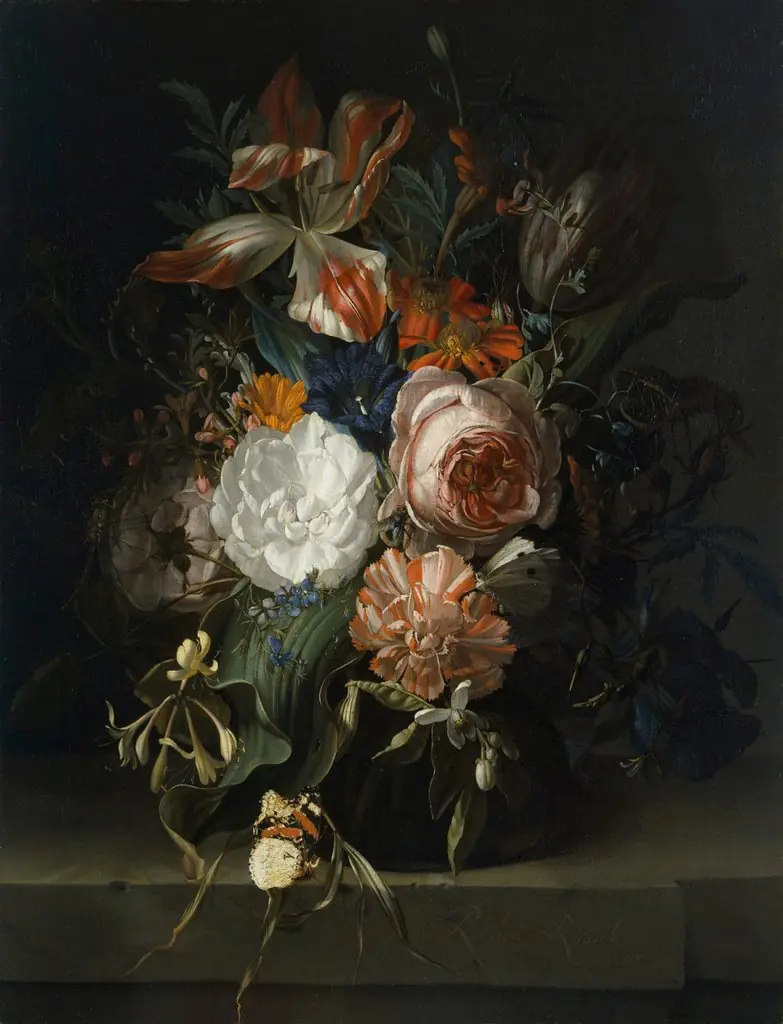 Flowers in a glass vase on a marble ledge, 1691
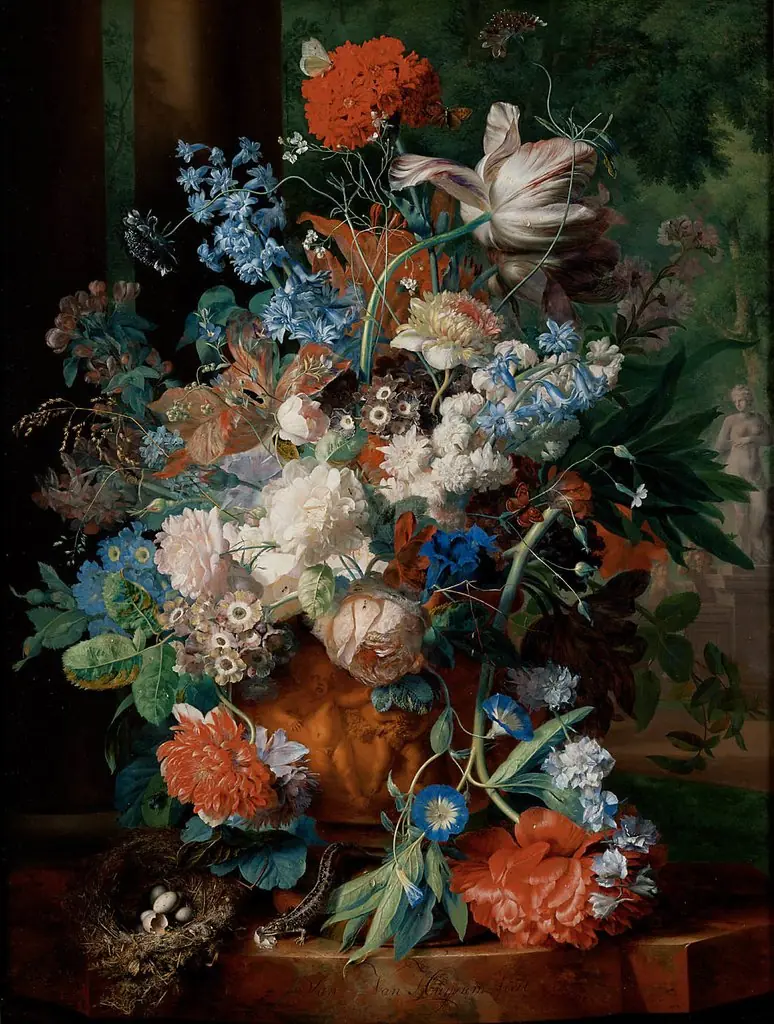 Flower still life in a terracotta vase, for two columns and a park landscape with a statue of Venus
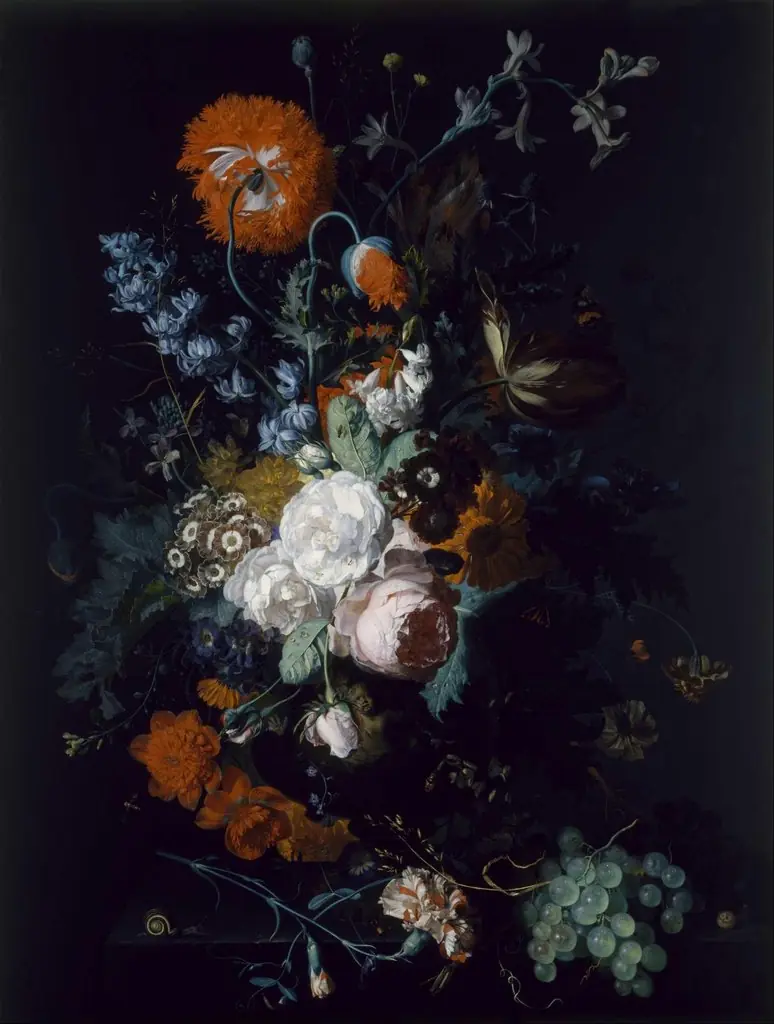 Still Life of Flowers and Fruit
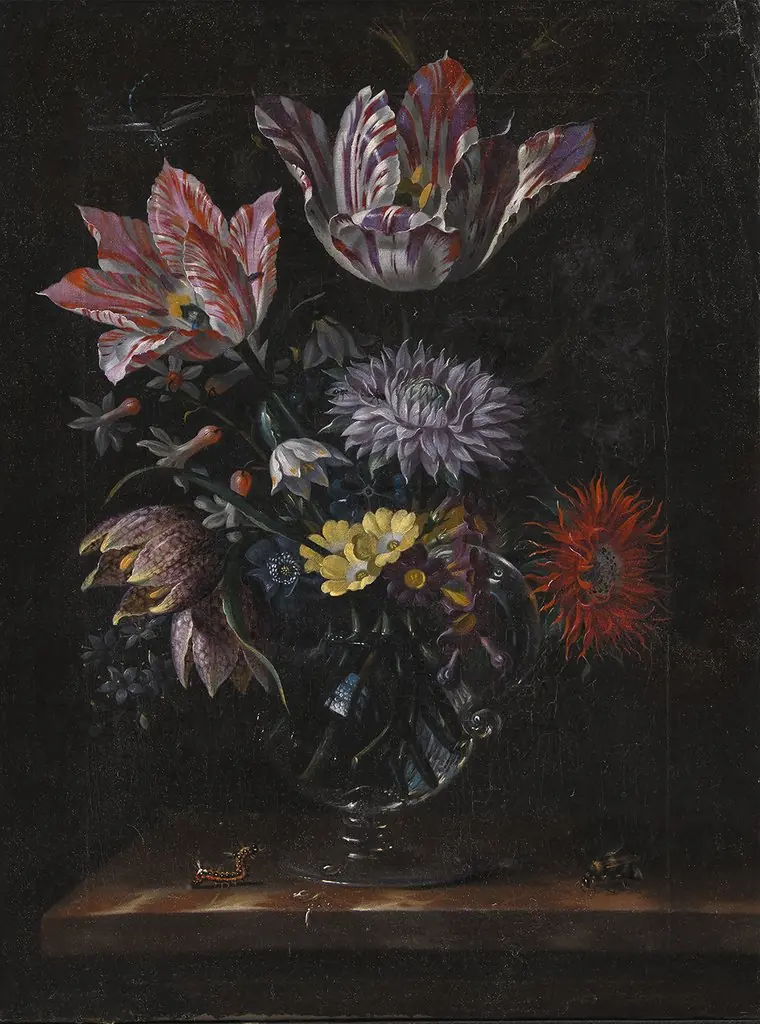 A Glass Vase with Flowers
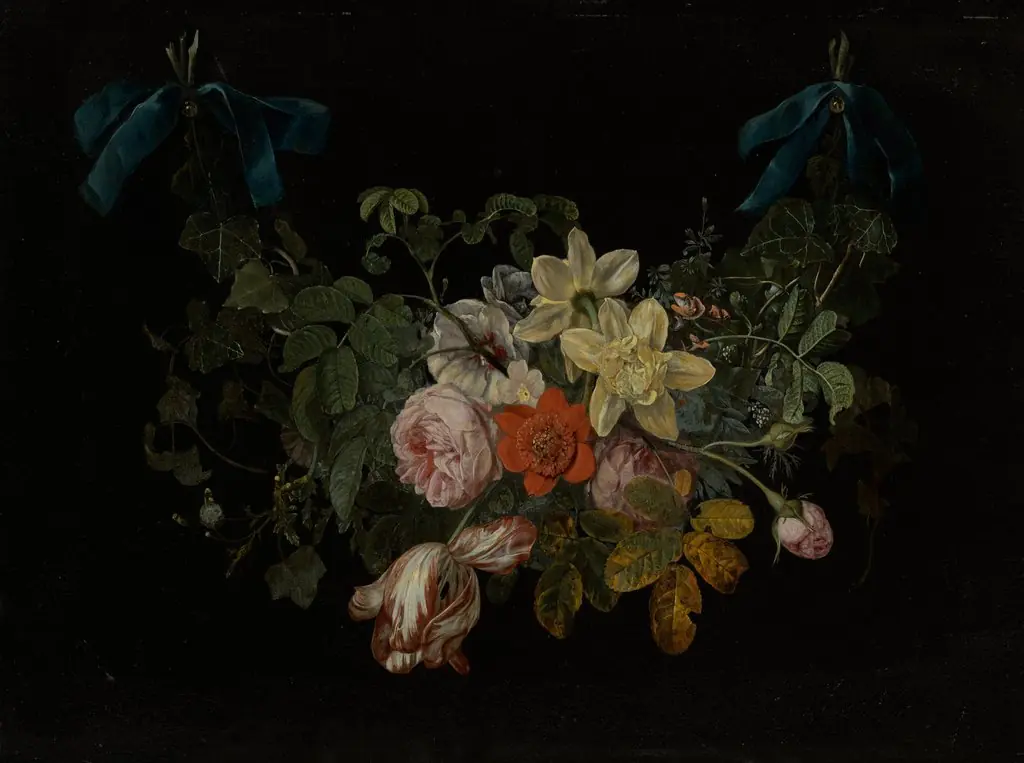 Blumengewinde an blauen Schleifen
 Flowers in a Vase
 Blomstrende planter