Artwork
Girl Seated with Mandolin
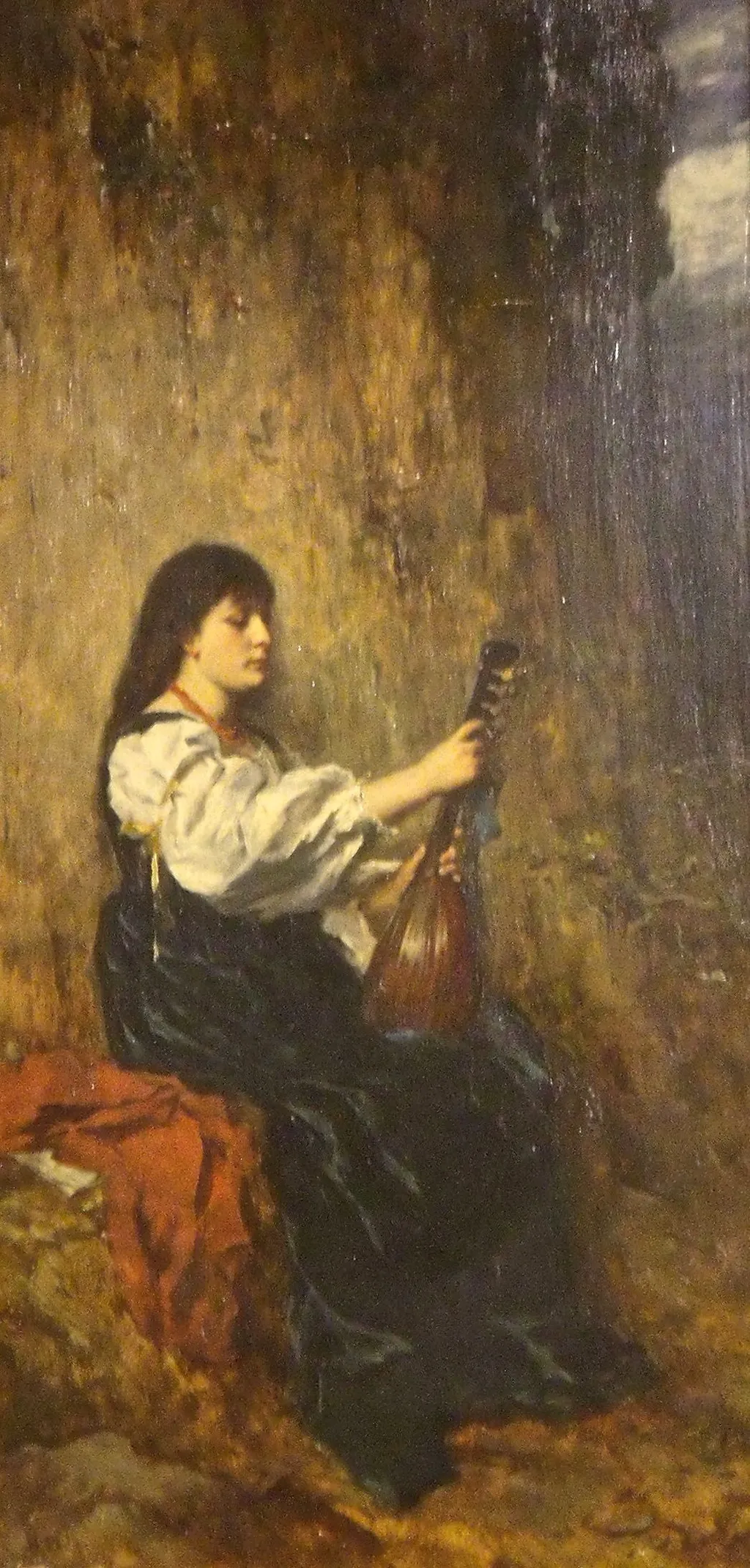
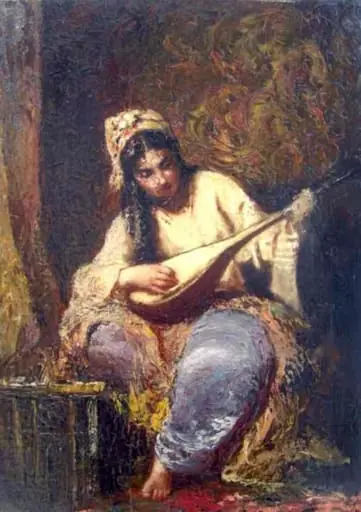
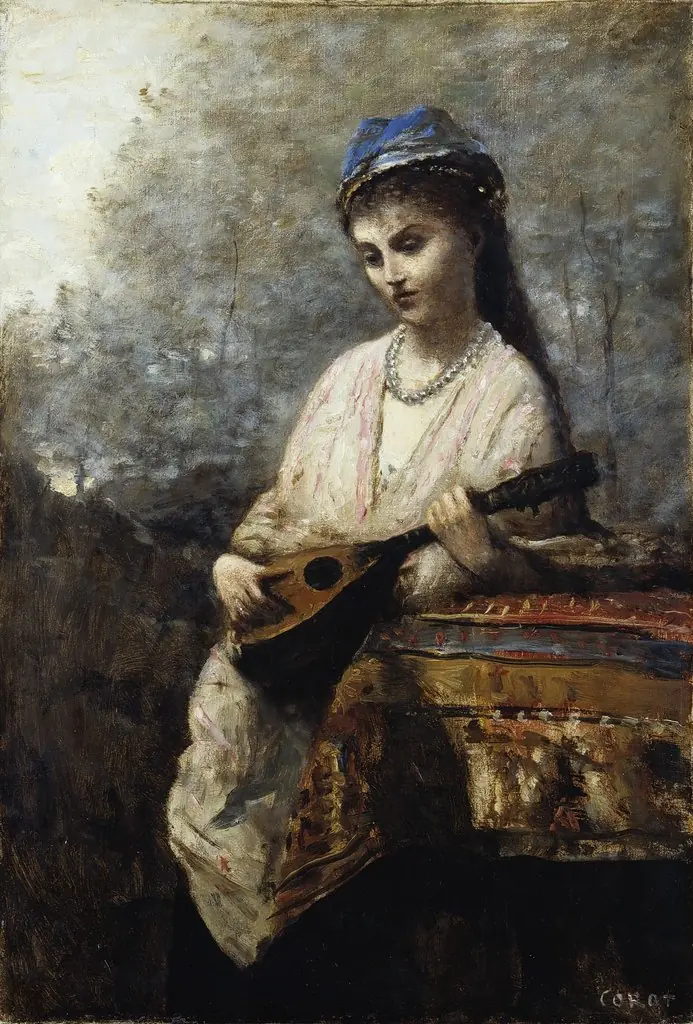
Girl Seated with Mandolin is an oil painting by the Realist artist Hermann August Philips. It dates from 1850 and is held in the collection of the Montreal Museum of Fine Arts.
About this work
Overview
Painted around 1850 by Hermann August Philips, this oil portrait captures a young woman in a moment of stillness. The work is part of the Montreal Museum of Fine Arts collection and exemplifies mid-19th-century genre painting, focusing on intimate, everyday presence rather than grand narrative. The subject’s quiet demeanor and simple attire suggest a domestic, unidealized setting.
Subject & Meaning
The red necklace and textured fabrics hint at personal identity, but no symbolic or narrative context is overtly provided, leaving interpretation open.
The woman, seated with a mandolin, appears absorbed in quiet reflection rather than performance. Her hands rest gently on the instrument, suggesting a pause between playing and listening. The absence of theatricality or ornamentation shifts focus to her inner state. The red necklace and textured fabrics hint at personal identity, but no symbolic or narrative context is overtly provided, leaving interpretation open.
Technique & Style
Philips employs soft, blended brushwork to render fabric and skin, with subtle glazing to achieve depth in the dark blue skirt and warm background. The red cloth beneath her adds a muted contrast, while the visible brushstrokes in the background suggest an emphasis on atmosphere over precision. Light falls evenly, avoiding dramatic shadows, reinforcing the painting’s calm, introspective mood.
History & Provenance
The painting entered the Montreal Museum of Fine Arts’ collection in the 20th century, though its earlier ownership remains undocumented. Its creation date is estimated based on stylistic parallels with Philips’ other works from the 1840s–1850s. No records of exhibition or critical reception from the artist’s lifetime have been preserved, suggesting it was likely a private commission or personal study.
Context
In mid-19th-century Europe, intimate portraits of women engaged in music were common, often reflecting ideals of domestic femininity and cultivated leisure. Philips, working in Germany, aligned with this trend, though his approach avoids sentimentality. The mandolin, associated with informal music-making, situates the subject within a middle-class domestic sphere rather than the concert hall.
Legacy
Though not widely exhibited or studied, the painting contributes to understanding lesser-known German genre painters of the period. Its restrained composition and focus on quietude distinguish it from more theatrical contemporaries. It remains a quiet example of how ordinary moments were rendered with sensitivity in 19th-century portraiture, preserving a sense of private life beyond public display.
Artist & collection