Artwork
Țiganca (copie dupa Vostagh)
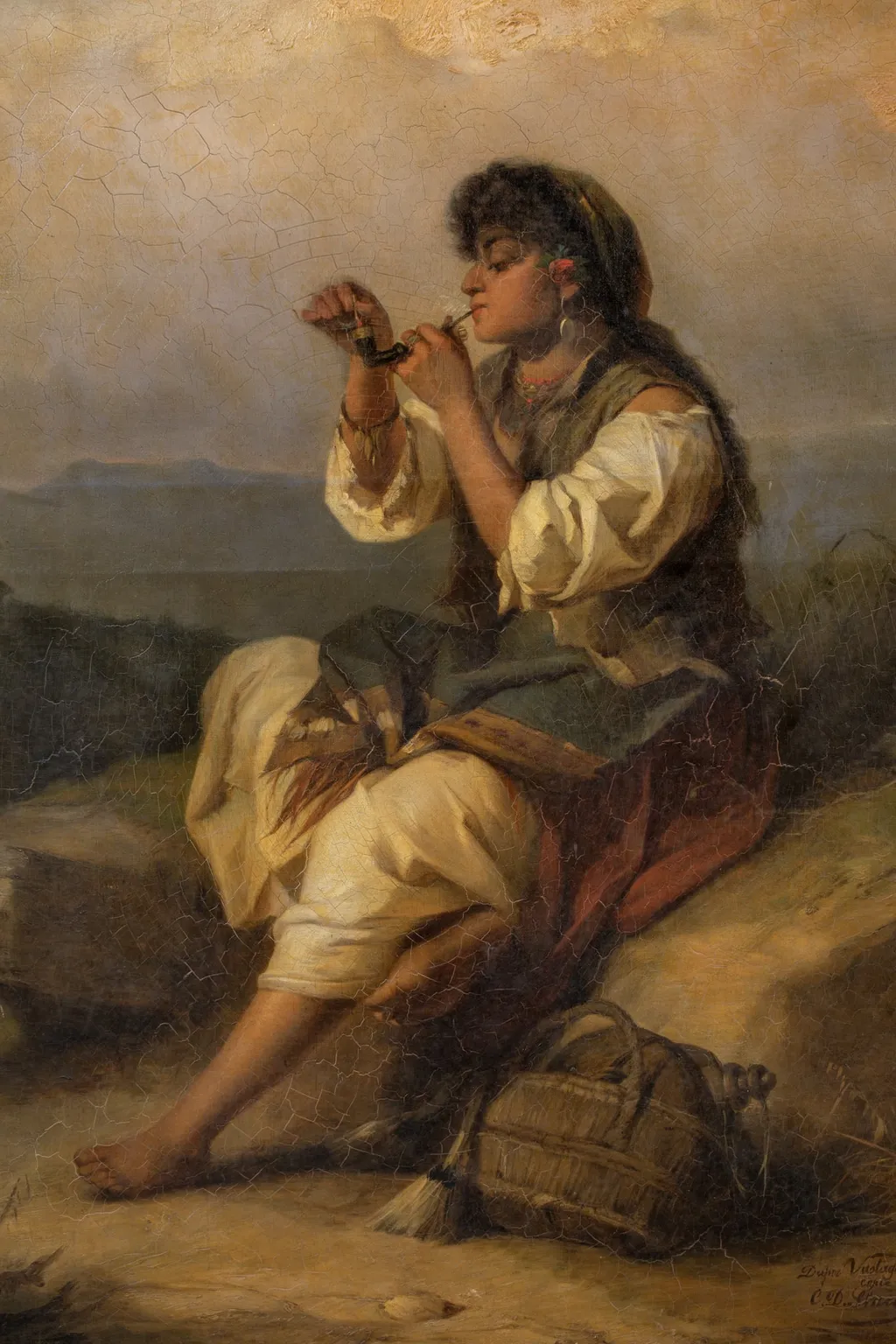
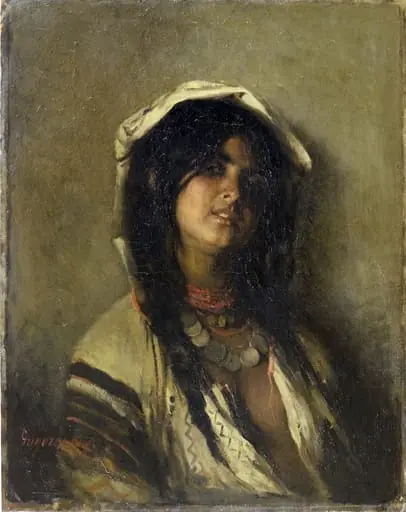
Țiganca (copie dupa Vostagh) is a print by Stahi D. Constantin. It dates from 1850 and is held in the collection of the Moldova National Museum Complex. Created around 1850 by Stahi D.
About this work
Overview
The absence of theatricality or narrative flourish underscores its focus on everyday presence.
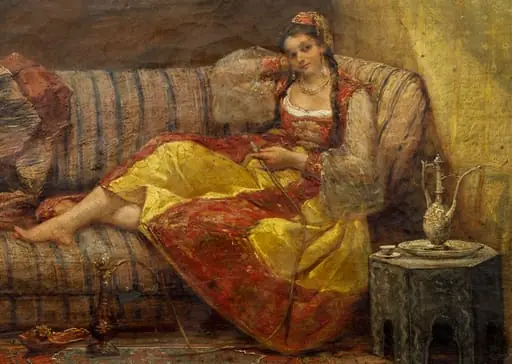
Created around 1850 by Stahi D. Constantin, this image is a copy after a work by Vostagh. It depicts a Romani woman seated outdoors in a moment of quiet repose. The composition emphasizes naturalism over idealization, capturing a figure engaged in an ordinary act—smoking a small pipe—amid a softly rendered rural backdrop. The absence of theatricality or narrative flourish underscores its focus on everyday presence.
Subject & Meaning
The subject is a Romani woman, portrayed without ornamentation or symbolic embellishment. Her bare feet, simple clothing, and solitary posture suggest a life grounded in routine and environment. The act of smoking, rendered without judgment, invites no moral or exoticizing interpretation. The image conveys dignity through stillness, presenting her as a figure of quiet autonomy within her surroundings.
Technique & Style
Light and shadow are carefully modulated to model the figure’s form, with soft transitions between illuminated skin and shaded areas beneath the arms and along the torso. The background is rendered in hazy, diluted strokes, receding into ambiguity. The brushwork is restrained, avoiding sharp definition, which enhances the sense of intimacy and temporal pause. This approach aligns with emerging 19th-century tendencies toward observational realism.
History & Provenance
The work is a copy made by Constantin after a composition by Vostagh, reflecting a common practice among artists of the period who studied and reinterpreted existing images. Its origin lies in the cultural milieu of Romanian artistic circles in the mid-19th century, where figural studies of rural and marginalized subjects gained attention. No documented ownership history exists prior to its inclusion in institutional collections.
Context
In mid-1800s Romania, depictions of Romani people were often steeped in stereotype or romanticized ethnography. This image diverges by avoiding overt exoticism, instead focusing on a single, unadorned moment. Its quiet realism aligns with broader European shifts toward secular, everyday subjects, even as it remains distinct in its regional specificity and lack of overt political or social commentary.
Legacy
Though not widely exhibited or reproduced, the work contributes to a lesser-known strand of Romanian visual culture that prioritized observational accuracy over narrative or moralizing intent. It stands as a quiet counterpoint to more stylized portrayals of Romani life, offering a reference point for later artists interested in unembellished human presence in natural settings.
Artist & collection
Artist
Stahi D. Constantin printed quiet portraits and gentle scenes in 19th-century Romanian ink and paint. Look for his family studies like Preotul Dimitrie Stahi (Tatăl artistului) and tender figures such as June (șovăind)…