Artwork
The Lute Player
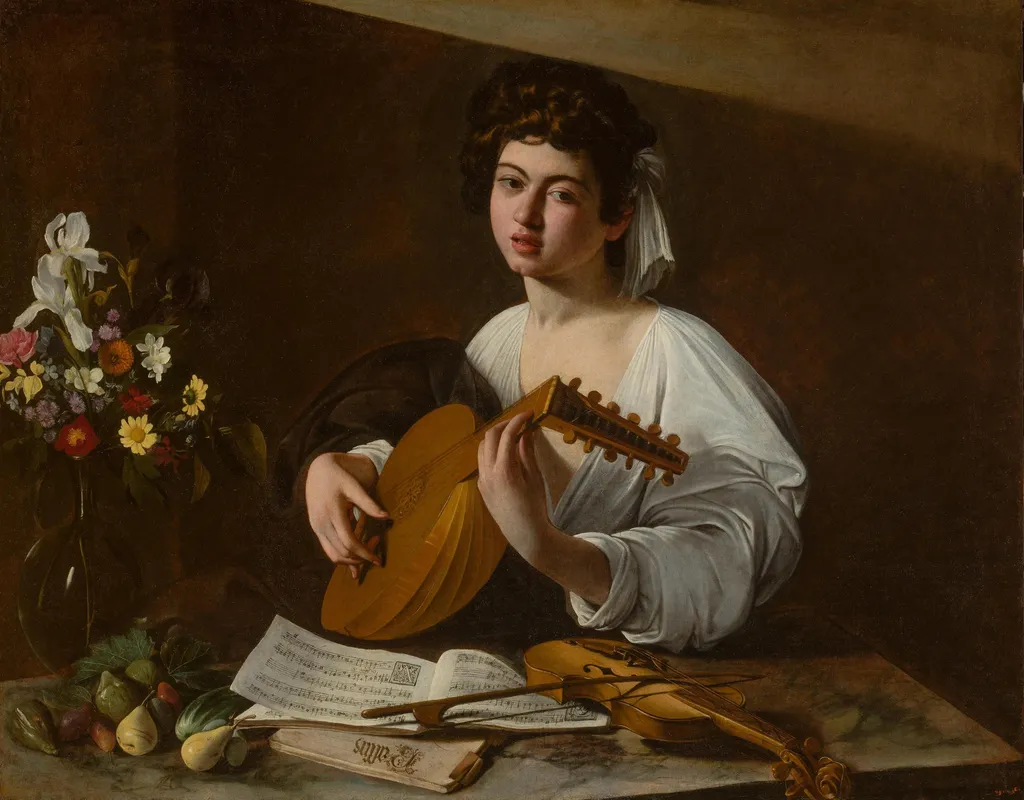
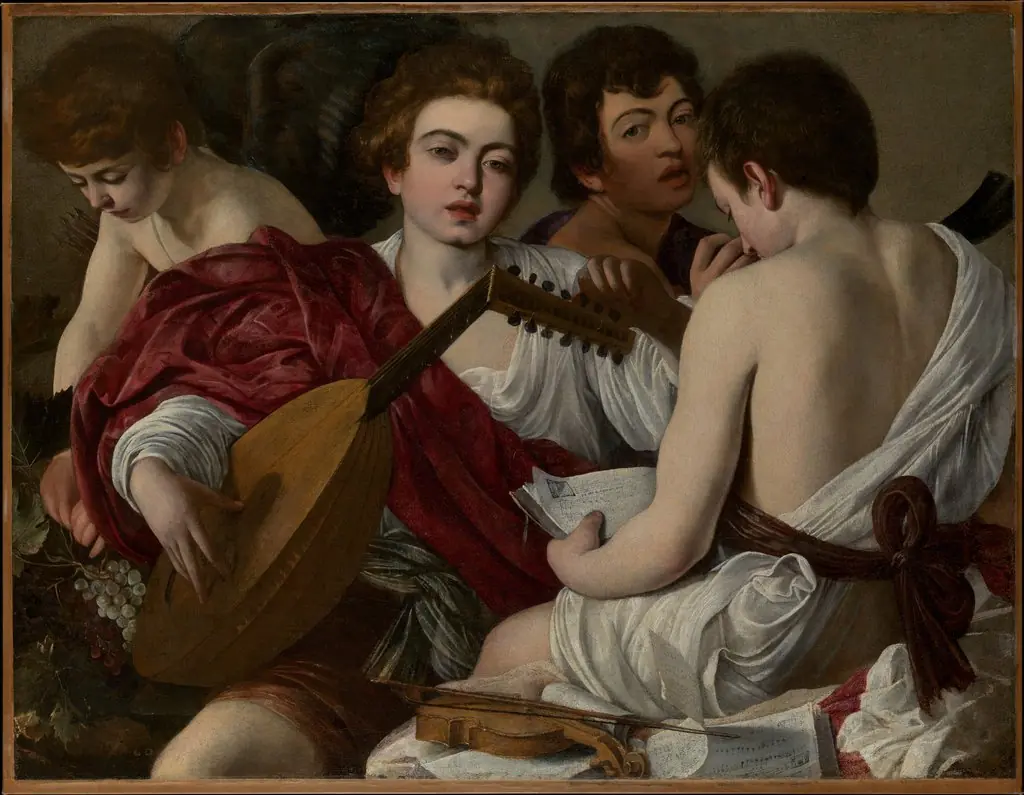
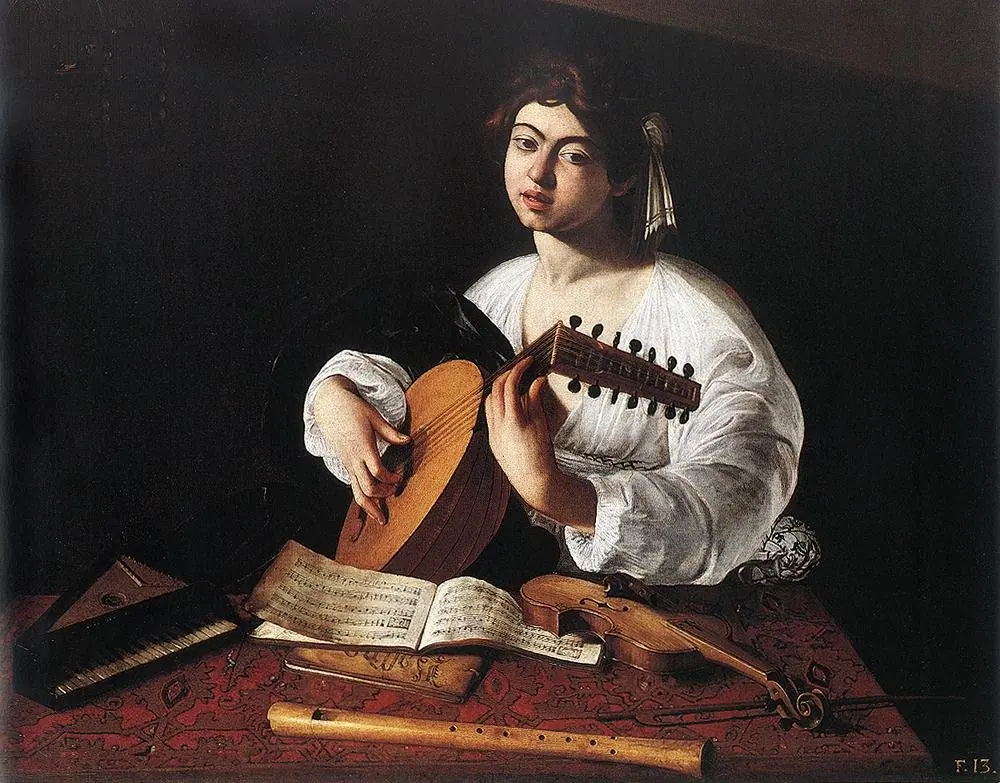
The Lute Player is an oil painting by the Early Baroque Italian artist Caravaggio. It dates from 1598 and is held in the collection of the Hermitage Museum.
About this work
Overview
The work belongs to a series of intimate genre scenes the artist produced for private patrons, blending everyday subjects with heightened emotional presence.
Painted in 1598 during Caravaggio’s early years in Rome, this oil on canvas portrays a young musician absorbed in playing the lute. The work belongs to a series of intimate genre scenes the artist produced for private patrons, blending everyday subjects with heightened emotional presence. Its composition centers on a solitary figure, rendered with close attention to texture and gesture, reflecting Caravaggio’s departure from idealized forms toward direct observation.
Subject & Meaning
The figure, a young man with dark curls and a draped black cloak, is engaged in the quiet act of music-making. The lute, sheet music, and plectrum suggest a moment of personal performance, while the knife and vase of flowers introduce elements of domestic life. These objects may hint at transience—flowers wilting, a blade that could cut both music and flesh—offering subtle allusions to mortality and the fleeting nature of pleasure.
Technique & Style
Caravaggio employs chiaroscuro to model the figure’s form, with light striking the white shirt and lute while shadows swallow the background. The brushwork is precise yet tactile, especially in the rendering of fabric folds, wood grain, and petal edges. Impasto is used sparingly on highlights, enhancing the illusion of material presence. The scene is tightly cropped, eliminating context to focus entirely on the figure’s physical and emotional immediacy.
History & Provenance
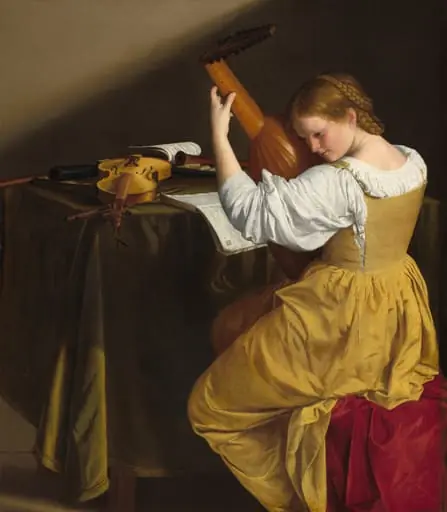
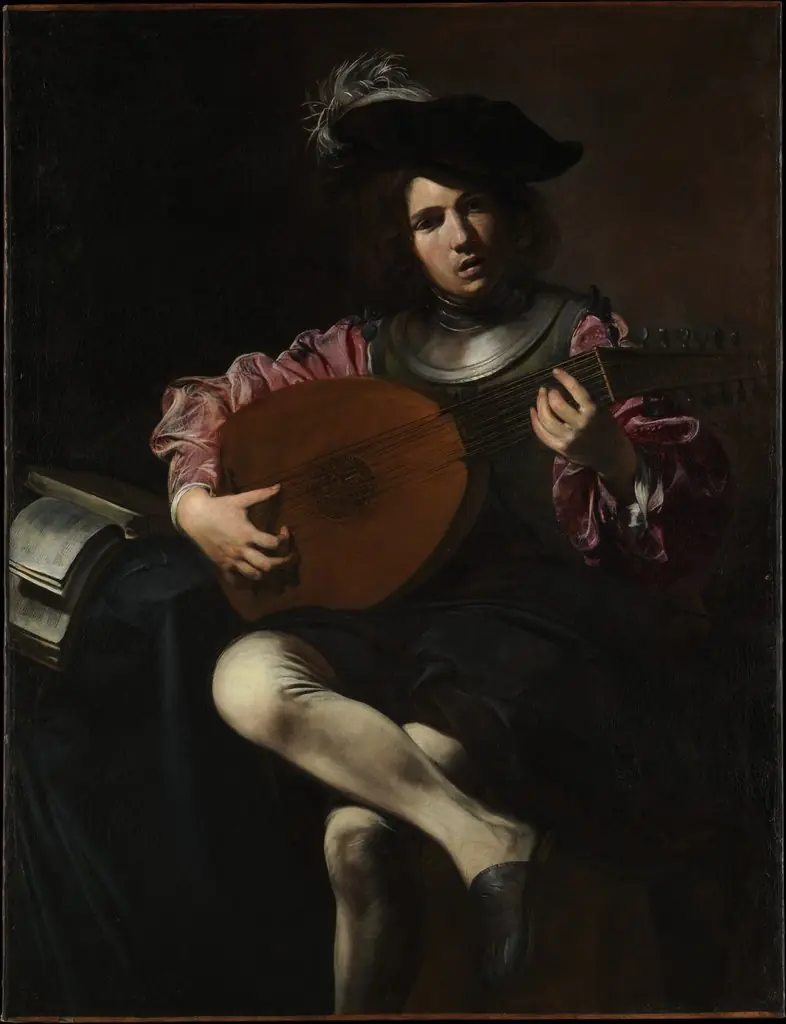
Commissioned by Cardinal Francesco Maria del Monte, Caravaggio’s early patron, the painting remained in the cardinal’s collection until the early 17th century. It later passed through several European collections before entering the Wildenstein collection in the 20th century. Multiple versions exist, including one in the Metropolitan Museum of Art, suggesting the original’s popularity and Caravaggio’s willingness to repeat successful compositions for different patrons.
Context
In late 16th-century Rome, private collectors favored naturalistic scenes that combined elegance with realism. Music-making was a refined pastime among the educated elite, and depictions of musicians appeared frequently in domestic interiors. Caravaggio’s treatment diverged from idealized Renaissance precedents by presenting the musician as a real, unidealized youth, grounding the scene in lived experience rather than allegory.
Legacy
The painting exemplifies Caravaggio’s influence on early Baroque art through its psychological realism and dramatic lighting. Artists across Europe adopted his approach to light and everyday subjects, shaping the development of genre painting. While not overtly religious, the work’s emotional gravity and technical innovation helped redefine the possibilities of secular imagery in painting.
Own this work as a print
Artist & collection
Artist
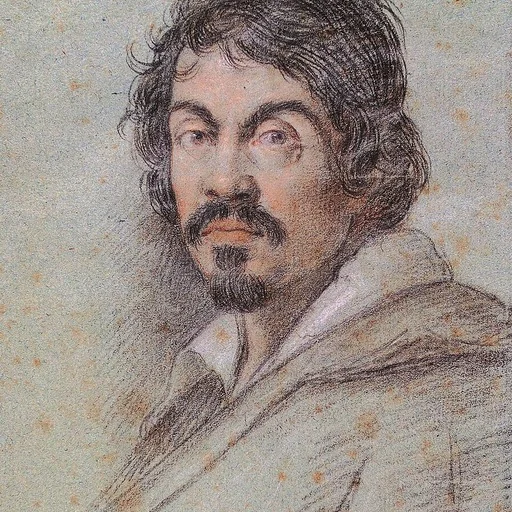
Michelangelo Merisi da Caravaggio (also Michele Angelo Merigi or Amerighi da Caravaggio; 29 September 1571 – 18 July 1610), known mononymously as Caravaggio, was an Italian painter active in Rome for most of his artistic life.