Artwork
It is the Table on Which the Treaty of Versailles was Signed
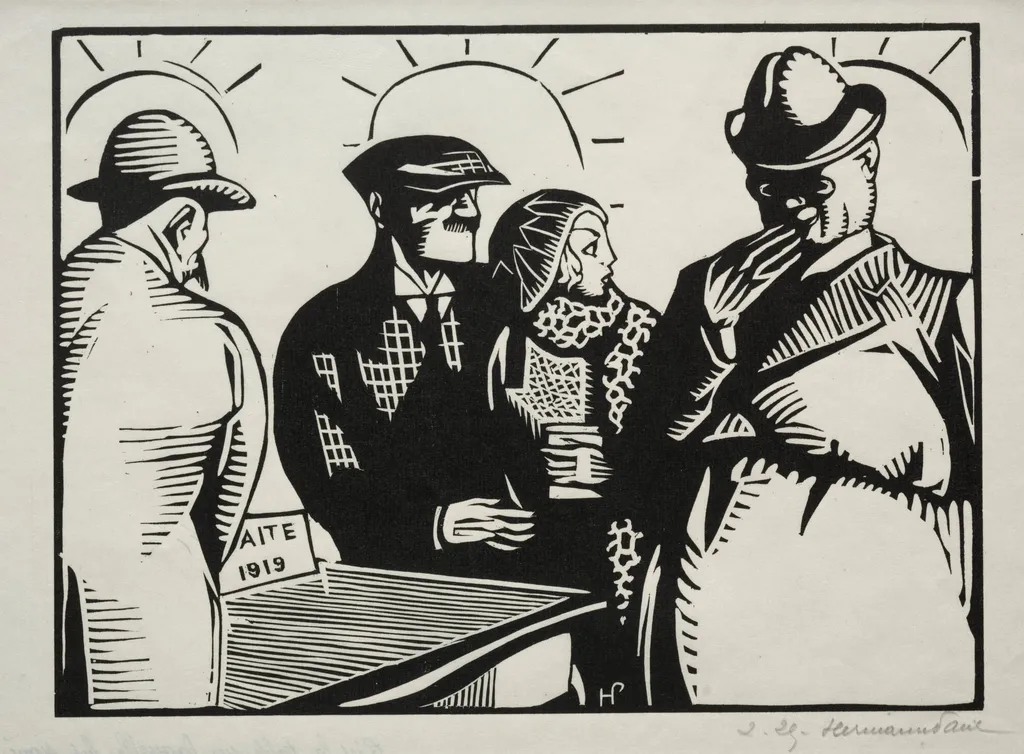
It is the Table on Which the Treaty of Versailles was Signed is a print by Hermann-Paul. It dates from 1919 and is held in the collection of the Cleveland Museum of Art. Created in 1919 by German artist Hermann Paul, this black-and-white woodcut depicts the signing of the Treaty of Versailles.
About this work
The man in the center wears a dark suit with a cross pattern on his chest and a halo over his head.
This black-and-white woodcut shows four men around a table. The man in the center wears a dark suit with a cross pattern on his chest and a halo over his head. The others have hats—one looks like a soldier, another wears a pith helmet. A woman in a patterned dress stands between them, also with a halo.
The date "1919" is carved into the table, matching the year the Treaty of Versailles was signed. The halos might hint at these figures being seen as important or symbolic.
Look up Hermann Paul to see more of his political woodcuts.
Overview
Created in 1919 by German artist Hermann Paul, this black-and-white woodcut depicts the signing of the Treaty of Versailles. The work is held in the collection of The Cleveland Museum of Art and reflects the immediate postwar atmosphere through symbolic representation rather than literal documentation. Paul used the medium of woodcut, known for its stark contrasts and graphic clarity, to convey political weight and historical gravity.
Subject & Meaning
The composition centers on four male figures gathered around a table, each distinguished by attire suggesting national or military roles: a soldier, a colonial official in a pith helmet, and others in formal suits. A woman stands between them, similarly haloed. The halos around all five figures elevate them beyond individuals to symbolic representatives of power, diplomacy, and the moral burden of peace. The carved date on the table anchors the scene in historical reality.
Technique & Style
Paul employed woodcut printing, a technique that emphasizes bold lines and high contrast between black and white. The figures are rendered with simplified, almost archetypal forms, avoiding individualized portraiture. The halos and stylized clothing are carved with deliberate precision, reinforcing the symbolic nature of the scene. The composition is tightly framed, focusing attention on the table as both physical object and metaphor for negotiation.
History & Provenance
Produced in the same year as the Treaty’s signing, the print was likely made as a commentary on the peace process. Hermann Paul, known for politically engaged prints, created this during a period of intense public reflection on war and diplomacy. The work entered the Cleveland Museum of Art’s collection in the 20th century, where it remains as part of a broader archive of interwar political graphics.
Context
In 1919, Germany faced profound political and social upheaval. Woodcuts like Paul’s were a common medium for political expression, accessible and reproducible for public circulation. The Treaty of Versailles was widely debated, and artists responded with imagery that questioned authority, justice, and the human cost of peace. Paul’s work aligns with a broader European tradition of using printmaking to critique power structures.
Legacy
Paul’s woodcut endures as a visual document of how contemporaries interpreted the Treaty’s significance. Its symbolic language—halos, stylized figures, and the central table—offers a lens into early 20th-century perceptions of diplomacy as both sacred and fraught. While not widely exhibited, it contributes to understanding how artists processed global events through accessible, non-painterly forms.
Artist & collection

Artist
René Georges Hermann-Paul (27 December 1864 – 23 June 1940) was a French artist. He was born in Paris and died in Saintes-Maries-de-la-Mer. He was a well-known illustrator whose work appeared in numerous newspapers and…

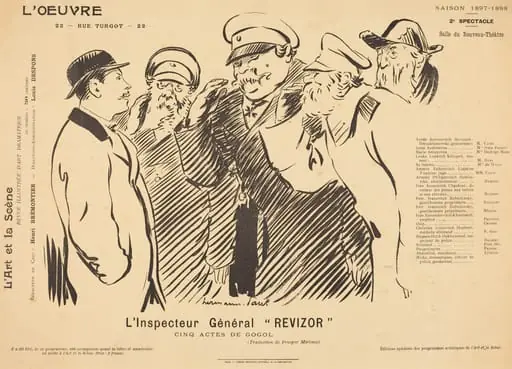 L'Inspecteur Général Revizor
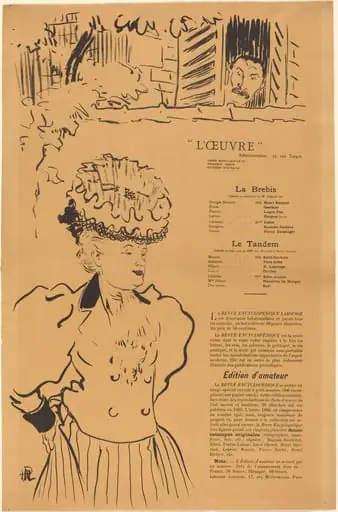 La Brebis; Le Tandem
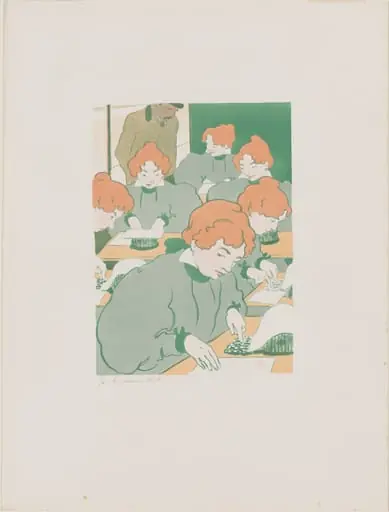 Les petits machines à écrire
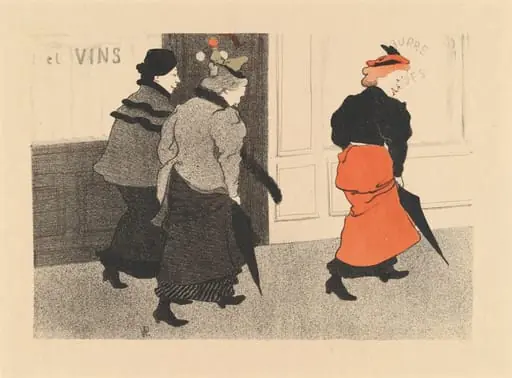 Milliners (Modistes)
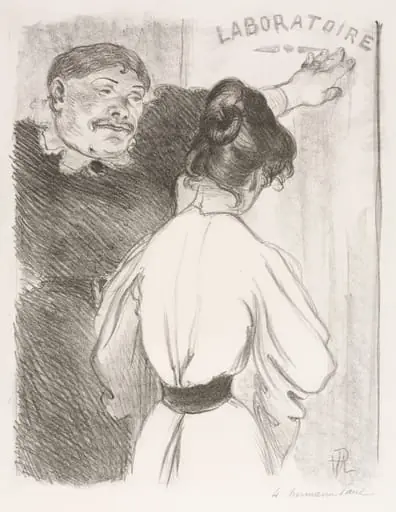 Laboratoire
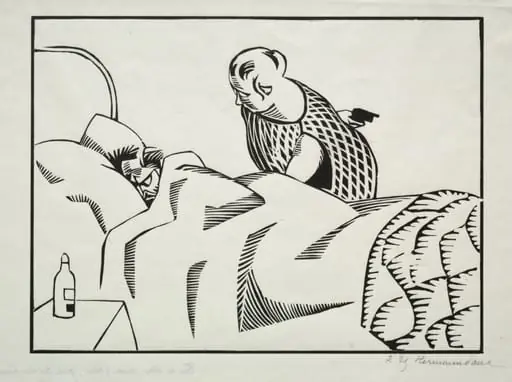 You are sure my dear that you cannot think of anything more to help the pain?
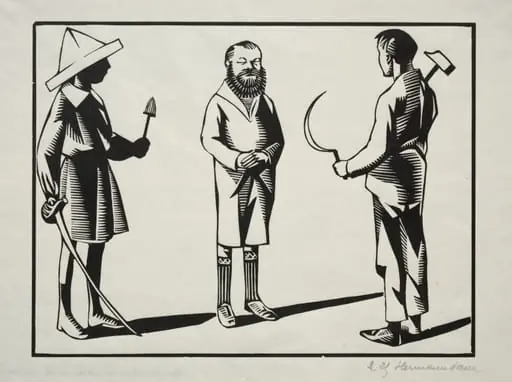 Moi! je tiens le sabre, et le goupillon; toi la faucille, le marteau et ler pastel. C'est la barbe.
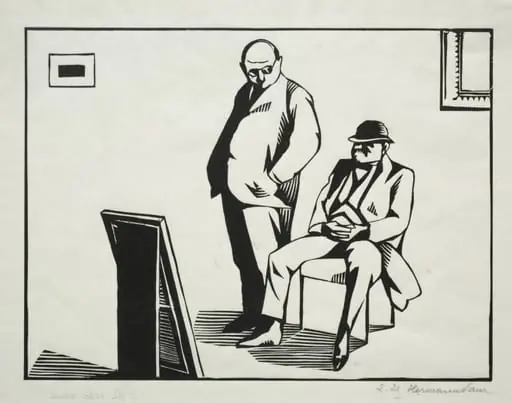 Et cela vaut! 100,000! et tout le monde le sait.