Artwork
Madonna of the Yarnwinder
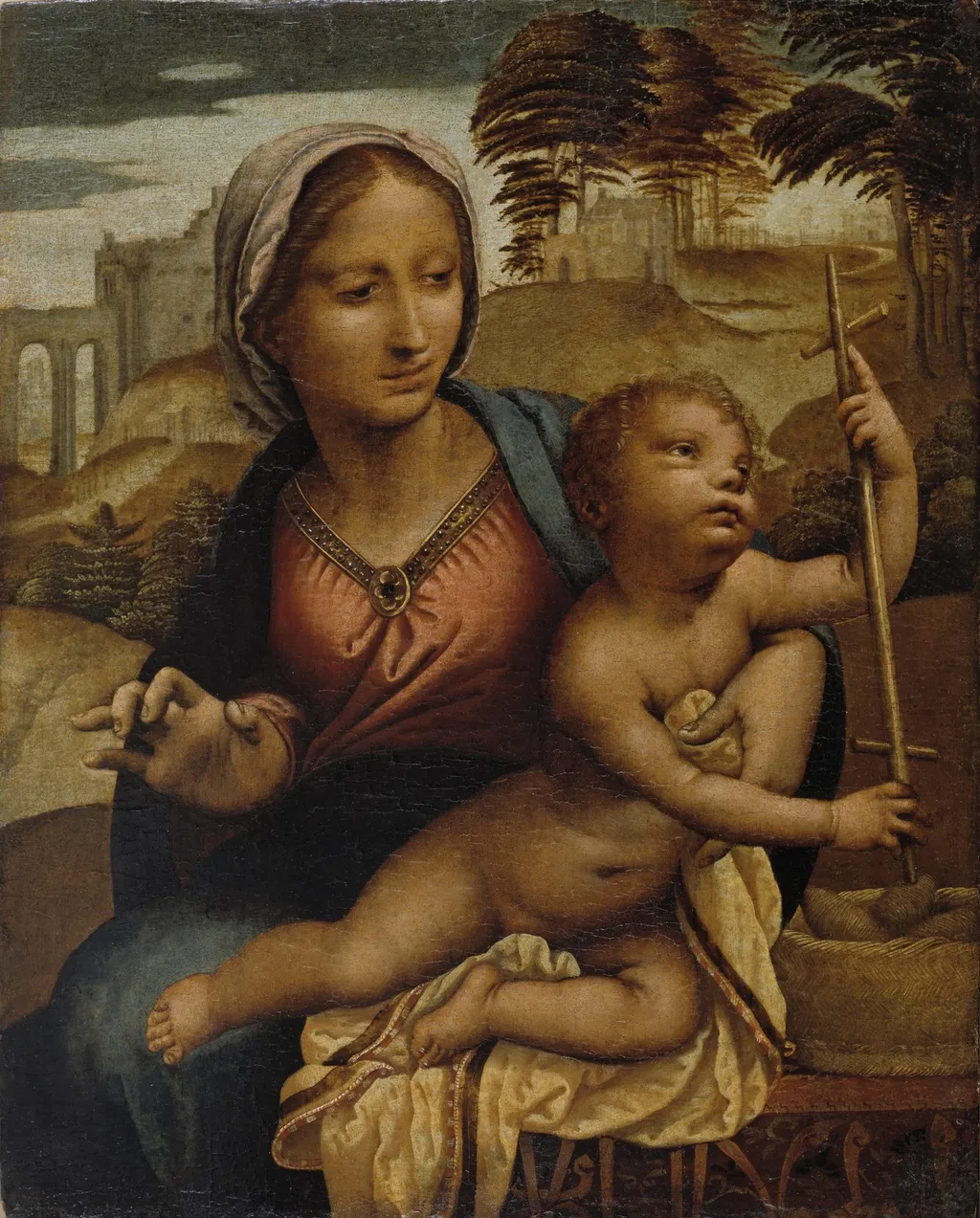
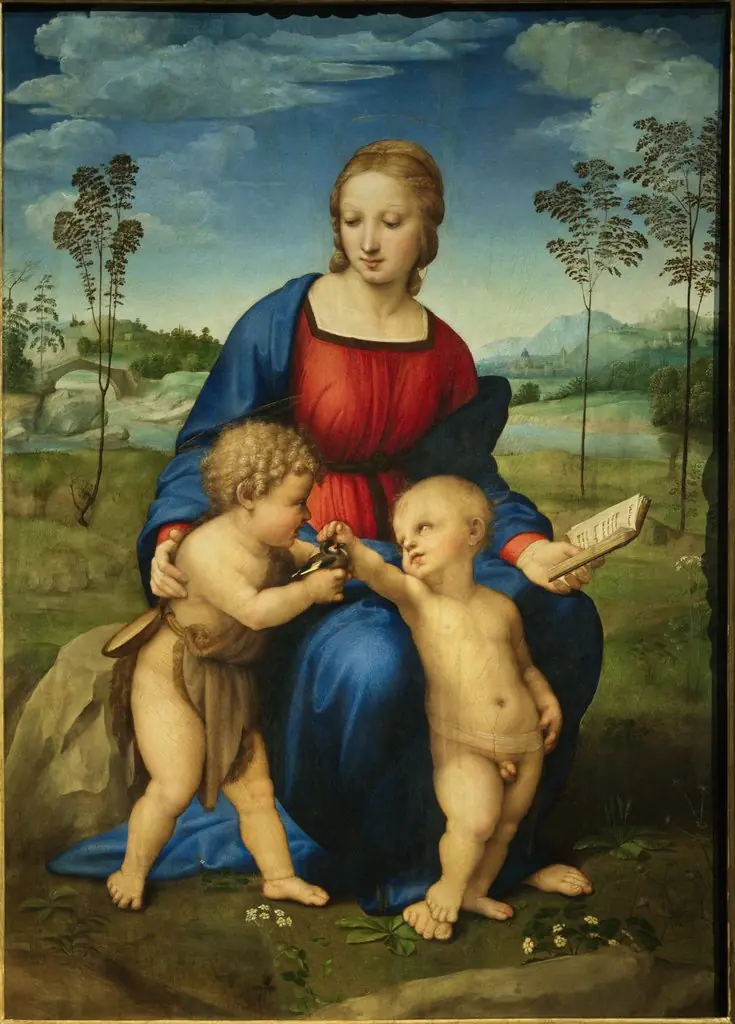
Madonna of the Yarnwinder is an oil painting by the Early Renaissance artist Hernando de los Llanos. It dates from 1501 and is held in the collection of the Museo del Prado.
About this work
Overview
Created in 1501, the *Madonna of the Yarnwinder* is an oil painting now part of the Museo del Prado’s collection. Executed by the Spanish Renaissance painter Hernando de los Llanos, the work reflects the early 16th‑century diffusion of Italian artistic ideas into the Iberian Peninsula.
Subject & Meaning
The composition shows a seated woman in a red dress and blue headscarf, identified as the Virgin Mary, cradling a nude infant Jesus. The child gazes upward while clutching a slender stick that alludes to the crucifixion, a symbolic reference to his future sacrifice.
Technique & Style
The painting employs the chiaroscuro lighting pioneered in Italy, rendering soft, graduated shadows that model the figures’ faces and bodies. The surface is smooth yet richly pigmented, allowing delicate transitions of tone that enhance the three‑dimensional presence of the mother and child against a muted landscape.
History & Provenance
Hernando de los Llanos, a disciple of Leonardo da Vinci, produced the work while collaborating with fellow artist Fernando Yáñez de la Almedina. Their partnership was instrumental in introducing Leonardo‑inspired techniques to Valencia, and the painting eventually entered the Prado’s holdings, where it remains on display.
Context
The work belongs to the early Renaissance movement in Spain, a period when local painters began adopting the naturalism and anatomical precision of Italian masters. Its subject, a tender Madonna and Child, aligns with contemporary devotional trends while the inclusion of the yarnwinder introduces a subtle theological motif.
Own this work as a print
Artist & collection
Artist
Fernando Llanos, also known as Hernando de los Llanos (1470–1525) was a Spanish Renaissance painter active in the early 16th century.

 Madonna and Child with the Infant Saint John
 Madonna and Child
 Madonna and Child with a Pomegranate
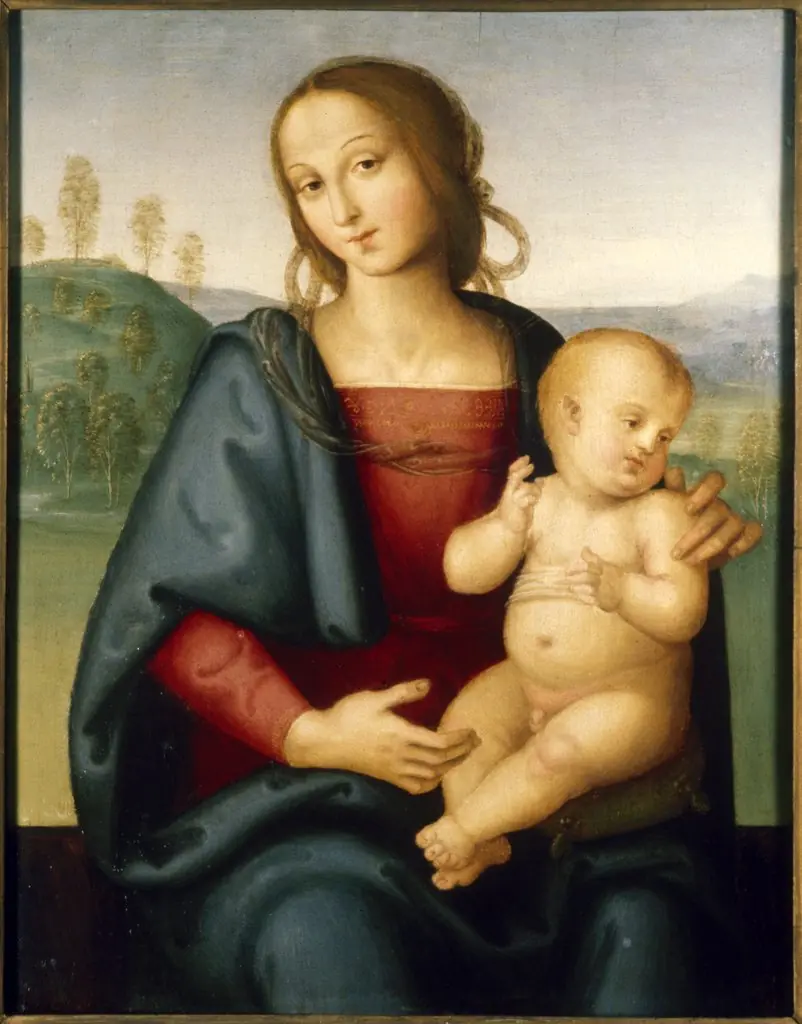 Madonna and Child
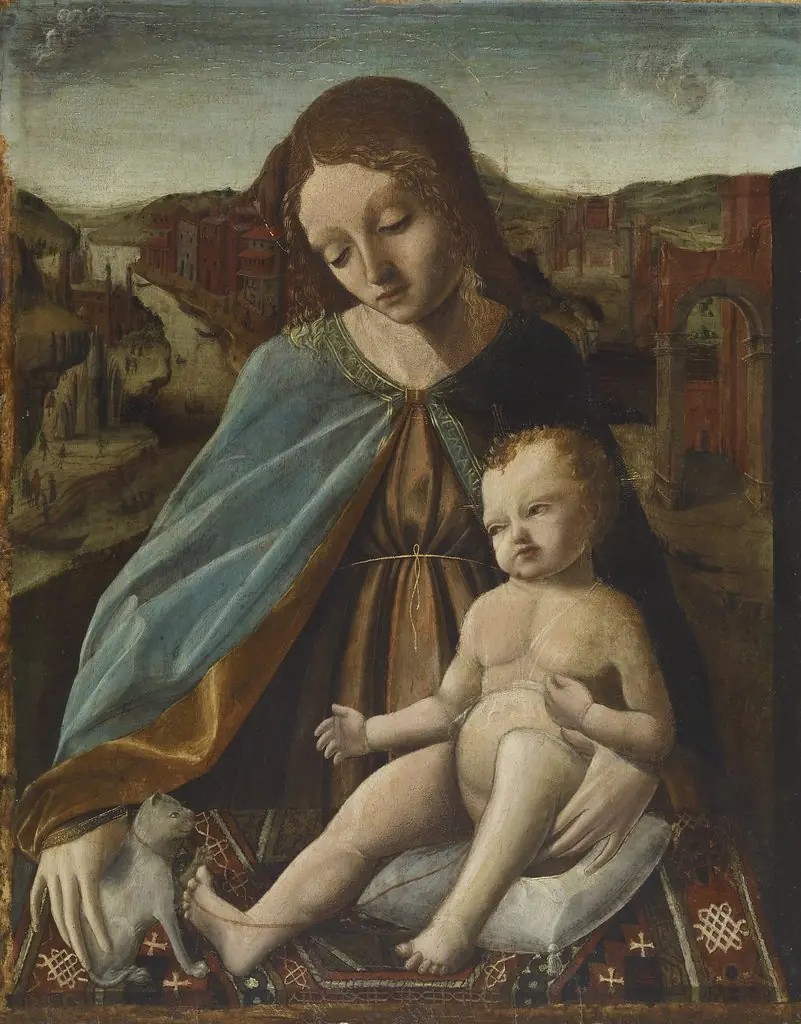 Madonna and Child with a Cat
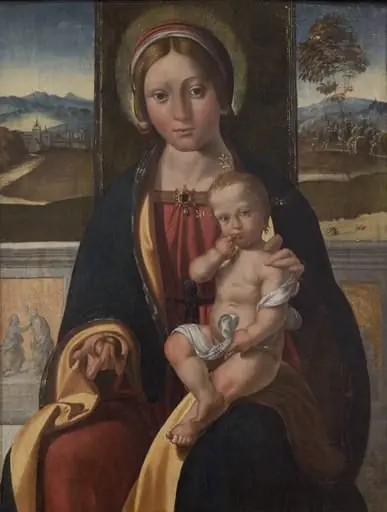 The Virgin and Child
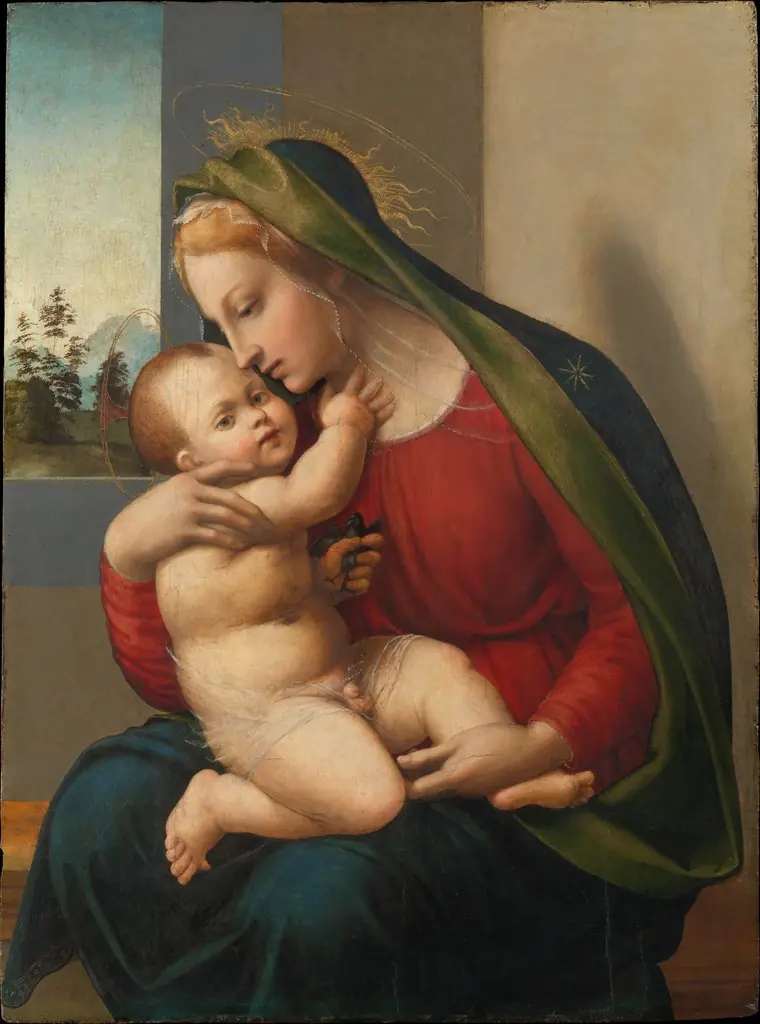 Madonna and Child
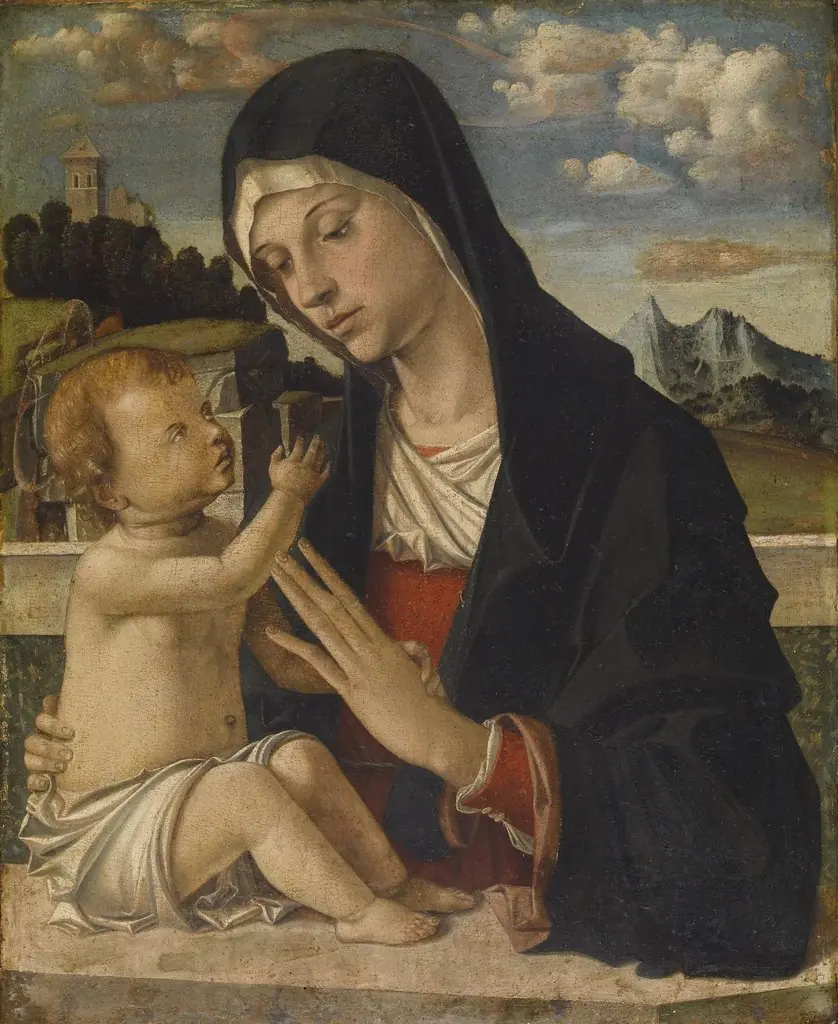 Madonna and Child
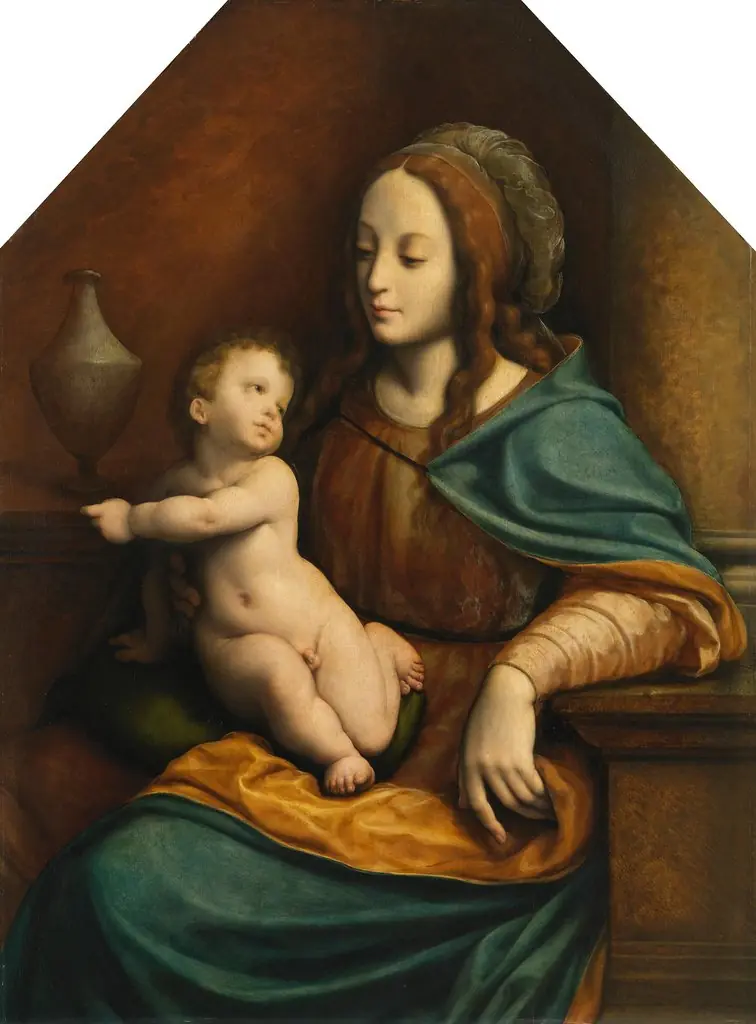 Maria mit Kind (Pommersfeldener Madonna)
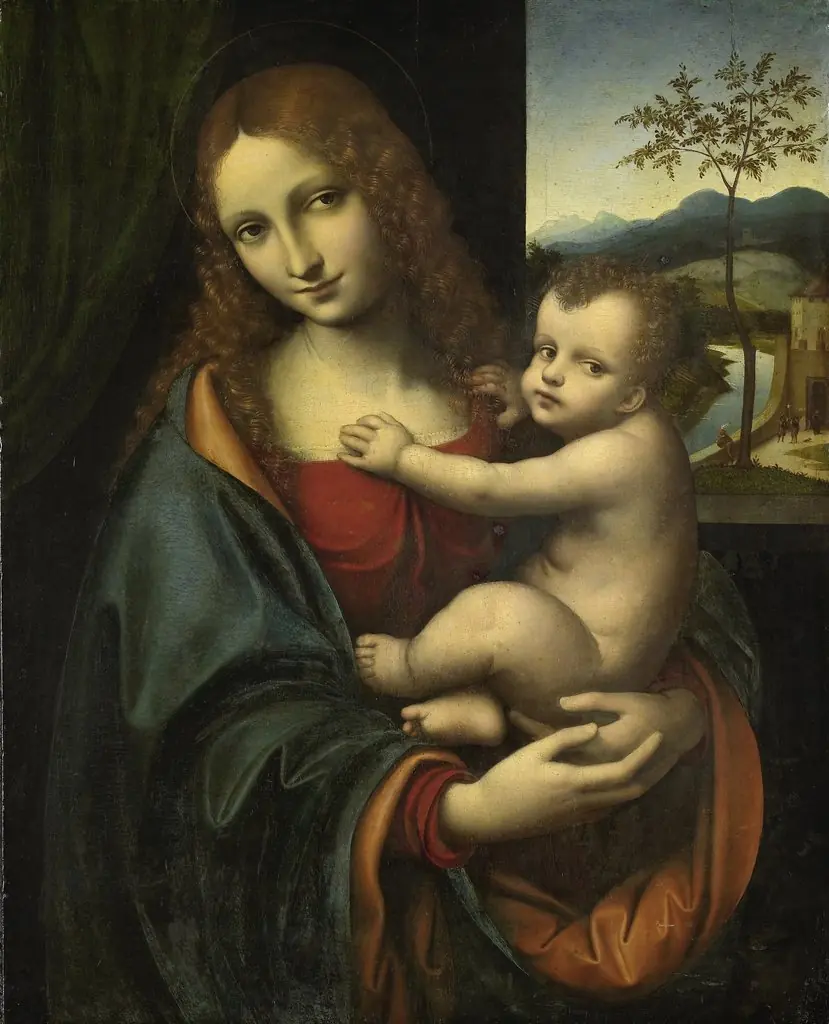 Virgin and Child
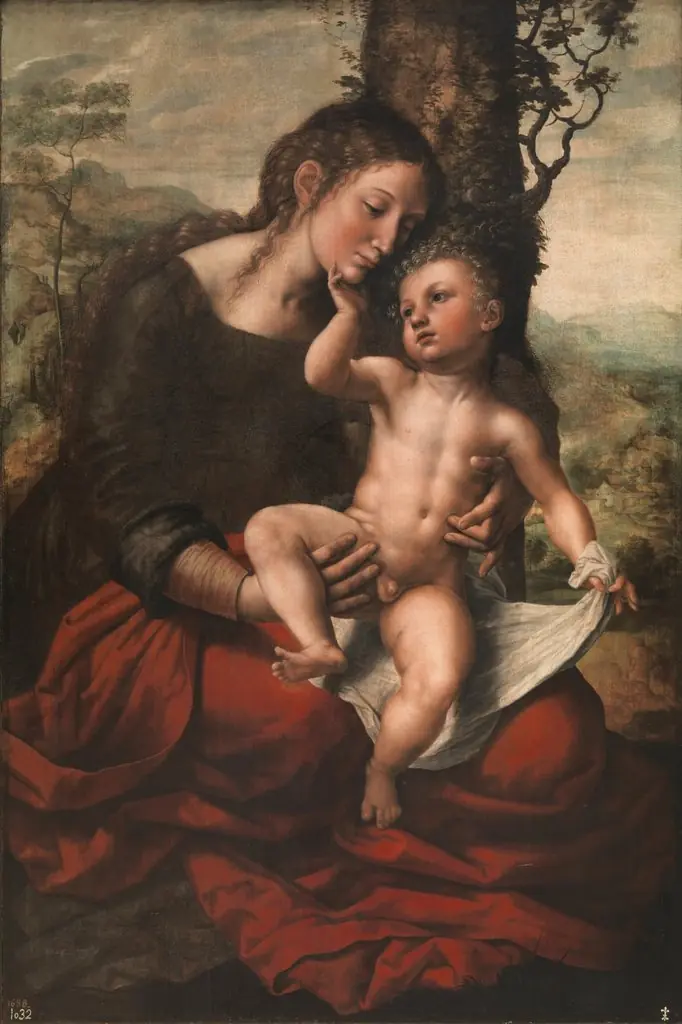 The Virgin and the Child
 Madonna of the Goldfinch