Artwork
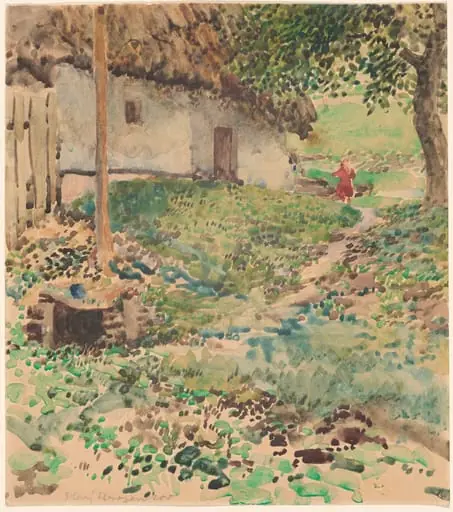
Farmyard
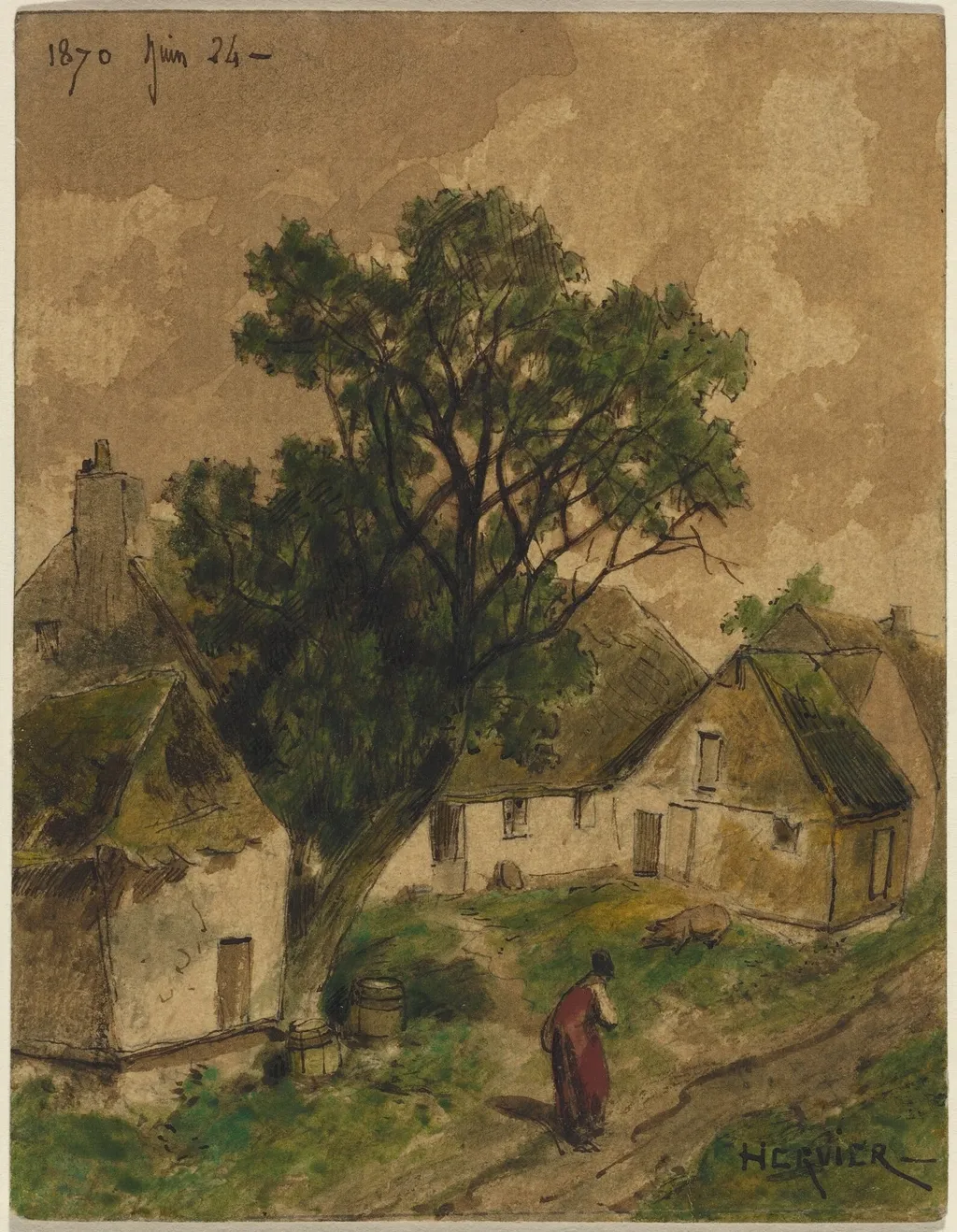
Farmyard is an ink drawing by the Impressionist artist Adolphe Hervier. It dates from 1870 and is held in the collection of the National Gallery of Art.
About this work
The loose, quick brushstrokes make it feel like a quick sketch rather than a polished painting.
This sketch shows a quiet farm scene with two small houses and a big tree in the middle. A person in a long red dress walks near a wooden barrel and a cow. The grass is green, the houses look old with thatched roofs, and the sky is pale.
The artist signed it in the corner and wrote the date—June 24, 1870. The loose, quick brushstrokes make it feel like a quick sketch rather than a polished painting.
Next, check out watercolor to see how artists use it for fast, expressive scenes like this.
Overview
Farmyard, executed in pen and ink with watercolor by Adolphe Hervier, is dated 24 June 1870. The work measures a modest size and presents a tranquil rural tableau: two modest thatched cottages flank a central, mature tree, while a solitary figure in a red dress moves near a wooden barrel beside a grazing cow. The composition is anchored by a pale sky and verdant grass, conveying a quiet moment on a French farm.
Subject & Meaning
The drawing captures everyday life in a countryside setting, emphasizing the simplicity of farm architecture and the presence of both human and animal activity. The lone figure, rendered in a vivid red garment, provides a focal point that contrasts with the muted tones of the surrounding structures and landscape, suggesting a subtle narrative of labor and domestic routine within an unadorned environment.
Technique & Style
Hervier employs swift, economical brushstrokes characteristic of a sketch rather than a finished painting. The pen outlines define the forms of the cottages, tree, and figures, while watercolor washes supply atmospheric color, particularly in the green grass and pale sky. This combination yields a sense of immediacy, allowing the artist to convey the scene’s mood with minimal detail and a light, expressive hand.
History & Provenance
The work bears the artist’s signature and the precise date in the lower corner, confirming its creation shortly before the outbreak of the Franco‑Prussian War. Its provenance traces back to the artist’s studio, later entering private collections before being acquired by the museum in the early twentieth century, where it has been displayed as an example of Hervier’s rural genre studies.
Artist & collection


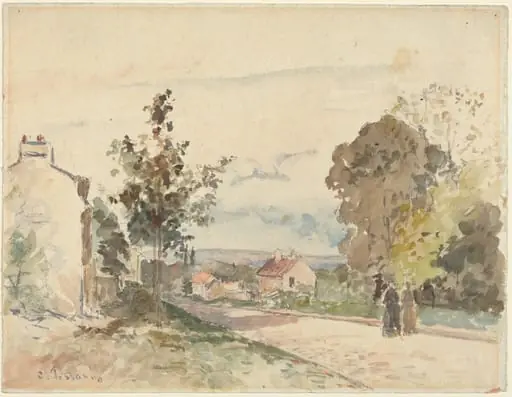 The Road from Versailles to Louveciennes
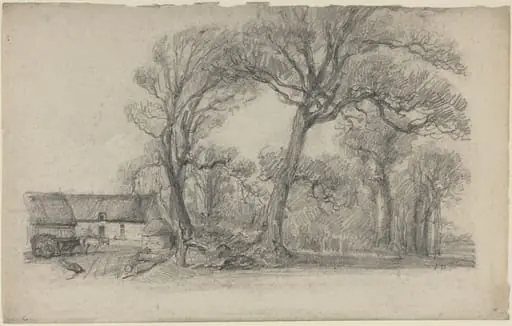 Landscape with Trees, Cottage, and Farm Wagon
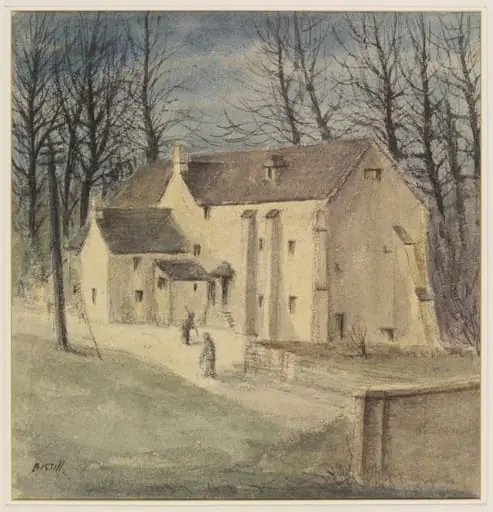 Arlington Mill
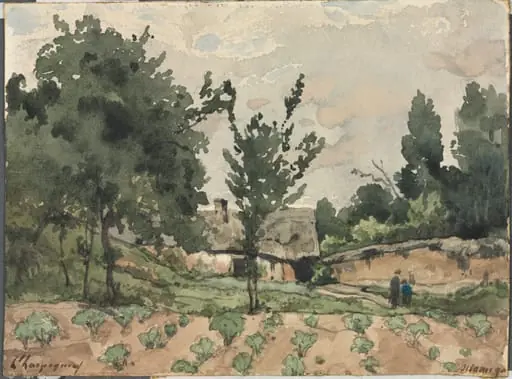 Landscape with Farmhouse
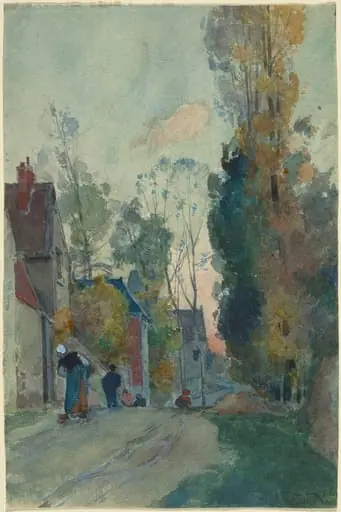 Rue de Jouy le Comte
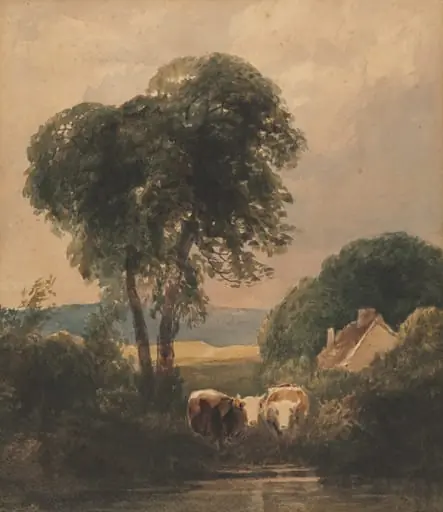 Welsh Landscape with Cattle
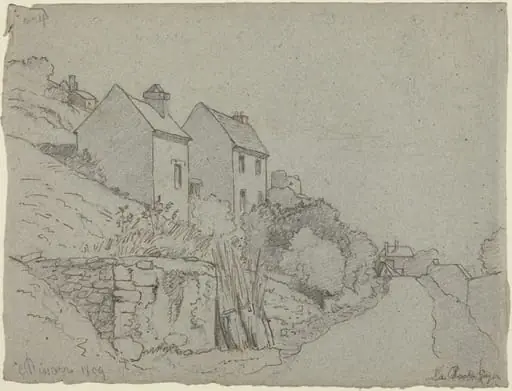 Houses by a Road
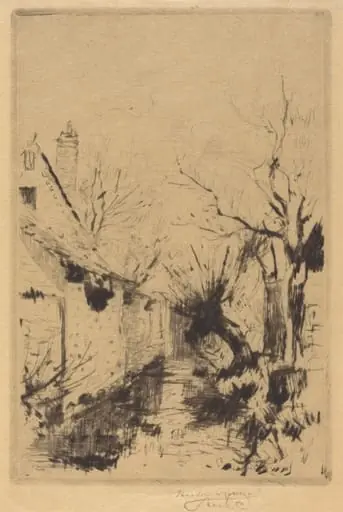 A Little Brook in Winter, Wiltshire
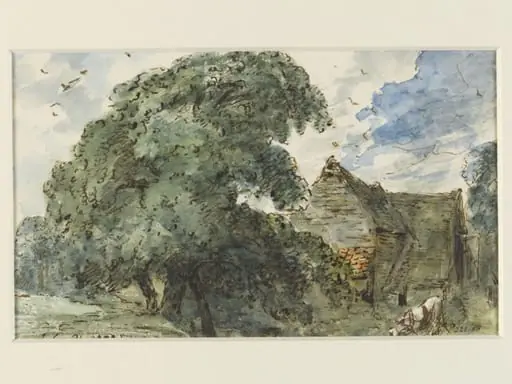 A barn, trees and a grey horse, near East Bergholt
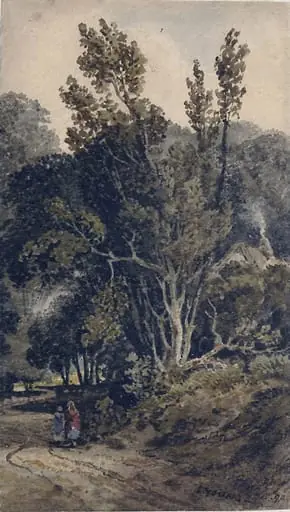 A road through a wood, with figures
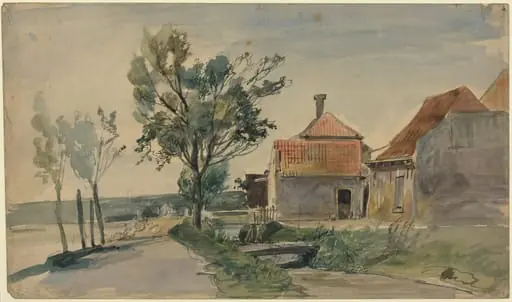 A Stream Running between Houses and a Road
 Stary Hrosenov