Artwork
Welsh Landscape with Cattle
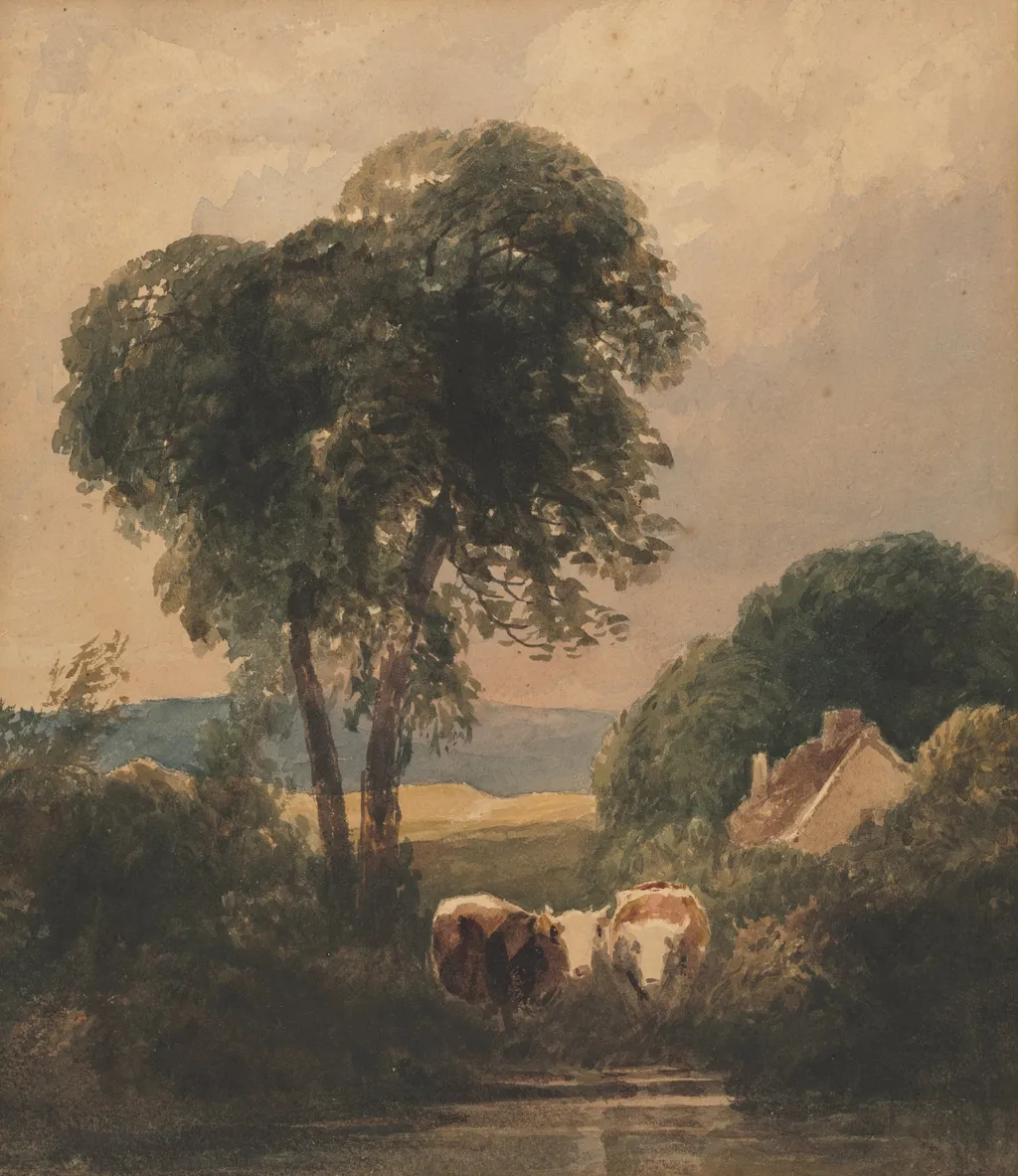
Welsh Landscape with Cattle is a drawing by the Romanticist artist Peter De Wint. It dates from 1828 and is held in the collection of the Cleveland Museum of Art.
About this work
Overview
The work is part of the collection at The Cleveland Museum of Art, where it is valued for its atmospheric tone and restrained palette.
Created in 1828, Welsh Landscape with Cattle is a pencil and watercolor drawing by Peter De Wint. It depicts a quiet rural scene in Wales, featuring grazing cattle and a gently rolling terrain. The work is part of the collection at The Cleveland Museum of Art, where it is valued for its atmospheric tone and restrained palette. De Wint’s approach blends observation with poetic sensitivity, characteristic of his mature style.
Subject & Meaning
The drawing presents a tranquil pastoral scene: cows rest beneath tall, leafy trees, while distant hills fade into a hazy horizon. There is no human presence, emphasizing nature’s quiet autonomy. The composition suggests harmony between livestock and landscape, reflecting 19th-century ideals of rural life as serene and enduring. The absence of narrative invites contemplation rather than storytelling.
Technique & Style
De Wint employed loose, fluid watercolor washes over delicate pencil lines to suggest form and depth. Colors are subdued—soft greens, earthy browns, and pale grays—creating a muted, atmospheric effect. Brushwork is expressive yet controlled, with wet-on-wet techniques allowing tones to blend naturally. The result is a sense of gentle movement, as if the breeze rustles the leaves and the cattle shift slowly in the field.
History & Provenance
The drawing was completed during De Wint’s period of frequent travel through Wales, where he made numerous sketches from life. It entered The Cleveland Museum of Art’s collection in the 20th century, likely through a private donation or acquisition. Its preservation reflects its status as a representative example of British watercolor practice from the early 1800s, though its specific exhibition history remains modest.
Context
De Wint worked alongside other British watercolorists who sought to capture the natural world with emotional honesty. While not overtly Romantic in the dramatic sense, his work aligns with the movement’s reverence for landscape and quiet emotion. This piece reflects a broader cultural interest in rural England and Wales, as industrialization reshaped the countryside and artists turned to the land as a source of stability and beauty.
Legacy
Welsh Landscape with Cattle exemplifies the quiet dignity of British watercolor drawing in the early 19th century. Though De Wint is less widely known today than some contemporaries, his works remain important for their technical refinement and emotional restraint. This drawing continues to be studied for its balance between realism and lyrical suggestion, influencing later landscape artists who valued subtlety over spectacle.
Artist & collection
Artist
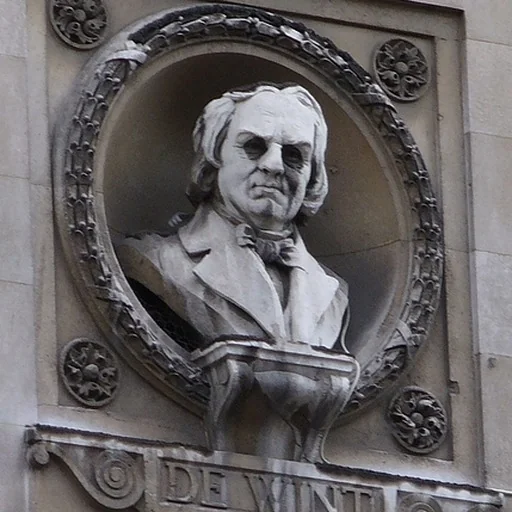
Peter De Wint was a prolific English painter, mostly in landscape painting in oils and watercolour. A number of his pictures are in Tate Britain, the Victoria and Albert Museum and The Collection, Lincoln. He died in London.

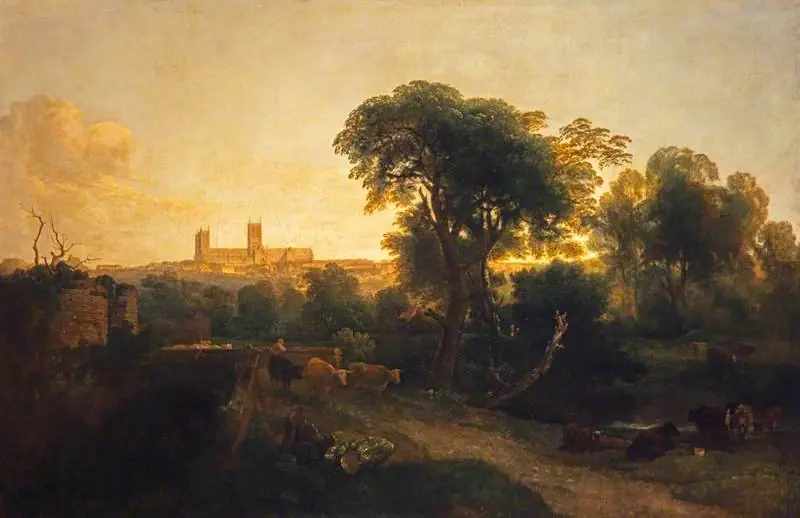
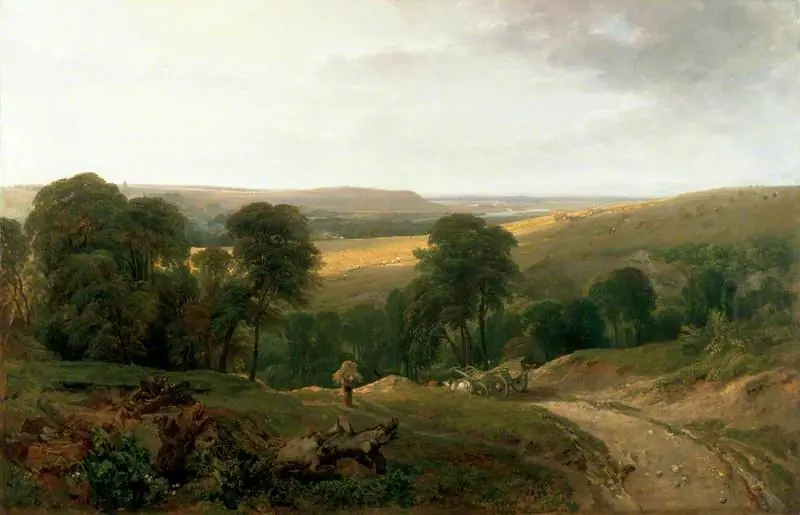
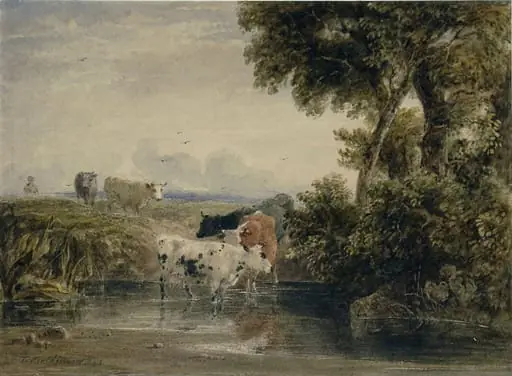 Landscape with cattle
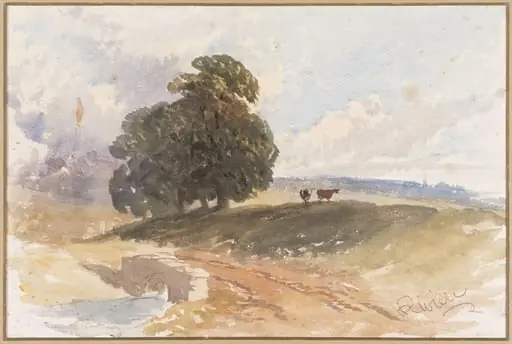 Trees, Rustic Bridge, etc
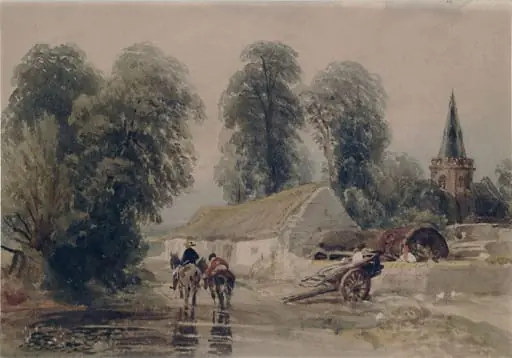 A village in Lincolnshire
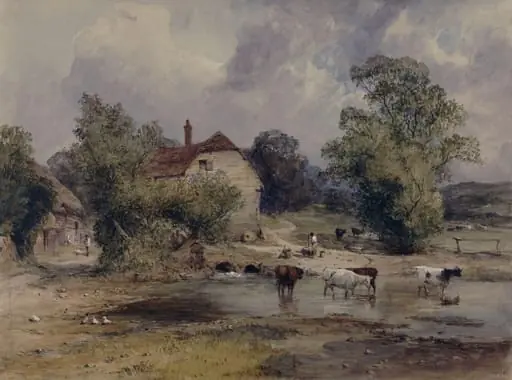 Mill at Droxford, Hampshire
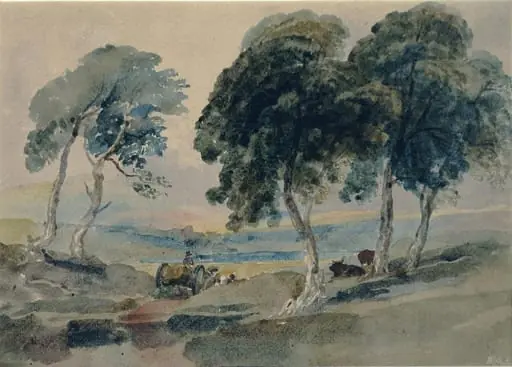 Landscape with wagon and cattle
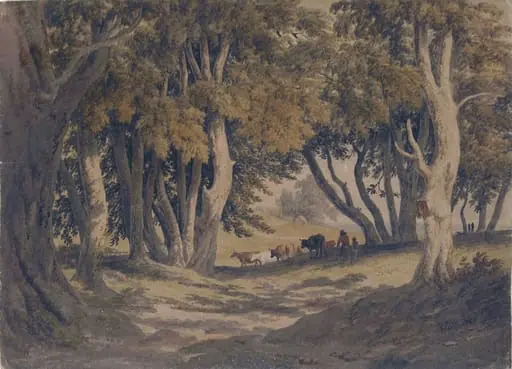 Woodland Glade with Cattle
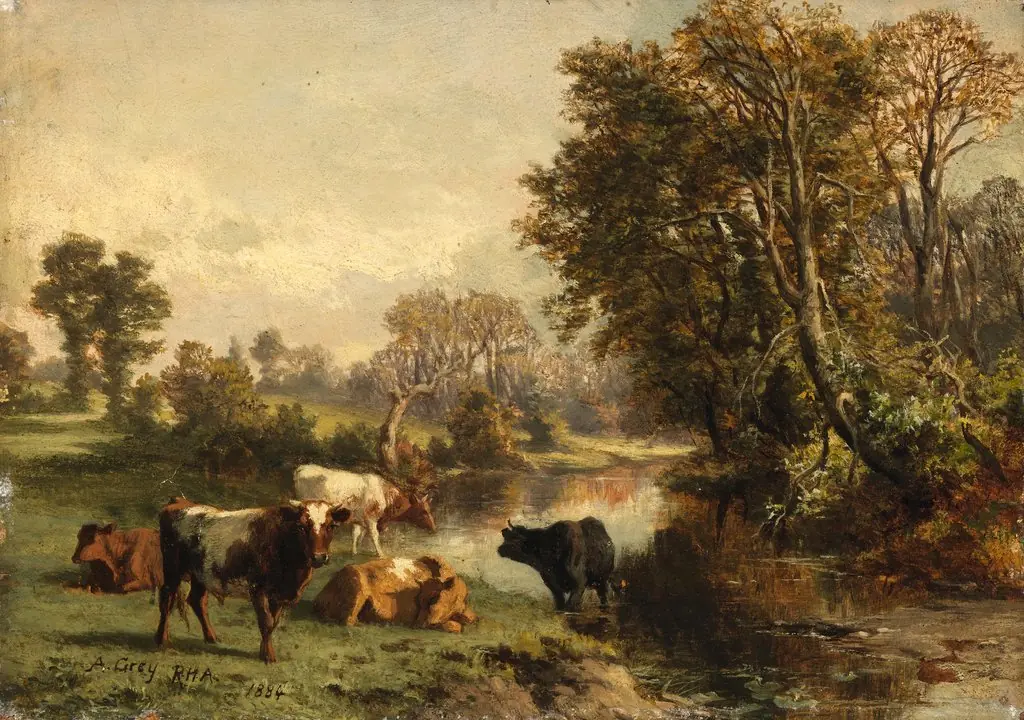 The River Bank
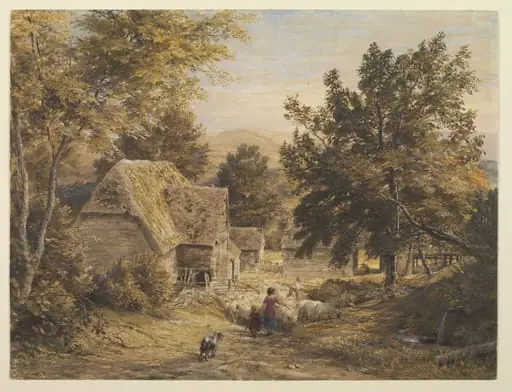 A Farmyard near Princes Risborough, Bucks
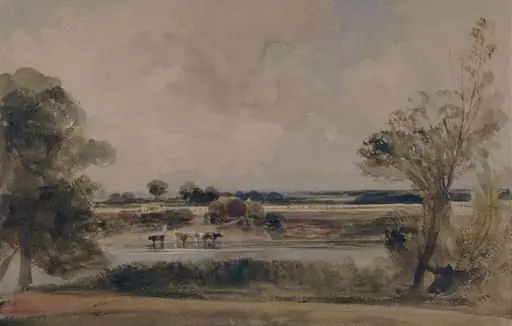 View near Salt Hill
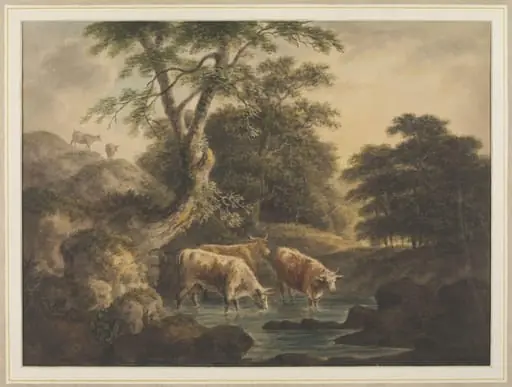 Landscape with cattle drinking
 Rick Yard, Ashford, Kent
 Landscape with a cottage