Artwork
Rue de Jouy le Comte
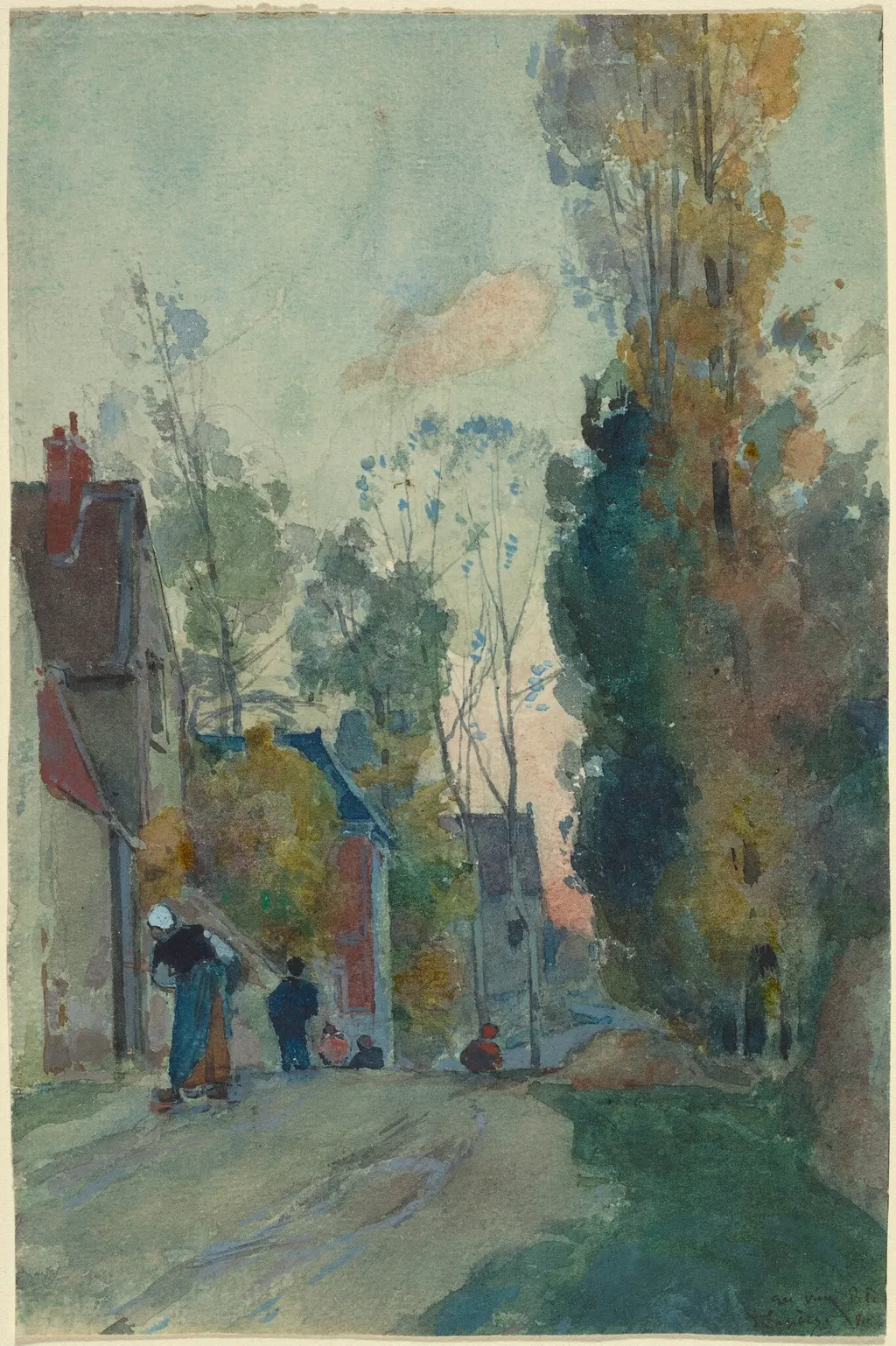
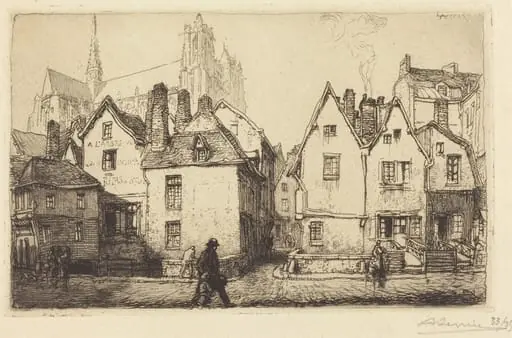
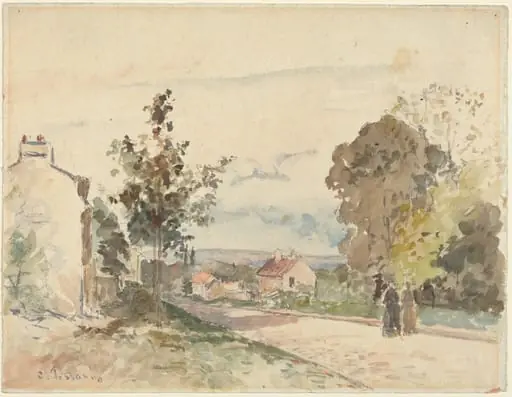
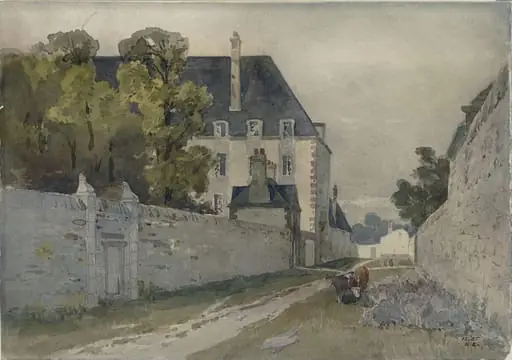
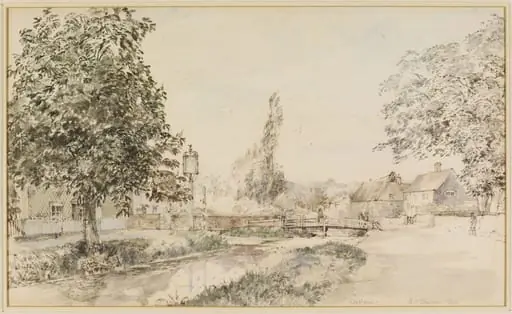
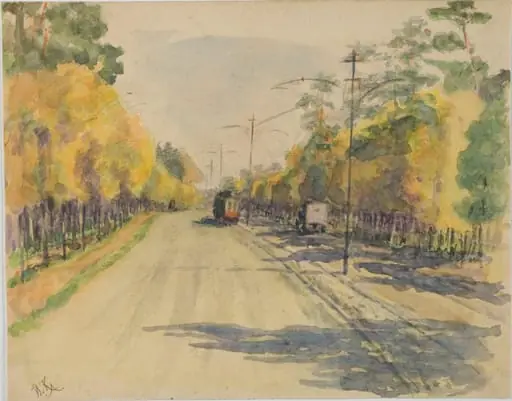
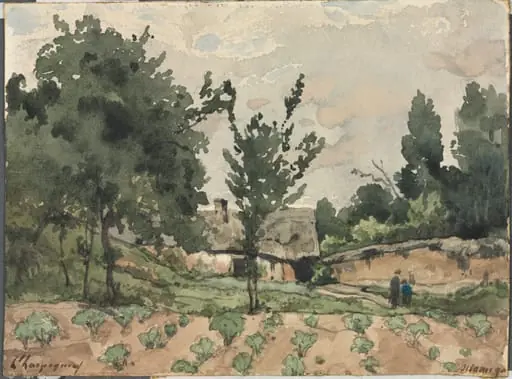
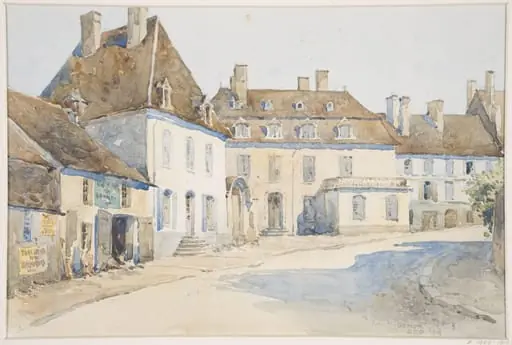
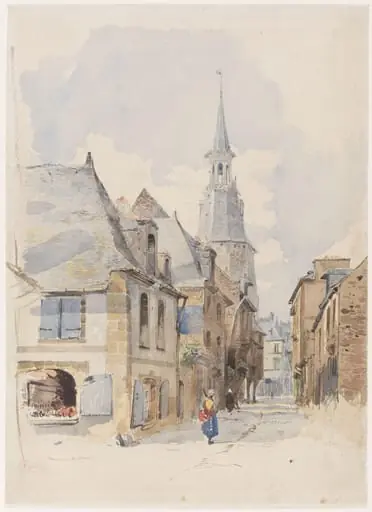
Rue de Jouy le Comte is a watercolor drawing by the Impressionist artist Auguste Lepère. It dates from 1880 and is held in the collection of the National Gallery of Art.
About this work
Overview
Created around 1880 by French artist Auguste Lepère, *Rue de Jouy le Comte* is a watercolor drawing depicting a modest street in a rural French village. Though Lepère is best known for his etchings and wood engravings, this work demonstrates his versatility in water-based media. The piece captures a quiet moment of daily life, avoiding dramatic narrative in favor of subtle observation.
Subject & Meaning
The scene portrays an unremarkable urban lane where a woman in a long dress and white hat walks with a basket, suggesting routine errands. Nearby, several figures sit on the ground, engaged in quiet repose. The absence of grandeur or spectacle emphasizes the dignity of ordinary routines. The painting conveys stillness and continuity, framing everyday existence as worthy of quiet attention.
Technique & Style
This approach aligns with contemporary interest in transient effects, though without the chromatic intensity of Impressionist oil painting.
Lepère employed loose, fluid watercolor washes to suggest form and atmosphere rather than define detail. Soft, muted tones—pale greens, grays, and earthy browns—create a hushed tonal harmony. The brushwork is suggestive rather than precise, allowing the paper’s texture to contribute to the sense of light and air. This approach aligns with contemporary interest in transient effects, though without the chromatic intensity of Impressionist oil painting.
History & Provenance
The work dates from the period when Lepère was actively exploring printmaking and landscape subjects beyond his established reputation in engraving. While its early ownership is undocumented, it likely remained within French artistic circles. Its survival as a watercolor on paper reflects its status as a personal study or sketch, rather than a commissioned piece, preserving its intimate character.
Context
In late 19th-century France, artists increasingly turned to non-urban and semi-rural scenes as industrialization reshaped cities. Lepère’s focus on Jouy le Comte aligns with a broader trend of documenting quiet provincial life. Though not formally part of the Impressionist group, his sensitivity to light and ordinary moments places him in dialogue with their concerns, particularly in his use of watercolor as a medium for immediacy.
Legacy
Though overshadowed by his printmaking achievements, *Rue de Jouy le Comte* exemplifies Lepère’s ability to convey atmosphere with minimal means. The work contributes to a lesser-known strand of French drawing that valued quiet observation over spectacle. It remains a quiet testament to the artistic value found in unassuming moments, influencing later generations interested in the poetic potential of everyday life.
Own this work as a print
Artist & collection
Artist
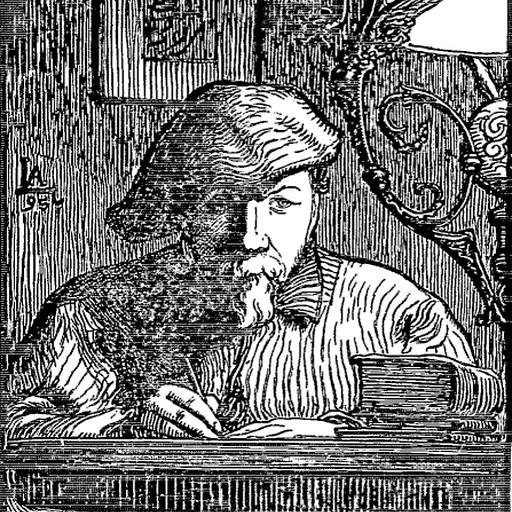
Louis-Auguste Lepère (30 November 1849 – 20 November 1918) was a French painter and etcher. Lepère is also considered a leader in the creative revival of wood engraving in Europe.