Artwork
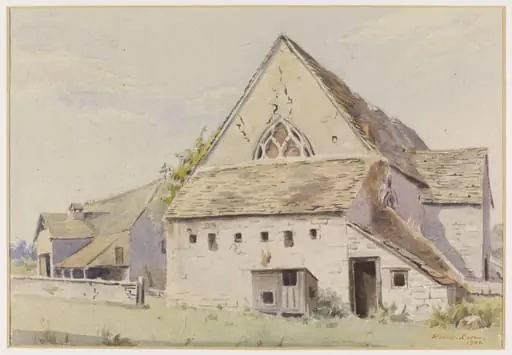
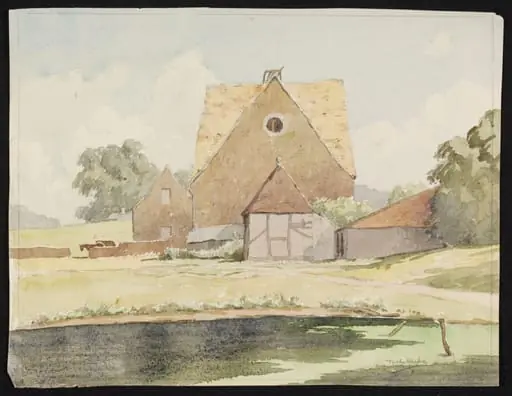
Saxon Dovecote, Lullington, near Alfriston, Cuckmere Valley
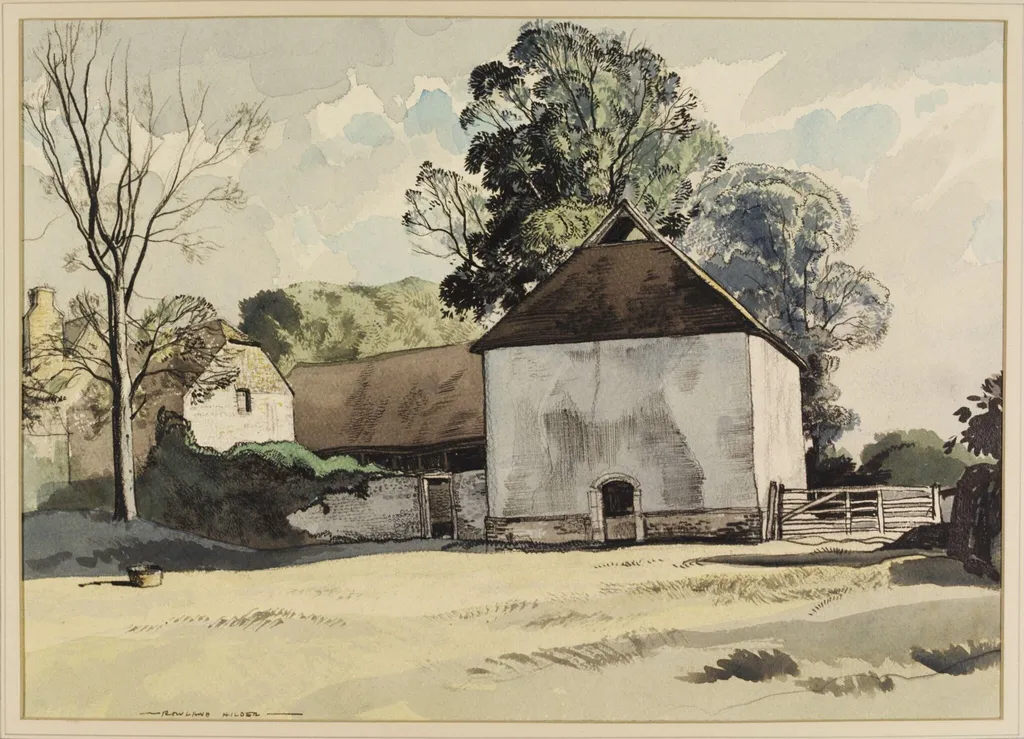
Saxon Dovecote, Lullington, near Alfriston, Cuckmere Valley is a watercolor work on paper by Hilder. It dates from 1940 and is held in the collection of the Victoria and Albert Museum.
About this work
Overview
Painted in 1940 by Rowland Hilder, this watercolour captures a rural dovecote in Lullington, near Alfriston, within the Cuckmere Valley.
Painted in 1940 by Rowland Hilder, this watercolour captures a rural dovecote in Lullington, near Alfriston, within the Cuckmere Valley. Created as part of the Recording Britain initiative, the work was one of over 1,500 pieces commissioned to visually archive England’s vanishing countryside during wartime. The project sought to preserve regional architecture and landscape character through the eyes of practicing artists, many of whom were supported financially during a period of national disruption.
Subject & Meaning
The subject is a modest, square stone dovecote, its white walls and dark tiled roof standing amid trees and a low boundary wall. A larger building rises behind it, suggesting a working farmstead. Dovecotes like this one were functional structures, once used to house pigeons for meat and fertilizer. Hilder’s depiction emphasizes quiet endurance rather than grandeur, reflecting the project’s aim to honor everyday rural heritage under threat from modernization and conflict.
Technique & Style
Hilder employed a restrained watercolour technique, using loose but deliberate brushwork to suggest texture in stone, foliage, and sky. Muted greens, greys, and browns dominate the palette, avoiding vivid contrast in favor of atmospheric harmony. Visible strokes convey the materiality of the dovecote’s surface and the softness of the surrounding vegetation. The light blue sky with scattered clouds adds depth without distraction, reinforcing the scene’s calm, observational tone.
History & Provenance
Commissioned by the Committee for the Employment of Artists in Wartime and funded by the Pilgrim Trust, the Recording Britain project was overseen by Sir Kenneth Clark. Hilder’s painting entered the collection of the Victoria and Albert Museum along with hundreds of other works from the initiative. It was not intended for public display at the time but preserved as a documentary record, later recognized for its historical and artistic value in capturing pre-war rural England.
Context
During the early years of World War II, fears of bombing and agricultural change prompted efforts to document Britain’s architectural heritage. The Recording Britain project responded to this urgency by mobilizing artists to record structures deemed vulnerable—churches, cottages, mills, and dovecotes. Hilder’s work aligned with a broader cultural movement to affirm national identity through place, even as the country faced upheaval and uncertainty.
Legacy
Hilder’s watercolour remains part of a significant archive of wartime British art, now held by the V&A. It contributes to ongoing scholarship on how art functioned as preservation during crisis. The painting’s quiet realism and attention to vernacular detail continue to inform perceptions of pre-war rural life, offering a measured counterpoint to more dramatic wartime imagery.
Artist & collection
Artist