Artwork
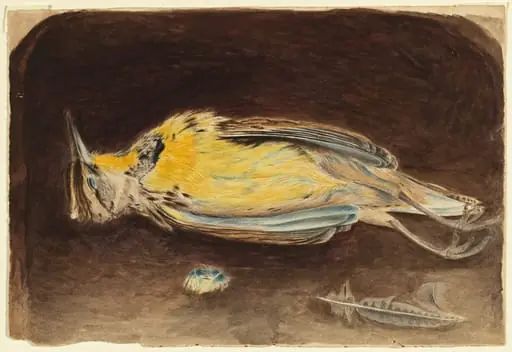
Golden Robin (Northern Oriole)
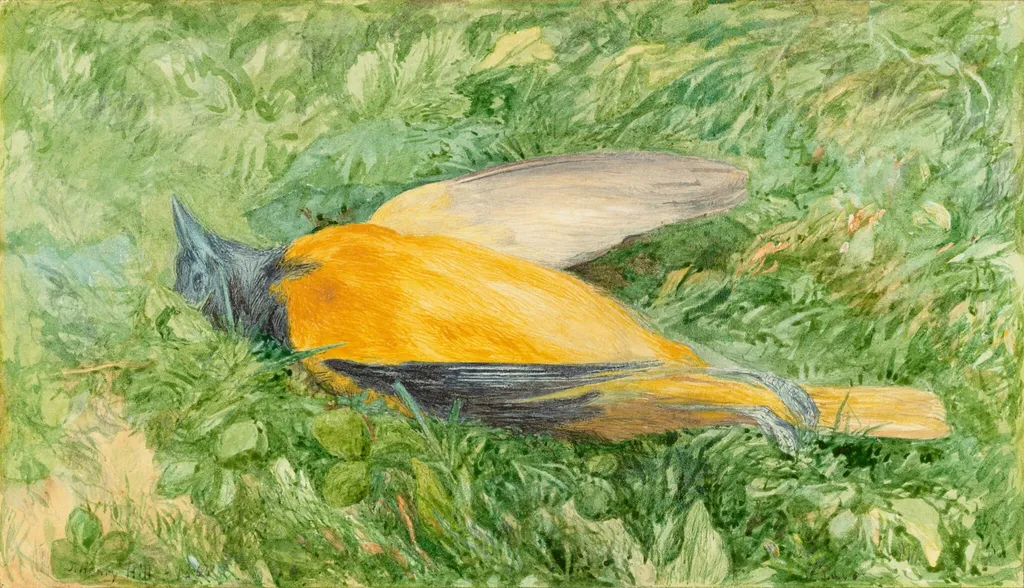
Golden Robin (Northern Oriole) is a graphite drawing by the Impressionist artist John Henry Hill. It dates from 1866 and is held in the collection of the National Gallery of Art.
About this work
Overview
Golden Robin (Northern Oriole) is a watercolor and graphite drawing on wove paper by John Henry Hill, dated to 1866. The work depicts a Northern Oriole perched on a branch, characterized by its vibrant yellow plumage, black wings, and long tail.
Subject & Meaning
The subject is a Northern Oriole, accurately rendered in its distinctive coloring. The emphasis on naturalistic detail and the bird's lively pose suggest an artistic focus on capturing the essence of nature.
Technique & Style
Hill employed watercolor and graphite to achieve a nuanced representation. Soft shading with watercolor conveys the texture of the bird's feathers, while loose, expressive brushstrokes in the green and yellow background evoke foliage. The overall style is naturalistic with a sense of spontaneity.
History & Provenance
Created in 1866 by John Henry Hill, specific provenance details are not provided in the available information.
Context
This drawing reflects the 19th-century interest in natural history and ornithological art, where accurate depiction of species was valued. The use of watercolor was common in this context for its ability to capture subtle color variations found in nature.
Legacy
While specific legacy or impact of 'Golden Robin (Northern Oriole)' on broader art historical movements is not detailed, it contributes to the body of 19th-century American ornithological art.
Artist & collection