Artwork
A Starling and a Lark
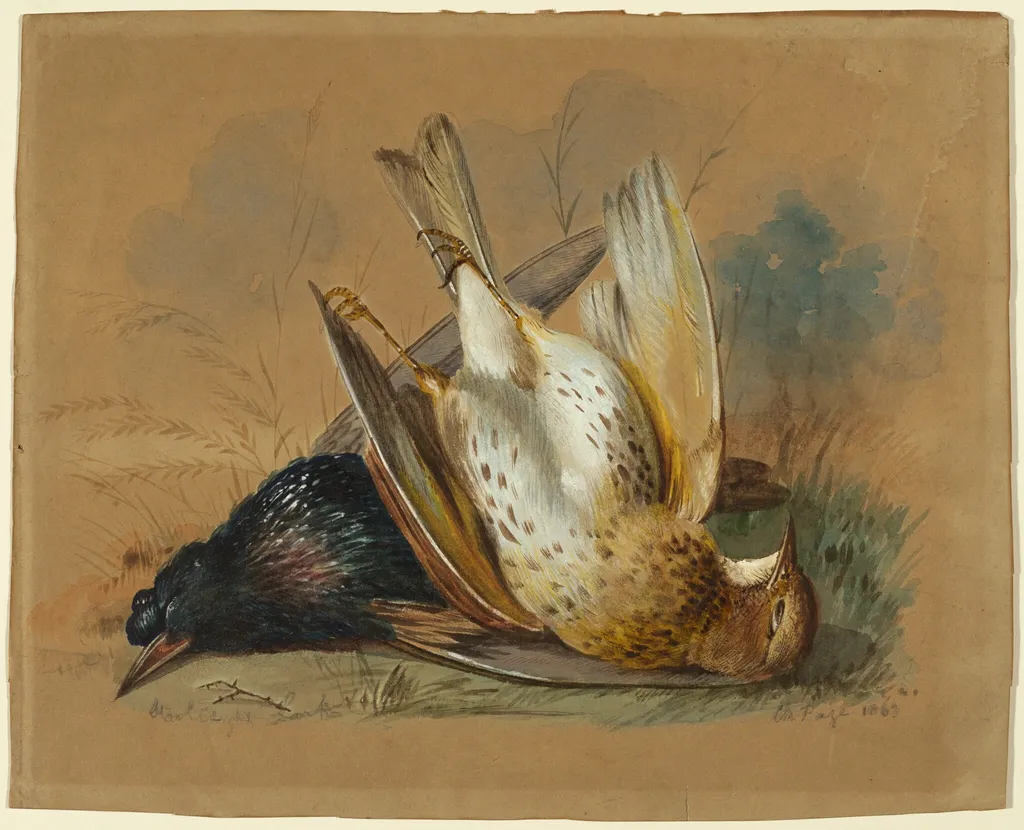
A Starling and a Lark is a watercolor drawing by the Impressionist artist William Page. It dates from 1863 and is held in the collection of the National Gallery of Art.
About this work
He was mostly self-taught and worked fast—this piece feels like a quiet moment snatched between bigger projects.
A small brown starling and a speckled lark sit side by side on a bare branch. The birds are painted in soft, quick strokes of watercolor.
William Page painted this in 1863, the year he died at just 24. He was mostly self-taught and worked fast—this piece feels like a quiet moment snatched between bigger projects. The branch is almost invisible, so the birds seem to float. It’s not flashy, just careful and calm.
If you like how watercolor can feel light and quick, look up *glazing*.
Overview
A Starling and a Lark is a modest watercolor drawing executed on wove paper in 1863. The work presents two small birds—a brown starling and a speckled lark—perched together on a barely suggested branch. The composition is intimate, occupying a limited space and inviting close observation of the delicate brushwork.
Subject & Meaning
The piece captures a fleeting encounter between two common European birds, rendered side by side in a moment of quiet coexistence. By placing the starling and the lark on an almost invisible branch, the artist emphasizes their forms and plumage rather than a detailed environment, suggesting a simple, observational study of nature.
Technique & Style
Executed with rapid, translucent watercolor strokes, the drawing demonstrates a light, almost sketch‑like approach. The artist employs soft washes that define the birds’ contours while allowing the paper to show through, creating a sense of airiness. The minimal treatment of the branch further enhances the impression that the subjects are floating within the picture plane.
History & Provenance
Created in the final year of William Page’s brief career—he died at twenty‑four—the work reflects his largely self‑directed training and propensity for swift execution. Produced shortly before his death, the drawing likely served as a quick study amid larger commissions, illustrating the artist’s habit of capturing immediate observations of the natural world.
Artist & collection

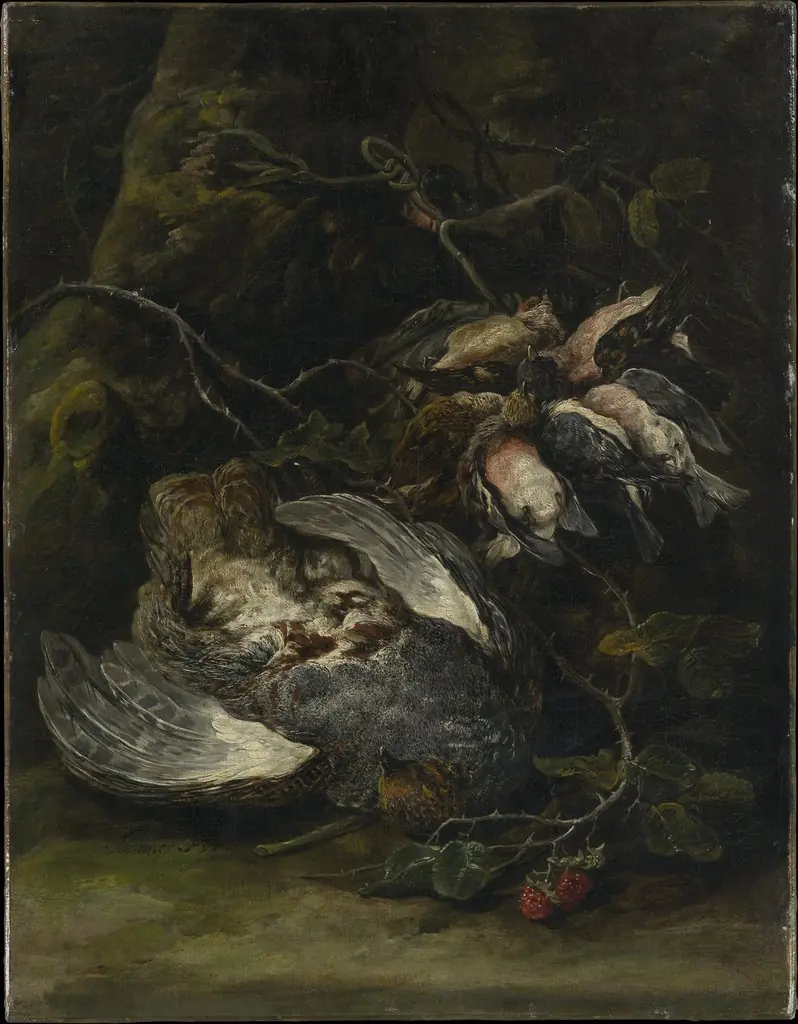 A Partridge and Small Game Birds
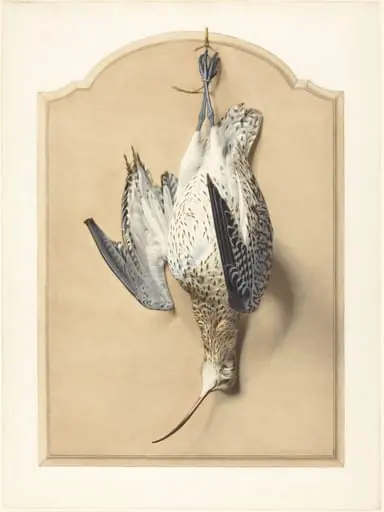 Trompe l'Oeil: A Curlew Hanging from a Nail
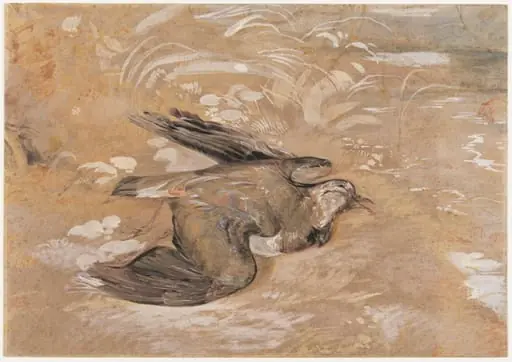 Study of a dead lapwing
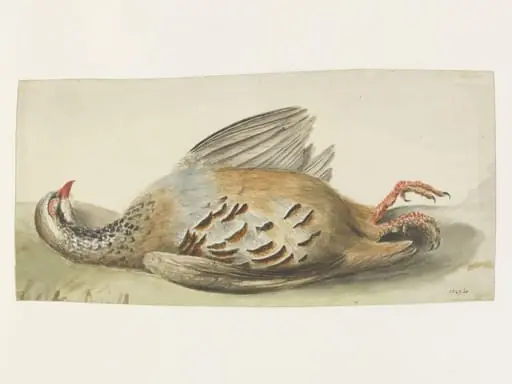 Study of a dead French partridge
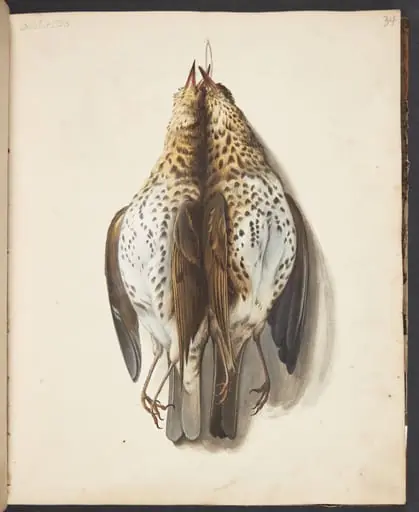 Studie af to døde sangdrosler?
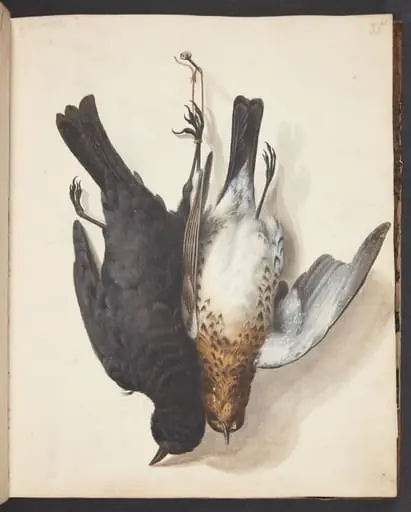 Studie af to døde solsorte, han og hun, ophængt i snor på en på en krog
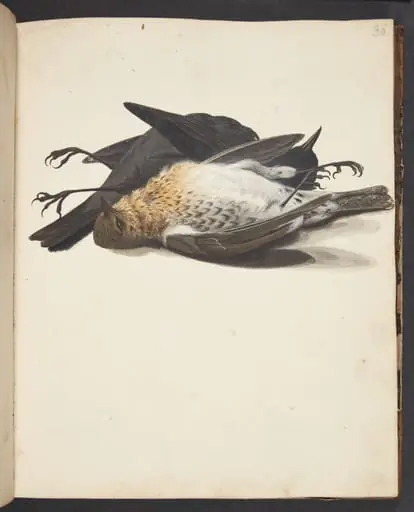 Studie af to døde solsorte, han og hun, liggende
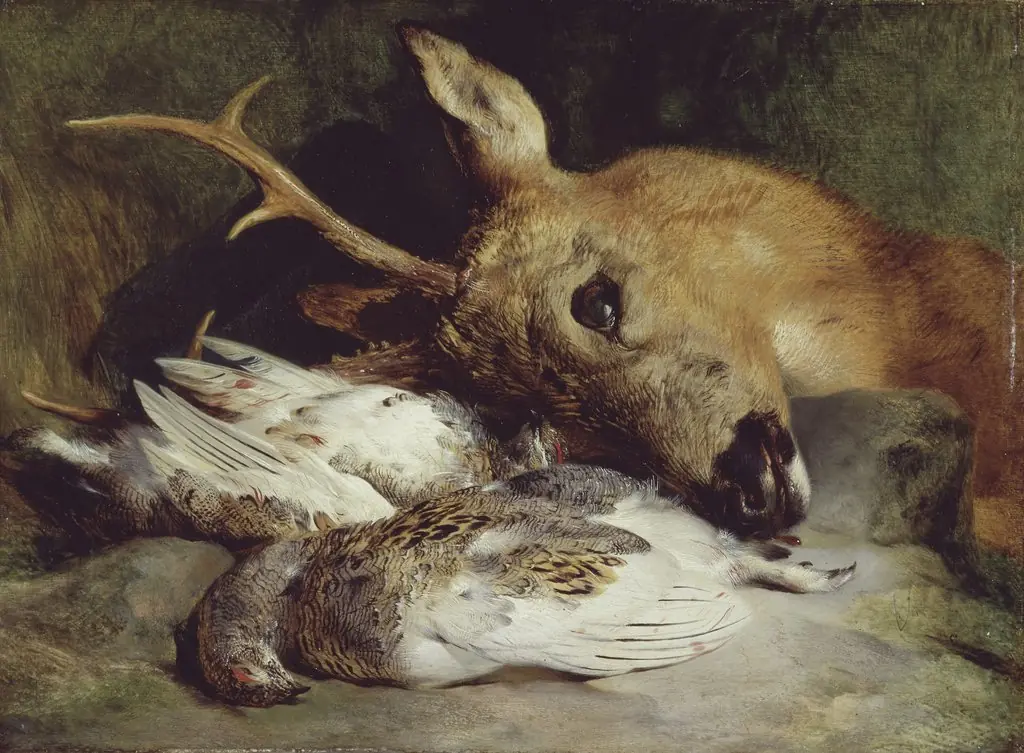 Head of a Roebuck and Two Ptarmigan
 Head of a Roebuck and Two Ptarmigan
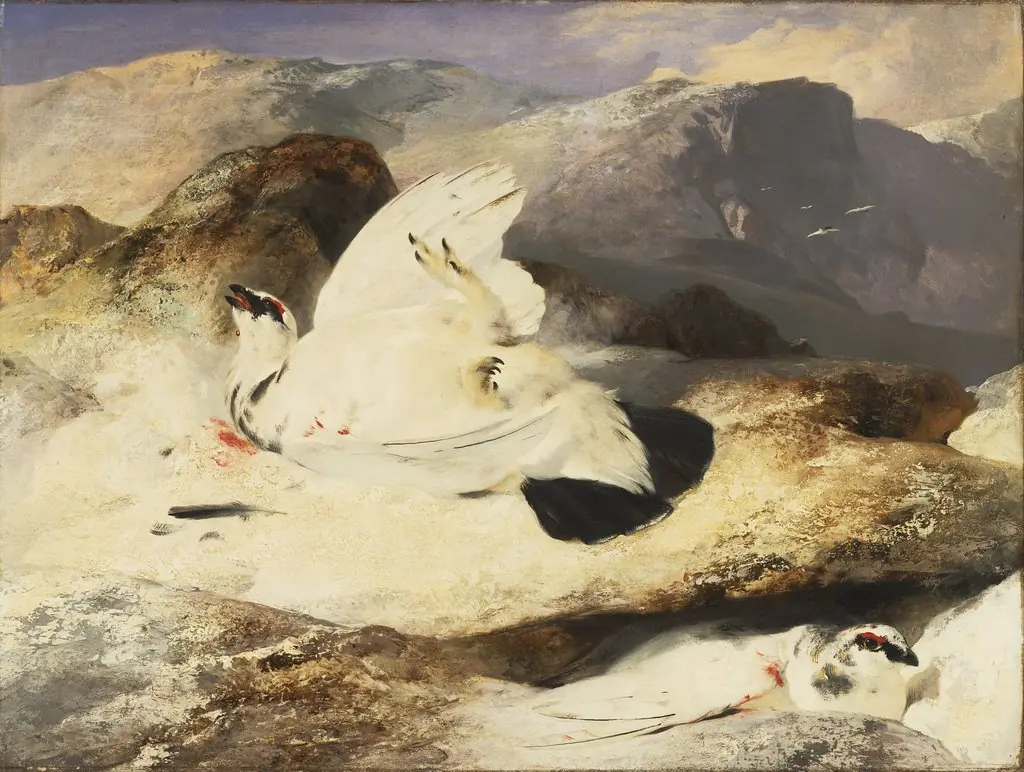 Ptarmigan in a Landscape
 Great Footed Hawk
 A Dead Snipe