Artwork
The Waterfall
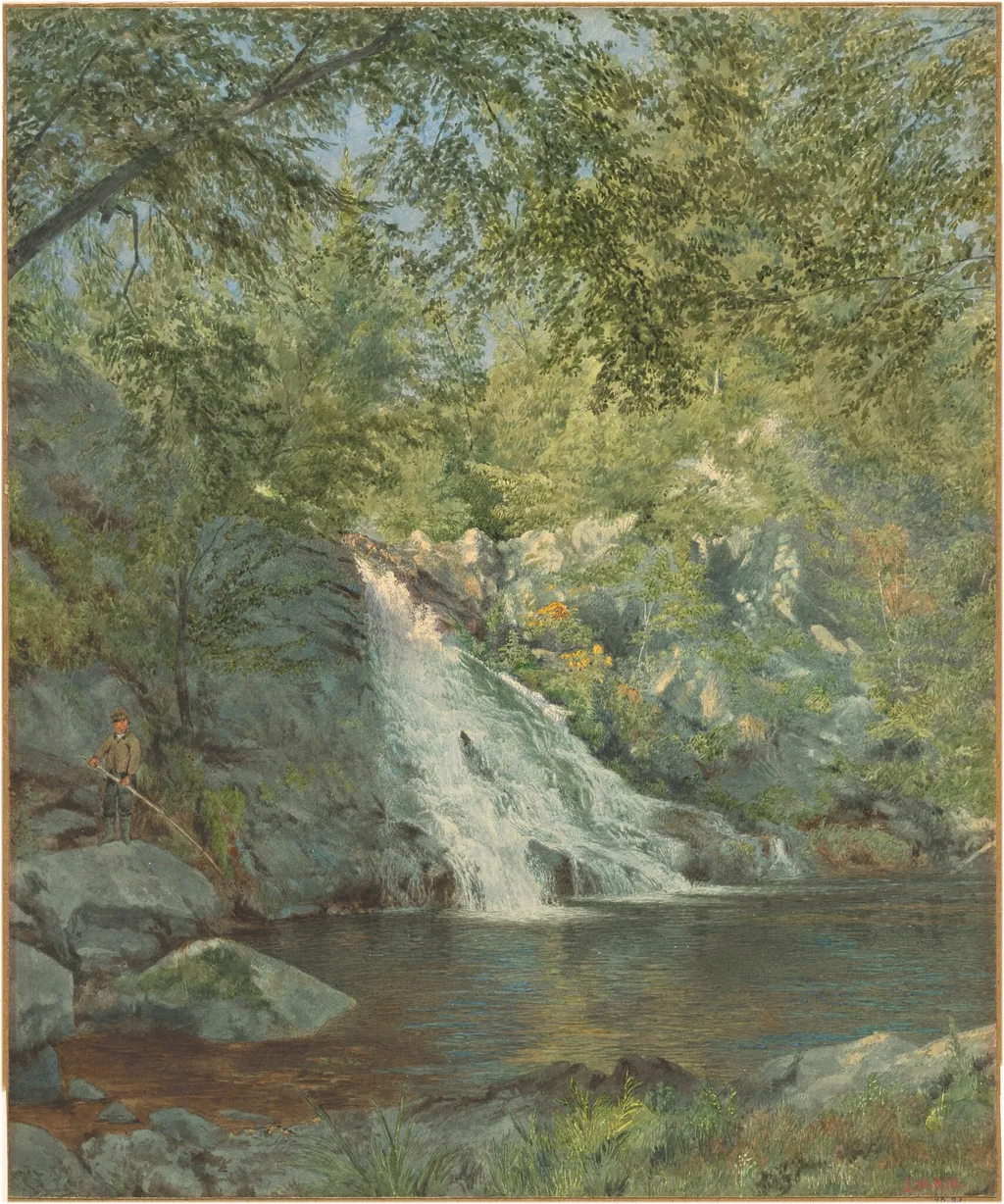
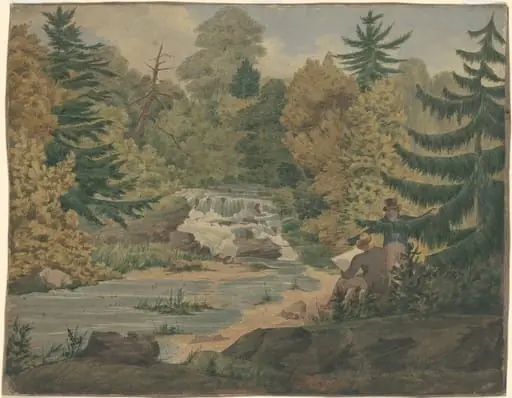
The Waterfall is a gouache drawing by the Impressionist artist John William Hill. It dates from 1870 and is held in the collection of the National Gallery of Art.
About this work
Overview
Created around 1870, The Waterfall is a detailed drawing in watercolor and gouache on paperboard by John William Hill. It depicts a forested cascade, rendered with careful attention to natural textures and subtle tonal shifts. The composition centers on the falling water, framed by dense vegetation and a solitary human figure, suggesting a quiet engagement with the landscape.
Subject & Meaning
A lone figure, dressed in a long coat and hat, stands on the left bank, holding a pole—possibly measuring or observing the water. His presence is unobtrusive, emphasizing the dominance of nature. The scene conveys a contemplative relationship between observer and environment, without overt narrative or symbolism, reflecting a 19th-century interest in quiet, observational realism.
Technique & Style
Hill employed watercolor and gouache over graphite to build layered textures, capturing the froth of the waterfall and the intricate foliage with precision. The muted palette of greens, browns, and grays enhances the atmospheric realism. Fine brushwork renders individual leaves and water ripples, demonstrating a methodical approach that prioritizes observed detail over expressive brushwork.
History & Provenance
The work originates from Hill’s later period, when he focused on topographical and natural subjects. It was likely created during his travels in the northeastern United States, where he documented landscapes for scientific and artistic audiences. The piece remained in private collections until entering institutional holdings in the 20th century.
Context
Though contemporaneous with early Impressionist developments in Europe, Hill’s approach aligns more closely with American topographical drawing traditions. His work reflects the influence of scientific illustration and the Hudson River School’s reverence for nature, but without romanticized grandeur—favoring quiet accuracy over dramatic effect.
Legacy
The Waterfall exemplifies a transitional moment in American art, where detailed observation met emerging interest in natural light and atmosphere. While not widely known today, Hill’s works contributed to the documentation of American landscapes and influenced later artists seeking to balance scientific precision with aesthetic sensitivity.
Own this work as a print
Artist & collection

Artist
John William Hill or often J.W. Hill (January 13, 1812 – September 24, 1879) was a British-born American artist working in watercolor, gouache, lithography, and engraving. Hill's work focused primarily upon natural…

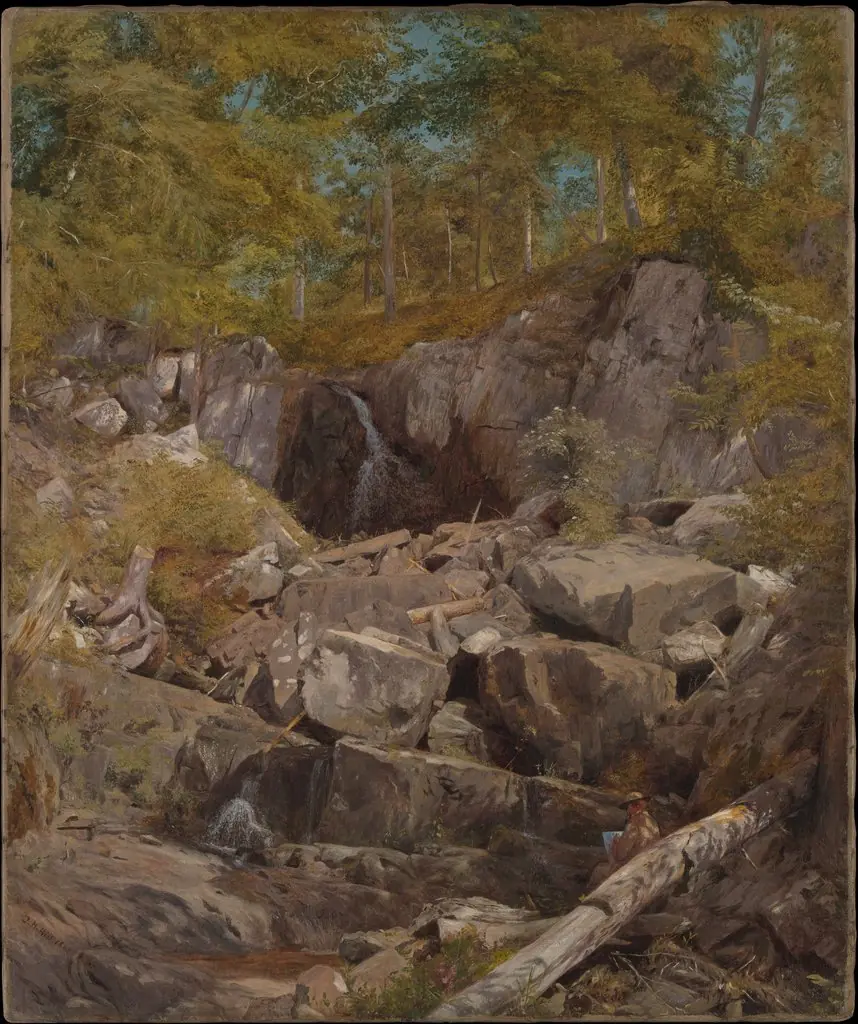 A Study of Trap Rock (Buttermilk Falls)
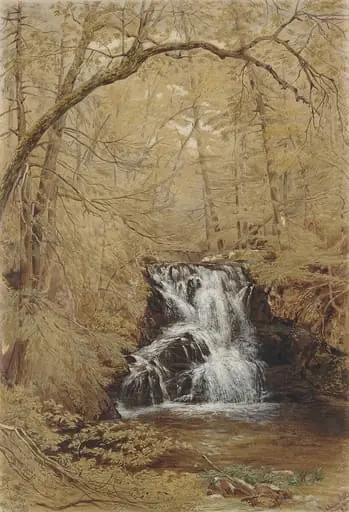 Indian Falls, Indian Brook, Cold Springs, New York
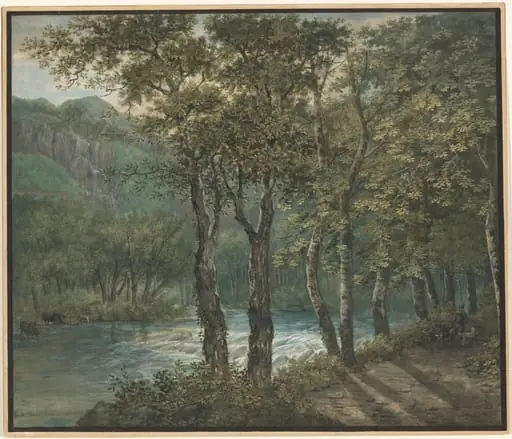 Sunlight Filtering through Trees along the River Sihl
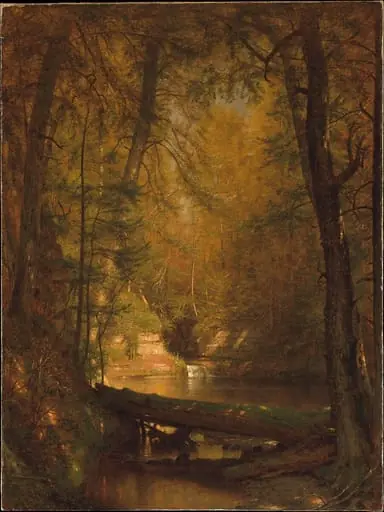 The Trout Pool
 View of the Second Falls on the Sawkill River
 Untitled
 Scene in the Catskills
 Forest Tour at Gerichtsberg near Kaumberg
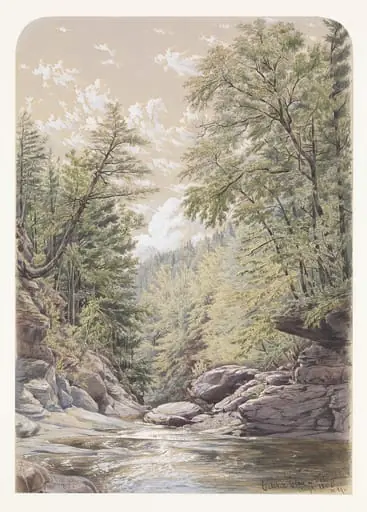 Catskill Clove in Palingsville
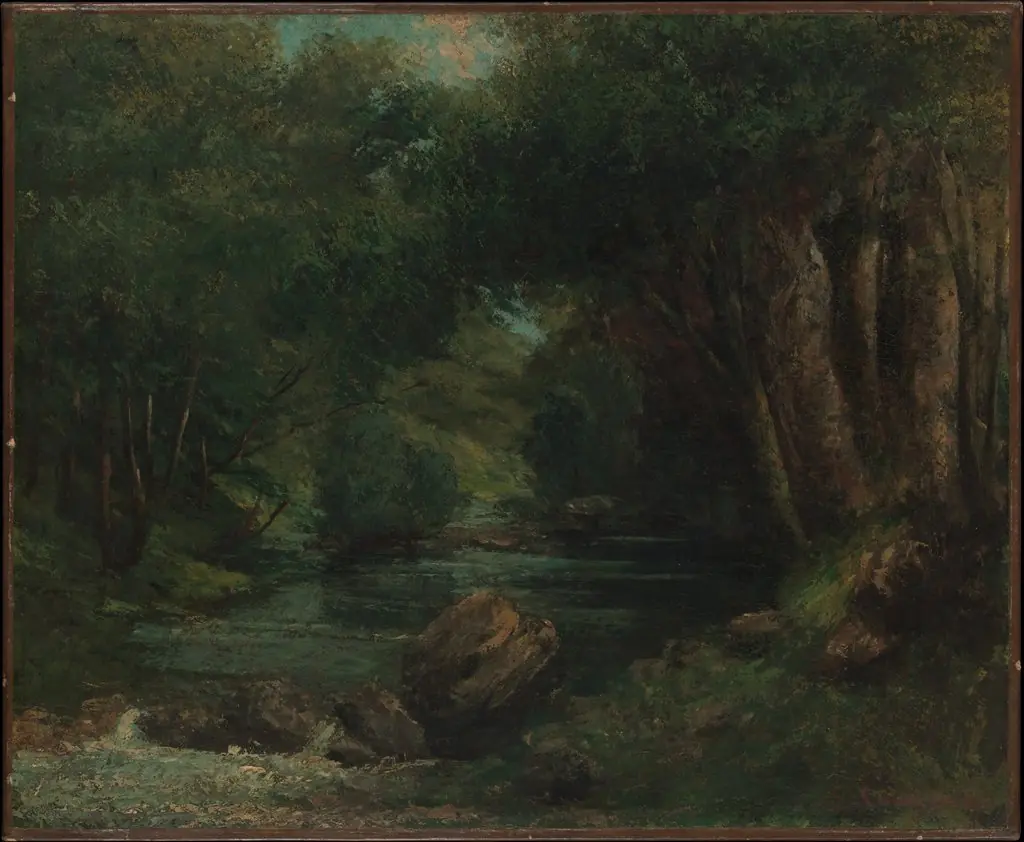 A Brook in the Forest