Artwork
Chancel of Trinity Chapel, New York
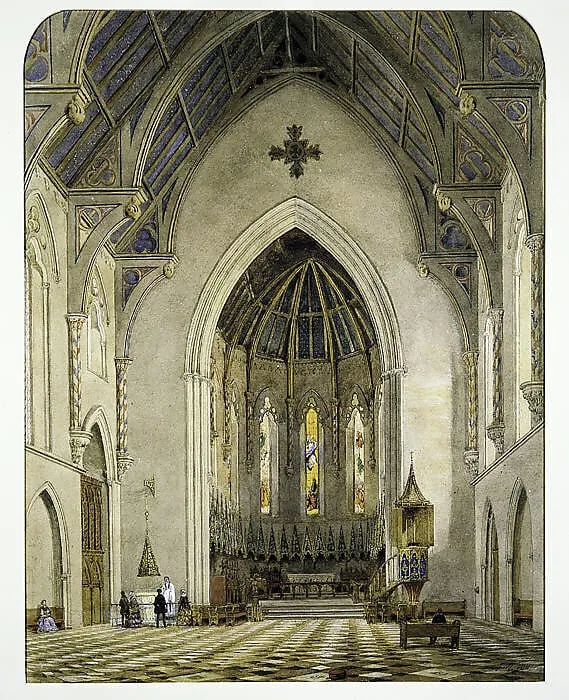
Chancel of Trinity Chapel, New York is a watercolor work on paper by the American Folk Art artist John William Hill. It dates from 1856 and is held in the collection of the Metropolitan Museum of Art.
About this work
You’re looking at a quiet corner of Trinity Chapel—pews, arches, and sunlight streaming through stained glass.
You’re looking at a quiet corner of Trinity Chapel—pews, arches, and sunlight streaming through stained glass. The colors are soft, almost like morning light.
Hill painted this in 1856, when most artists were sketching landscapes. He chose a church interior instead, using tiny brushstrokes to show how light bounces off wood and stone. The details feel real, like you could step into the scene.
If you like how he builds space with light, try searching for the technique: watercolor.
Overview
Created in 1856, *Chancel of Trinity Chapel, New York* is a mixed-media work by John William Hill. The piece combines watercolor, gouache, black ink, graphite, and gum arabic on off‑white wove paper. It records the interior of Trinity Chapel, capturing the quiet atmosphere of the nave with a focus on light and architectural detail.
Subject & Meaning
The composition centers on a tranquil segment of the chapel’s chancel, showing wooden pews, vaulted arches, and stained‑glass windows that admit a soft, diffused light. By rendering the sacred space with meticulous observation, Hill emphasizes the interplay of illumination and material, inviting viewers to contemplate the serene ambience of a 19th‑century worship setting.
Technique & Style
Hill employs fine, layered brushstrokes to model the textures of stone and timber, while ink outlines define structural edges. The integration of gouache adds opacity to areas of shadow, and graphite provides subtle tonal gradations. Influences from John Ruskin and the American Pre‑Raphaelite movement are evident in the work’s precise detail and reverence for natural light.
History & Provenance
Born in Britain and later active in the United States, Hill was known for landscapes and still‑lifes before turning to interior subjects. This piece, produced during a period when most contemporaries favored plein‑air sketches, reflects his departure toward architectural genre. It entered the American Wing collection of the museum, where it remains displayed as part of the institution’s 19th‑century holdings.
Artist & collection

Artist
John William Hill or often J.W. Hill (January 13, 1812 – September 24, 1879) was a British-born American artist working in watercolor, gouache, lithography, and engraving. Hill's work focused primarily upon natural…

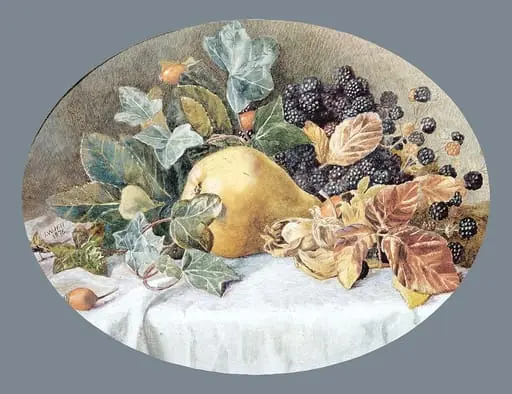
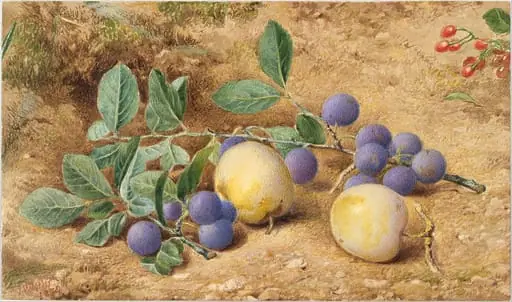

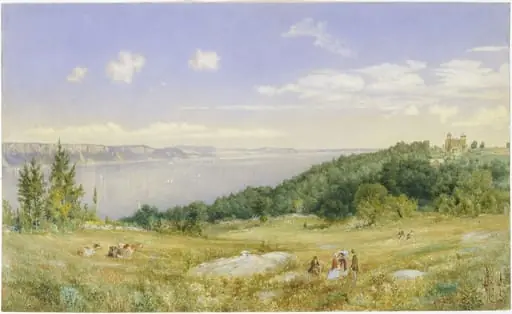

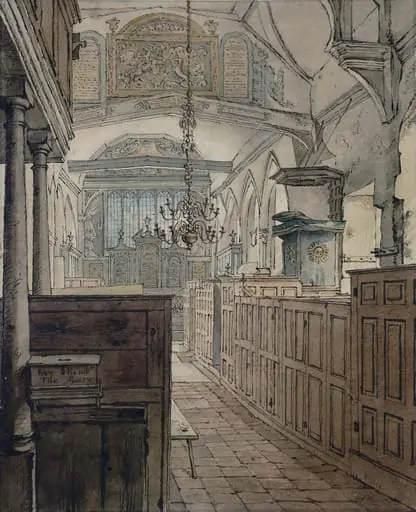 Interior of an old church
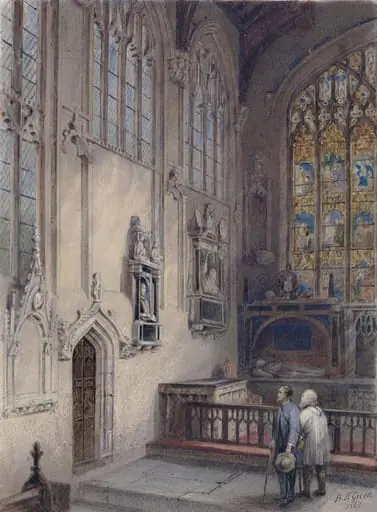 Interior of Stratford-on-Avon church, showing Shakespeare's Monument
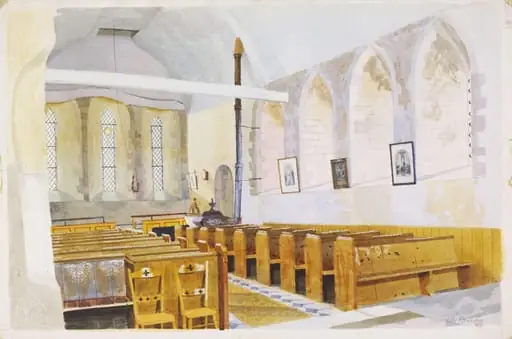 Interior of St. Mary's Church, Tilty
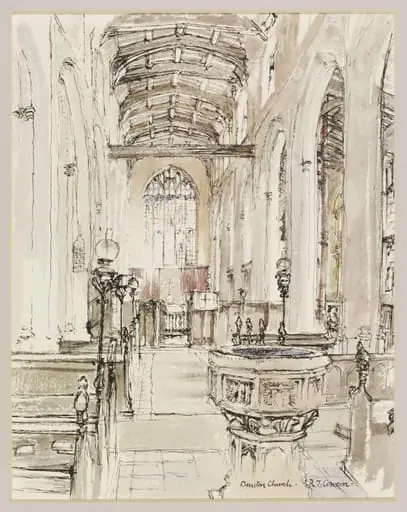 St. Nicholas Church, Denston
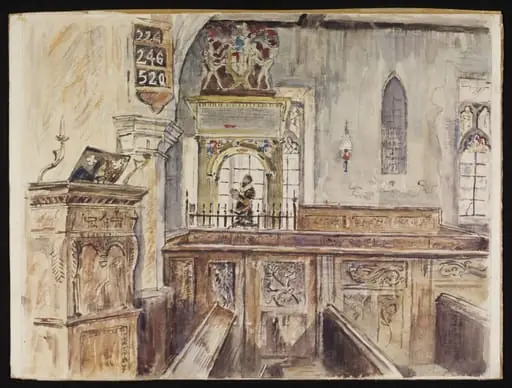 Monument and the Bolingbroke pews, St.Mary’s Church, Lydiard Tregoze
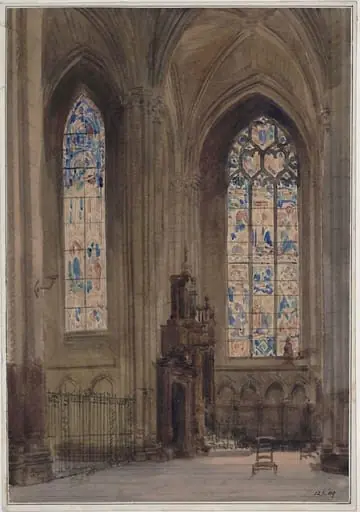 Chapel in the south transept of Rouen Cathedral
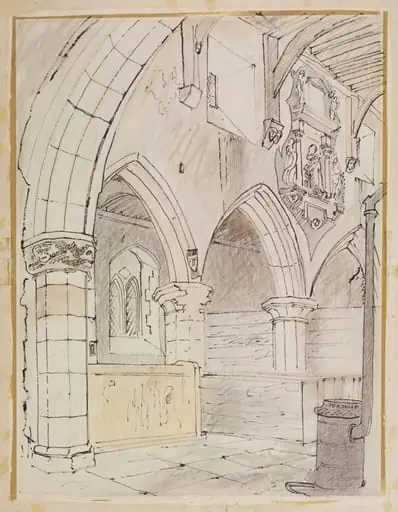 Interior of the Church of St. Denis, Faxton
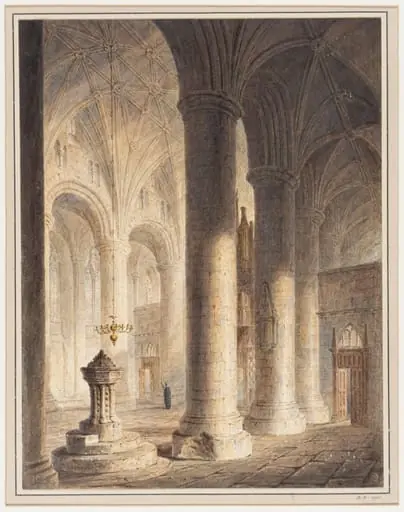 Tewkesbury Abbey
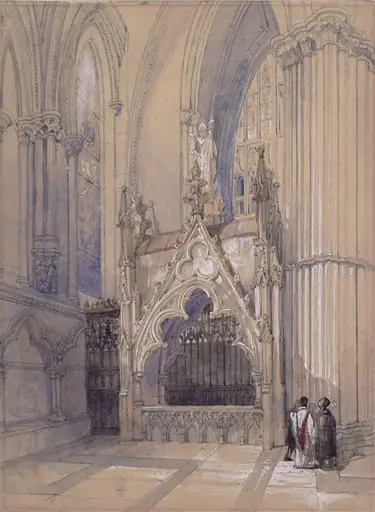 Monument of Archbishop Greenfield in the Eastern Aisle of the North Transept of York Minster
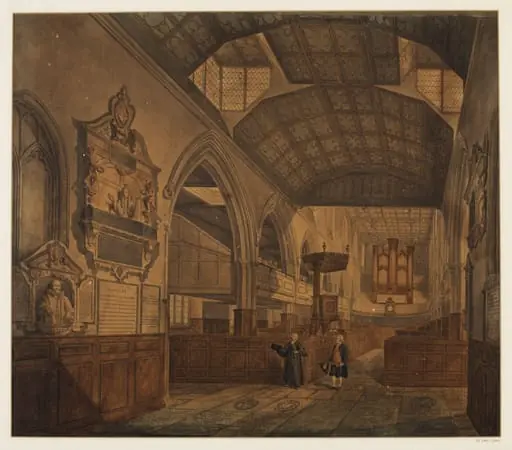 Interior view of the Church of St. Giles, Cripplegate
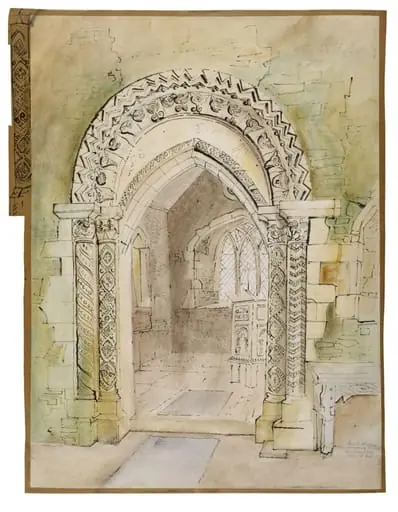 Chancel Arch, St. Peter's, Stanton Low, Buckinghamshire
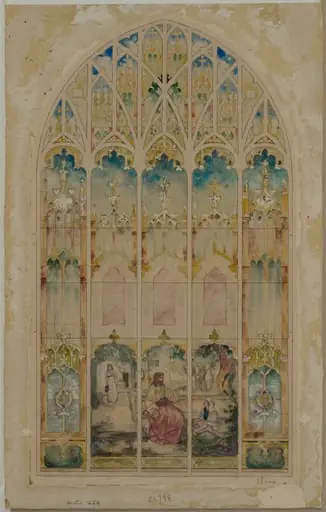 Chapel Window