Artwork
Country road leading from a wood, man driving a flock of sheep
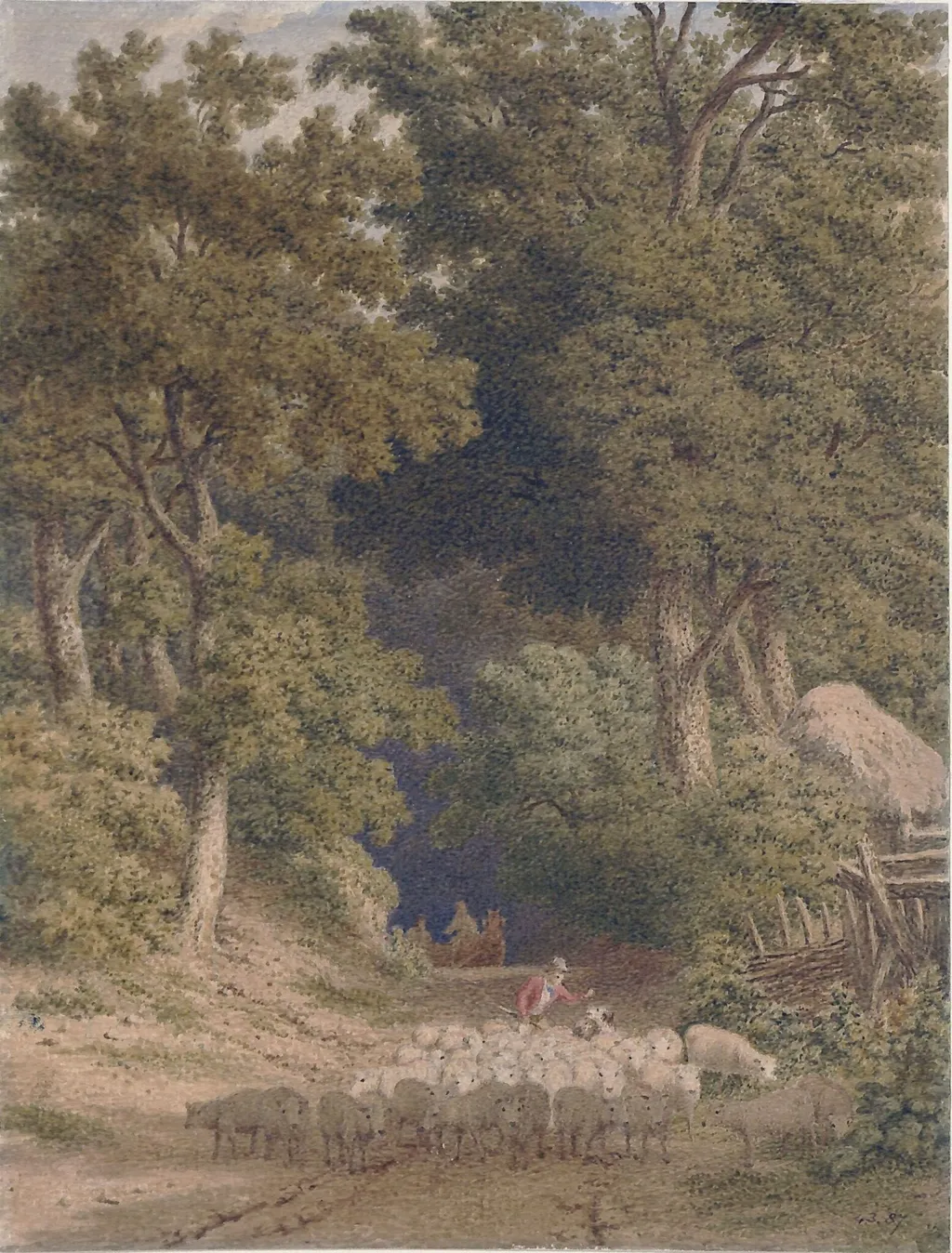
Country road leading from a wood, man driving a flock of sheep is a watercolor work on paper by the Romanticist artist Robert Hills. It dates from 1790 and is held in the collection of the Victoria and Albert Museum.
About this work
Overview
The scene is rendered in muted earth tones—olive greens, browns, and soft grays—with subtle highlights suggesting dappled sunlight filtering through the canopy.
This watercolour depicts a quiet rural pathway emerging from a dense woodland, where a solitary figure guides a flock of sheep along a narrow dirt track. The scene is rendered in muted earth tones—olive greens, browns, and soft grays—with subtle highlights suggesting dappled sunlight filtering through the canopy. The composition emphasizes stillness and solitude, avoiding dramatic action in favor of a gentle, observed moment in the landscape.
Subject & Meaning
The figure in the red coat, likely a shepherd, performs a routine task with quiet dignity, reinforcing themes of rural labor and harmony with nature. The sheep move calmly, their forms blending into the terrain, while the road disappears into the trees, suggesting continuity rather than destination. The absence of buildings or other figures heightens the sense of isolation, evoking a timeless, unspoiled countryside.
Technique & Style
The artist employs delicate, translucent washes to build layered textures in the foliage and earth, using soft edges and minimal detail to suggest depth without precision. Brushwork is restrained, favoring atmospheric effects over definition—trees are indicated by smudged greens, the road by a faint ochre line. The watercolour medium allows for a luminous quality, where light seems to emanate from within the paper rather than be applied on top.
History & Provenance
The work is part of a broader tradition of 19th-century British watercolours that documented rural life with observational precision. While its exact origin remains undocumented, its style aligns with artists associated with the Norwich School or contemporaries who favored intimate landscape studies. It likely circulated among private collectors before entering institutional holdings, reflecting a taste for tranquil, unidealized nature.
Context
Created during a period when industrialization reshaped the British countryside, this image offers a quiet counterpoint to urban growth. Such scenes were valued not as nostalgia but as records of a vanishing way of life, observed with empathy rather than sentimentality. The focus on a single shepherd and his flock reflects a broader cultural interest in agrarian rhythms and the dignity of manual labor.
Legacy
This watercolour contributes to a legacy of British landscape art that prioritized quiet observation over grandeur. Its influence lies in its restraint—avoiding romanticized vistas in favor of unadorned, everyday moments. Later artists and photographers drew from its emphasis on subtle light and natural composition, helping to shape a more intimate mode of landscape representation in the 20th century.
Own this work as a print
Artist & collection
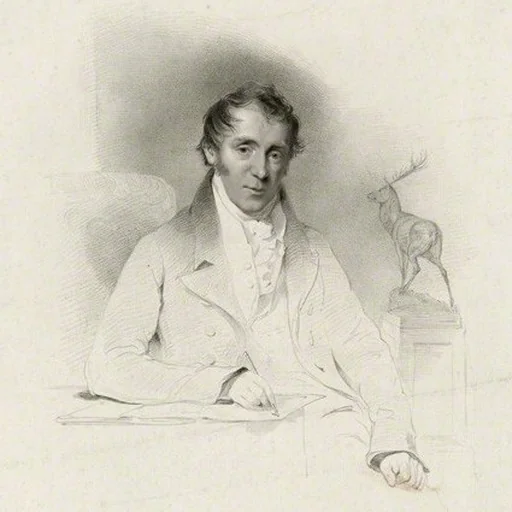
Artist
Robert Hills (26 June 1769 – 14 May 1844) was an English painter and etcher. Hills was born in Islington. He initially studied under John Alexander Gresse, then enrolled at the Royal Academy of Arts in 1788. He…

 Woodland Road with Ox-waggon
 Landscape: Ripon Cathedral in the distance
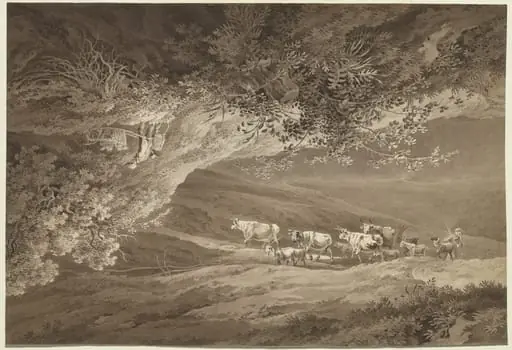 A Landscape with a Herd of Cows and Goats, Surmounted by Another Landscape, Upside-down, with a Man Pushing a Wheelbarrow
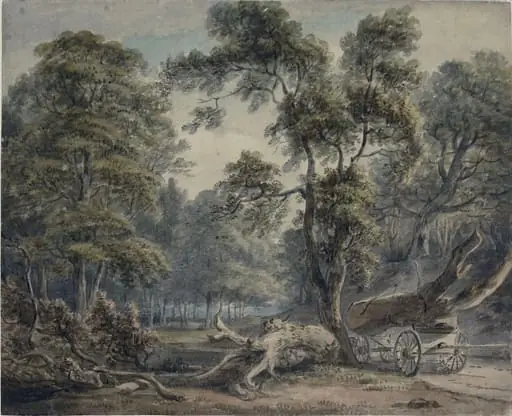 Scene in Windsor Forest
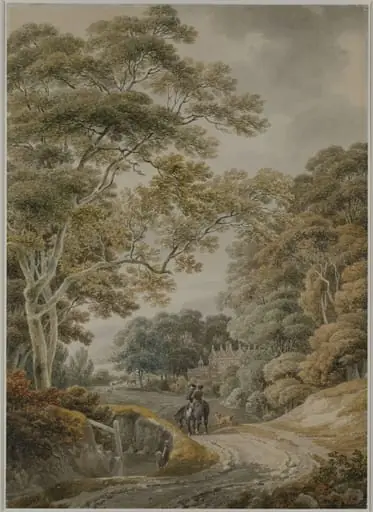 Godinton, near Ashford, Kent
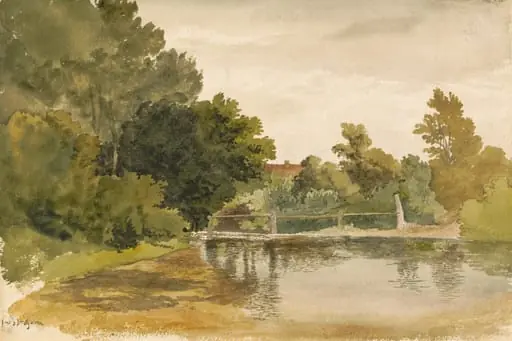
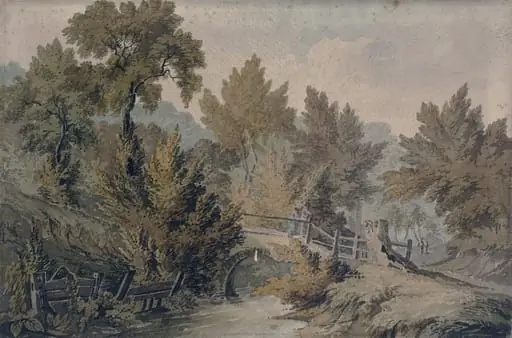 Landscape with Bridge and Stream
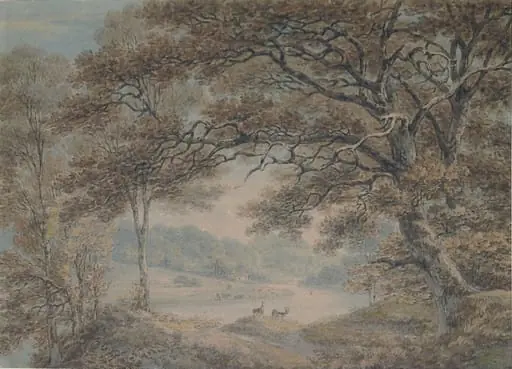 A Scene At Knights, Downton, Herefordshire
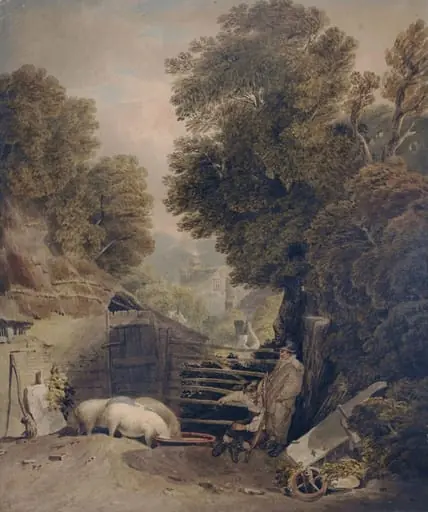 Landscape and Figures : Scene in Windsor Forest
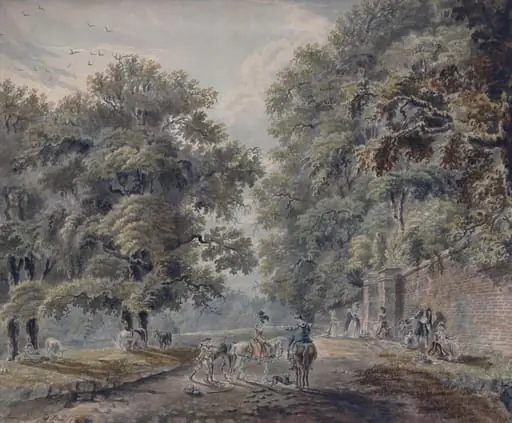 Entrance to Greenwich Park from Blackheath