Artwork
Entrance to Greenwich Park from Blackheath
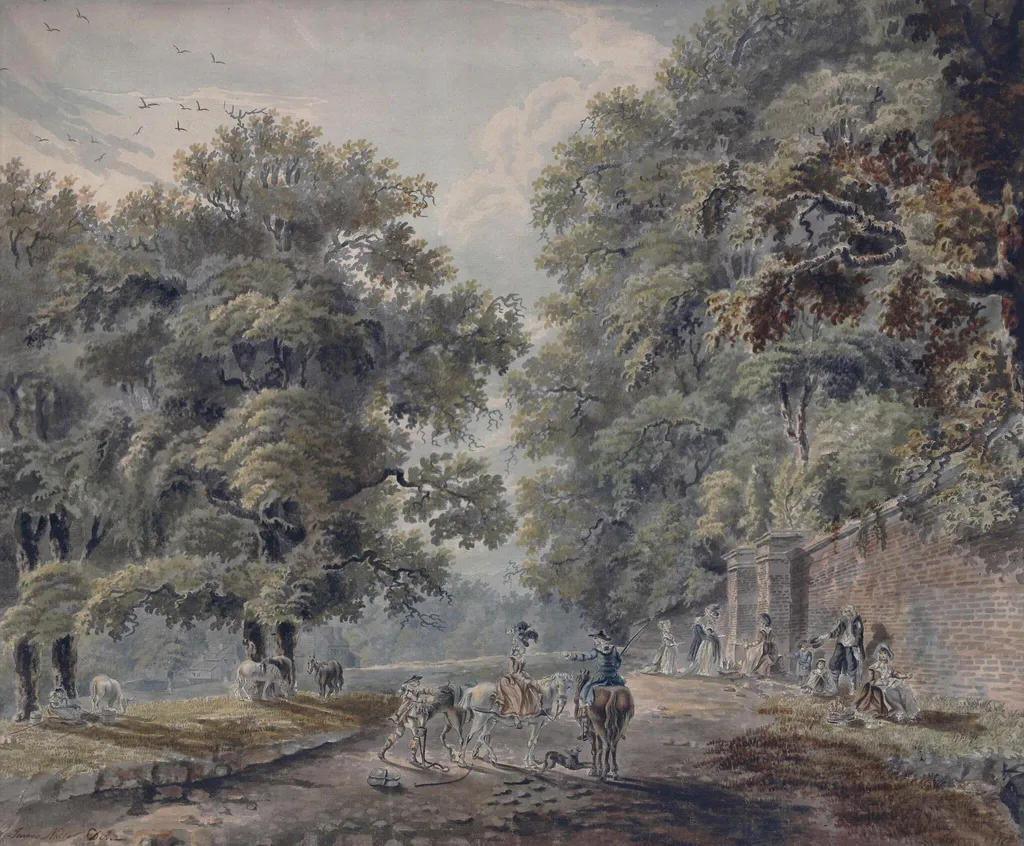
Entrance to Greenwich Park from Blackheath is a watercolor work on paper by James Miller. It dates from 1750 and is held in the collection of the Victoria and Albert Museum.
About this work
Overview
Executed by James Miller, the work presents a quiet moment at the park’s boundary, rendered with delicate washes that emphasize atmosphere over detail.
This watercolour, dated 1750, captures the approach to Greenwich Park from Blackheath, a rural route then connecting London to the royal grounds. Executed by James Miller, the work presents a quiet moment at the park’s boundary, rendered with delicate washes that emphasize atmosphere over detail. The composition invites the viewer to pause, observing the interplay between figures and landscape in a time when such views were becoming subjects of artistic interest.
Subject & Meaning
The scene centers on a woman on horseback, guided by a man, while another figure rests on a stone, observing them. These figures suggest leisurely travel or a social outing, typical of genteel activity in the 18th century. The brick wall and tree-lined path mark the transition from open heath to enclosed parkland, subtly framing the boundary between public space and private royal territory. The stillness of the moment conveys contemplation rather than movement.
Technique & Style
Miller employs transparent watercolour washes to achieve a light, airy quality, allowing the paper’s texture to contribute to the softness of the landscape. Details are suggested rather than defined—figures are simplified, foliage rendered in loose strokes. The palette is muted, dominated by earth tones and pale greens, reinforcing the calm, early morning or late afternoon mood. The technique prioritizes tone and atmosphere over precision, aligning with emerging trends in topographical watercolour.
History & Provenance
The work is attributed to James Miller, an English artist active in the mid-18th century known for topographical views. While little is documented about his life, his surviving works often depict London’s outskirts and royal parks. This piece likely originated as a personal study or commission, possibly intended for private circulation rather than public exhibition. Its survival suggests it was valued within a circle interested in landscape and place.
Context
In the 1750s, Greenwich Park was a favored retreat for London’s elite, accessible via Blackheath, a common thoroughfare. Artists increasingly turned to such suburban scenes, reflecting a growing appreciation for the natural and the everyday. Miller’s work aligns with a broader shift away from grand historical subjects toward intimate, observed moments in the landscape—a trend that would later influence the English watercolour tradition.
Legacy
Though James Miller is not widely remembered today, this watercolour contributes to a quiet lineage of British topographical art that valued observation over drama. Its restrained composition and sensitivity to light helped lay groundwork for later watercolourists like Turner and Cotman. The piece endures as a modest but authentic record of how ordinary people engaged with the landscape at the edge of the capital.
Artist & collection
Artist
James Miller painted top-down views of London’s riverfront in the 1700s, turning everyday bridges and embankments into quiet, sunlit scenes.

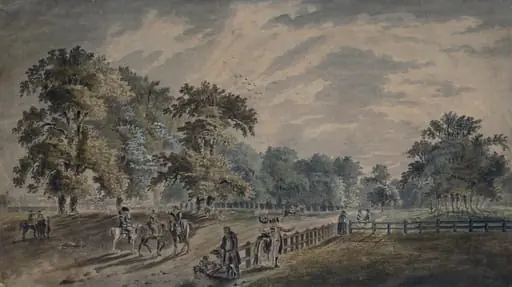 St. James's Park
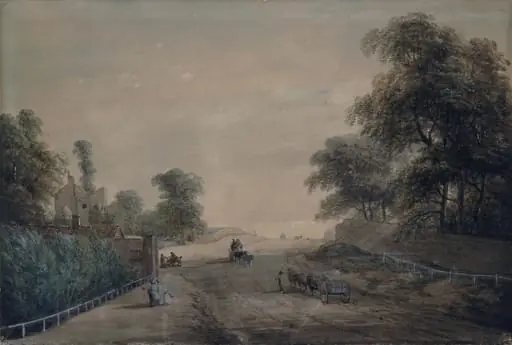 Bayswater Hill
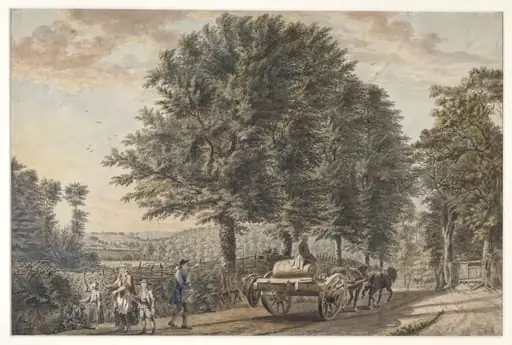 Landscape with Dray and Figures
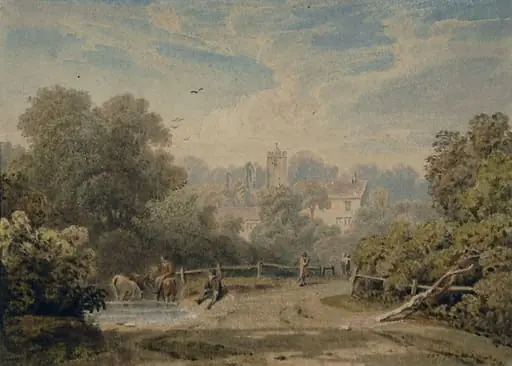 Crowhurst near Hastings
 Landscape: Ripon Cathedral in the distance
 Landscape with a pond and country folk outside a cottage
 Godinton, near Ashford, Kent
 Landscape with cottage and postchaise
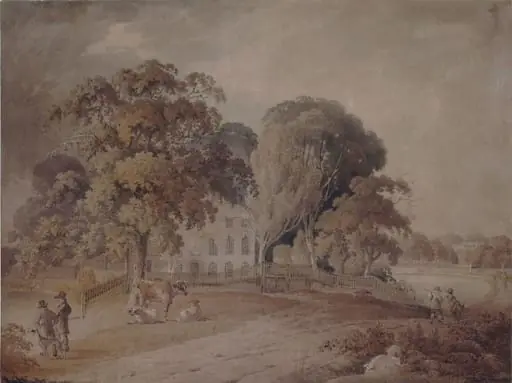 Lake House, Epping
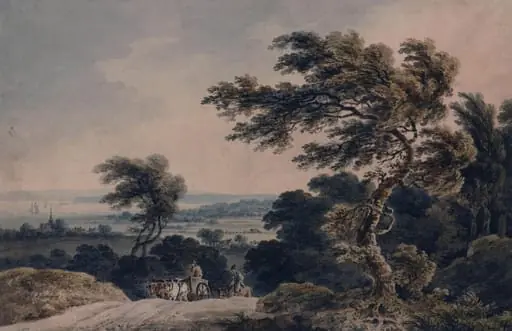 Near Totnes, Devonshire
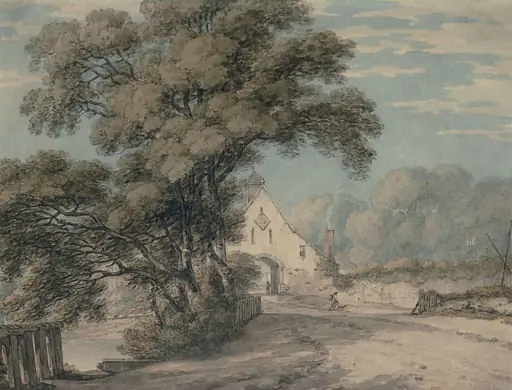 The Gateway at Beaulieu Abbey, Hants
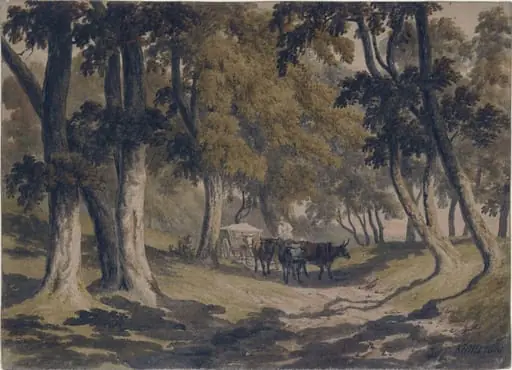 Woodland Road with Ox-waggon