Artwork
Trees at Beddington
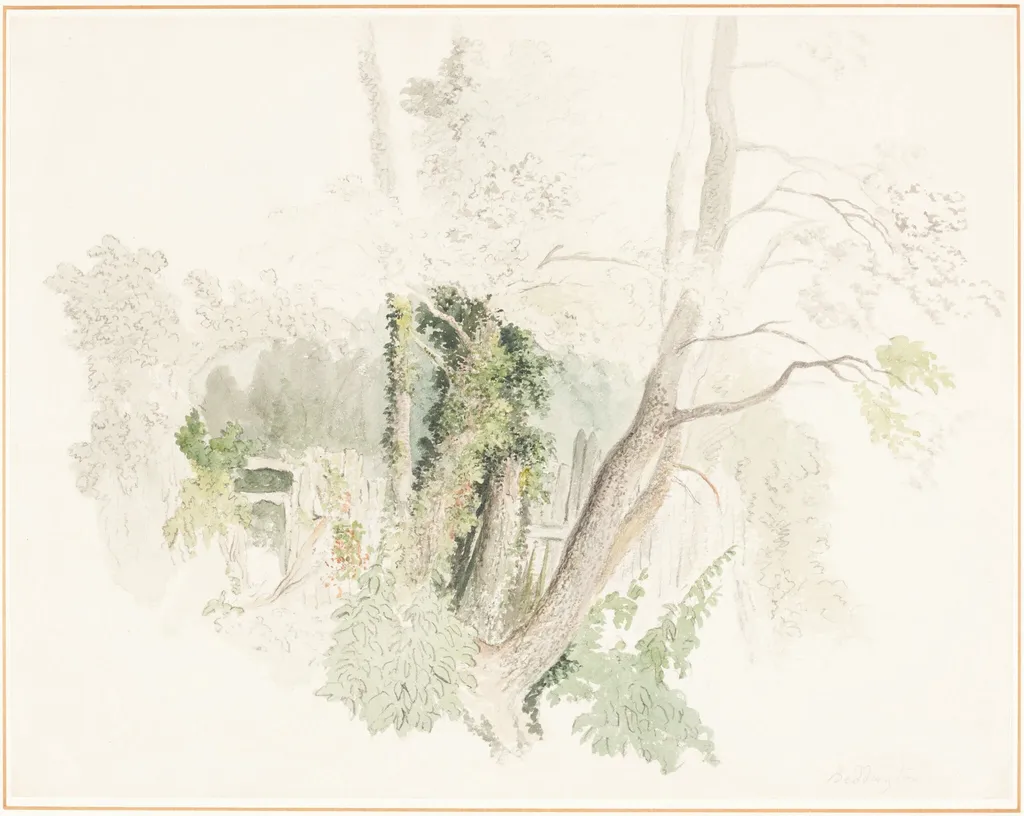
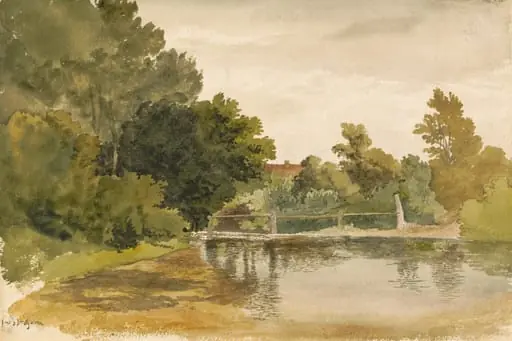
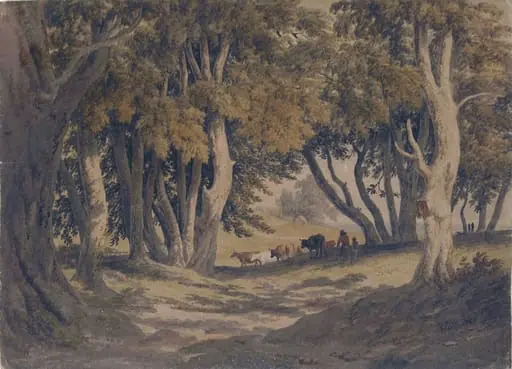
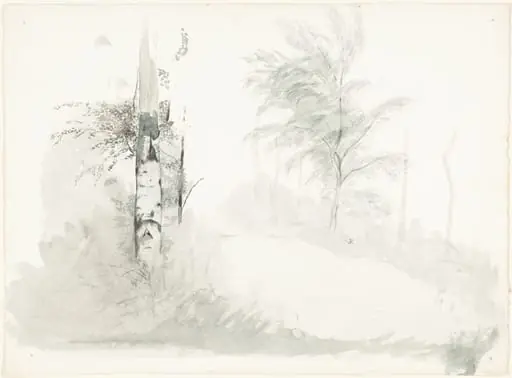
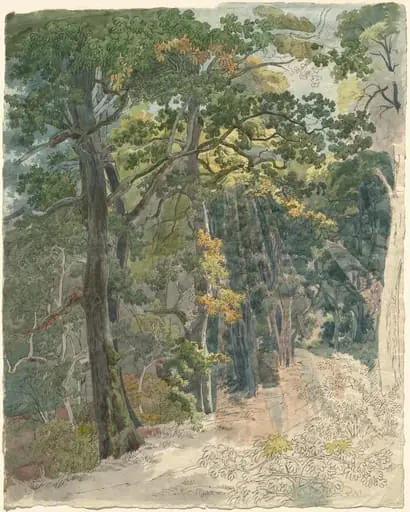
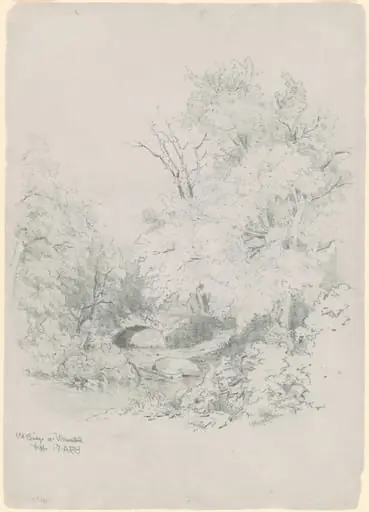
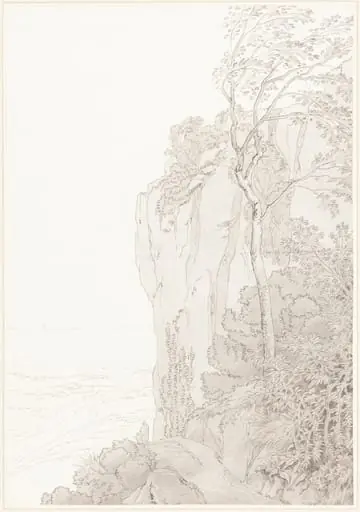
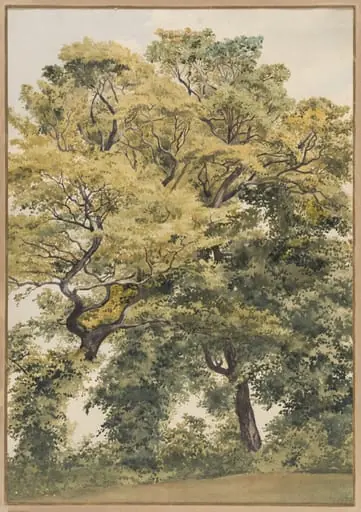
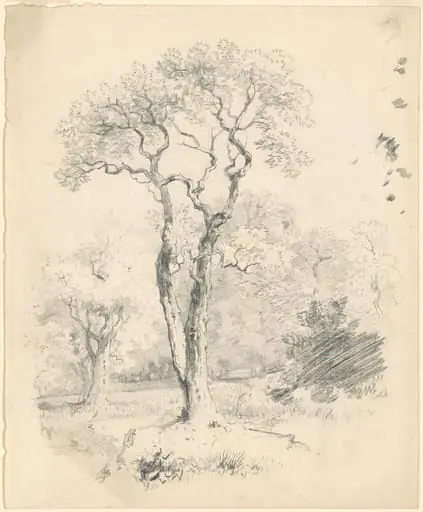
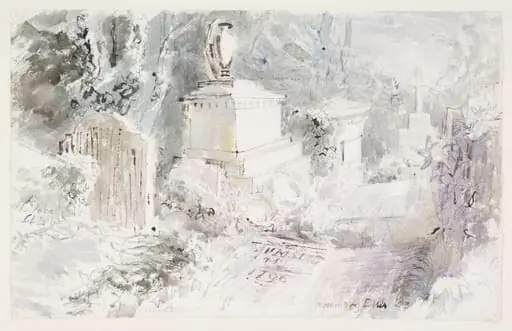
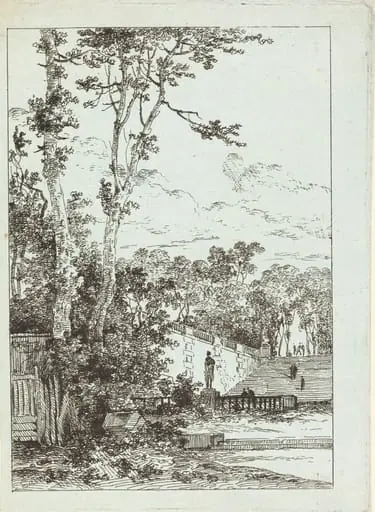
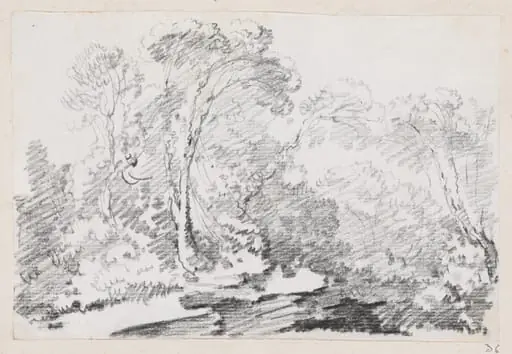
Trees at Beddington is a graphite drawing by the Romanticist artist Robert Hills. It dates from 1805 and is held in the collection of the National Gallery of Art.
About this work
Overview
The work belongs to a body of sketches made during his travels, where he observed nature with a focus on atmosphere rather than precision.
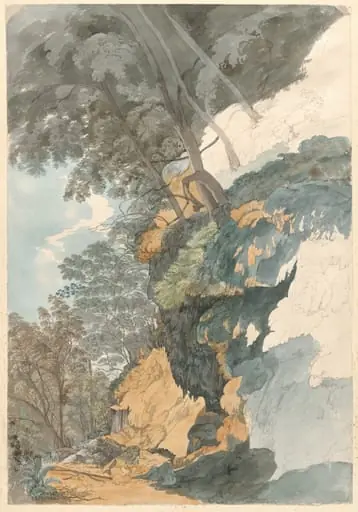
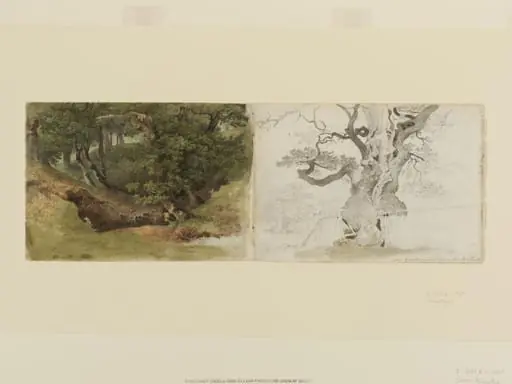
Created around 1805, *Trees at Beddington* is a delicate drawing by Robert Hills, executed in graphite and watercolor on wove paper. It reflects his sustained interest in the English countryside, particularly the quiet, unadorned landscapes of Surrey. The work belongs to a body of sketches made during his travels, where he observed nature with a focus on atmosphere rather than precision. Hills, trained at the Royal Academy, favored intimate, observational studies over grand compositions.
Subject & Meaning
The scene portrays a narrow path threading through a mixed woodland, with one side showing bare winter branches and the other retaining autumnal foliage. A low wooden fence borders the trail, suggesting human presence without intrusion. The composition conveys a sense of stillness and seasonal transition, not as a narrative but as a quiet record of place. There are no figures or animals, emphasizing solitude and the subtle rhythms of the natural world.
Technique & Style
Hills employed a light, rapid hand, laying soft watercolor washes over a faint graphite underdrawing. The colors blend seamlessly, creating a hazy, atmospheric effect that suggests mist or early morning light. Details are suggested rather than defined—leaves, bark, and grass are rendered with minimal strokes. This approach prioritizes mood and light over topographical accuracy, aligning with the tradition of topographical sketching adapted for personal observation.
History & Provenance
Robert Hills, an English artist active in the late 18th and early 19th centuries, produced numerous drawings of rural England, many now held in institutional collections including the British Museum. *Trees at Beddington* is one of many works from his time spent sketching in Surrey, likely during the early 1800s. While its exact provenance before institutional acquisition is undocumented, its style and materials are consistent with his known practice and the broader culture of amateur and professional landscape sketching of the period.
Context
During the early 1800s, British artists increasingly turned to direct observation of the countryside, influenced by Romantic ideals and the rise of topographical drawing. Hills worked within this trend, avoiding dramatic landscapes in favor of modest, everyday scenes. His training under John Alexander Gresse and at the Royal Academy provided technical grounding, yet his sketches reveal a personal, unpretentious engagement with nature, distinct from the grander ambitions of contemporaries like Turner.
Legacy
Hills’s drawings, including *Trees at Beddington*, remain valuable for their unembellished documentation of rural England before industrialization. Though not widely exhibited today, his works contribute to the historical record of landscape art as a practice of quiet observation. They are studied for their technique and sensitivity to seasonal change, offering insight into how artists of the time engaged with nature beyond formal commissions or public exhibitions.
Artist & collection
Artist
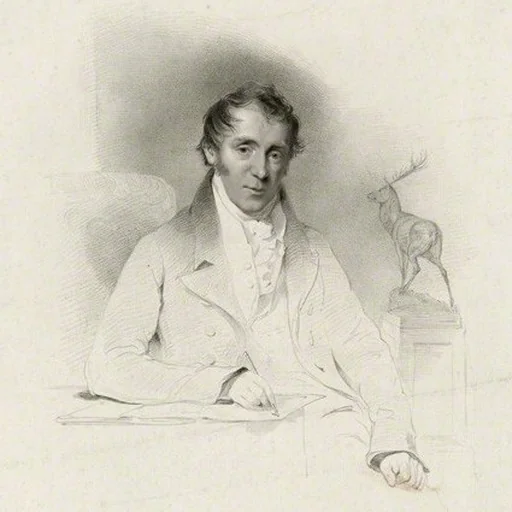
Robert Hills (26 June 1769 – 14 May 1844) was an English painter and etcher. Hills was born in Islington. He initially studied under John Alexander Gresse, then enrolled at the Royal Academy of Arts in 1788. He…