Artwork
Untitled
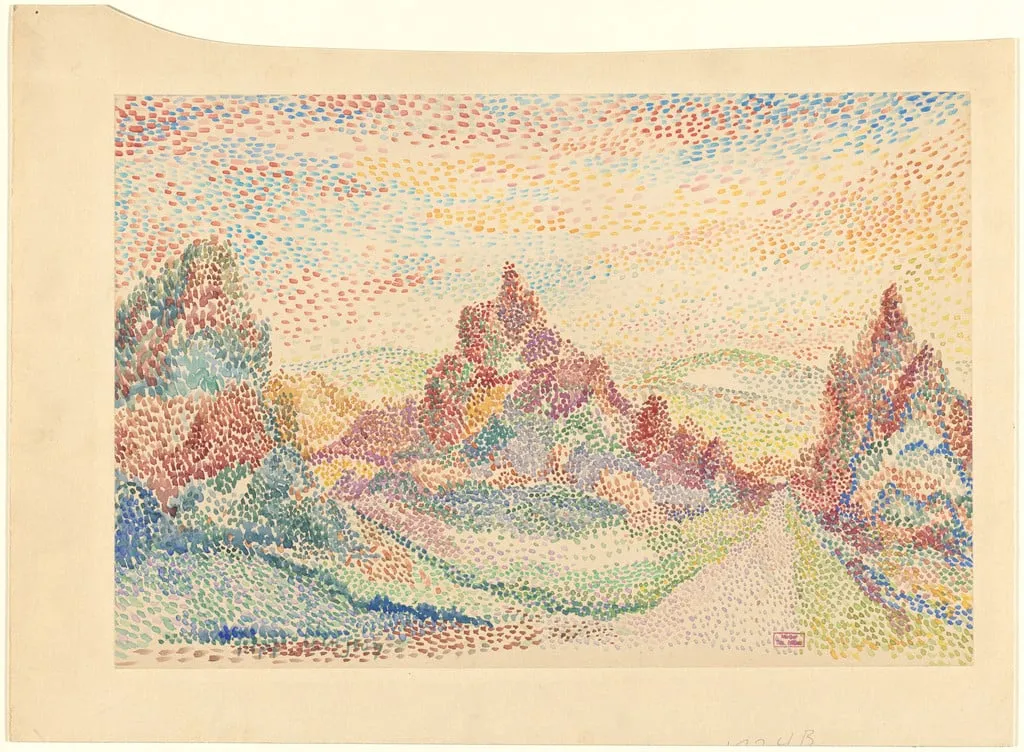
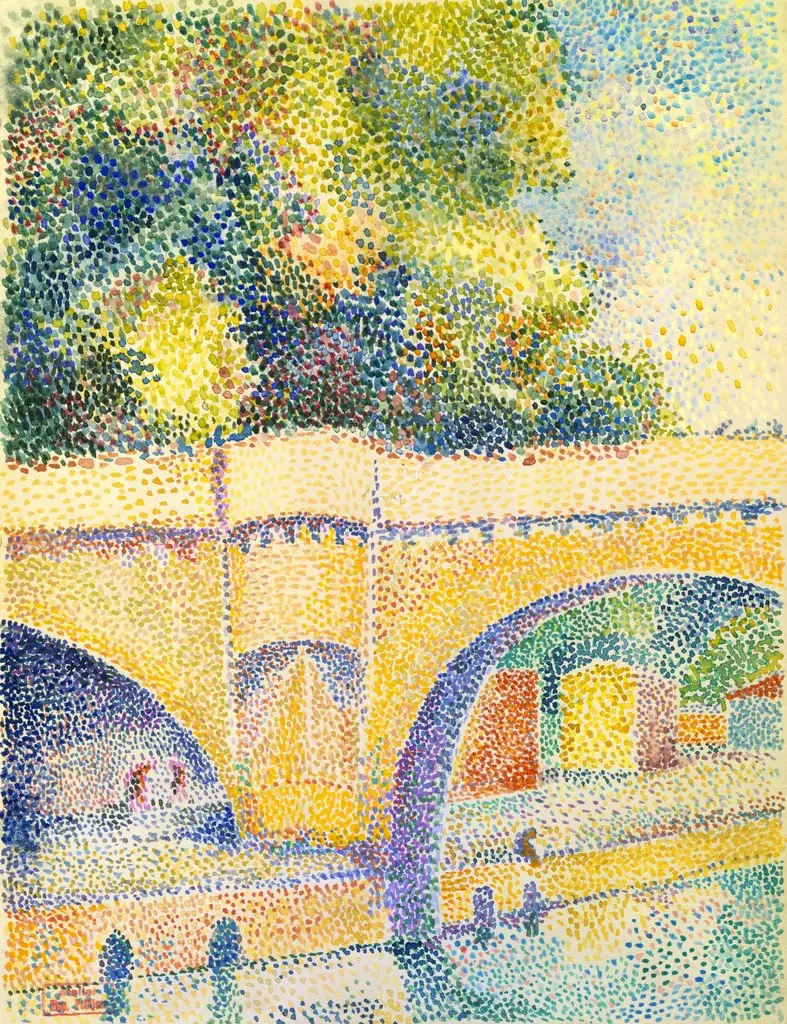
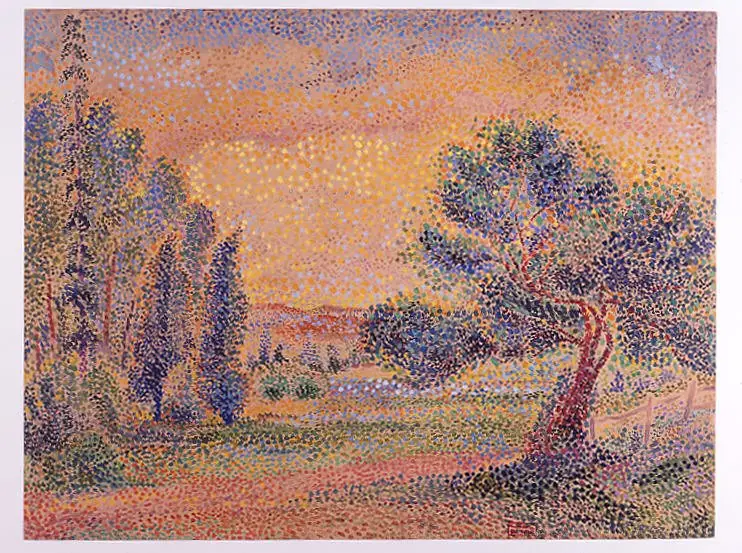
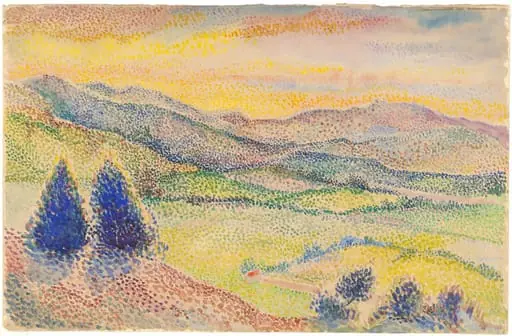
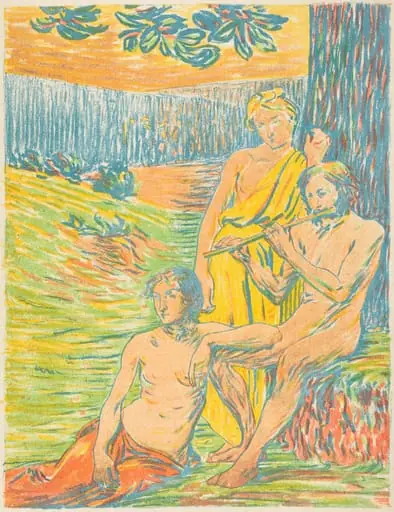
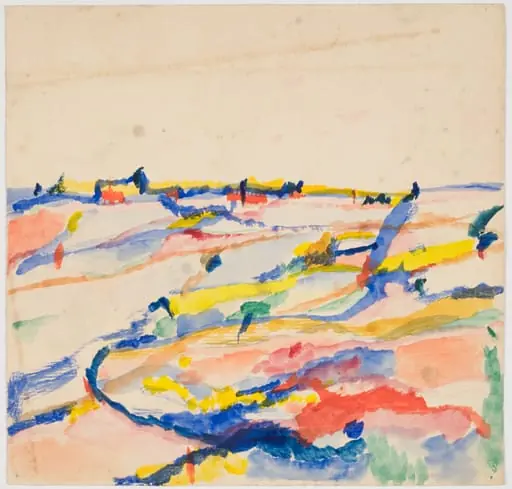
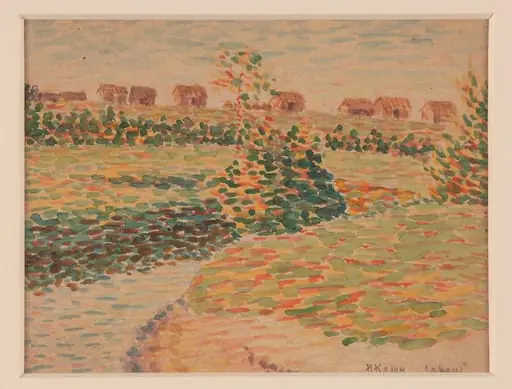
Untitled is a watercolor drawing by Hippolyte Petitjean. It dates from 1900 and is held in the collection of the Museum of Modern Art.
About this work
Overview
This untitled work by Hippolyte Petitjean dates to approximately 1900 and exemplifies the artist’s engagement with Post-Impressionist principles.
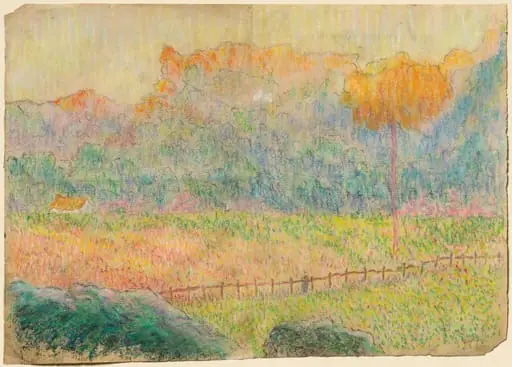
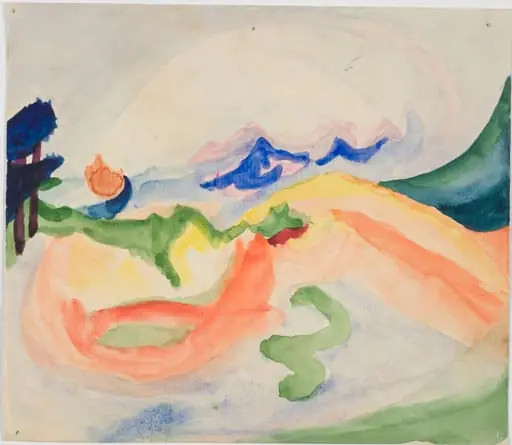
This untitled work by Hippolyte Petitjean dates to approximately 1900 and exemplifies the artist’s engagement with Post-Impressionist principles. Executed in watercolor on paper, the composition presents a landscape rendered through a systematic application of discrete color marks. The medium’s translucency and the artist’s methodical technique converge in a scene that balances precision with atmospheric effect.
Subject & Meaning
The drawing depicts a tranquil outdoor setting, featuring a serpentine path flanked by trees. The subject matter aligns with Petitjean’s frequent exploration of natural motifs, where form and light interact without narrative weight. The absence of figures or dramatic incident directs attention to the interplay of color and space, suggesting an interest in perceptual experience over symbolic content.
Technique & Style
Petitjean employed a pointillist technique, constructing the image through small, distinct dots of pigment. This approach, derived from Neo-Impressionist practice, relies on optical mixing rather than blended strokes. The watercolor medium allows for layered transparency, while the varied hues—blues, greens, and yellows—create depth and luminosity. The methodical application reflects the movement’s emphasis on scientific color theory.
History & Provenance
Created around the turn of the 20th century, the work entered the collection of The Museum of Modern Art at an unspecified date. Its early history remains undocumented, though its inclusion in a major institution underscores its significance within Petitjean’s oeuvre. The untitled status suggests it may have been part of a series or exploratory studies rather than a commissioned piece.
Context
Petitjean’s work emerged during a period of experimentation among Post-Impressionist artists, who sought to refine Impressionism’s focus on light and color. His adoption of pointillism aligns with contemporaries like Georges Seurat and Paul Signac, though his watercolor practice distinguishes him from the oil-based methods more commonly associated with the style. The work reflects broader debates about perception and representation in late 19th-century French art.
Legacy
Though less prominent than some of his peers, Petitjean’s contributions to pointillism expand the understanding of the technique’s versatility. This watercolor demonstrates how the method could adapt to lighter, more fluid media, influencing later artists who explored optical effects. Its presence in a modern art collection underscores its role in the evolution of abstract and color-based approaches in 20th-century art.
Artist & collection
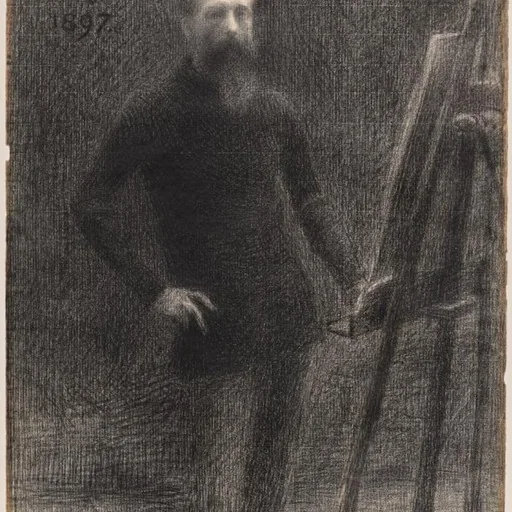
Artist
Hippolyte Petitjean (French pronunciation: ; 11 September 1854, Mâcon – 18 September 1929, Paris) was a French Post-Impressionist painter who practiced the technique of pointillism.