Artwork
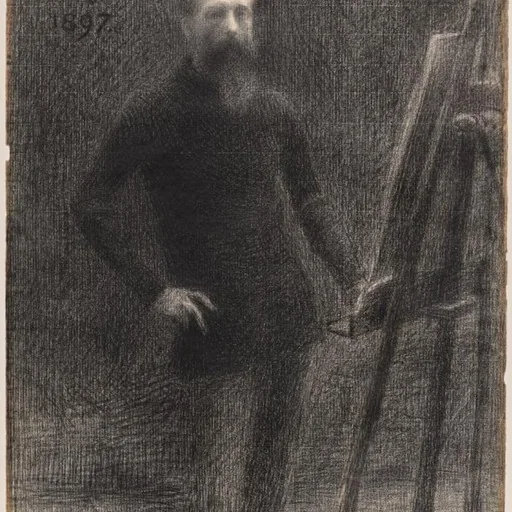
Self-Portrait at Easel
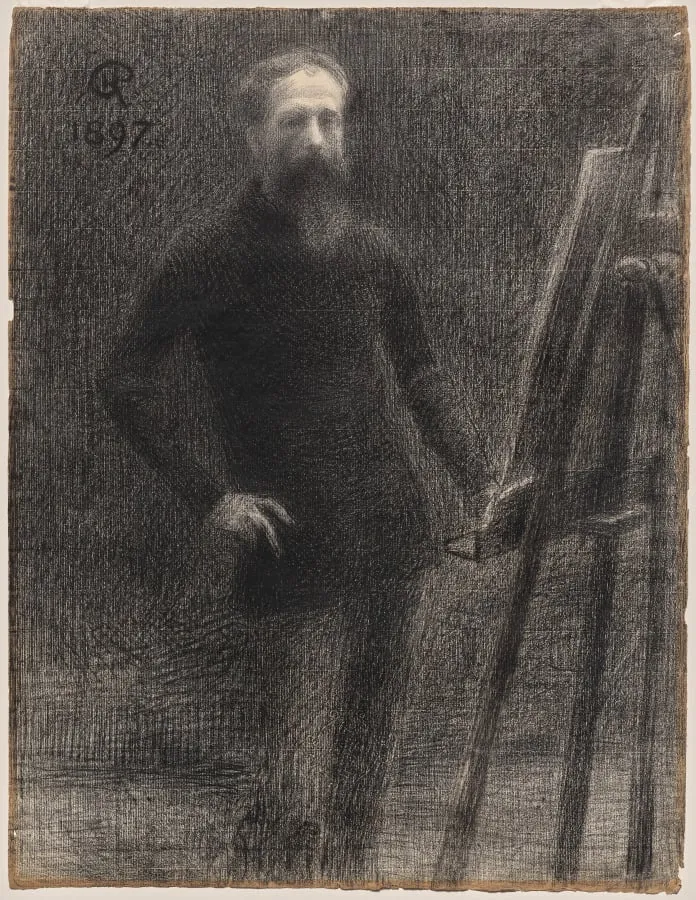
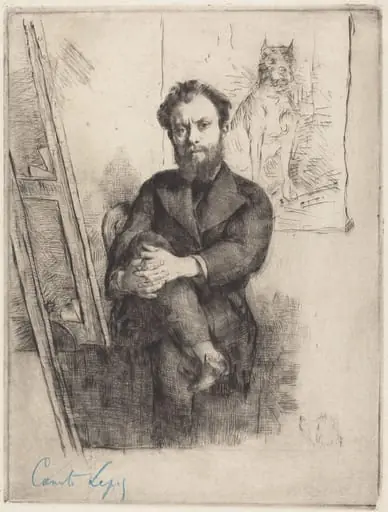
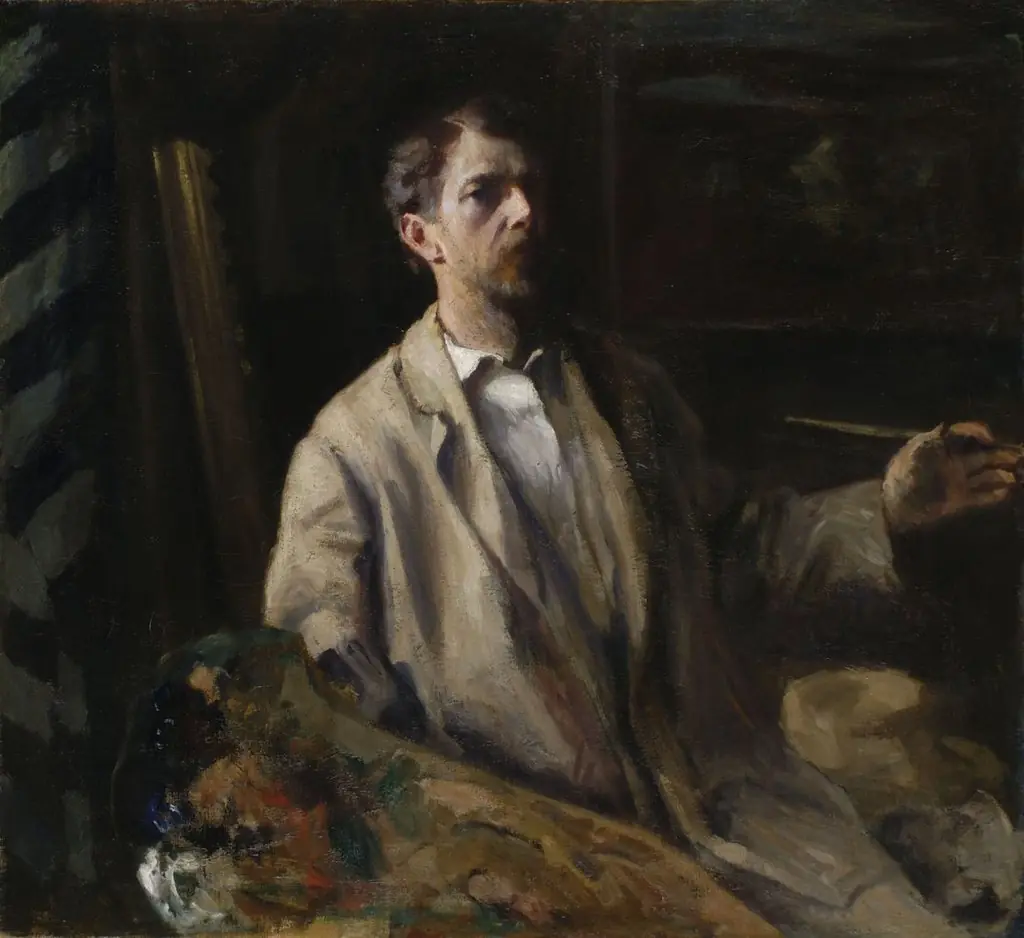
Self-Portrait at Easel is a drawing by the Impressionist artist Hippolyte Petitjean. It dates from 1897 and is held in the collection of the Cleveland Museum of Art.
About this work
Overview
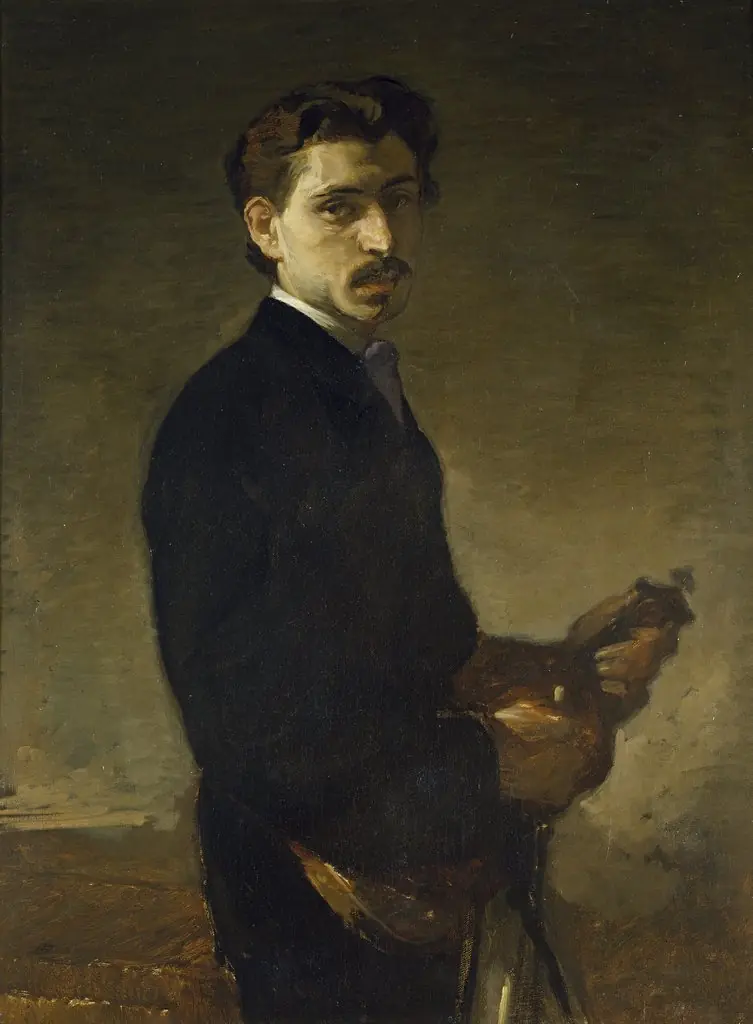
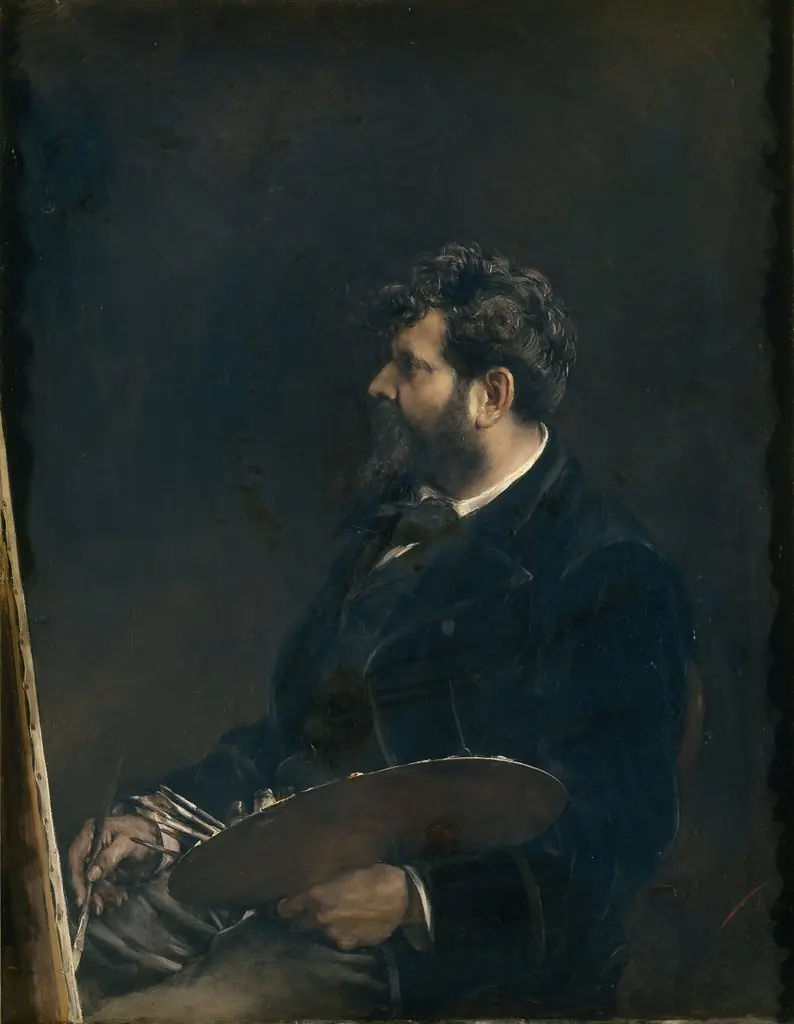
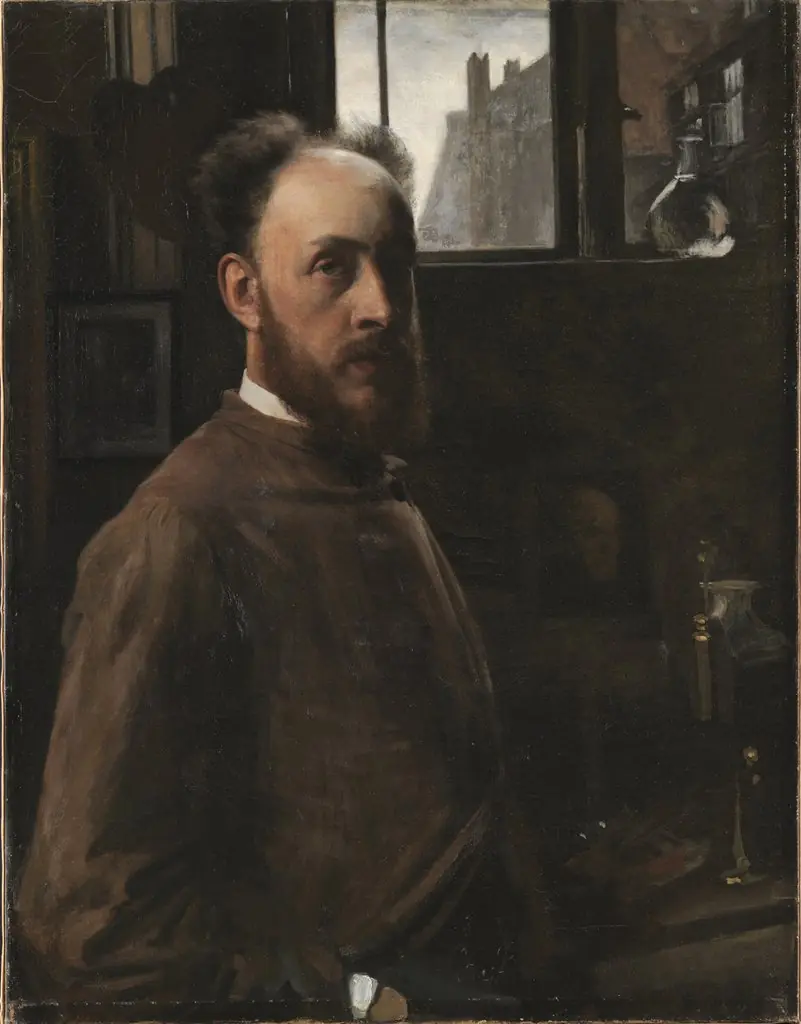
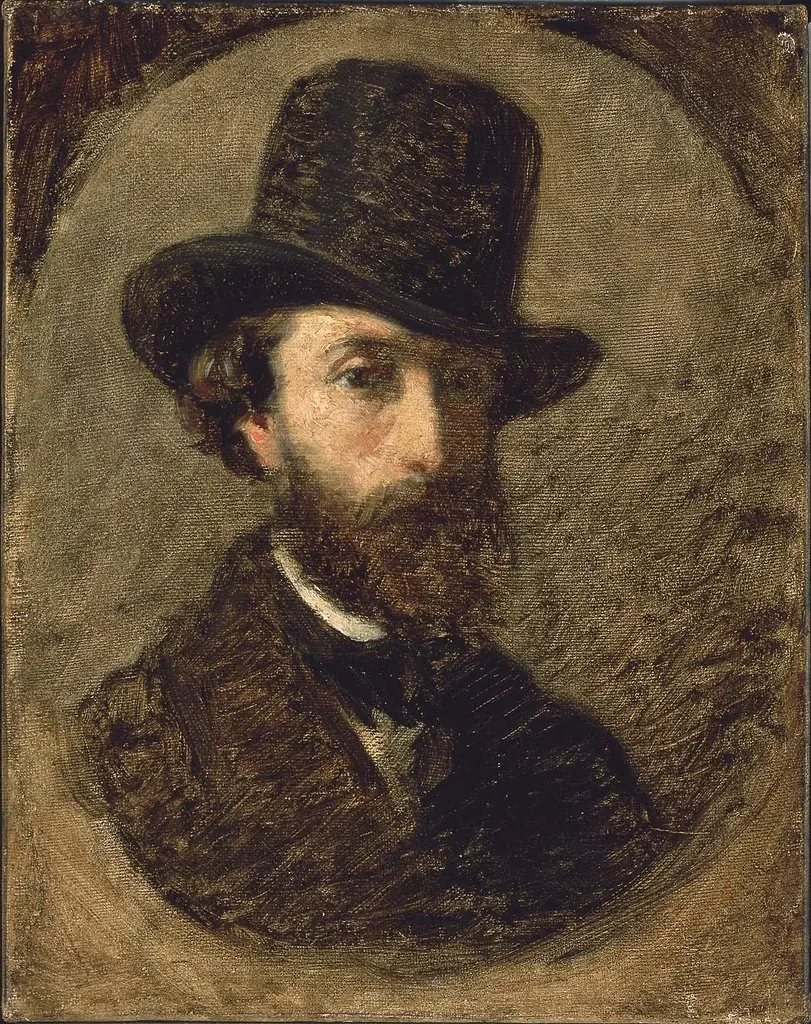
Hippolyte Petitjean’s drawing titled *Self‑Portrait at Easel* presents the artist positioned before his own canvas, brush poised, and looking straight out at the audience. Executed in the latter phase of his career, the work belongs to a small series of five self‑representations that reflect his deep engagement with the legacy of Rembrandt.
Subject & Meaning
In the composition, Petitjean assumes the role of both creator and observer, his direct gaze suggesting a dialogue with viewers about the function of the artist. Influenced by the anarchist theorist Charles‑Albert, the piece can be read as a visual argument for the social relevance of artistic practice beyond the confines of the exhibition hall.
Technique & Style
The drawing employs a loose, sketch‑like handling of line and shading, echoing the chiaroscuro effects that characterize Rembrandt’s portraiture. Light falls across the figure and the vague interior, creating a contrast that emphasizes the artist’s form while leaving the surrounding space intentionally ambiguous.
History & Provenance
Created late in Petitjean’s life, the portrait forms part of a quintet of self‑depictions produced after he publicly expressed admiration for Rembrandt’s methods. The series was assembled as a personal study, and the drawing has remained within the artist’s estate before entering the museum’s collection through a donation in the early 2000s.
Artist & collection
Artist
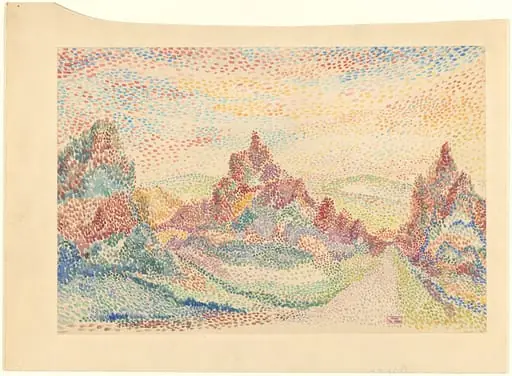
Hippolyte Petitjean (French pronunciation: ; 11 September 1854, Mâcon – 18 September 1929, Paris) was a French Post-Impressionist painter who practiced the technique of pointillism.