Artwork
In Memory of Philips of Marnix, Lord of Sint-Aldegonde
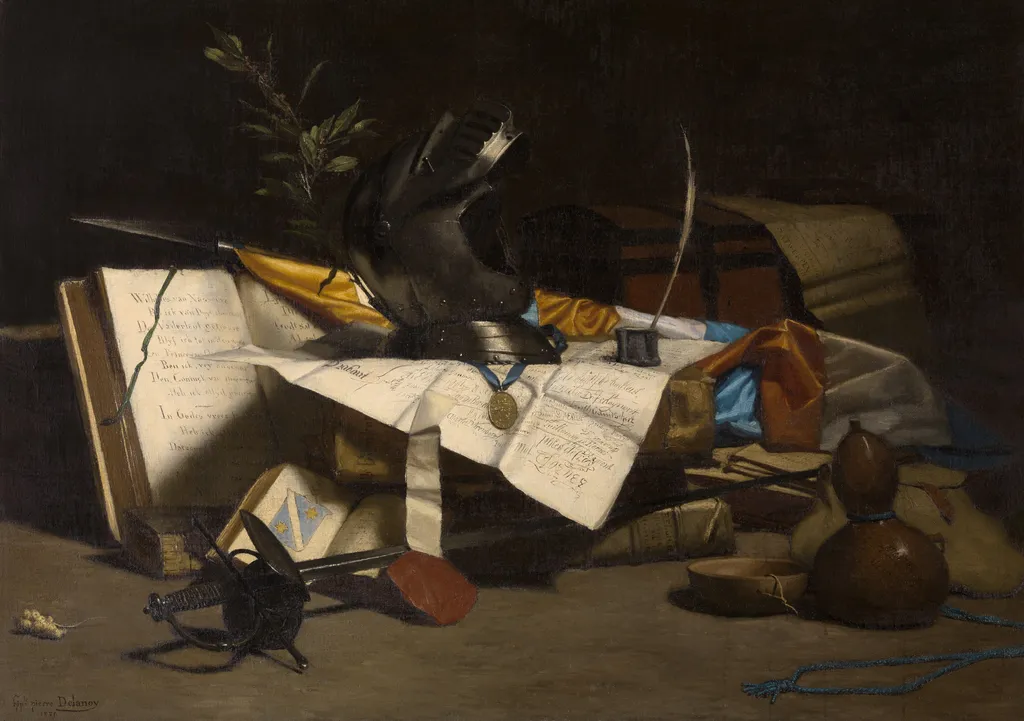
In Memory of Philips of Marnix, Lord of Sint-Aldegonde is an oil painting by the Post-Impressionist artist Hippolyte-Pierre Delanoy. It dates from 1893 and is held in the collection of the Royal Museum of Fine Arts Antwerp.
About this work
Overview
It presents a carefully arranged ensemble of personal and symbolic objects on a darkened surface, avoiding narrative action in favor of quiet contemplation.
Painted in 1893 by Hippolyte-Pierre Delanoy, this oil work serves as a commemorative still life honoring Philips of Marnix, Lord of Sint-Aldegonde. It presents a carefully arranged ensemble of personal and symbolic objects on a darkened surface, avoiding narrative action in favor of quiet contemplation. The composition is restrained, with no human figures, focusing instead on the material traces of a historical figure’s life and legacy.
Subject & Meaning
The objects—open book, handwritten papers, helmet, and sword—reference Marnix’s dual identity as a scholar and a leader in the Dutch Revolt. The written materials suggest his literary contributions, particularly his religious and political writings, while the armor and blade allude to his military role. Together, they form a visual epitaph, merging intellectual and martial virtues without overt symbolism, inviting reflection rather than declaration.
Technique & Style
Delanoy employs chiaroscuro to model the forms with subtle gradations of light and shadow, giving volume to the helmet’s curve and the book’s pages. The dark background isolates the objects, enhancing their presence and solemnity. Brushwork is precise but not overly detailed, favoring tonal harmony over texture. The arrangement is balanced yet asymmetrical, guiding the eye through the objects with deliberate rhythm and restraint.
History & Provenance
The painting was completed in 1893 and entered the collection of the Royal Museum of Fine Arts Antwerp shortly thereafter. It was likely commissioned or acquired as part of a broader 19th-century effort to visually commemorate Flemish and Dutch historical figures. Its preservation in Antwerp reflects the region’s ongoing engagement with its early modern past, particularly figures tied to religious and political resistance.
Context
Created during a period of renewed interest in national heroes across Europe, the painting aligns with 19th-century historiography that elevated figures like Marnix as symbols of civic virtue. While Marnix lived in the 16th century, Delanoy’s work responds to contemporary cultural currents that sought to connect modern identity with past struggles, using still life as a dignified, non-heroic mode of remembrance.
Legacy
The painting remains a quiet example of how 19th-century artists translated historical memory into visual form without grandeur. It avoids melodrama, instead offering a meditative inventory of a life through its possessions. Its presence in a major Belgian museum underscores its role as a cultural artifact, preserving not just Marnix’s memory but also the era’s aesthetic approach to commemoration.
Own this work as a print
Artist & collection
Artist
Hippolyte-Pierre Delanoy (1849–1899) was an artist, born in Glasgow.

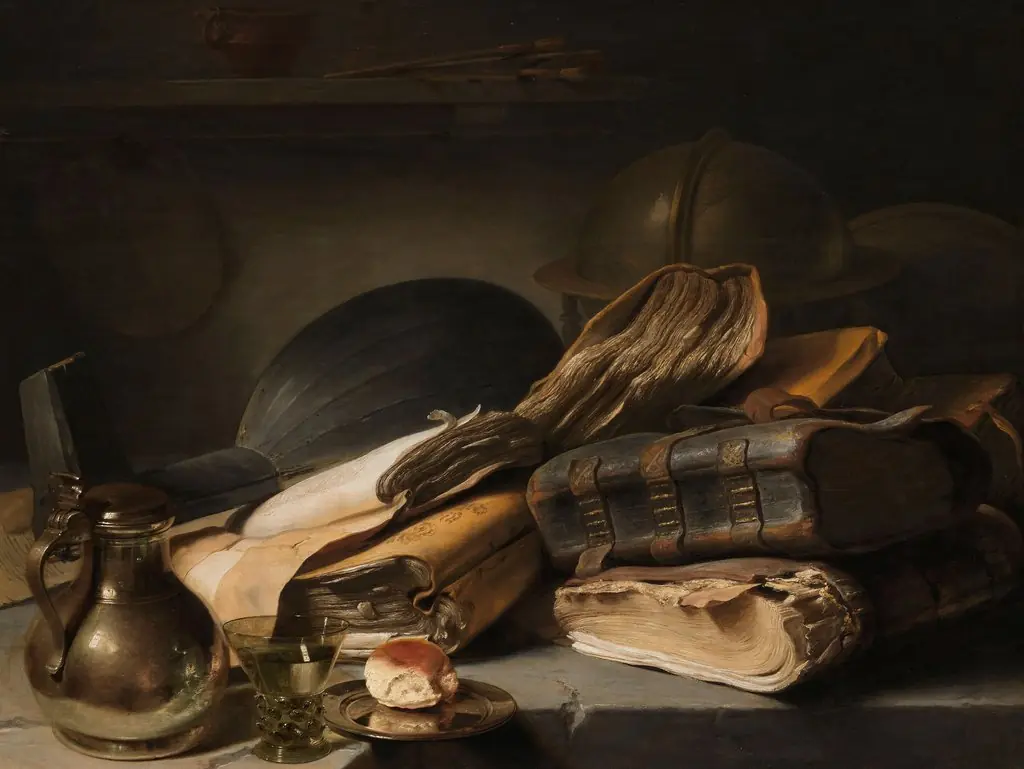 Still Life with Books
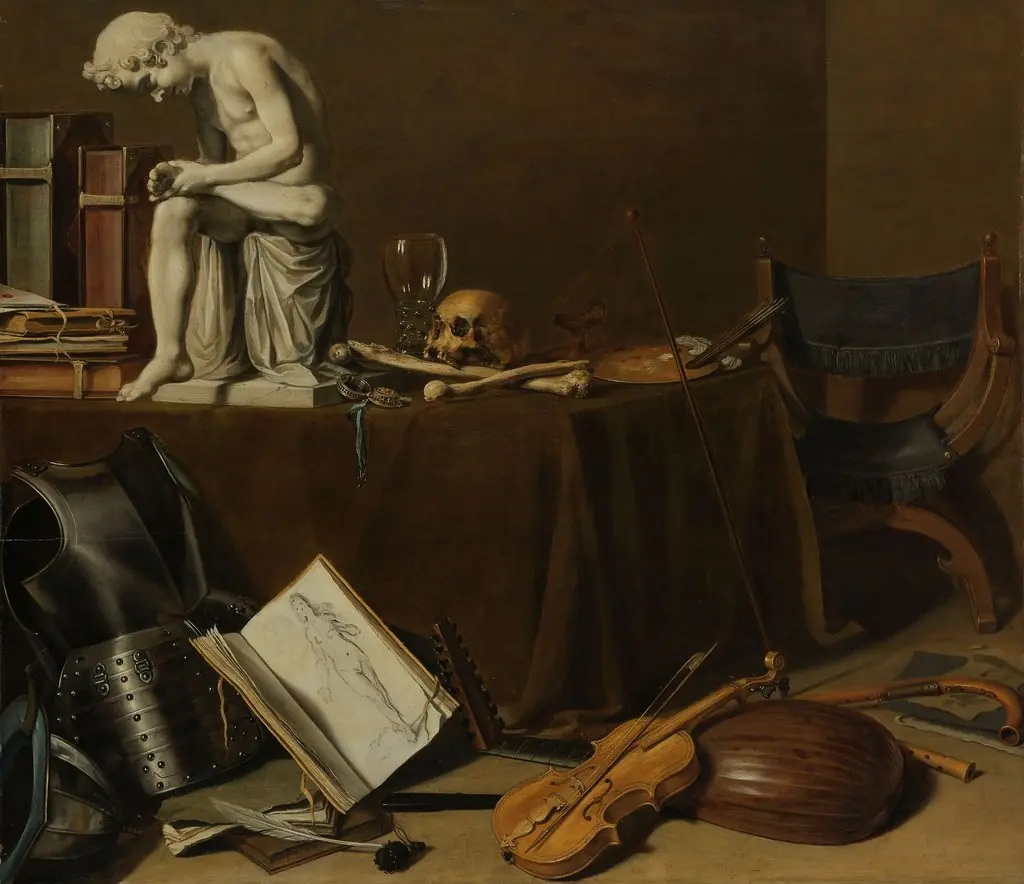 Vanitas Still Life with the Spinario
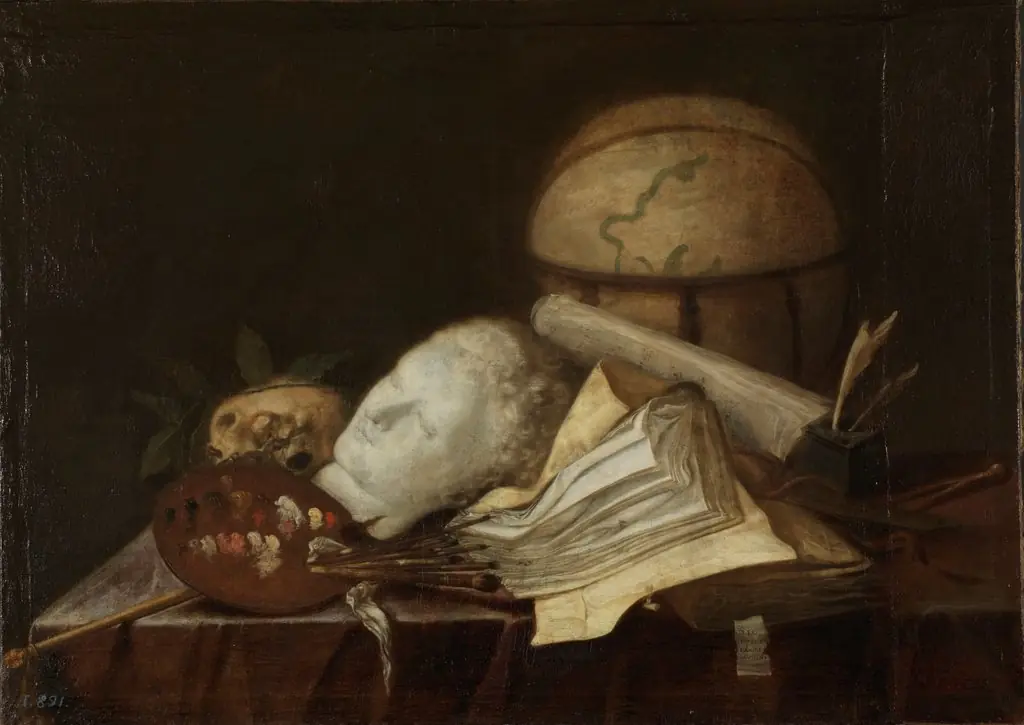 Allegory of the Arts and Sciences
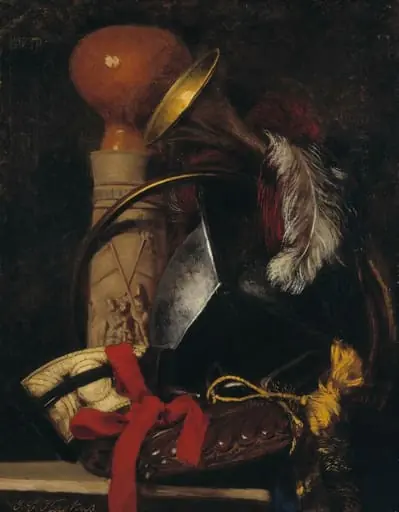 Asetelma, malja, metsätorvi, plyymejä sekä vyö
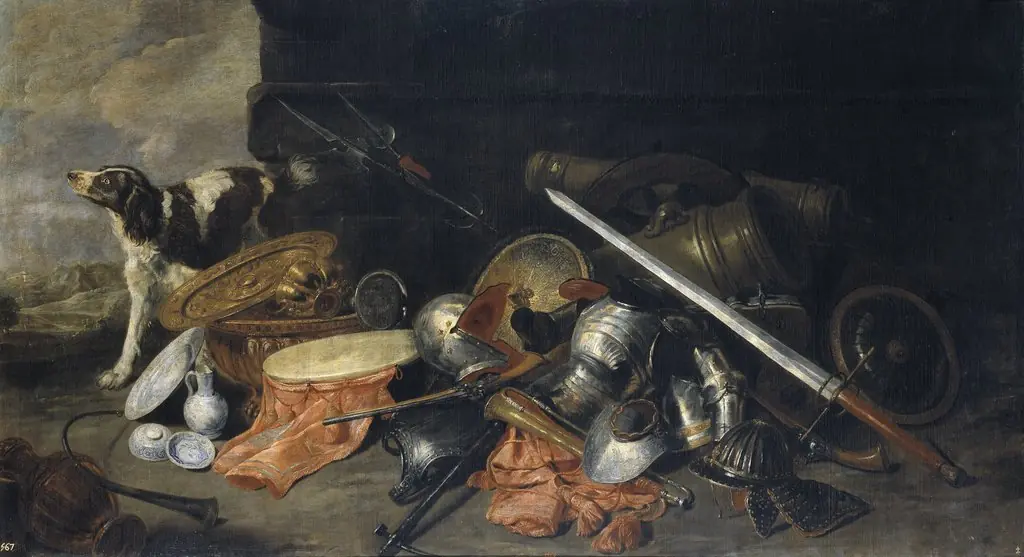 Arms and instruments of war
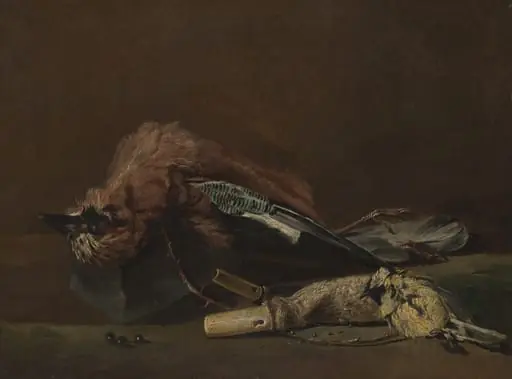 Dead Birds and Shot Bags
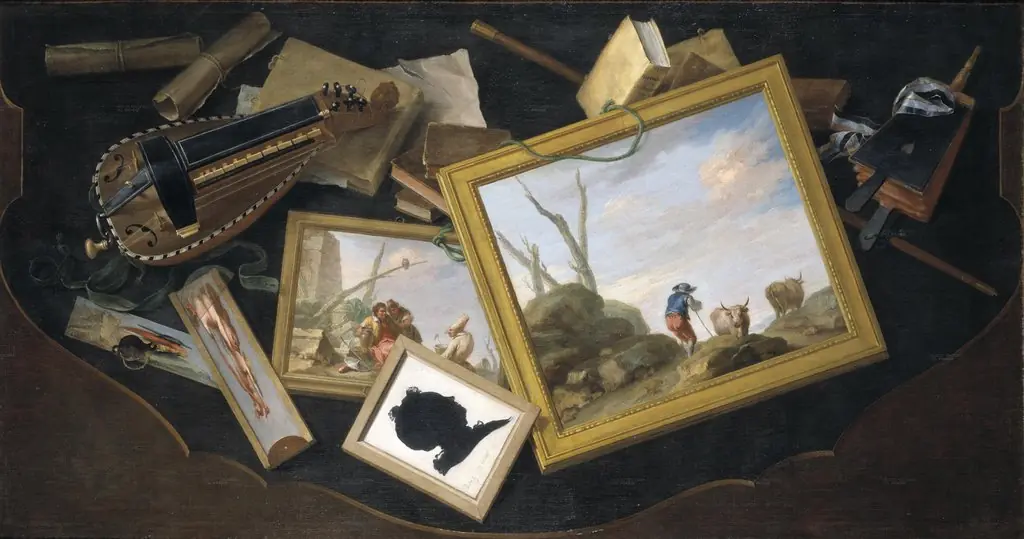 Trompe-l'œil of a Table in a Mess with Paintings, a Hurdy-Gurdy, Books and Other Objects
 Emblem of Death
 Still Life with Oriental Slippers
 Still life with Implements of War
 Still Life with Ostrich Egg Cup and the Whitfield Heirlooms
 Stilleben mit Musikinstrumenten, Notenblättern, Himmelsglobus und Muschel