Artwork
Still Life with Ostrich Egg Cup and the Whitfield Heirlooms
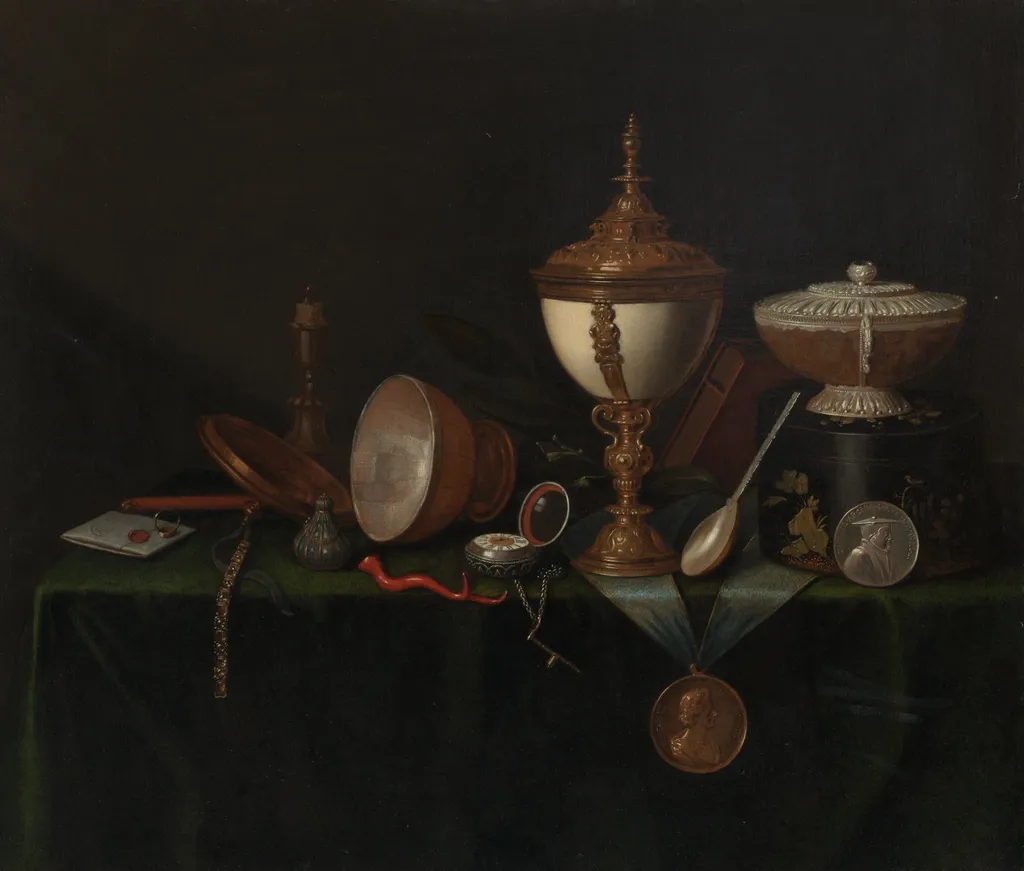
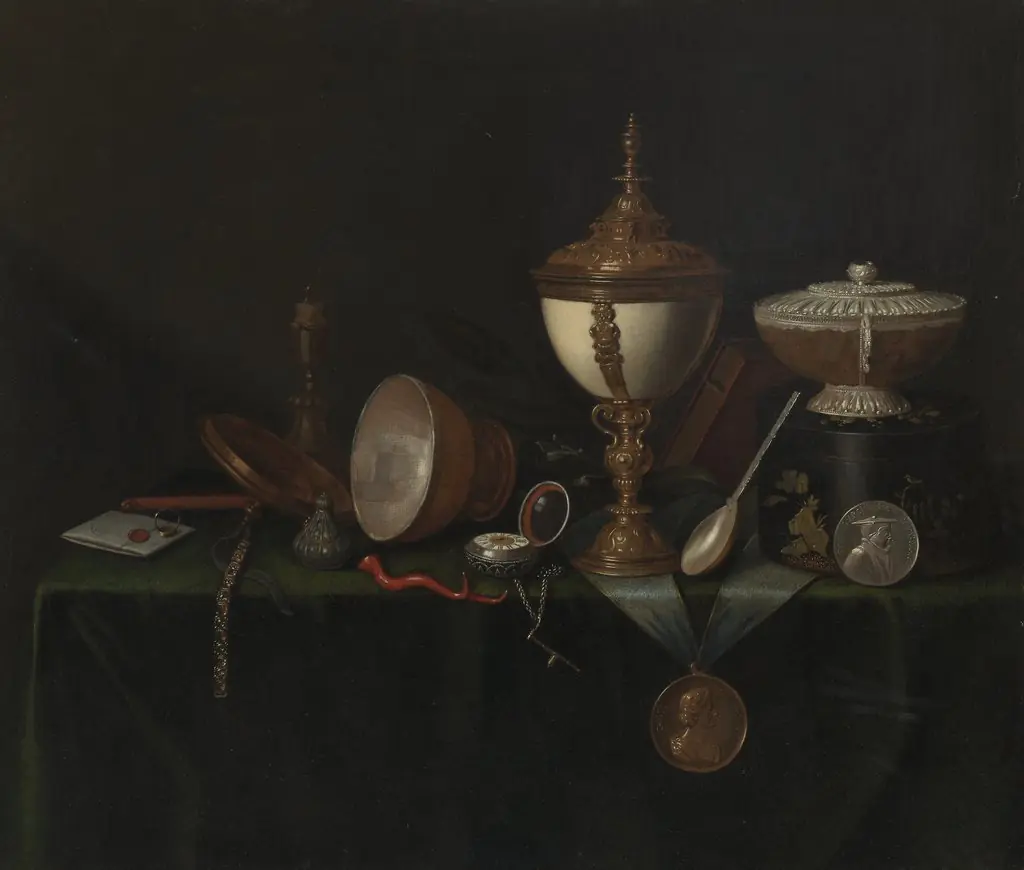
Still Life with Ostrich Egg Cup and the Whitfield Heirlooms is an oil painting by the Baroque artist Pieter Gerritsz van Roestraten. It dates from 1670 and is held in the collection of the Art Institute of Chicago. Pieter van Roestraeten, trained in the Dutch Republic and active in London, painted still lifes centered on rare, imported materials.
About this work
Overview
Pieter van Roestraeten, trained in the Dutch Republic and active in London, painted still lifes centered on rare, imported materials. This work features luxury objects arranged with precision, emphasizing their material value and craftsmanship. The composition reflects the taste of wealthy collectors in early 18th-century England, who prized exotic goods as symbols of global trade and refinement.
Subject & Meaning
The inclusion of the Whitfield Cup, a documented royal artifact, anchors the scene in real-world provenance and elite collecting practices.
The painting displays a curated selection of rare objects: an ostrich egg cup, an agate vessel with silver mounts, an overturned mother-of-pearl-lined cup, and a strand of coral. These items were not merely decorative but signified access to global trade networks. The inclusion of the Whitfield Cup, a documented royal artifact, anchors the scene in real-world provenance and elite collecting practices.
Technique & Style
Van Roestraeten rendered surfaces with meticulous attention to texture and light—polished stone, reflective metal, and organic materials like coral and eggshell are distinguished through subtle tonal shifts. His brushwork is controlled, avoiding dramatic contrasts in favor of quiet realism. The arrangement is balanced yet asymmetrical, guiding the eye across the table’s surface with deliberate restraint.
History & Provenance
The ostrich egg cup at the center, known as the Whitfield Cup, was crafted in 1590 by John Spilman, jeweler to the English court. Its presence in the painting confirms its status as a treasured heirloom. The work likely belonged to the Whitfield family, whose collection of curiosities was documented in the early 1700s. The painting itself entered the Art Institute’s holdings alongside the cup.
Context
In early 18th-century London, still lifes featuring exotic materials were popular among the mercantile elite. These works mirrored the expanding reach of global trade, where items from Africa, Asia, and the Mediterranean became status symbols. Van Roestraeten’s paintings aligned with this trend, offering visual catalogs of wealth derived from colonial and maritime commerce.
Legacy
Van Roestraeten’s work contributes to the understanding of how material culture was represented in art during the rise of consumer society. His paintings preserve the appearance and arrangement of objects now held in museum collections, offering insight into the values of their original owners. The Whitfield Cup’s continued presence in the Art Institute underscores the enduring link between art and artifact.
Own this work as a print
Artist & collection
Artist
Pieter Gerritsz van Roestraten
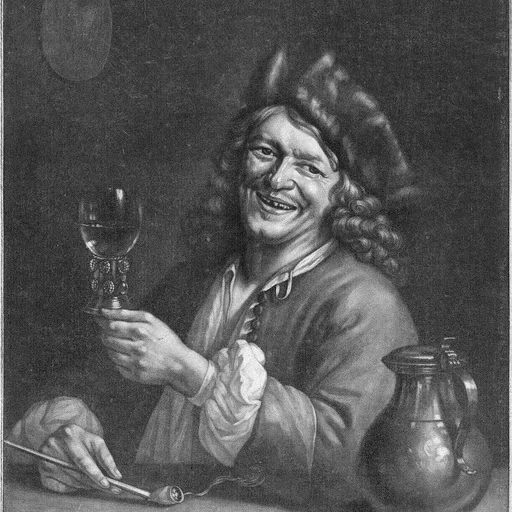
Pieter Gerritsz van Roestraten or Pieter Gerritsz van Roestraeten (21 April 1630 – 10 July 1700) was a Dutch painter of still lifes, in particular floral and vanitas still lifes.

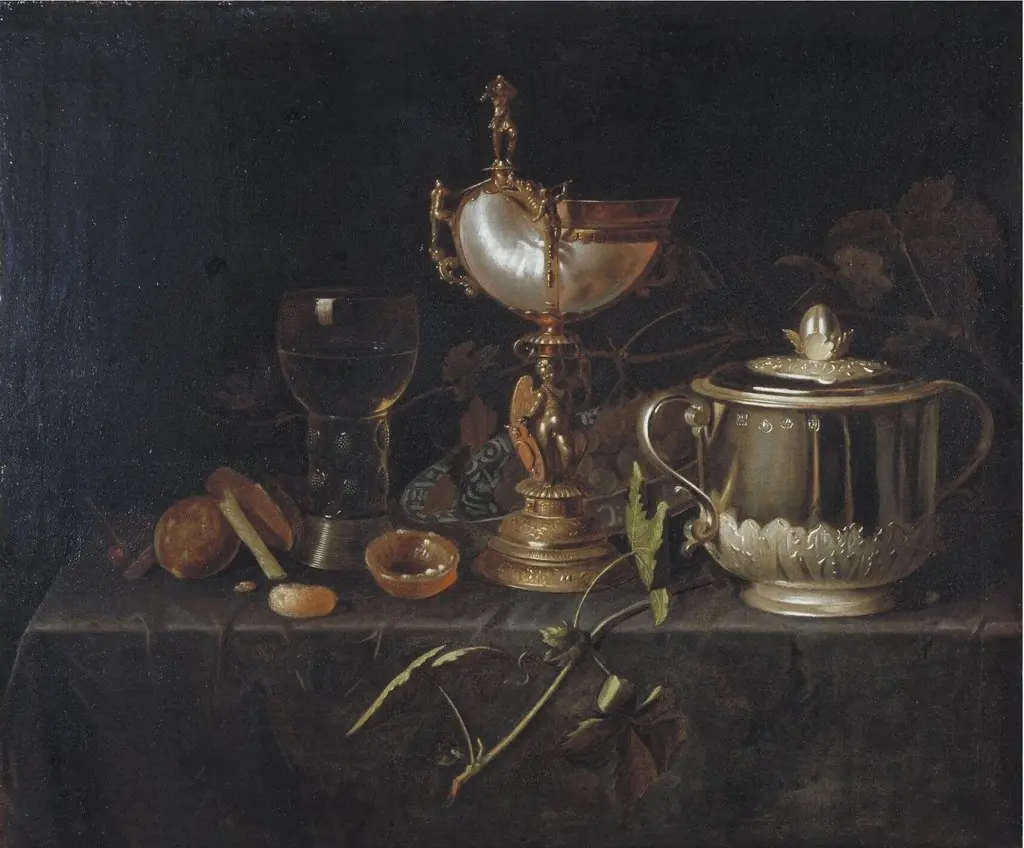
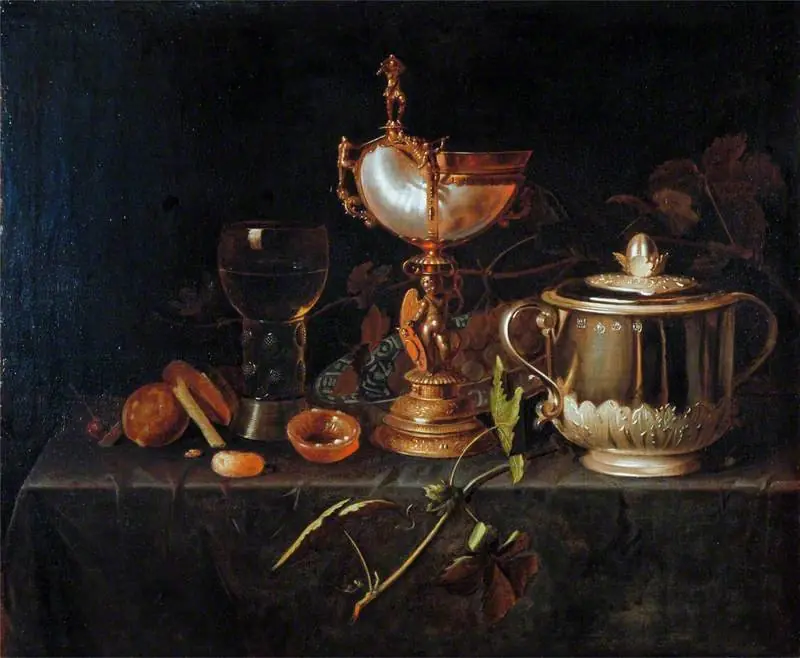 Porringer and Nautilus Cup
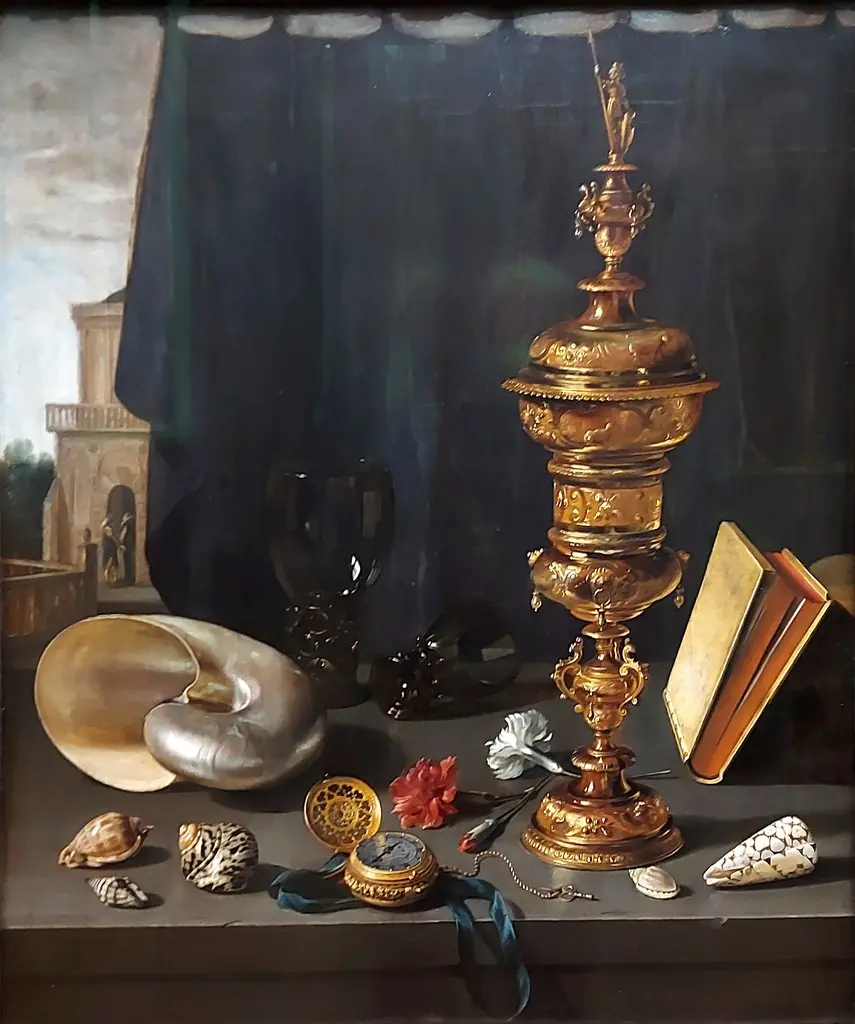 Still Life with a Tall Covered Beaker
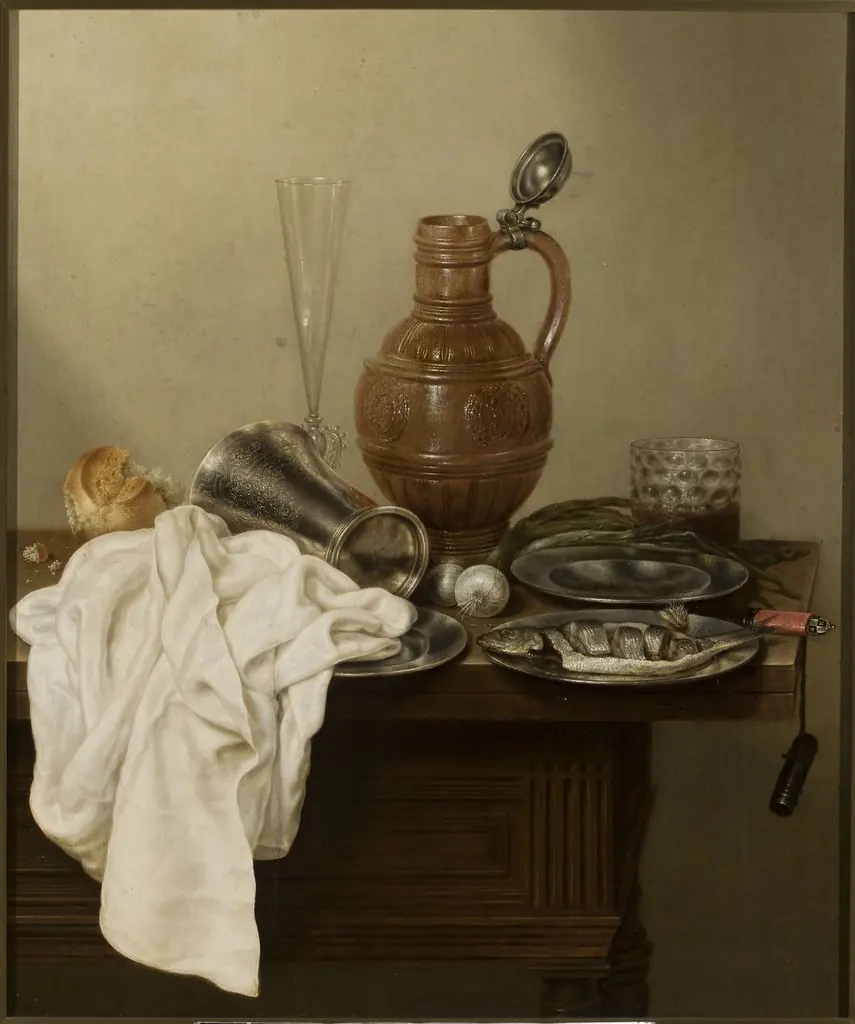 Still life with a herring
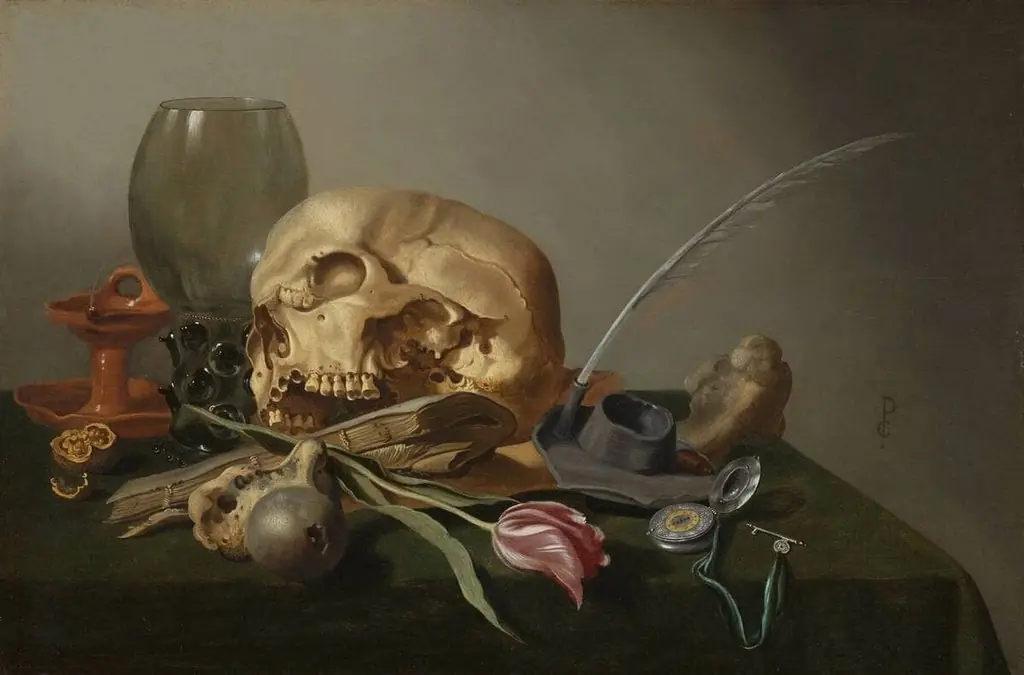 Vanitas, circa 1630
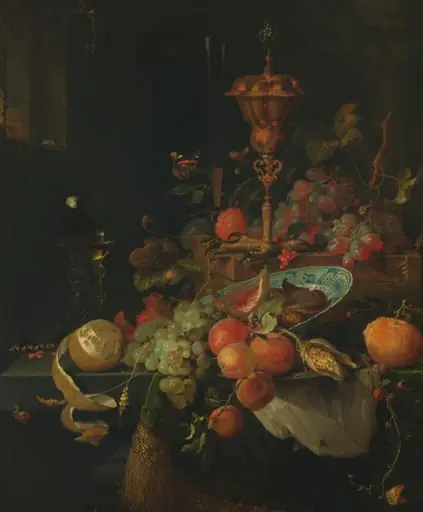 Still Life with Fruit and a Beaker on a Cock's Foot
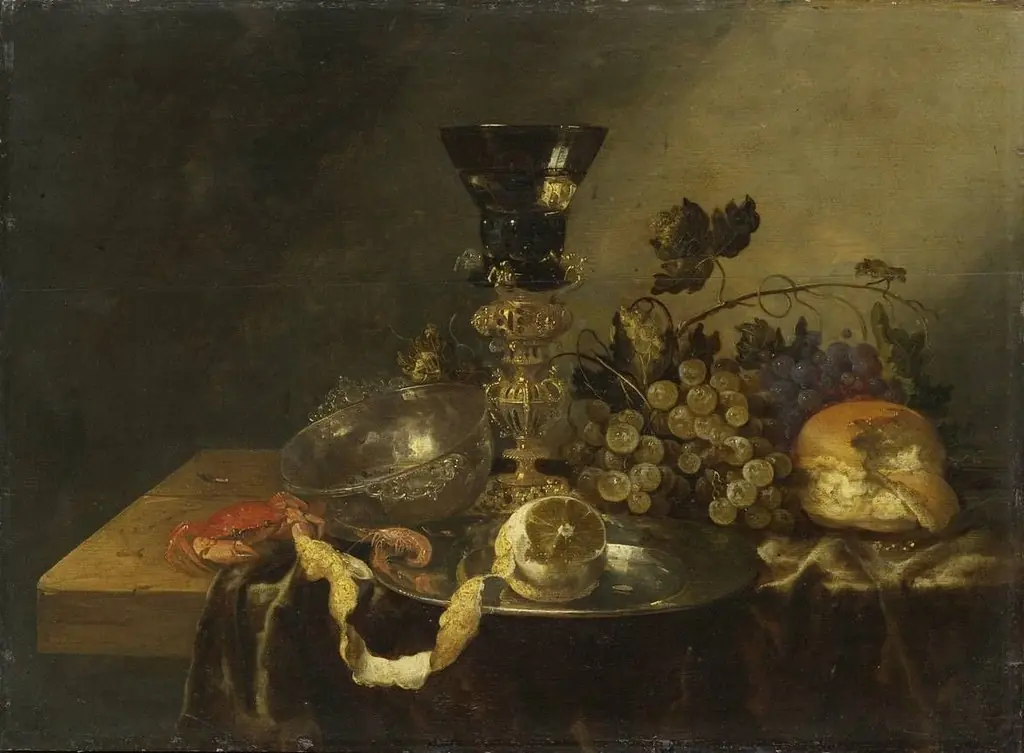 Stillleben mit Silberschale und Becherschraube
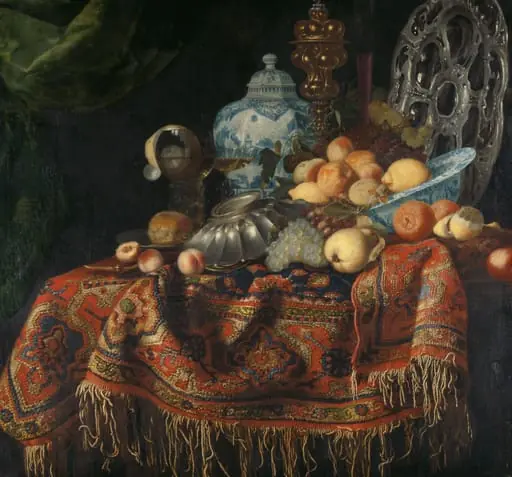 Still Life with Fruit, Plates and Dishes on a Turkey Carpet
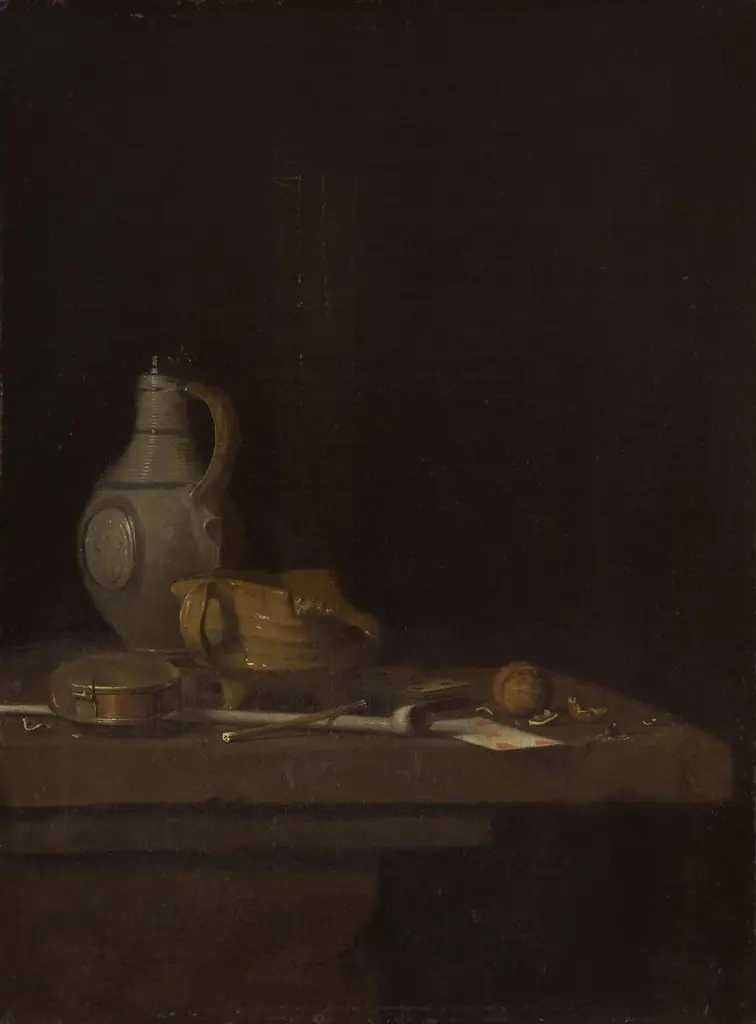 Still Life with a Stoneware Jar and a Brazier
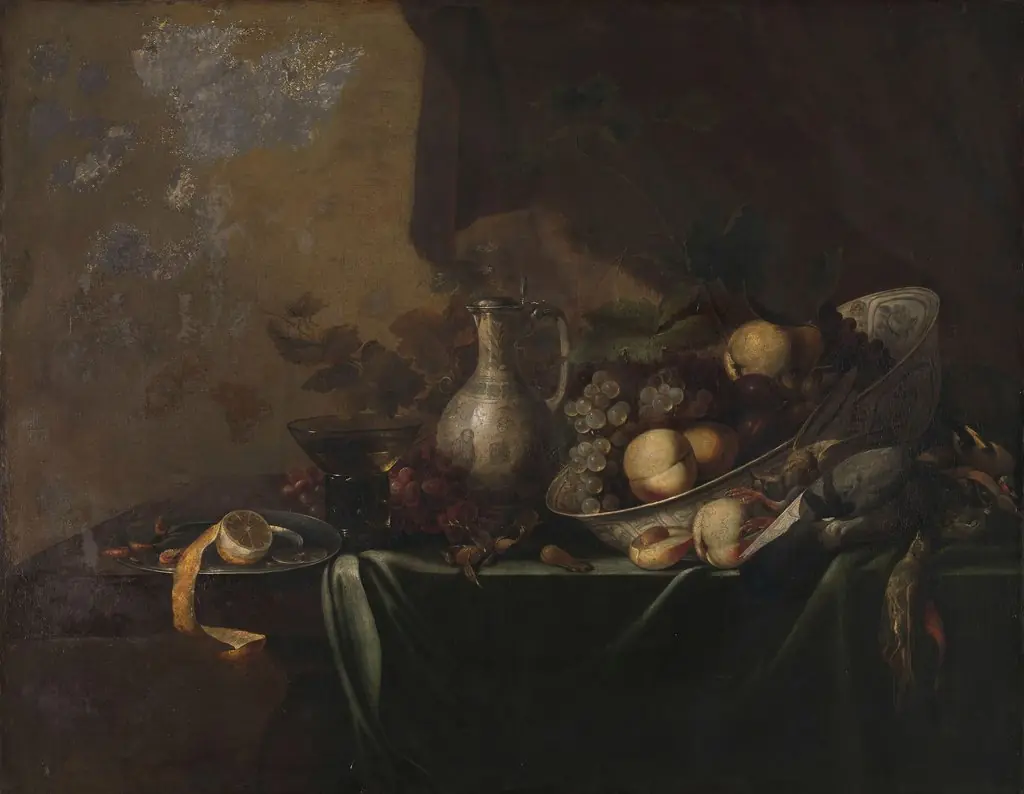 Still Life with Fruit