Artwork
Wakoku Hyakujo|Leaf from One Hundred Japanese Women
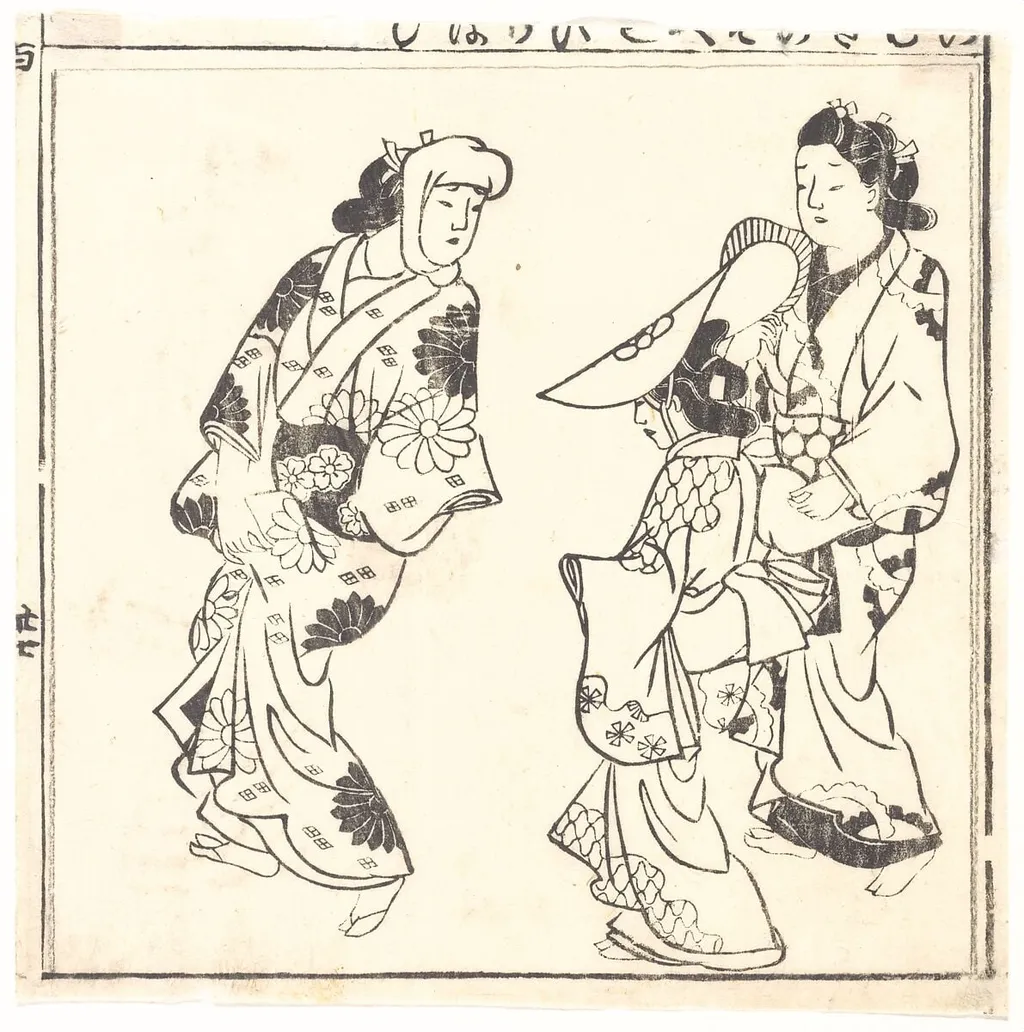
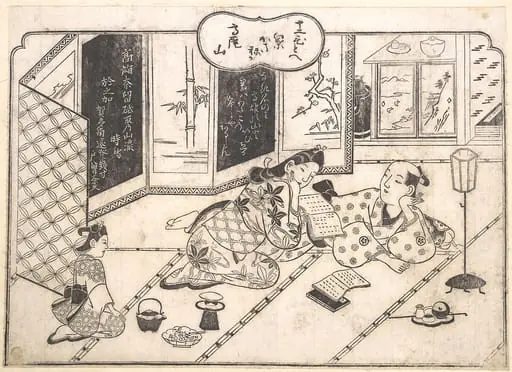
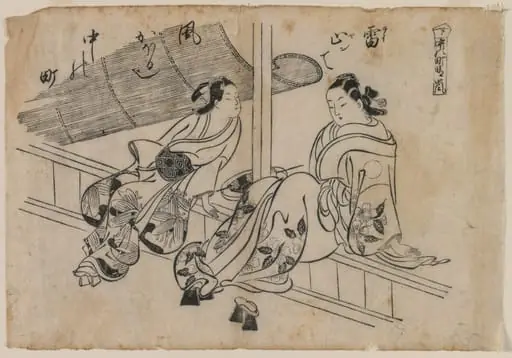
Wakoku Hyakujo|Leaf from One Hundred Japanese Women is an ink print by the Baroque artist Hishikawa Moronobu 菱川師宣. It dates from 1695 and is held in the collection of the Metropolitan Museum of Art. This woodblock print, dating to around 1695, is one leaf from a series titled One Hundred Japanese Women, created by Hishikawa Moronobu.
About this work
Overview
Executed in ink on paper, it exemplifies early ukiyo-e printing, a genre that emerged in Edo-period Japan to depict everyday life and popular figures.
This woodblock print, dating to around 1695, is one leaf from a series titled One Hundred Japanese Women, created by Hishikawa Moronobu. Executed in ink on paper, it exemplifies early ukiyo-e printing, a genre that emerged in Edo-period Japan to depict everyday life and popular figures. The work is part of the collection at The Metropolitan Museum of Art, where it serves as an early example of mass-produced visual culture in Japan.
Subject & Meaning
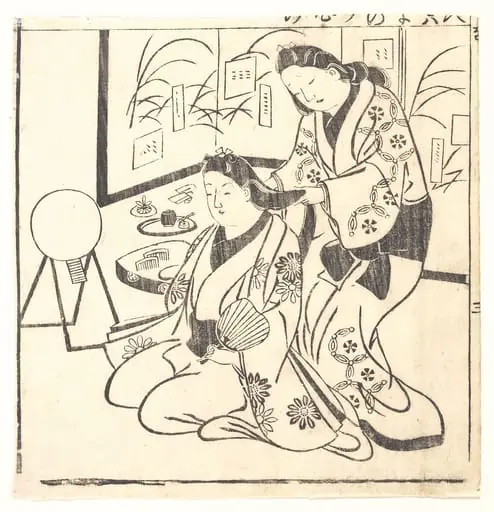
The print portrays a single woman, rendered with quiet dignity, dressed in period-appropriate attire. She is not a historical or mythological figure but an ordinary individual, representative of the urban female population of late 17th-century Japan. The focus on her presence, without narrative context, reflects a growing interest in personal identity and daily life, rather than grand or religious themes, characteristic of the emerging ukiyo-e tradition.
Technique & Style
Moronobu employed clean, flowing lines and flat areas of ink to define form, avoiding shading or perspective. The simplicity of the design emphasizes contour and pattern, particularly in the folds of her kimono and the arrangement of her hair. This monochrome approach was typical of early woodblock prints before color became standard. The precision of the brushwork suggests a transition from hand-drawn illustrations to print-based reproduction.
History & Provenance
Created during the Genroku era, the series was likely produced for a broad audience, possibly as a set of individual sheets sold separately. The Metropolitan Museum of Art acquired the print as part of its broader collection of Japanese prints, preserving it as a rare surviving example from Moronobu’s prolific output. Its survival in good condition offers insight into the circulation and reception of early ukiyo-e.
Context
Moronobu’s work emerged alongside the rise of Edo’s merchant class, who sought affordable art reflecting their world. Unlike courtly or religious imagery, these prints captured the aesthetics of urban life—fashion, leisure, and gender roles. The Hundred Japanese Women series contributed to a visual cataloging of female types, aligning with contemporary literary and theatrical portrayals of women in Edo society.
Legacy
Moronobu’s prints laid foundational techniques for later ukiyo-e artists, establishing the template for figure-focused compositions and commercial print production. While later generations added color and complexity, his use of line and composition remained influential. This leaf endures as a testament to the early democratization of art in Japan, where images of ordinary people became subjects worthy of reproduction and preservation.
Artist & collection
Artist
Hishikawa Moronobu made bold black-and-white prints of daily life in late-1600s Japan.

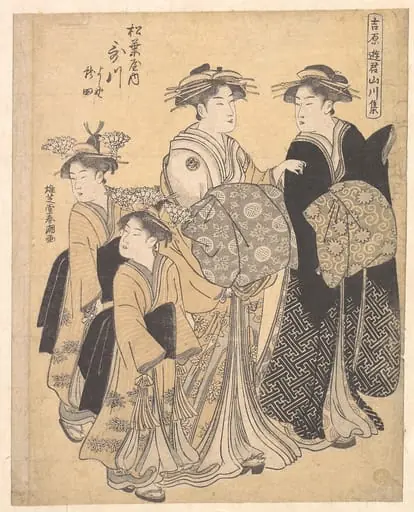 Untitled
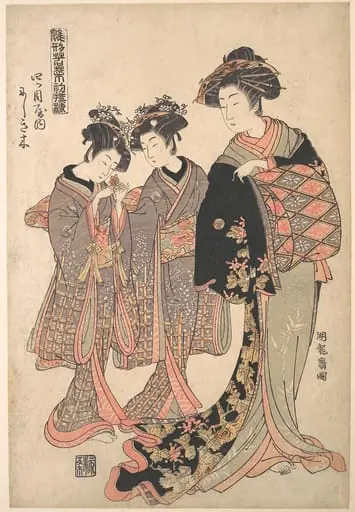 『雛形若菜初模様 四ツ目屋内 にしき木』|The Courtesan Nishikigi of the Yotsumeya Brothel, from the series “A Pattern Book of the Year’s First Designs, Fresh as Spring Herbs” (“Hinagata wakana hatsu moyō”)
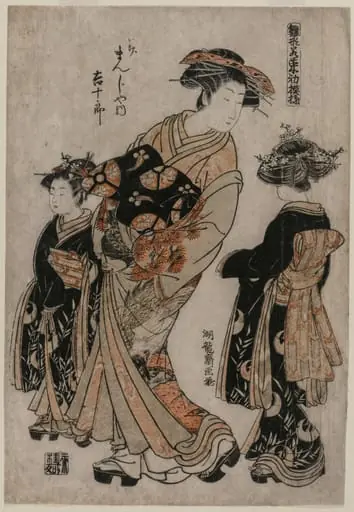 The Courtesan Kichijuro of Kage Manjiya with Two Kamuro (from the series Models for Fashions: New Designs as Fresh as Young Leaves)
 Untitled
 Untitled
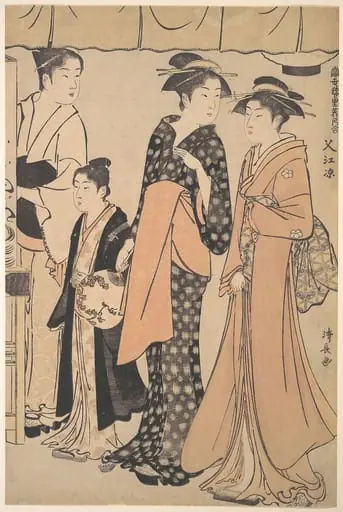 Sako no Suzumi|Cooling Off at Nakazu
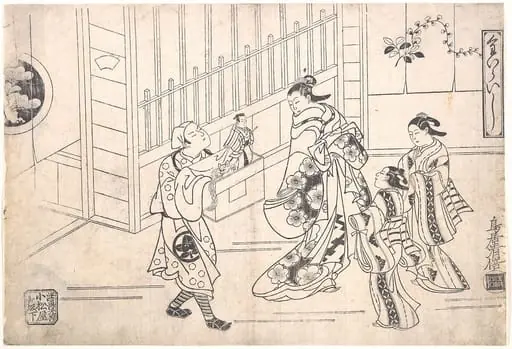 Kairaishi|The Actor Ichimura Takenojo VIII in the Role of a Puppeteer, showing Puppets to a Courtesan
 Untitled
 Twilight at Nakanocho
 Untitled
 Seiryu Edo|Courtesan District of Edo