Artwork
『雛形若菜初模様 四ツ目屋内 にしき木』|The Courtesan Nishikigi of the Yotsumeya Brothel, from the series “A Pattern Book of the Year’s First Designs, Fresh as Spring Herbs” (“Hinagata wakana hatsu moyō”)
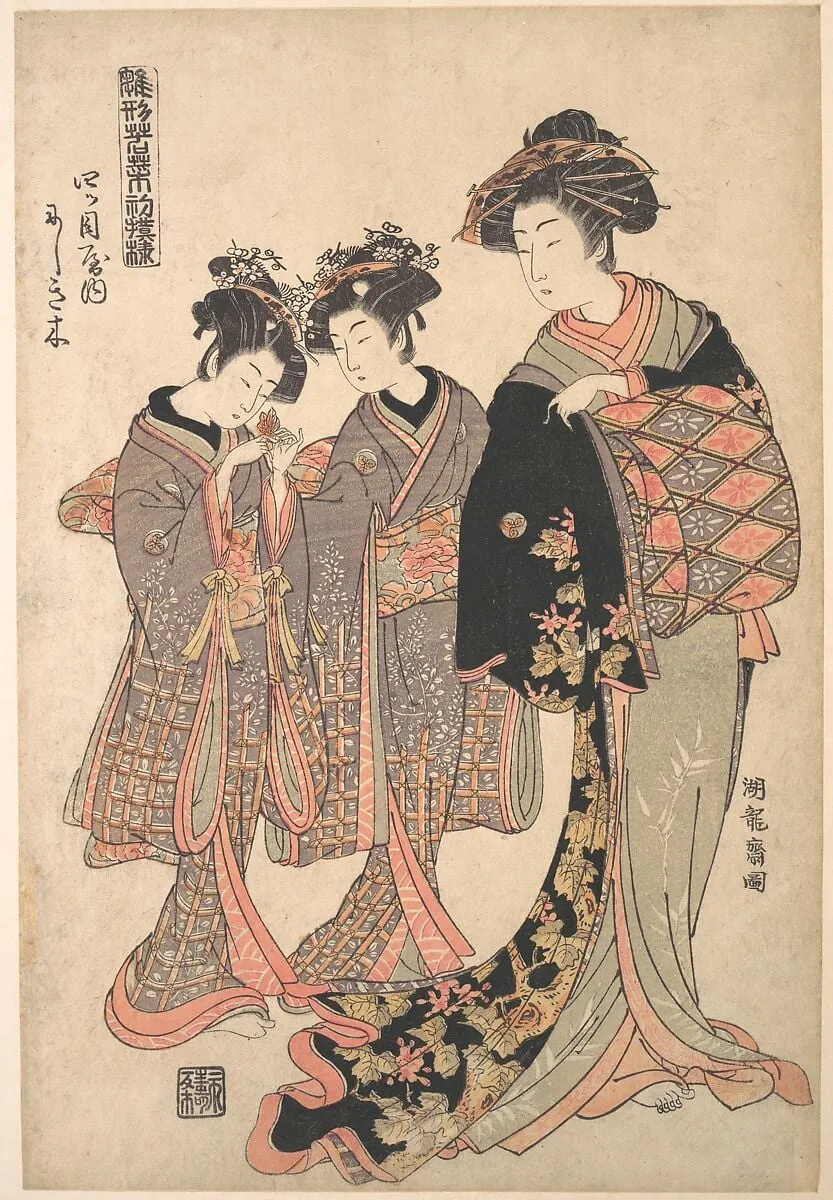
『雛形若菜初模様 四ツ目屋内 にしき木』|The Courtesan Nishikigi of the Yotsumeya Brothel, from the series “A Pattern Book of the Year’s First Designs, Fresh as Spring Herbs” (“Hinagata wakana hatsu moyō”) is an ink print by the Romanticist artist Isoda Koryūsai. It dates from 1776 and is held in the collection of the Metropolitan Museum of Art.
About this work
Overview
Created in 1776 by Isoda Koryūsai, this woodblock print is part of a series titled 'A Pattern Book of the Year’s First Designs, Fresh as Spring Herbs.
Created in 1776 by Isoda Koryūsai, this woodblock print is part of a series titled 'A Pattern Book of the Year’s First Designs, Fresh as Spring Herbs.' It depicts three courtesans from the Yotsumeya brothel, rendered in ink and color on paper. The composition emphasizes textile detail and formal posture, typical of ukiyo-e fashion plates meant to showcase seasonal styles. The Metropolitan Museum of Art holds this example of Edo-period printed design.
Subject & Meaning
The three women represent high-ranking courtesans, their identities tied to their brothel and names. The image functions as a fashion record rather than a narrative scene, documenting the elaborate attire worn during the new year’s celebrations. The inclusion of ornate hats and patterned robes signals status and seasonal refinement, aligning with the series’ theme of fresh, spring-inspired designs for the elite urban audience.
Technique & Style
Koryūsai employed precise line work and layered color blocks to render intricate textile patterns, including gold accents and deep blacks that suggest luxurious fabrics. The figures stand in rigid alignment against a blank background, directing attention to their garments. The use of bokashi shading and fine detailing in embroidery reflects advanced woodblock printing techniques of the period, prioritizing clarity and decorative richness over emotional expression.
History & Provenance
The print originates from a limited series produced in 1776, likely distributed as a fashion reference among merchants and patrons of the pleasure quarters. It entered the collection of The Metropolitan Museum of Art through documented acquisitions of Japanese prints in the early 20th century. Its survival in good condition reflects its value as a cultural artifact rather than a disposable ephemera.
Context
During the late 18th century, Edo’s pleasure districts became centers of fashion innovation, with courtesans setting trends in clothing and hairstyle. Print series like this one catered to a growing urban middle class eager to emulate elite aesthetics. Koryūsai’s work contributed to a genre that blurred the lines between art, commerce, and social aspiration, documenting the visual culture of a transient yet highly codified world.
Legacy
This print exemplifies the role of ukiyo-e in preserving ephemeral trends of Edo society. While not widely known outside specialist circles, Koryūsai’s fashion plates remain important for understanding how visual media mediated social identity and consumer culture. Their influence persists in studies of Japanese textile design and the history of print media as a tool for cultural transmission.
Artist & collection
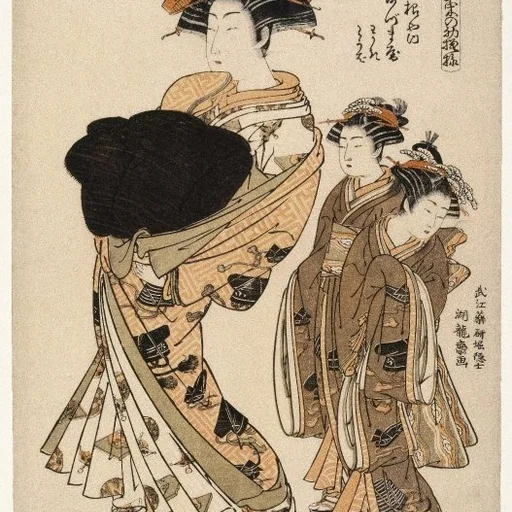

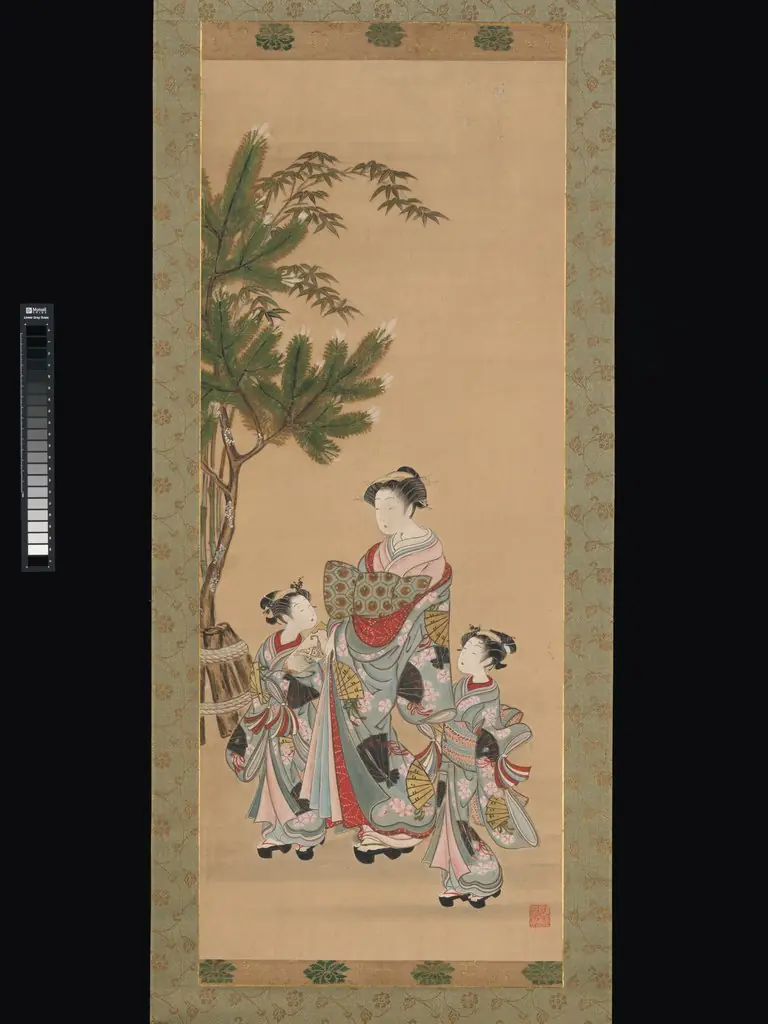
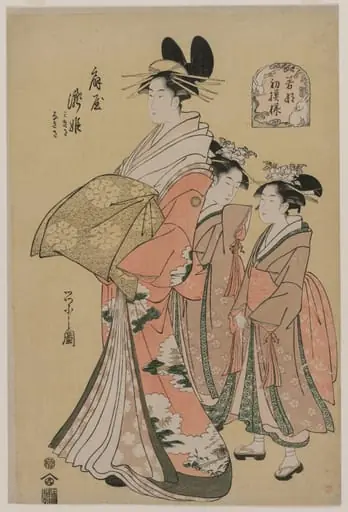 The Courtesan Takihime and Attendants (from the series New Patterns of Young Greens)
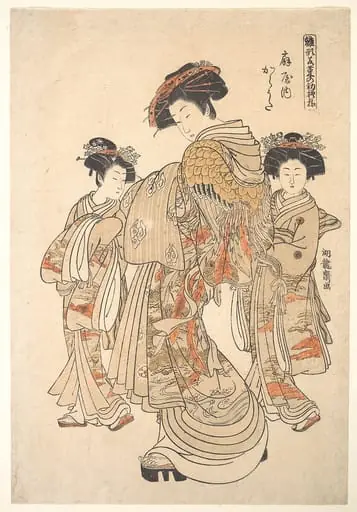 『雛形若菜の初模様 扇屋内 からうた』|The Courtesan Karauta of the Ōgiya Brothel, from the series “A Pattern Book of the Year’s First Designs, Fresh as Spring Herbs” (“Hinagata wakana no hatsu moyō”)
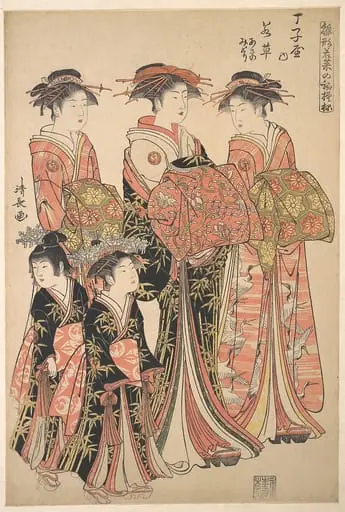 鳥居清長画 「雛形若菜の初模様 丁子屋の若草・ あさの・みどり」|The Courtesan Wakakusa of the Chōjiya Brothel, and Attendants Asano and Midori, from the series “A Pattern Book of the Year’s First Designs, Fresh as Spring Herbs” (Hinagata wakana no hatsumoyō)
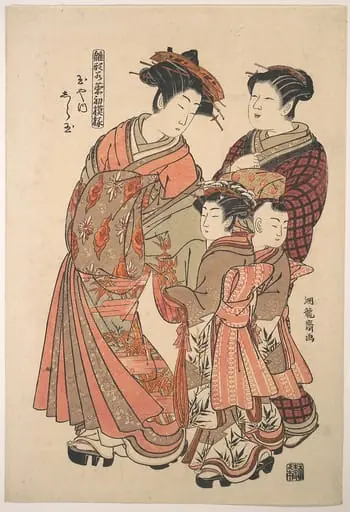 『雛形若菜初模様 玉や内 しら玉』|The Courtesan Shiratama of the Tamaya Brothel, from the series “A Pat-tern Book of the Year’s First Designs, Fresh as Spring Herbs” (“Hinagata wakana hatsu moyō”)
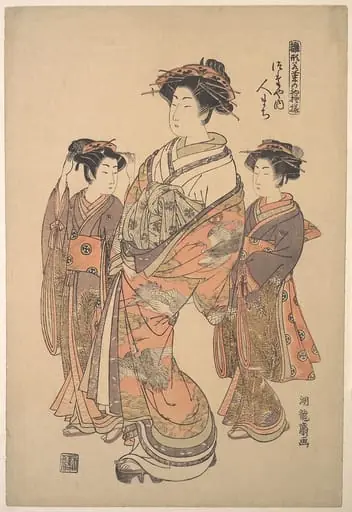 『雛形若菜の初模様 つたや内 人まち』|The Courtesan Hitomachi of the Tsutaya Brothel, from the series “A Pat-tern Book of the Year’s First Designs, Fresh as Spring Herbs” (“Hinagata wakana no hatsu moyō”)
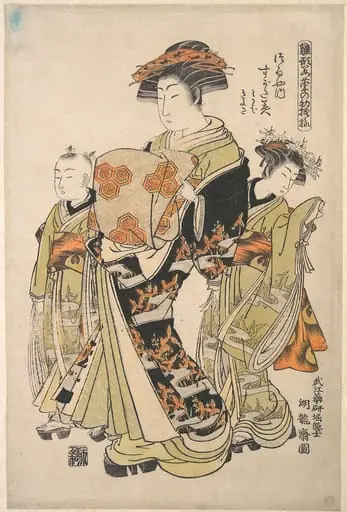 『雛形若菜の初模様 つるや内 すがたみ』|The Courtesan Sugatami of the Tsuruya Brothel, from the series “A Pat-tern Book of the Year’s First Designs, Fresh as Spring Herbs” (“Hinagata wakana no hatsu moyō”)
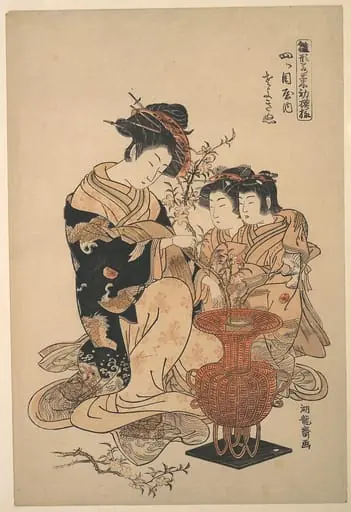 礒田湖竜斎画「雛形若菜初模様 四ツ目屋内 さよぎぬ」|The Courtesan Sayoginu of the Yotsumeya Brothel, from the series “A Pattern Book of the Year’s First Designs, Fresh as Spring Herbs” (Hinagata wakana hatsu moyō)
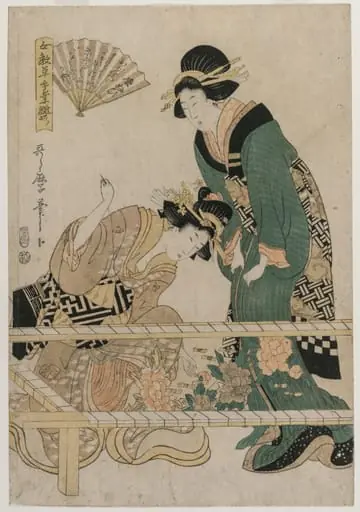 Chinese Embroidery (from the series Instructive Patterns for Women's Handicraft)