Artwork
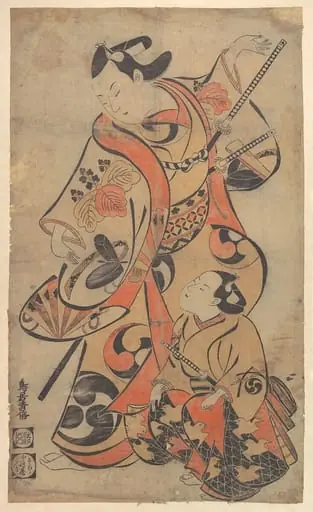
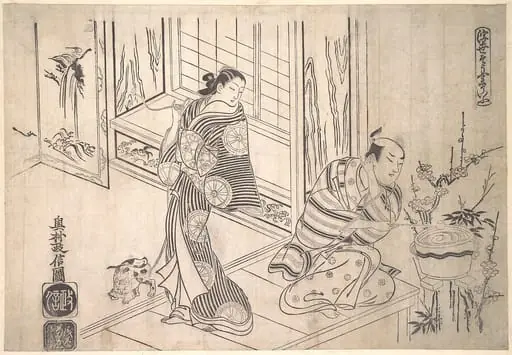
Kairaishi|The Actor Ichimura Takenojo VIII in the Role of a Puppeteer, showing Puppets to a Courtesan
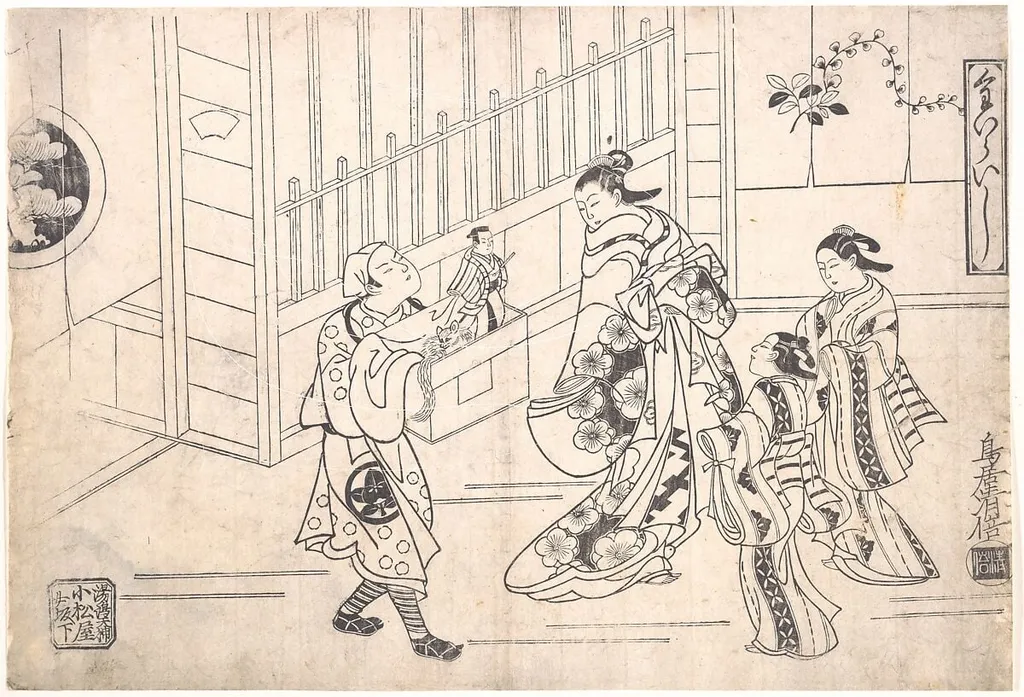
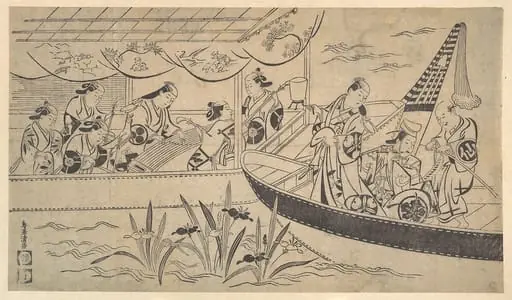
Kairaishi|The Actor Ichimura Takenojo VIII in the Role of a Puppeteer, showing Puppets to a Courtesan is an ink print by the Baroque artist Torii Kiyomasu I. It dates from 1715 and is held in the collection of the Metropolitan Museum of Art.
About this work
Overview
The composition captures a quiet moment of performance within an interior space, emphasizing subtle interactions between figures rather than overt drama.
This monochrome woodblock print, dated around 1715, depicts a theatrical scene featuring the actor Ichimura Takenojo VIII portraying a puppeteer. Created by Torii Kiyomasu I, it is rendered in ink on paper and belongs to the early Edo-period ukiyo-e tradition. The composition captures a quiet moment of performance within an interior space, emphasizing subtle interactions between figures rather than overt drama. The print is part of the collection at The Metropolitan Museum of Art.
Subject & Meaning
The scene portrays a puppeteer demonstrating his craft to a courtesan, surrounded by two attendants. The focused gaze of the woman suggests deep engagement, blurring the line between performance and observation. The presence of puppets—delicately rendered with tiny hands—hints at themes of artifice and control, common in Edo-period theater. The setting, with its sliding doors and domestic furnishings, situates the act within a private, intimate sphere rather than a public stage.
Technique & Style
Kiyomasu employed fine ink lines and controlled cross-hatching to model form and suggest volume without color. Shadows are built through layered strokes, giving the figures a sculptural presence against the flat background. The precision in detailing the puppets’ limbs and the courtesan’s kimono reflects a mastery of line, while the sparse interior elements—mirror, scroll, shelves—anchor the scene without distraction. The style aligns with early Torii school conventions, prioritizing clarity and expressive gesture.
History & Provenance
The print originates from the early 18th century, a period when ukiyo-e prints began to document kabuki actors in character. Torii Kiyomasu I, a key figure in the Torii school, specialized in actor portraits and theatrical scenes. This work was likely produced for a niche audience familiar with kabuki culture. It entered The Metropolitan Museum of Art’s collection through documented acquisitions, preserving its status as an early example of actor prints in monochrome.
Context
During the early 1700s, kabuki theater flourished in Edo, and actor prints became popular among urban audiences. The Torii school dominated this niche, often depicting performers in dramatic or intimate roles. This print reflects a shift toward quieter, more psychological portrayals, moving beyond grand gestures to capture nuanced moments. The inclusion of a courtesan and domestic setting also ties the scene to the broader culture of pleasure quarters and their connection to theatrical entertainment.
Legacy
Kiyomasu’s use of ink shading and restrained composition influenced later ukiyo-e artists who sought emotional depth in monochrome prints. While color became standard in later decades, this work demonstrates the expressive potential of line alone. It remains a significant reference for understanding the evolution of actor portraiture and the Torii school’s role in shaping early woodblock print aesthetics.
Artist & collection
Artist
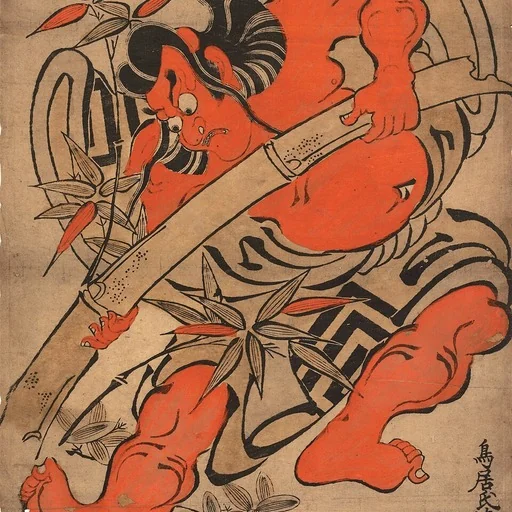
Torii Kiyomasu was the shop name of a printmaker in Edo—modern Tokyo—who spent his short career plastering the city with bold, eye-catching posters.