Artwork
Plate 27: Blennies, Scorpion Fish, and Other Fish
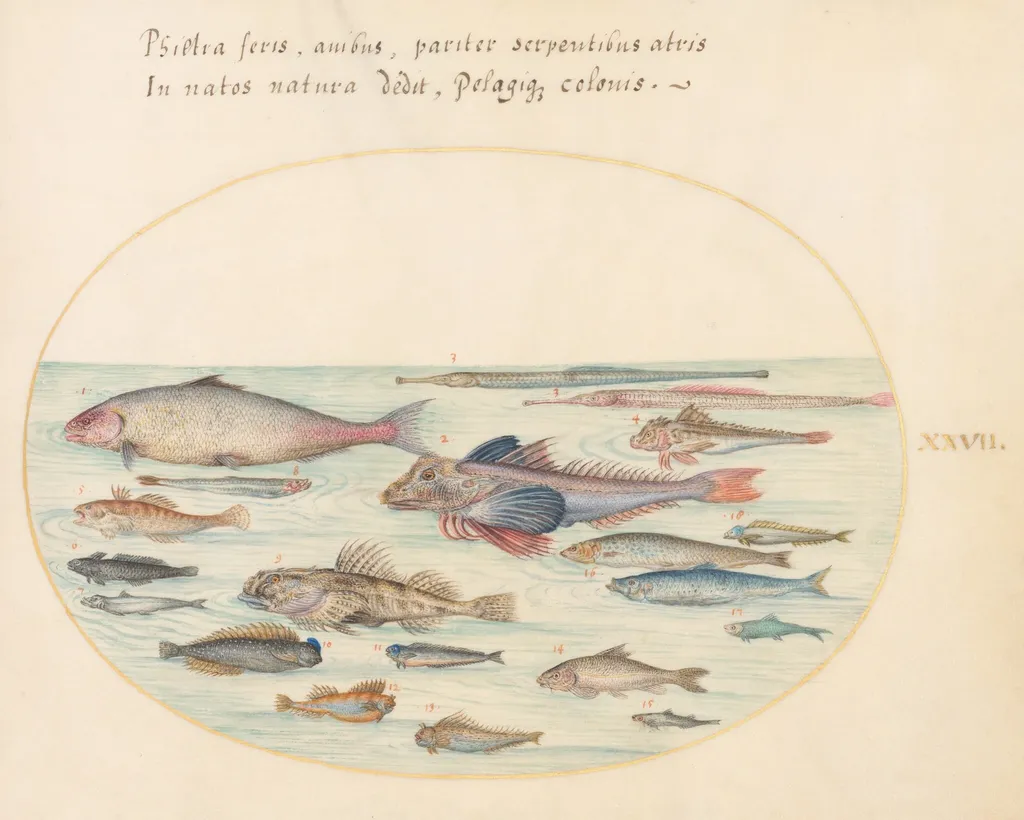
Plate 27: Blennies, Scorpion Fish, and Other Fish is a gouache drawing by the Renaissance artist Joris Hoefnagel. It dates from 1594 and is held in the collection of the National Gallery of Art.
About this work
Overview
Created around 1594 by Joris Hoefnagel, this watercolor and gold-painted parchment sheet depicts a variety of marine species arranged in a circular format.
Created around 1594 by Joris Hoefnagel, this watercolor and gold-painted parchment sheet depicts a variety of marine species arranged in a circular format. Executed with meticulous detail, it belongs to a larger manuscript tradition that merged scientific documentation with ornamental design. The use of parchment and gold highlights its place in pre-print natural history illustration, bridging art and early zoological study.
Subject & Meaning
The plate illustrates blennies, scorpion fish, and other unidentified species, each rendered with anatomical accuracy and labeled numerically. The arrangement suggests a taxonomic intent, possibly for scholarly reference. Latin inscriptions at the top reinforce its role as an educational artifact, reflecting Renaissance efforts to classify natural forms through visual means rather than textual description alone.
Technique & Style
Hoefnagel applied thin layers of watercolor with fine brushwork to capture scale texture, fin structure, and subtle tonal shifts in the fish’s bodies. Gold paint outlines the circular composition and accents details, lending luminosity without overwhelming the naturalistic palette of pinks, blues, and grays. The technique reflects manuscript illumination traditions, where precision and decorative restraint coexisted.
History & Provenance
This work originated in Hoefnagel’s broader project to document flora and fauna for imperial patrons, likely connected to the Habsburg court. As one of the final practitioners of manuscript illumination, his work preceded the rise of printed natural history books. The piece survives as part of a rare, hand-copied collection, preserving a transitional moment between medieval codex culture and early modern science.
Context
In late 16th-century Europe, natural history was shifting from allegorical representation toward empirical observation. Hoefnagel’s fish plates align with this trend, paralleling contemporaneous works by Conrad Gesner and Ulisse Aldrovandi. His integration of decorative elements—gold borders, Latin labels—retained medieval aesthetics while serving new scientific aims, reflecting the era’s hybrid intellectual climate.
Legacy
Hoefnagel’s detailed marine studies influenced later naturalists and illustrators by demonstrating how artistic precision could support biological documentation. Though overshadowed by printed works, his manuscripts preserved techniques of observation and rendering that informed the development of scientific illustration. The plate remains a testament to the role of hand-crafted imagery in the evolution of natural science.
Artist & collection

Artist
Joris Hoefnagel or Georg Hoefnagel (1542 – 24 July 1601) was a Flemish painter, printmaker, miniaturist, draftsman and merchant.

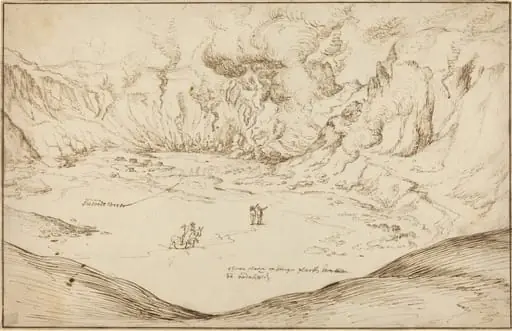 Forum Vulcani: The Hot Springs at Pozzuoli
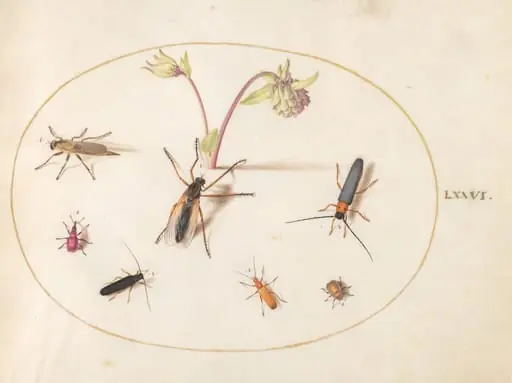 Plate 76: Insects with a Pink and Cream Columbine
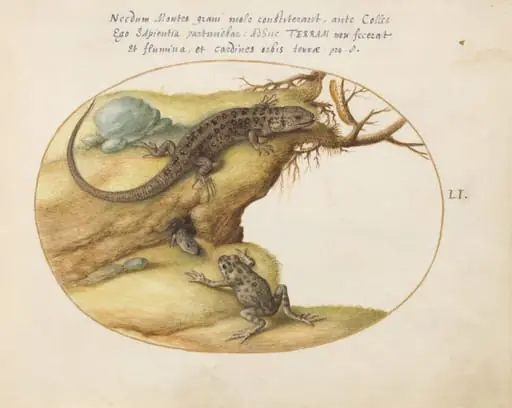 Plate 51: Two Sand Lizards, a Common Parsley Frog(?), and a Caterpillar
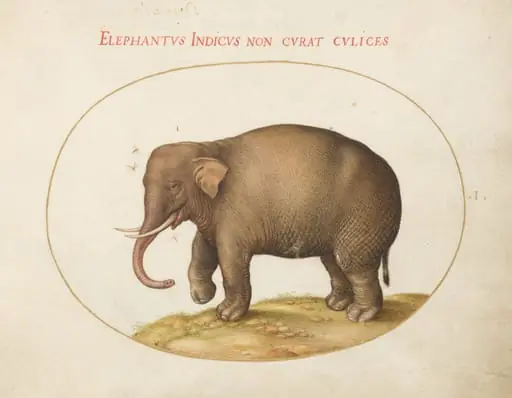 Plate 1: Elephant with Insects
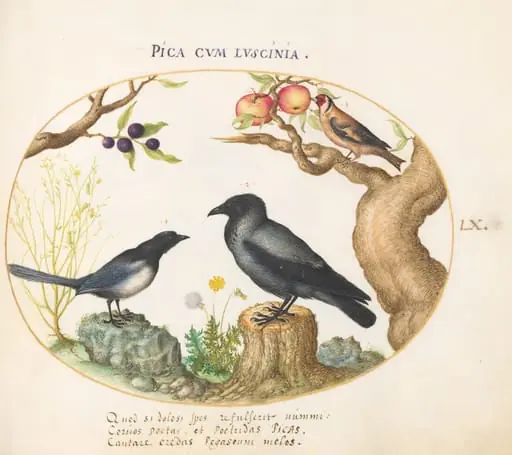 Plate 60: Magpie, Crow, and Goldfinch
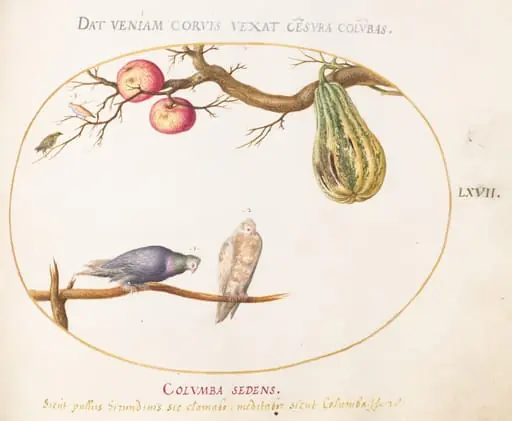 Plate 67: Two Doves beneath a Gourd and Apples
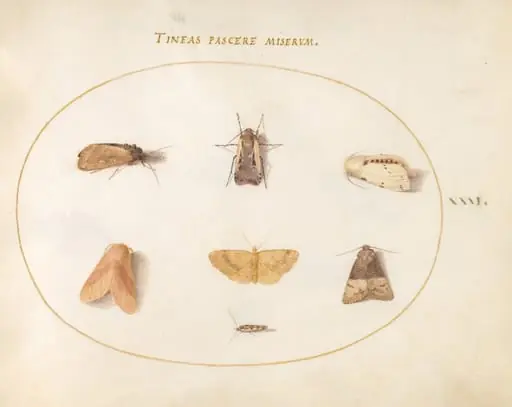 Plate 31: Seven Moths
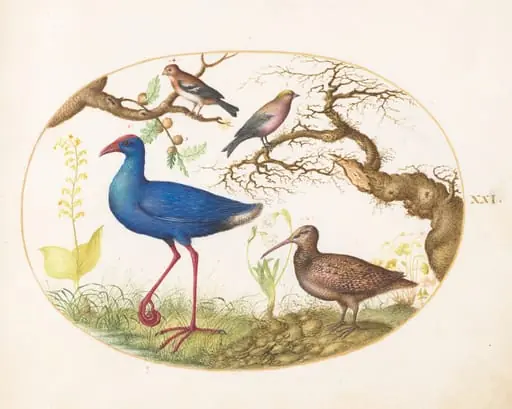 Plate 21: Swamp Hen and Woodcock with a Streaked Rosefinch, a Finch, and Oak Galls
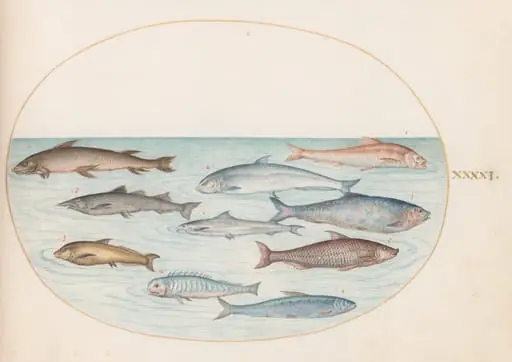 Plate 41: Whitefish(?) and Other Fish
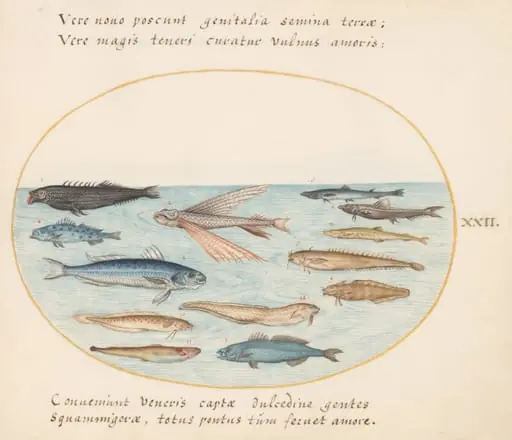 Plate 22: Mullet, Flying Fish, Eels, and Other Fish
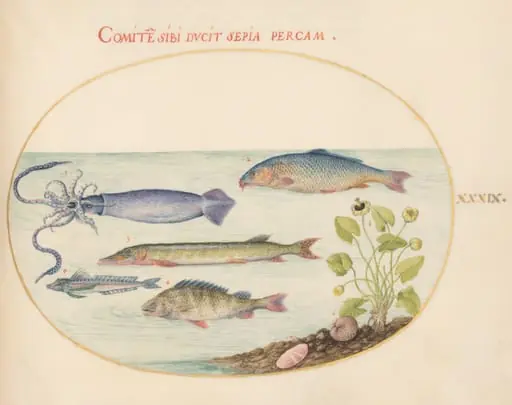 Plate 39: Squid, Gurnard, Pike, and Other Fish
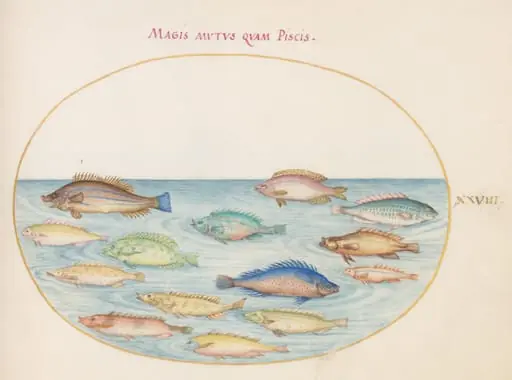 Plate 28: Sea Bream(?) and Other Fish
 Plate 18: Boarfish, Razorfish, Butterfish, a John Dory, and Other Fish
 Plate 26: Gurnards, Dragonets, and Other Fish
 Plate 17: A Cod, Weever Fish, Eels, and Other Fish
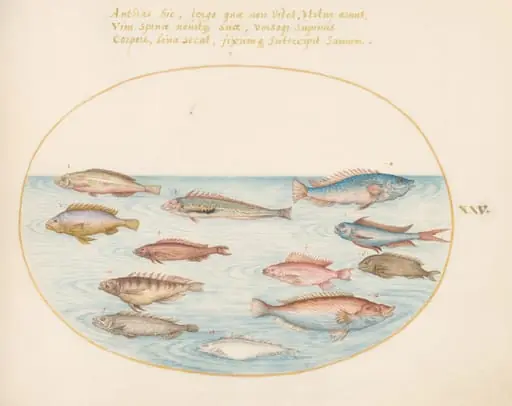 Plate 25: Mediterranean Rainbow Wrasse, Other Wrasse, a Swallowtail Sea Perch(?), Several "Anthiae," and Other Fish
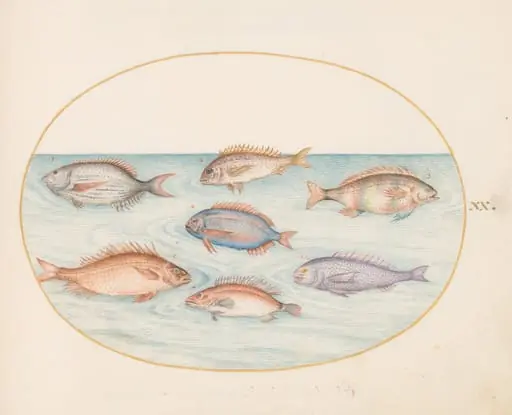 Plate 20: Sea Bream, Dentex, Sargo, and Other Fish
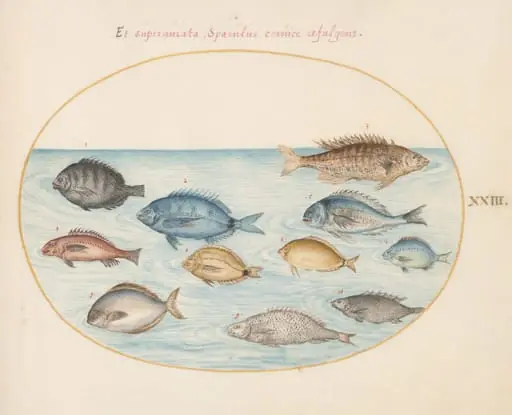 Plate 23: Bream(?) and Other Fish
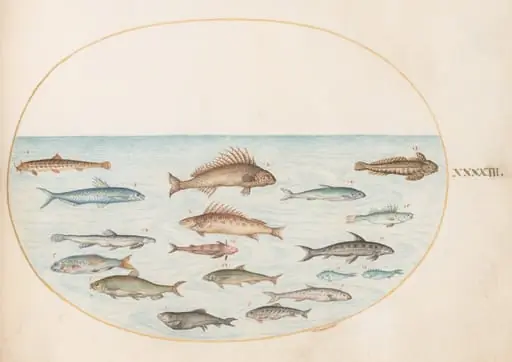 Plate 43: Fifteen Fish