Artwork
Plate 26: Gurnards, Dragonets, and Other Fish
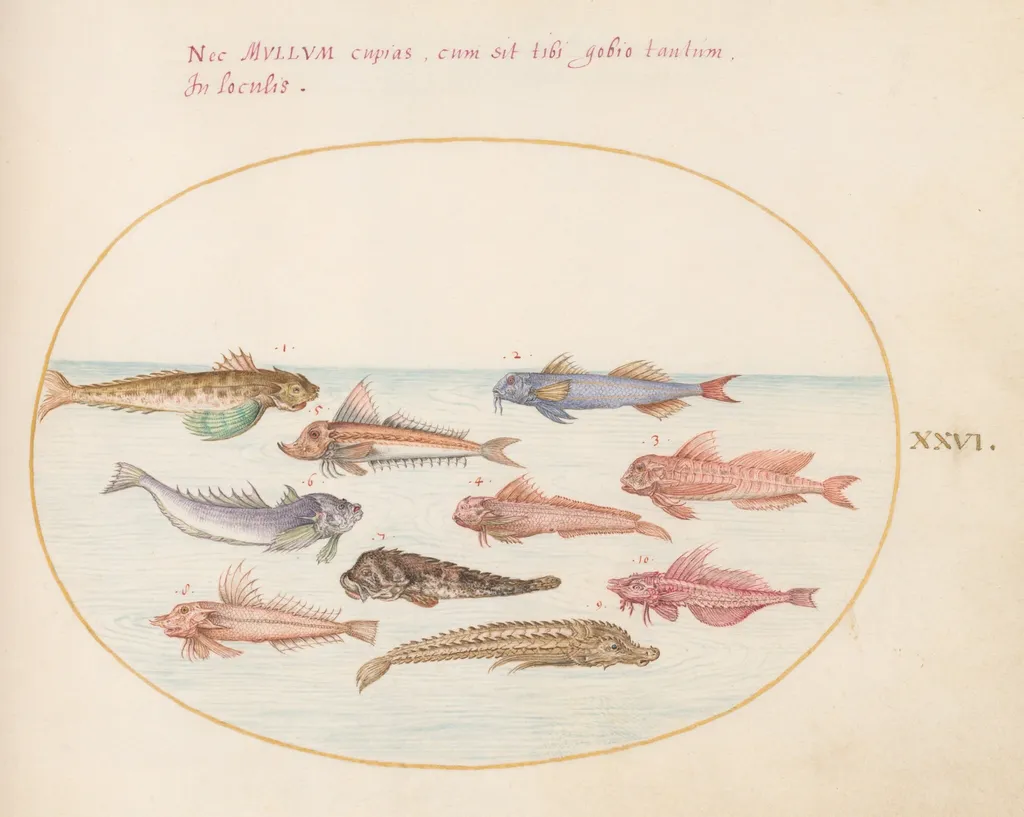
Plate 26: Gurnards, Dragonets, and Other Fish is a gouache drawing by the Renaissance artist Joris Hoefnagel. It dates from 1594 and is held in the collection of the National Gallery of Art.
About this work
Overview
This work, dated to approximately 1594, is a meticulously rendered study of marine species by Joris Hoefnagel, a Flemish artist whose diverse practice spanned natural history illustration and manuscript illumination. Executed in watercolor and gold paint on parchment, the composition presents ten distinct fish arranged within a circular format, their forms delineated with precision. The use of delicate glazing and subtle highlights underscores Hoefnagel’s technical refinement, aligning with broader Renaissance efforts to document the natural world.
Subject & Meaning
Rather than a purely aesthetic arrangement, the work functions as a scientific record, reflecting the period’s growing interest in empirical observation.
The drawing catalogs a selection of fish, including gurnards and dragonets, each identified by numerical annotations. Rather than a purely aesthetic arrangement, the work functions as a scientific record, reflecting the period’s growing interest in empirical observation. The inclusion of varied species—some spined, others scaled—demonstrates an intent to classify and preserve knowledge of marine biodiversity, a hallmark of late 16th-century natural history illustration.
Technique & Style
Hoefnagel employed watercolor on parchment, a medium that allowed for both transparency and fine detail. The fish are depicted with soft, layered washes, while gold paint enhances the border and select highlights, lending the work an illuminated manuscript’s luminosity. This approach bridges manuscript tradition and emerging still-life painting, characterized by its clarity and absence of extraneous ornamentation. The restrained background focuses attention on the specimens, emphasizing their anatomical accuracy.
History & Provenance
Created during Hoefnagel’s active period, the work forms part of a larger series dedicated to natural subjects. Trained initially in law, the artist later pursued painting and draftsmanship, contributing to illuminated manuscripts and scientific illustrations. While the exact early ownership of this piece remains unrecorded, it exemplifies the intersection of art and natural philosophy in northern Europe during the late Renaissance.
Context
The drawing emerges from a period marked by increased exploration and collection of natural specimens. Artists and scholars collaborated to document flora and fauna, often for cabinets of curiosity or encyclopedic volumes. Hoefnagel’s work aligns with this trend, offering visual precision that served both scientific and artistic purposes. His approach reflects the era’s blending of empirical inquiry with aesthetic refinement.
Legacy
Hoefnagel’s illustrations influenced the development of still-life painting in northern Europe, shifting focus from religious or allegorical themes to direct observation of nature. This work, with its scientific rigor and artistic elegance, exemplifies the transition from medieval illumination to independent studies of the natural world. Its legacy persists in the tradition of botanical and zoological illustration, where accuracy and artistry remain intertwined.
Artist & collection

Artist
Joris Hoefnagel or Georg Hoefnagel (1542 – 24 July 1601) was a Flemish painter, printmaker, miniaturist, draftsman and merchant.

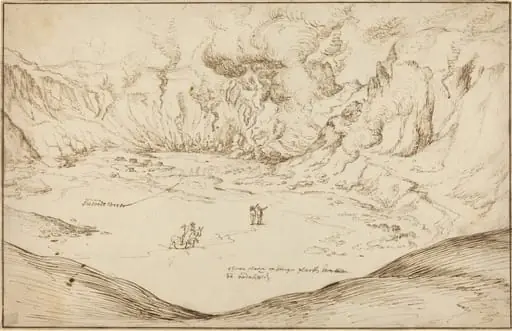 Forum Vulcani: The Hot Springs at Pozzuoli
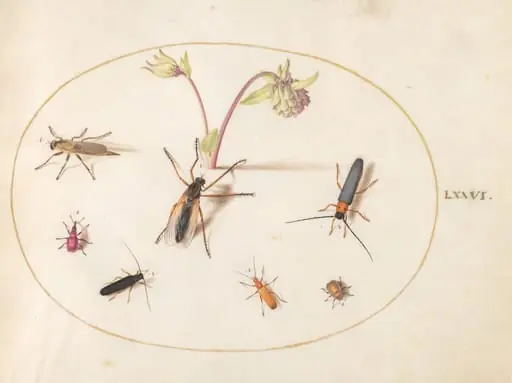 Plate 76: Insects with a Pink and Cream Columbine
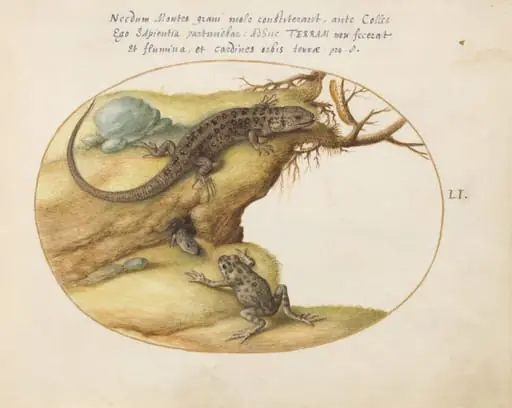 Plate 51: Two Sand Lizards, a Common Parsley Frog(?), and a Caterpillar
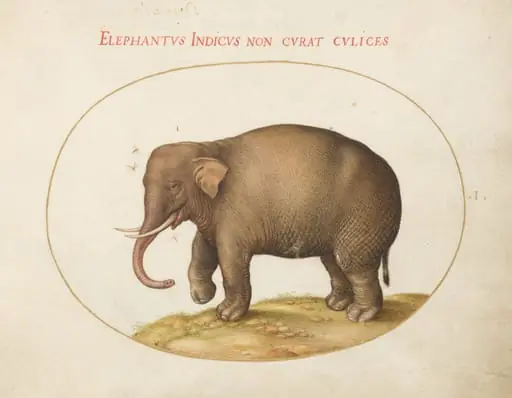 Plate 1: Elephant with Insects
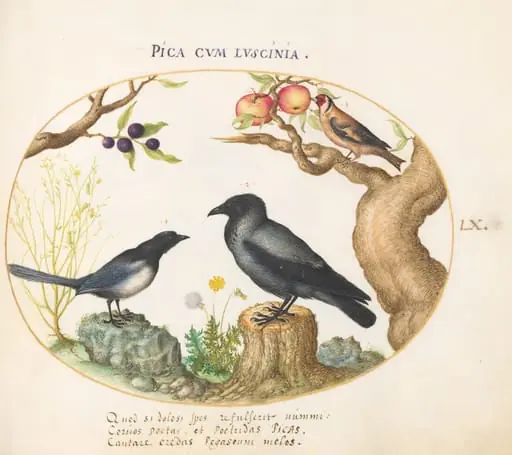 Plate 60: Magpie, Crow, and Goldfinch
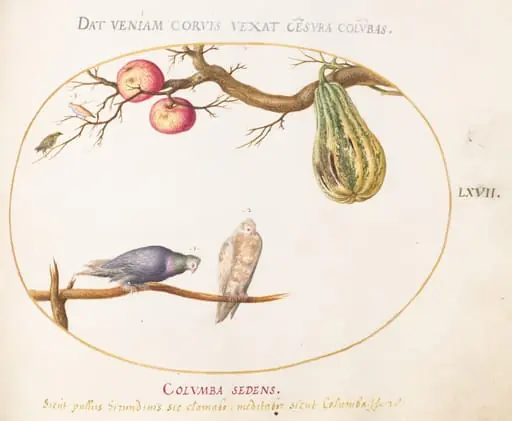 Plate 67: Two Doves beneath a Gourd and Apples
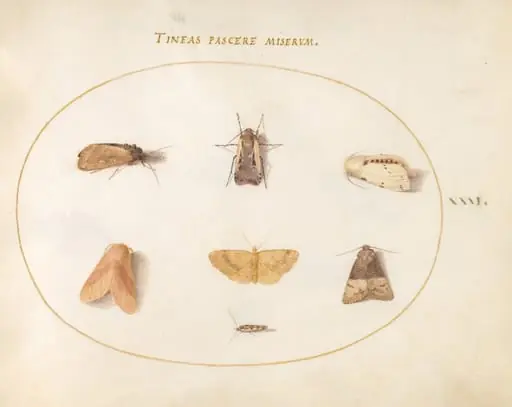 Plate 31: Seven Moths
 Plate 21: Swamp Hen and Woodcock with a Streaked Rosefinch, a Finch, and Oak Galls
 Plate 22: Mullet, Flying Fish, Eels, and Other Fish
 Plate 23: Bream(?) and Other Fish
 Plate 27: Blennies, Scorpion Fish, and Other Fish
 Plate 28: Sea Bream(?) and Other Fish
 Plate 17: A Cod, Weever Fish, Eels, and Other Fish
 Plate 39: Squid, Gurnard, Pike, and Other Fish
 Plate 25: Mediterranean Rainbow Wrasse, Other Wrasse, a Swallowtail Sea Perch(?), Several "Anthiae," and Other Fish
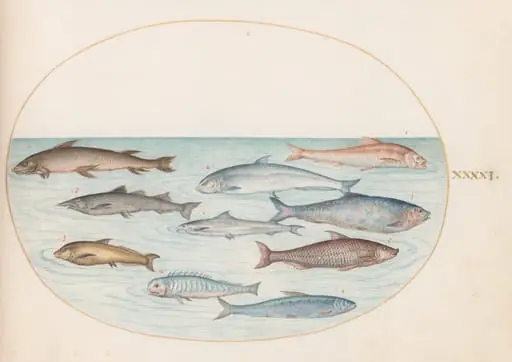 Plate 41: Whitefish(?) and Other Fish
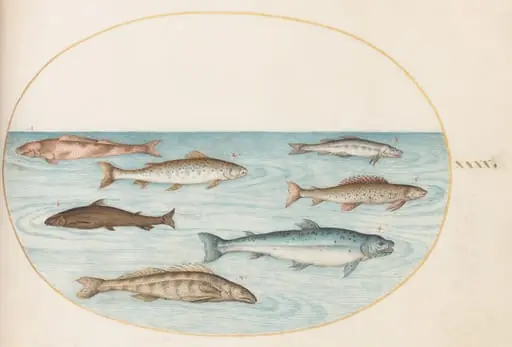 Plate 40: Salmon, Trout, and Freshwater(?) Fish
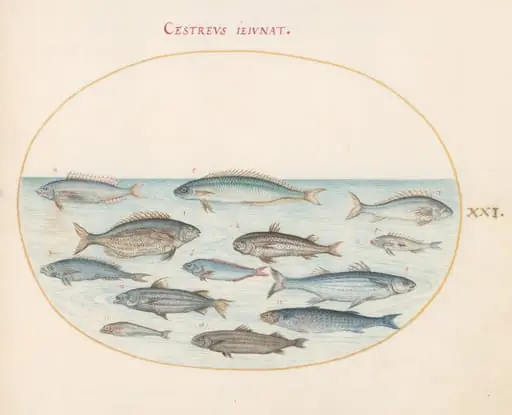 Plate 21: Cod(?) and Other Fish
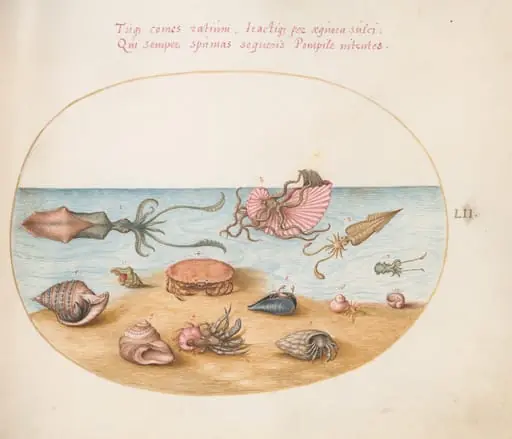 Plate 52: An Argonaut, Squid, Hermit Crabs, Shells, and a Crab
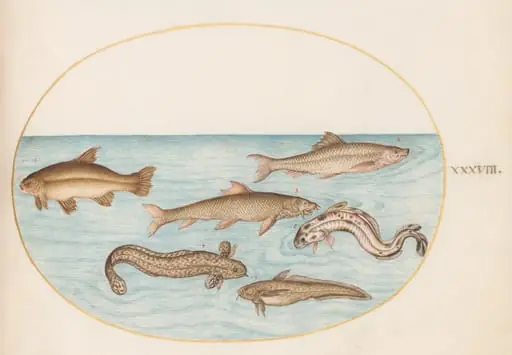 Plate 38: Burbot, Rockling, and Other Fish