Artwork
Plate 33: Sole and Other Flatfish with Bandfish(?)
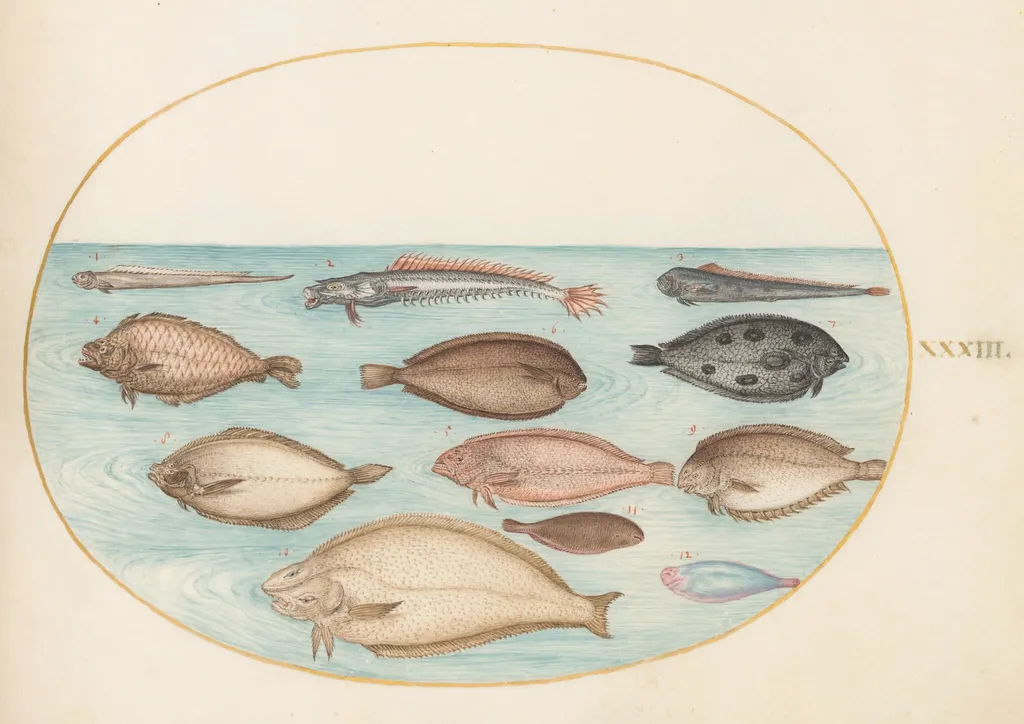
Plate 33: Sole and Other Flatfish with Bandfish(?) is a gouache drawing by the Renaissance artist Joris Hoefnagel. It dates from 1594 and is held in the collection of the National Gallery of Art.
About this work
Overview
Created around 1594 by Joris Hoefnagel, this watercolor and gold-painted drawing on parchment depicts a group of flatfish and possibly a bandfish.
Created around 1594 by Joris Hoefnagel, this watercolor and gold-painted drawing on parchment depicts a group of flatfish and possibly a bandfish. Executed with meticulous detail, the work belongs to a tradition of naturalistic manuscript illustration that flourished in northern Europe during the late Renaissance. The use of gold highlights and delicate brushwork reflects Hoefnagel’s training in illuminated manuscripts, merging scientific observation with ornamental precision.
Subject & Meaning
The plate presents a variety of marine species arranged in dynamic, overlapping poses, each rendered with anatomical accuracy. While the exact identity of one fish remains uncertain, the composition emphasizes diversity in form and movement. Rather than symbolic or allegorical intent, the focus appears to be on documentation—capturing the physical reality of aquatic life as observed in natural settings, aligning with emerging empirical approaches to natural history.
Technique & Style
Hoefnagel employed translucent watercolor to model the fish’s scales and contours, adding subtle shading for volume and texture. Gold paint outlines key features and frames the scene, enhancing luminosity without overwhelming the naturalism. The rippling blue background suggests water movement, while the fish’s varied orientations create a sense of spatial depth. The technique bridges manuscript illumination with emerging naturalist drawing, avoiding idealization in favor of close observation.
History & Provenance
This piece was likely part of a larger manuscript or album commissioned for a learned patron, common among European elites interested in natural curiosities. Hoefnagel’s work from this period often circulated in private collections before being integrated into institutional holdings. Its survival in relatively intact condition reflects its value as both artistic and scientific artifact, preserved through centuries as a record of early modern marine observation.
Context
In the late 16th century, northern European artists increasingly turned to nature as a subject worthy of systematic study. Hoefnagel’s work emerged alongside growing interest in taxonomy and specimen collection, influenced by travels and printed natural histories. His drawings contributed to a visual culture that valued accuracy over convention, laying groundwork for later scientific illustration while retaining the decorative sensibilities of manuscript art.
Legacy
Hoefnagel’s detailed aquatic studies helped shape the transition from decorative natural history to more empirical visual documentation. His approach influenced subsequent generations of illustrators in both scientific and artistic circles. Though not widely exhibited today, his works remain referenced in studies of Renaissance naturalism, valued for their quiet precision and the rare fusion of artistry with observational rigor.
Artist & collection

Artist
Joris Hoefnagel or Georg Hoefnagel (1542 – 24 July 1601) was a Flemish painter, printmaker, miniaturist, draftsman and merchant.

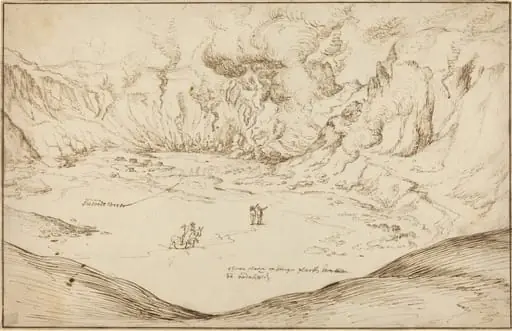 Forum Vulcani: The Hot Springs at Pozzuoli
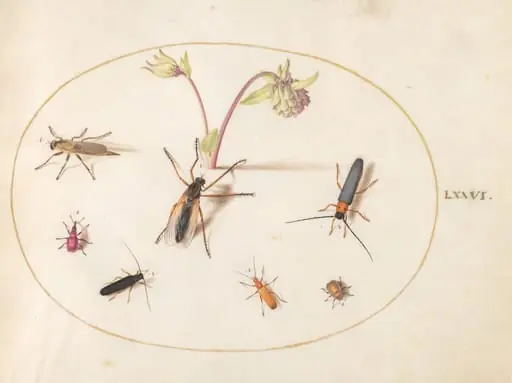 Plate 76: Insects with a Pink and Cream Columbine
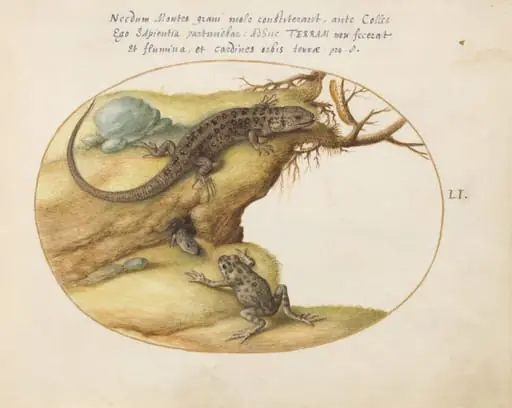 Plate 51: Two Sand Lizards, a Common Parsley Frog(?), and a Caterpillar
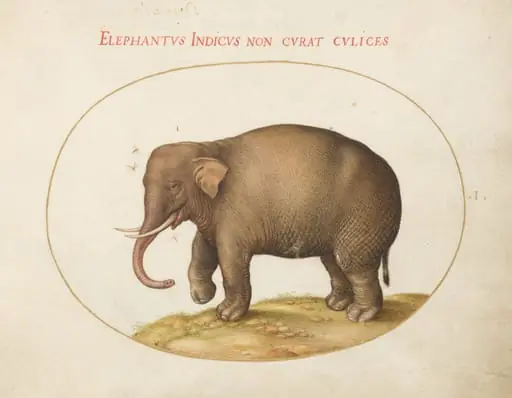 Plate 1: Elephant with Insects
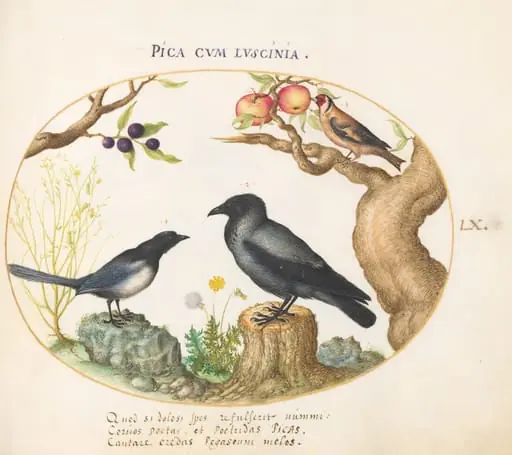 Plate 60: Magpie, Crow, and Goldfinch
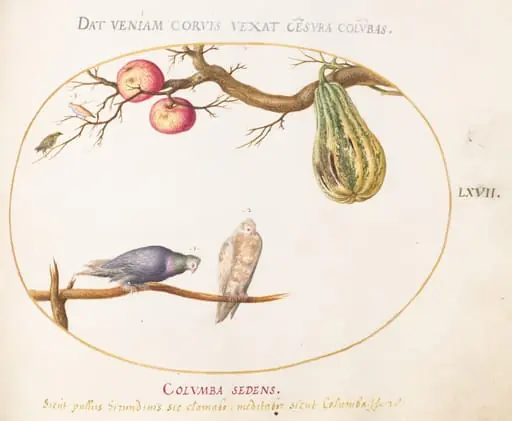 Plate 67: Two Doves beneath a Gourd and Apples
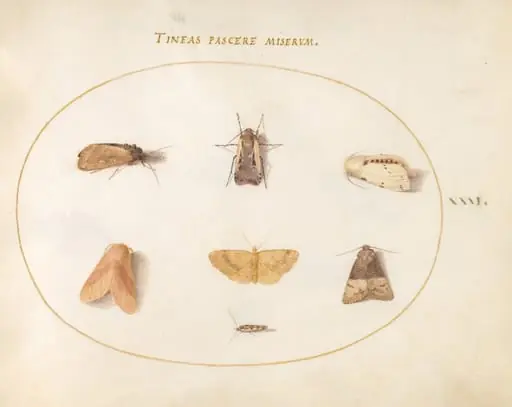 Plate 31: Seven Moths
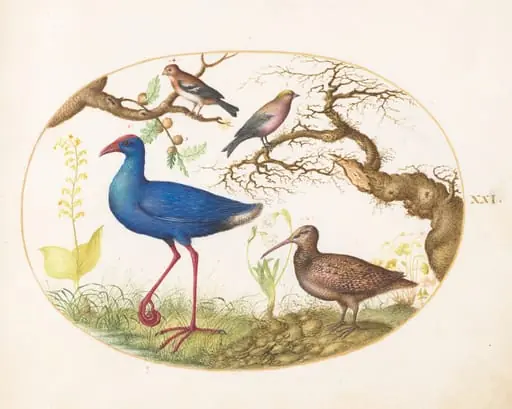 Plate 21: Swamp Hen and Woodcock with a Streaked Rosefinch, a Finch, and Oak Galls
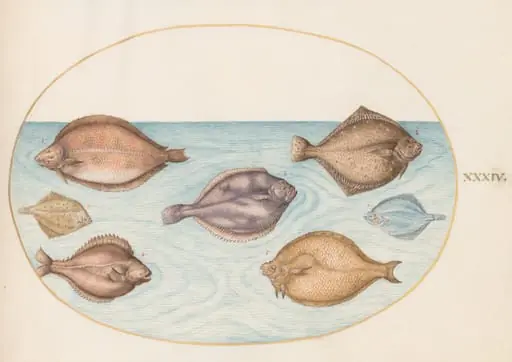 Plate 34: Seven Flatfish
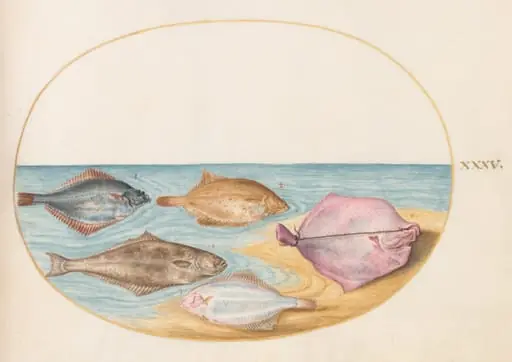 Plate 35: The Undersides of Turbot(?) and Other Flat Fish
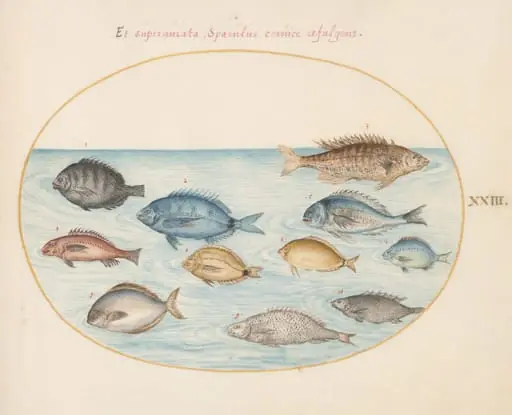 Plate 23: Bream(?) and Other Fish
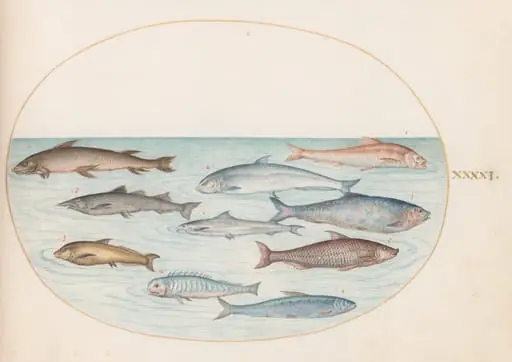 Plate 41: Whitefish(?) and Other Fish
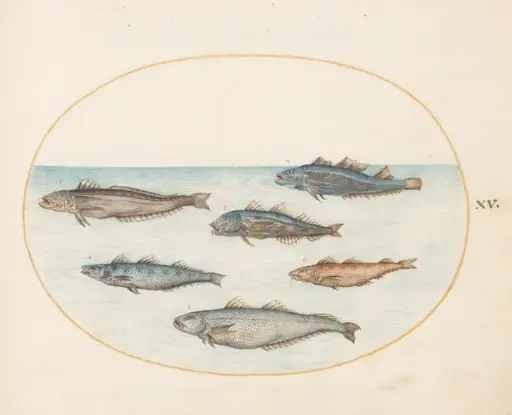 Plate 15: Six "Asellorum" Fish (Cod?)
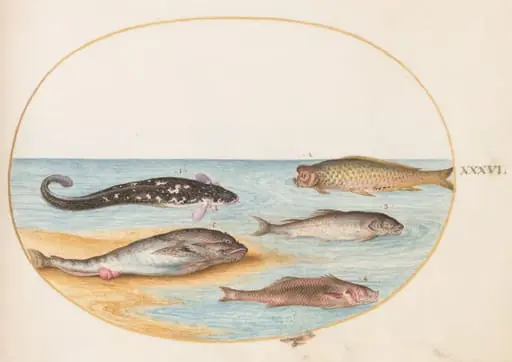 Plate 36: Five Fish, Including Carp(?)
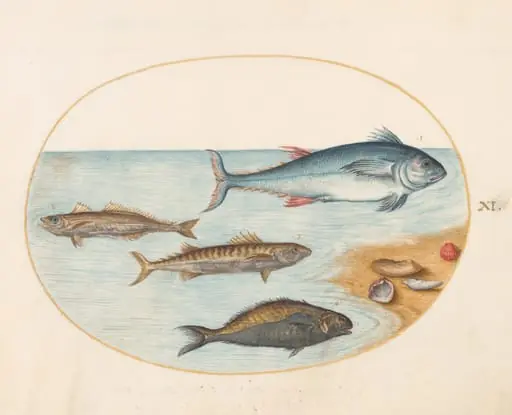 Plate 11: Four Fish and Shells
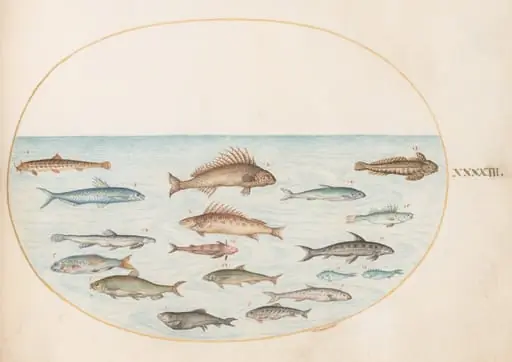 Plate 43: Fifteen Fish
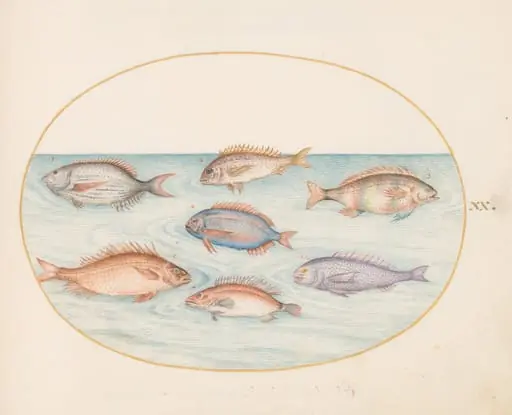 Plate 20: Sea Bream, Dentex, Sargo, and Other Fish
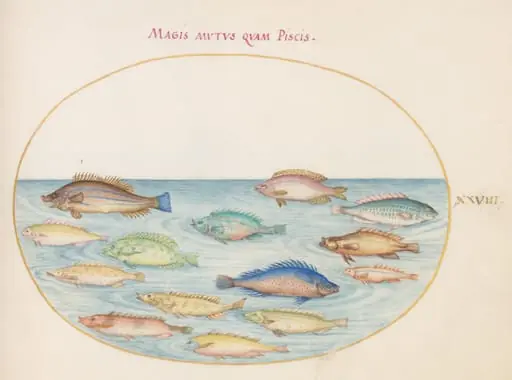 Plate 28: Sea Bream(?) and Other Fish
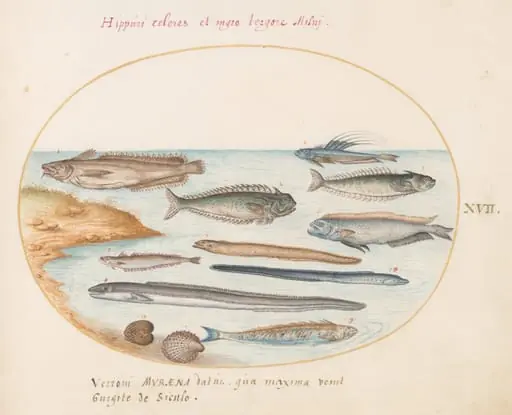 Plate 17: A Cod, Weever Fish, Eels, and Other Fish
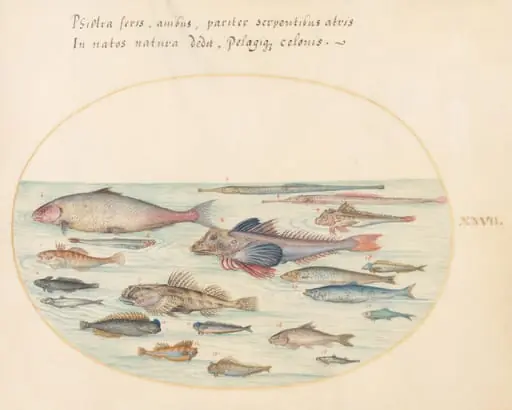 Plate 27: Blennies, Scorpion Fish, and Other Fish