Artwork
Crowns, Mitres, Maces, Etc.
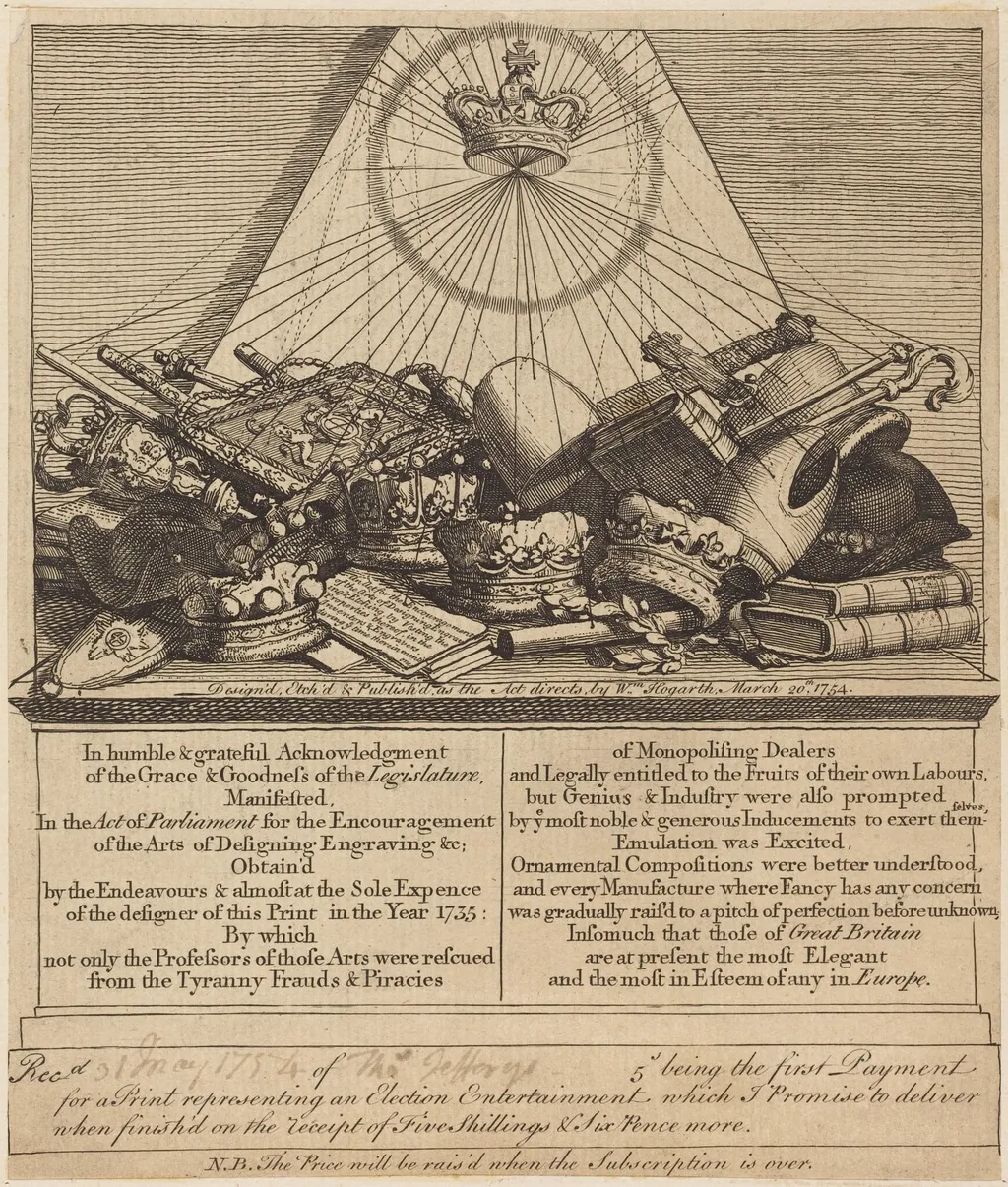
Crowns, Mitres, Maces, Etc. is an ink print by the Romanticist artist William Hogarth. It dates from 1754 and is held in the collection of the National Gallery of Art.
About this work
Overview
Hogarth, trained as an engraver, leveraged his technical mastery to highlight the very medium that had long been undervalued in the art world.
Created in 1754, *Crowns, Mitres, Maces, Etc.* is an etching by William Hogarth that visually commemorates the Engravers’ Copyright Act of 1734. The print functions as both a celebration and a critique, using dense, tangled imagery to reflect the complex relationship between artistic authority and legal protection. Hogarth, trained as an engraver, leveraged his technical mastery to highlight the very medium that had long been undervalued in the art world.
Subject & Meaning
The composition presents a chaotic assemblage of royal and ecclesiastical regalia—crowns, mitres, maces—spilling from a fractured vessel alongside books and tools. These symbols, once markers of institutional power, are rendered as disordered relics, suggesting their diminished relevance. The work underscores the Act’s intent: to shift legitimacy from inherited privilege to the labor of the artist, asserting intellectual ownership as a new form of authority.
Technique & Style
Hogarth employed fine, incised lines characteristic of etching to render intricate textures and overlapping forms. The dense network of strokes creates a sense of visual overload, mirroring the cluttered symbolism. His use of sharp, controlled lines contrasts with the apparent disorder of the scene, revealing deliberate composition beneath chaos. The technique elevates the print beyond mere illustration, transforming it into a tactile commentary on craftsmanship.
History & Provenance
The print was produced shortly after the passage of the Engravers’ Copyright Act, which granted artists legal rights over their designs. Hogarth, who had lobbied for the legislation, issued this work to publicize its significance. It was distributed among fellow artists and patrons, functioning as both a commemorative token and a political statement. No known original impressions survive in major collections, suggesting limited circulation.
Context
In mid-18th-century Britain, engravers were often seen as craftsmen rather than artists, their work routinely copied without compensation. Hogarth’s print emerged amid broader debates over intellectual property and artistic identity. By juxtaposing regal symbols with the tools of the trade, he challenged the hierarchy of artistic value, positioning engraving as a legitimate and protected profession.
Legacy
The print helped cement Hogarth’s reputation as a defender of artists’ rights and a pioneer of visual satire. Its imagery influenced later campaigns for copyright reform and became a reference point in discussions of artistic labor. Though not widely reproduced, its conceptual framework—linking legal protection with visual metaphor—remains a distinctive contribution to the history of print culture.
Artist & collection
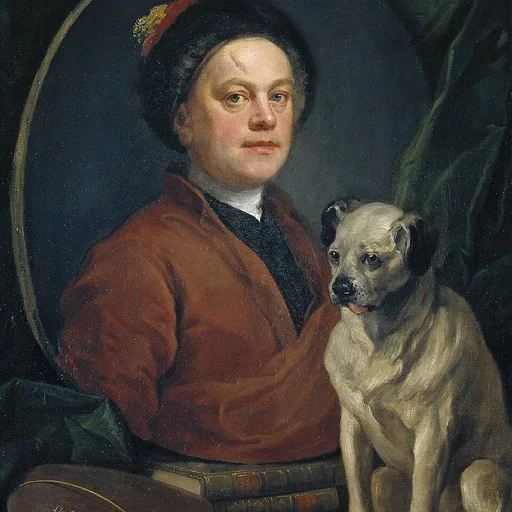
Artist
William Hogarth (; 10 November 1697 – 26 October 1764) was an English painter, engraver, satirist, cartoonist and writer.

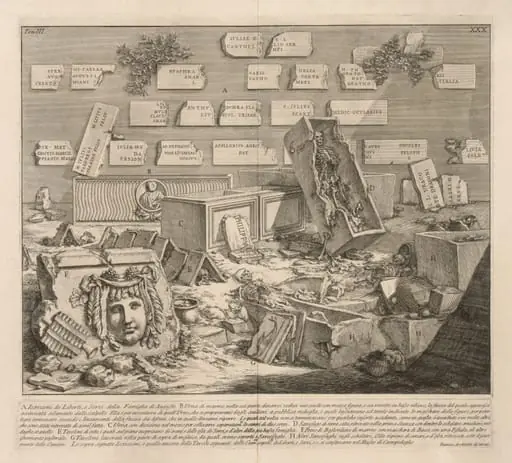 Iscrizioni de Liberti e Servi
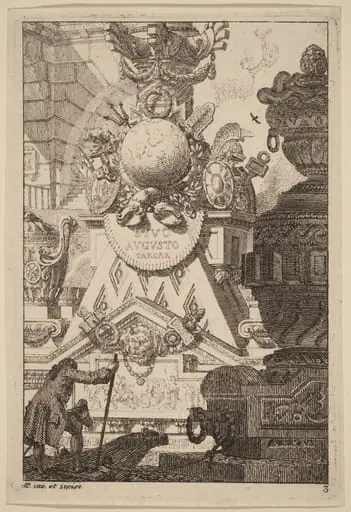 Fantasy of an Antique Trophy to Augustus
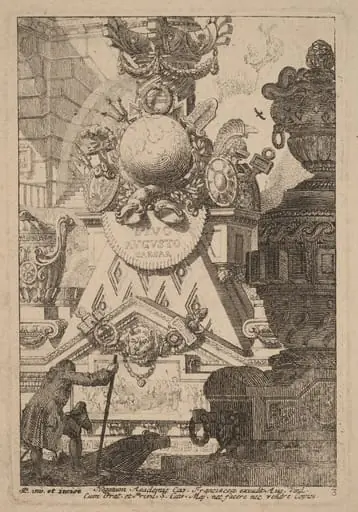 Fantasy of an Antique Trophy to Augustus
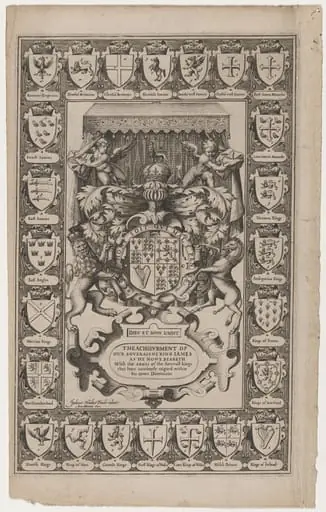 Title Page for the Achievement of our Soveraigne King James
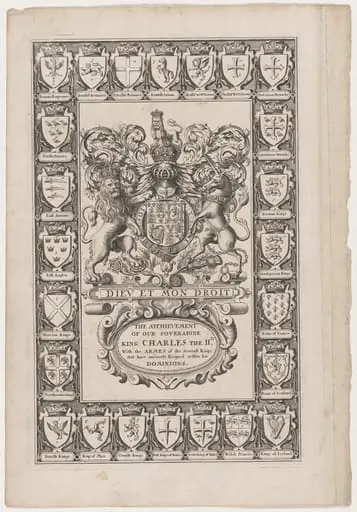 Title Page for the Achievement of Our Sovereign King Charles the Second
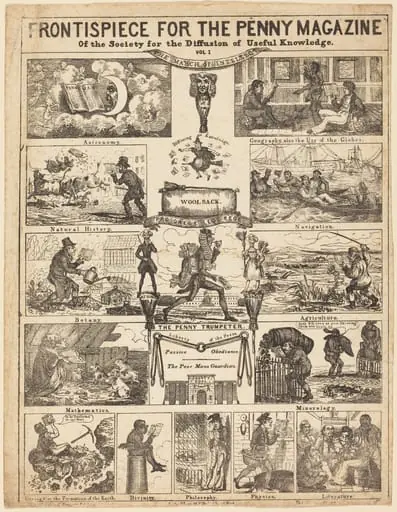 Frontispiece for the Penny Magazine of the Society for the Diffusion of Knowledge: Vo
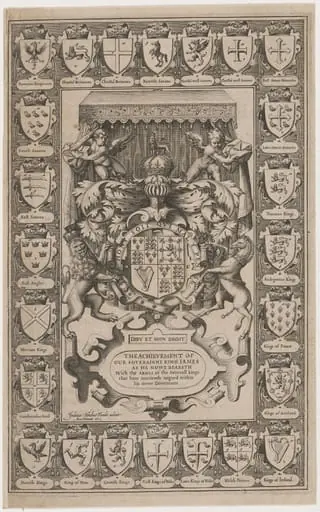 Title Page for the Achievement of our Soveraigne King James
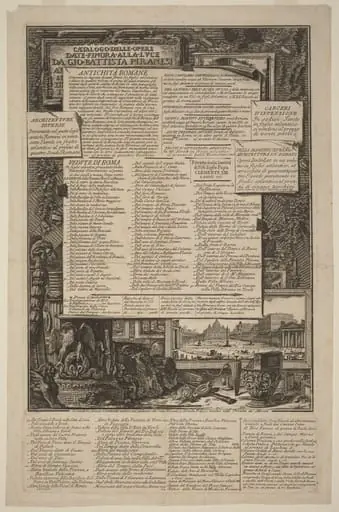 Catalogo delle Opere Date Finora Alla Lvce Da Gio Battista Piranesi
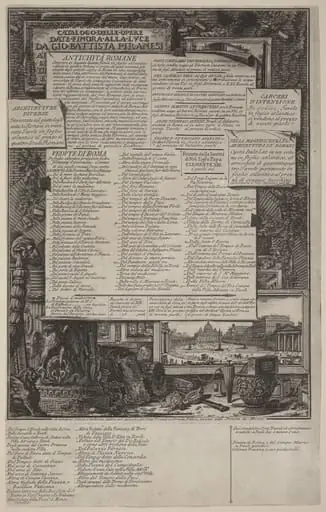 Catalogo delle Opere
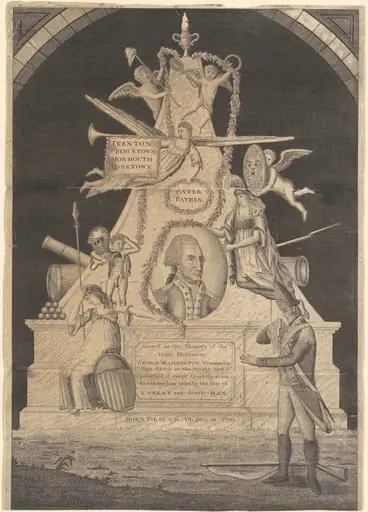 Memorial for George Washington