Artwork
Title Page for the Achievement of our Soveraigne King James
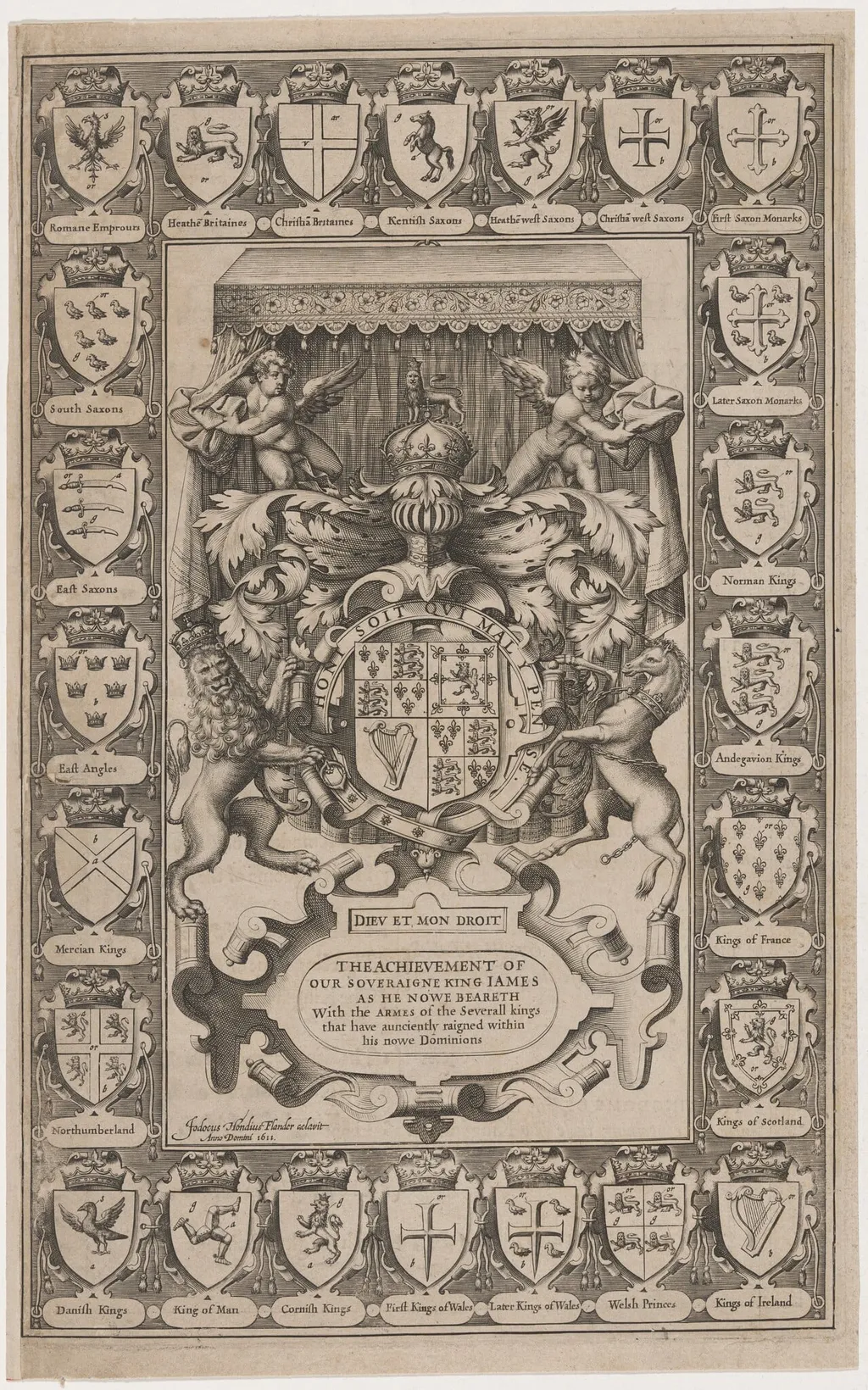
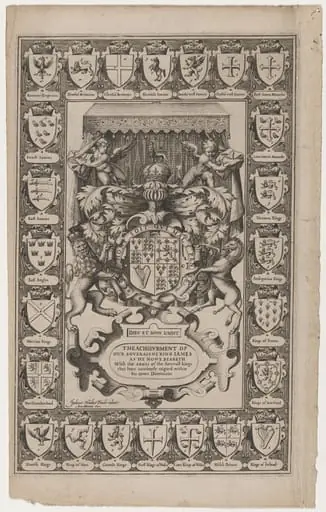
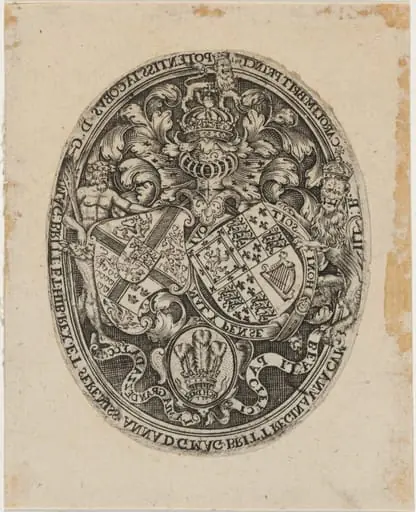
Title Page for the Achievement of our Soveraigne King James is an ink print by the Baroque artist Jodocus Hondius I. It dates from 1611 and is held in the collection of the National Gallery of Art.
About this work
Around the edges, small squares show coats of arms for different groups—like the "Heathen Britaines" or "Kings of Scotland.
This print is packed with shields and symbols. Around the edges, small squares show coats of arms for different groups—like the "Heathen Britaines" or "Kings of Scotland." In the center, two cherubs hold up a crown over a big shield with more designs. The whole thing looks like a family tree for a king, with lots of fancy scrollwork and text.
The text at the bottom says this is for "King James" and lists his "severall kings" from history. The artist signed it in 1611. It’s all drawn with fine lines and shading to make it pop.
Want to see how this style works? Check out engraving.
Overview
This 1611 engraving by Jodocus Hondius I serves as a heraldic title page dedicated to King James I of England. It presents a dense composition of coats of arms, ornamental scrollwork, and textual inscriptions arranged to assert royal lineage. The design functions as a visual genealogy, linking James to historical and mythical rulers through symbolic representation. Fine linear engraving techniques give the image clarity and depth, typical of early 17th-century printmaking.
Subject & Meaning
The print constructs a legitimizing narrative of James’s sovereignty by displaying ancestral claims through heraldic shields. Around the perimeter, small panels depict rulers of ancient British kingdoms, including the so-called 'Heathen Britaines' and Kings of Scotland. At the center, two cherubs elevate a royal crown above a large shield bearing composite emblems. The accompanying text lists James’s claimed predecessors, framing his rule as the culmination of a long, divinely sanctioned line.
Technique & Style
Executed in fine-line engraving, the work relies on precise incisions and cross-hatching to render texture and volume. The intricate detailing of shields, foliage, and decorative borders reflects the conventions of Northern European heraldic illustration. The composition is tightly organized, with no empty space, emphasizing abundance and authority. The artist’s signature and date, positioned clearly, affirm authorship and temporal context, aligning with contemporary print practices.
History & Provenance
Created in 1611, the engraving was likely produced to accompany official publications or ceremonial materials honoring King James I. Jodocus Hondius I, a Flemish engraver active in London, was known for his cartographic and heraldic work. The piece was probably commissioned by royal or civic patrons seeking to visually reinforce James’s dynastic claims. Its survival suggests it was circulated among elites or archived in institutional collections.
Context
In the early Jacobean era, visual propaganda played a key role in consolidating royal authority after the Union of the Crowns. Heraldic imagery like this engraving helped unify disparate histories—English, Scottish, and mythical British—under a single monarch. Similar compositions appeared in royal proclamations and printed genealogies, reflecting a broader cultural effort to anchor political power in ancient lineage and divine right.
Legacy
The engraving remains a documented example of early Stuart visual rhetoric, illustrating how print media was used to communicate political ideology. While not widely reproduced, it contributes to scholarly understanding of how heraldry functioned beyond the nobility, entering public discourse through printed formats. Its survival in archives offers insight into the intersection of art, politics, and historical mythmaking in Jacobean England.
Artist & collection

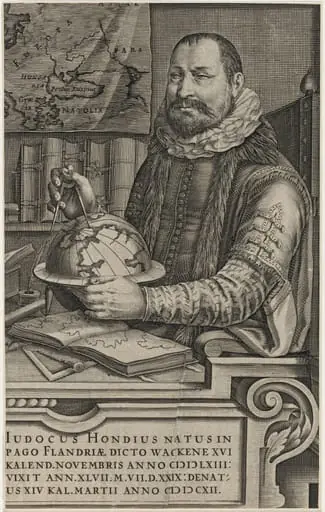 Jodocus Hondius
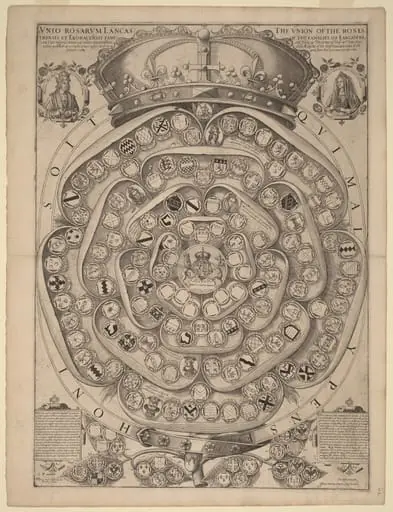 Talbot's Rose: A Record of the Knights of the Garter, 1486-1589
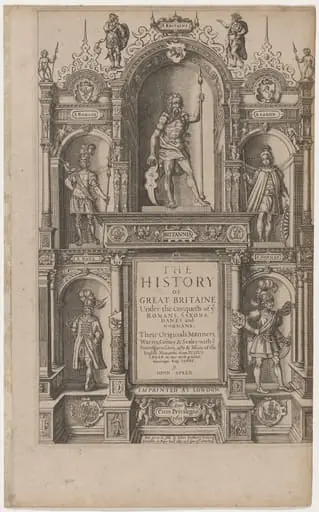 Title Page to "The History of Great Britaine" by John Speed
 Title Page to "The Theatre of the Empire of Great Britaine" by John Speed
 Title Page to "The Theatre of the Empire of Great Britaine" by John Speed
 Title Page for the Achievement of our Soveraigne King James
 Title Page for the Achievement of Our Sovereign King Charles the Second
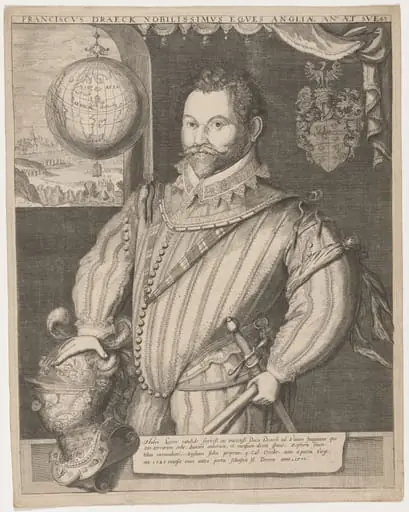 Sir Francis Drake
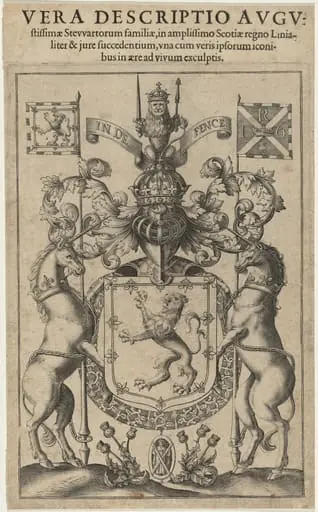 Stuart Coat of Arms from Vera Descriptio by John Jonston
![Shield of Queen Elizabeth [left half], by Simon van de Passe](https://artifactworldgallery.com/img/simon-van-de-passe--shield-of-queen-elizabeth-left-half--f4b61579dbc6b41d-w320.webp) Shield of Queen Elizabeth [left half]
Shield of Queen Elizabeth [left half]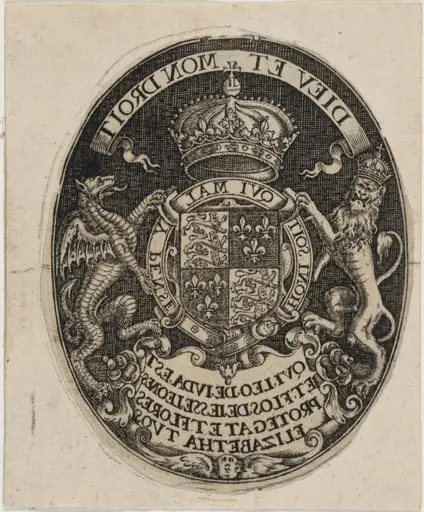 Shield of Queen Elizabeth
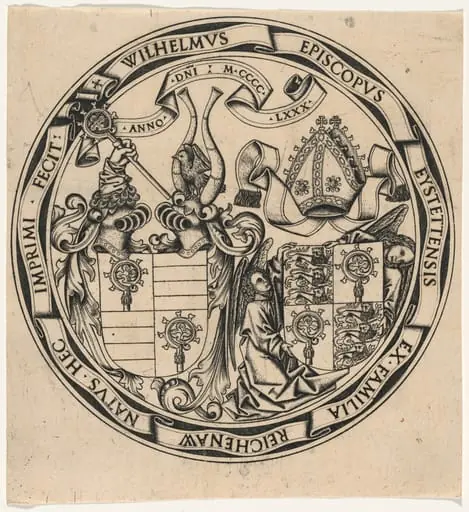 Arms of the Bishopric of Eichstätt and of Its Bishop, Wilhelm of Reichenau
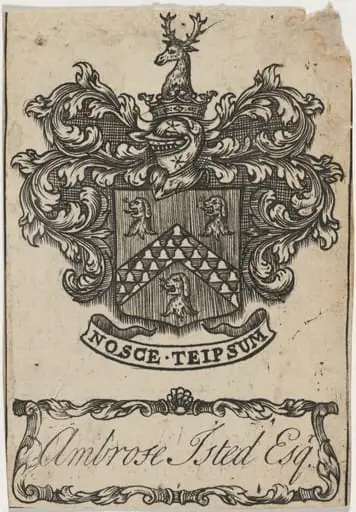 Bookplate for Ambrose Isted
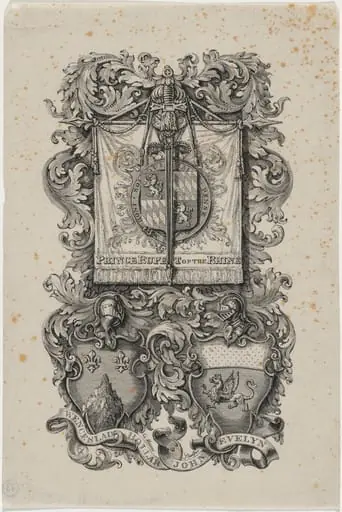 Coat of Arms of Prince Rupert, Hollar and Evelyn
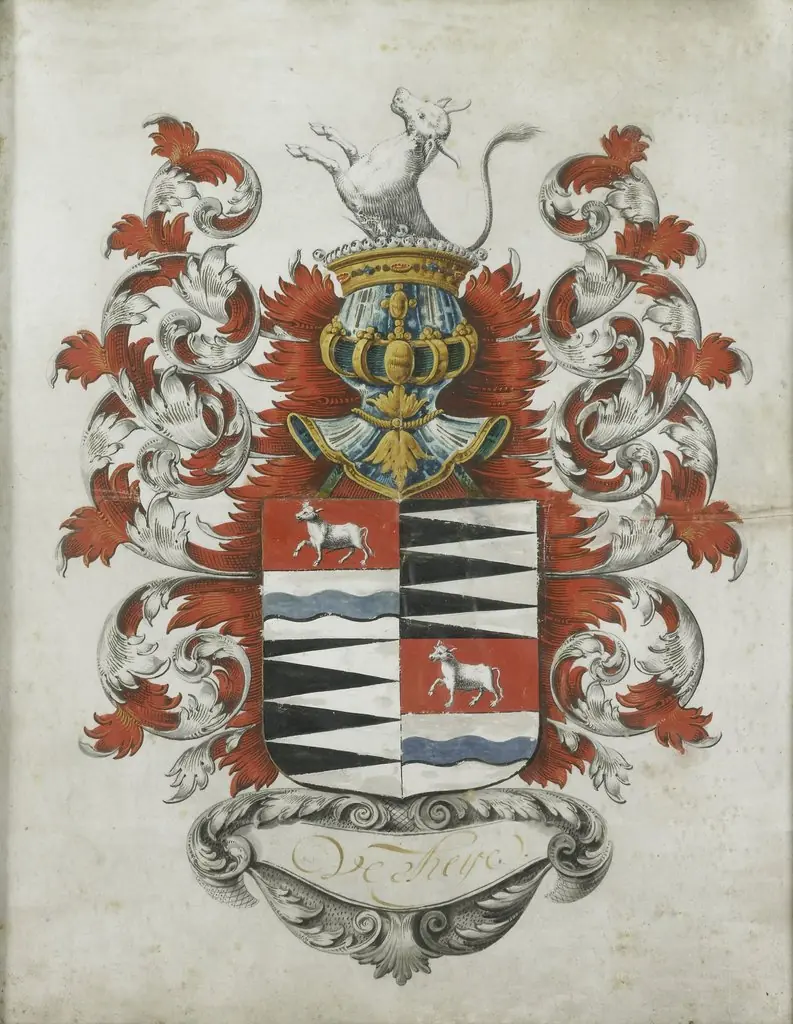 Het wapen Verheye
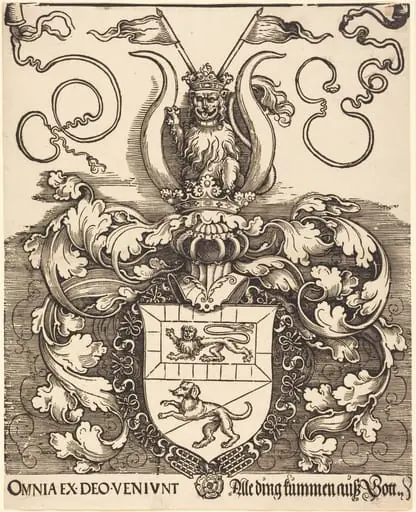 Coat of Arms of Lorenz Staiber
 Shield of James I, Anne of Denmark, and Prince Charles