Artwork
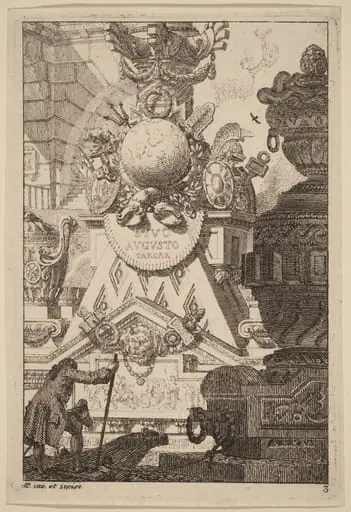
Fantasy of an Antique Trophy to Augustus
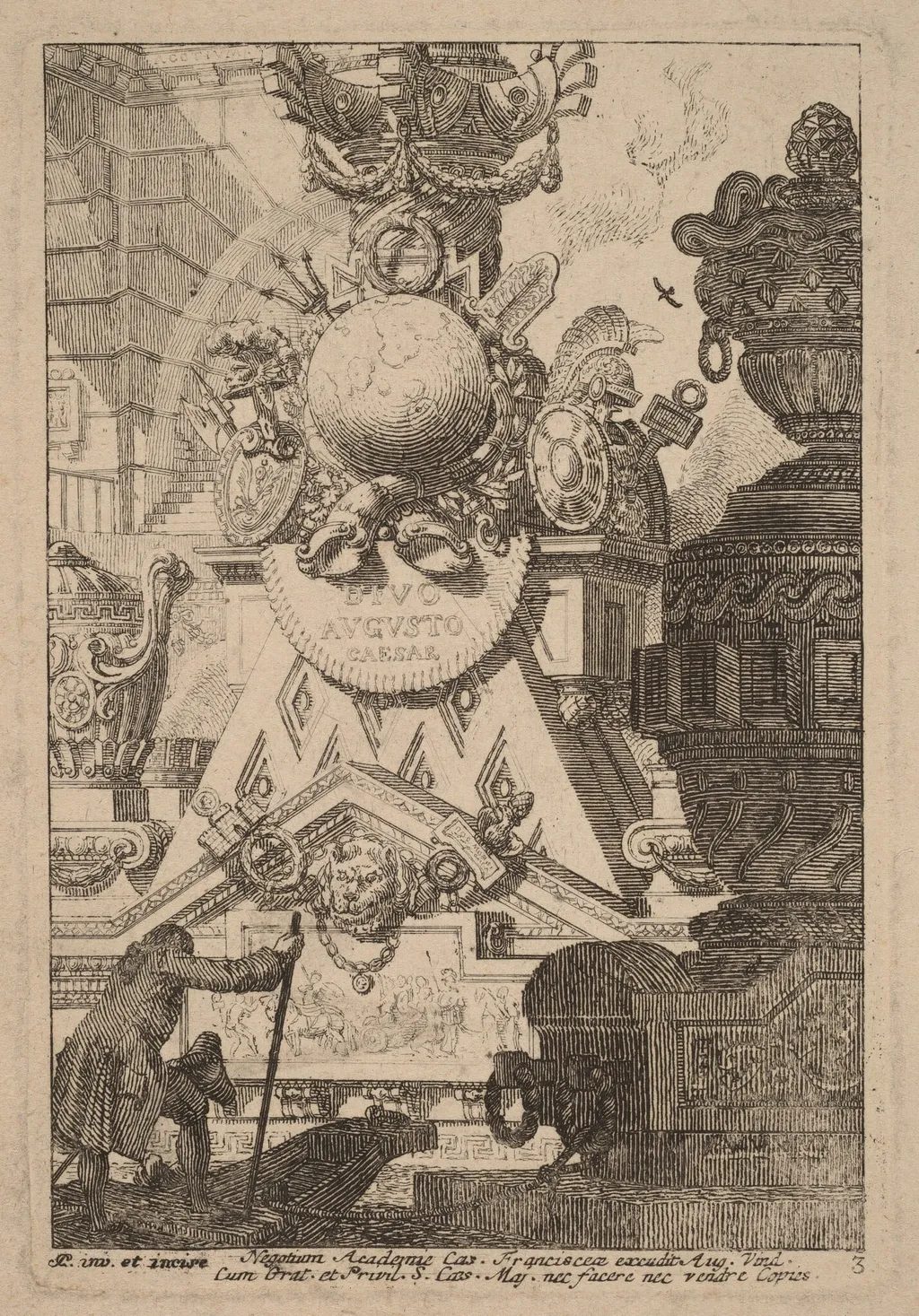
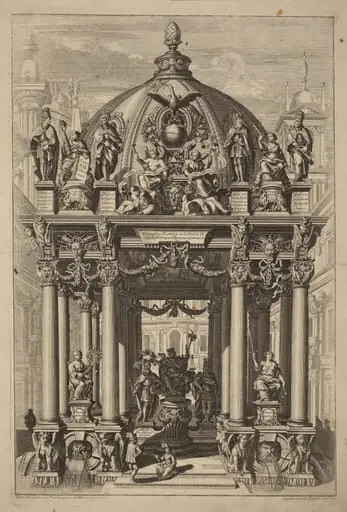
Fantasy of an Antique Trophy to Augustus is an ink print by the Romanticist artist Carl Schütz. It dates from 1775 and is held in the collection of the National Gallery of Art.
About this work
Overview
Carl Schütz’s 1775 etching, titled Fantasy of an Antique Trophy to Augustus, presents a central, elaborately constructed trophy composed of assorted objects—a globe, a helmet, a sword—rendered in fine line work on laid paper. The composition is set against a deep, shadowed backdrop that heightens the visual prominence of the assembled monument.
Subject & Meaning
The work imagines a ceremonial prize that might have been offered to the Roman emperor Augustus, assembling symbols of conquest and authority. By juxtaposing classical elements with a fanciful arrangement, the etching invites contemplation of antiquity’s grandeur and the romanticized view of imperial power.
Technique & Style
Executed as an etching, Schütz employed delicate incisions to achieve intricate detailing on the trophy’s surfaces, suggesting metalwork in gold or bronze. The strong chiaroscuro—dark surroundings contrasted with illuminated forms—aligns the piece with Romantic sensibilities that favor dramatic lighting and emotional resonance.
Context
Created in the late eighteenth century, the image reflects the period’s fascination with classical antiquity and the burgeoning Romantic movement, which emphasized imagination over strict historicism. The choice of Augustus as a focal point underscores contemporary interest in Roman imperial iconography as a source of artistic inspiration.
Artist & collection


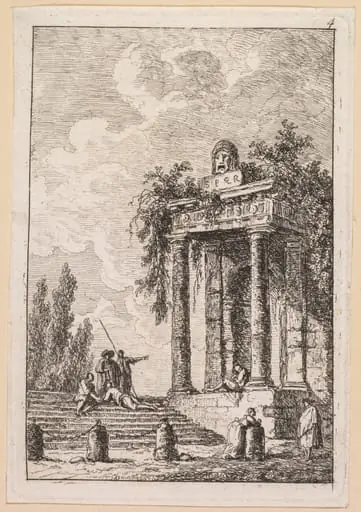 Les Soirées de Rome: L'Escalier aux quatre bornes
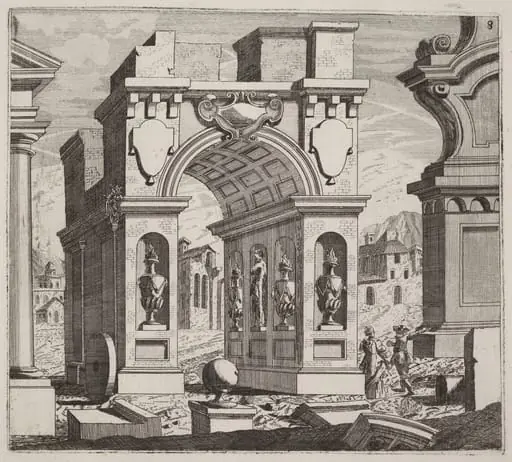 Architectural Fantasy with a Triumphal Arch
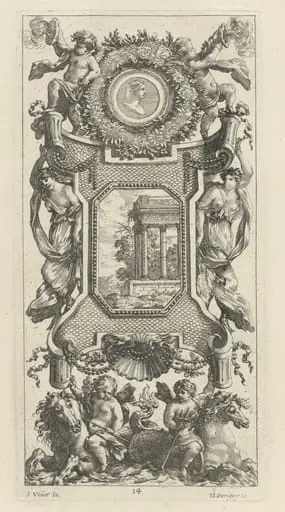 Ornamental Panel Surmounted by a Bust of a Woman and Two Putti with Flaming Trumpets
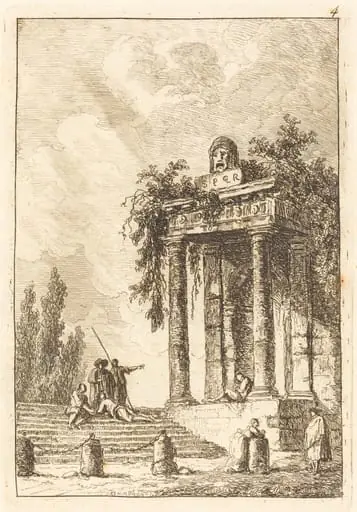 Steps to the Four Landmarks
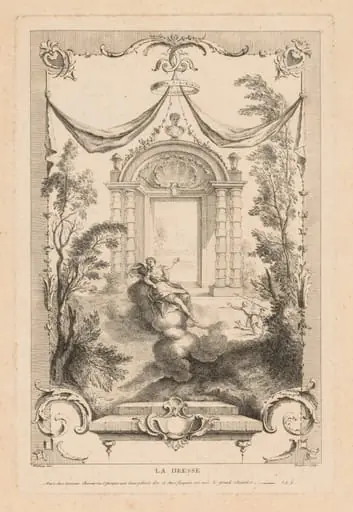 The Goddess, Diana on the Clouds
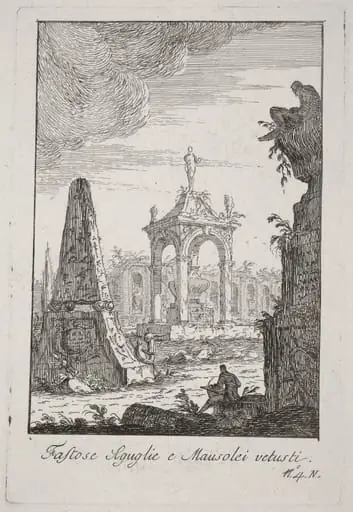 Fastose Aguglie e Mausolei vetusti
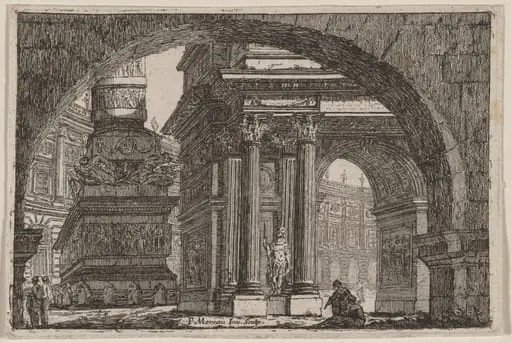 Ancient Forum Seen Beneath an Arch
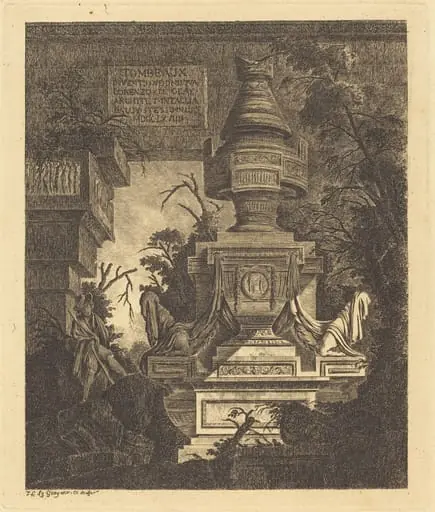 Frontispiece for "Views of Tombs"
 Triumphal Arch for Lotharius II