Artwork
Four Heads from the Raphael Cartoons at Hampton Court
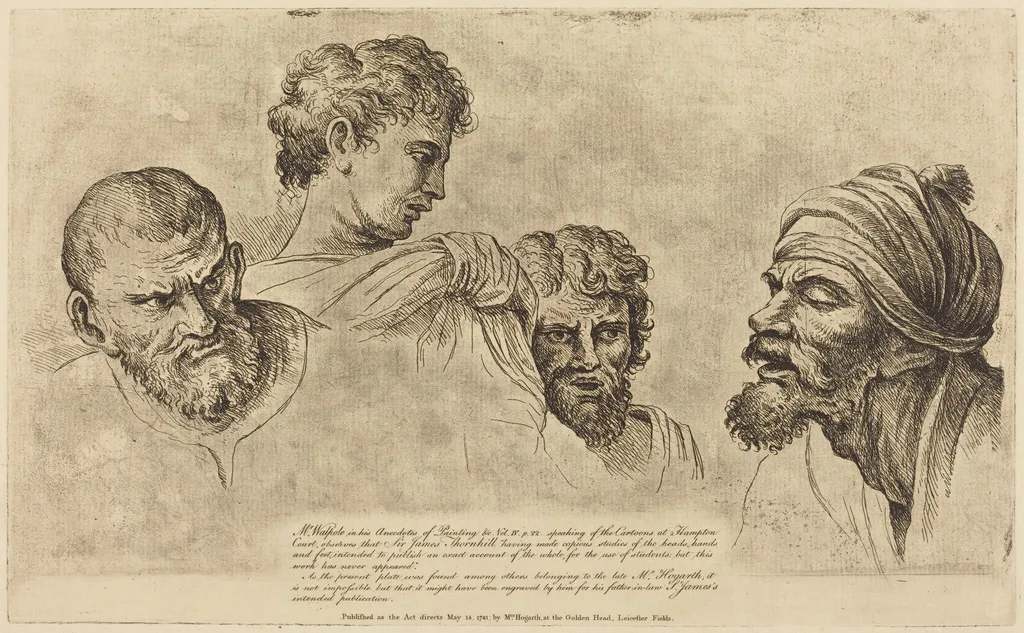
Four Heads from the Raphael Cartoons at Hampton Court is an ink print by the Baroque artist William Hogarth. It dates from 1729 and is held in the collection of the National Gallery of Art.
About this work
Overview
Created around 1729, this etching by William Hogarth reproduces four portrait heads derived from Raphael’s monumental cartoons at Hampton Court Palace.
Created around 1729, this etching by William Hogarth reproduces four portrait heads derived from Raphael’s monumental cartoons at Hampton Court Palace. Executed in a direct, linear style, the work reflects Hogarth’s early engagement with Renaissance models, translating large-scale fresco studies into intimate graphic form. The medium of etching allowed him to capture subtle facial expressions with minimal strokes, emphasizing character over grandeur.
Subject & Meaning
The four heads depict male figures from Raphael’s biblical and historical scenes, rendered in profile and three-quarter view. Each face varies in age and expression—youthful, weathered, stern, contemplative—offering a study in human diversity. Hogarth’s focus on individuality suggests an interest in psychological depth, moving beyond mere replication to interpret the emotional weight of each figure through simplified, expressive lines.
Technique & Style
Hogarth employed etching to achieve a sketchlike immediacy, using fluid, incised lines that mimic the spontaneity of drawing. The texture of the paper enhances the roughness of the strokes, lending the faces a tactile presence. His approach blends observational precision with a loose, almost improvisational hand, revealing his training in portraiture and his inclination toward capturing transient expressions rather than idealized forms.
History & Provenance
The original Raphael cartoons, commissioned for tapestries in the Sistine Chapel, were acquired by the English court in the early 17th century and displayed at Hampton Court. Hogarth, then a young artist, studied them closely during the 1720s. This etching emerged from his practice of copying classical works to refine his draftsmanship, a common academic exercise that also served as a means of asserting his own artistic identity within a tradition dominated by foreign masters.
Context
In early 18th-century Britain, access to Italian Renaissance art was limited, making Raphael’s cartoons a vital reference for local artists. Hogarth’s etching reflects a broader cultural effort to assimilate continental ideals into English art. Rather than slavishly imitating, he adapted these figures through a distinctly British lens—emphasizing realism and psychological nuance over classical harmony, aligning with emerging Enlightenment values.
Legacy
This etching stands as an early example of Hogarth’s commitment to grounding his art in historical sources while developing a personal visual language. It influenced later British printmakers who sought to reconcile academic tradition with observational realism. Though not widely circulated in his lifetime, the work remains a testament to his method: learning from the past to forge a new, distinctly modern approach to figural representation.
Artist & collection
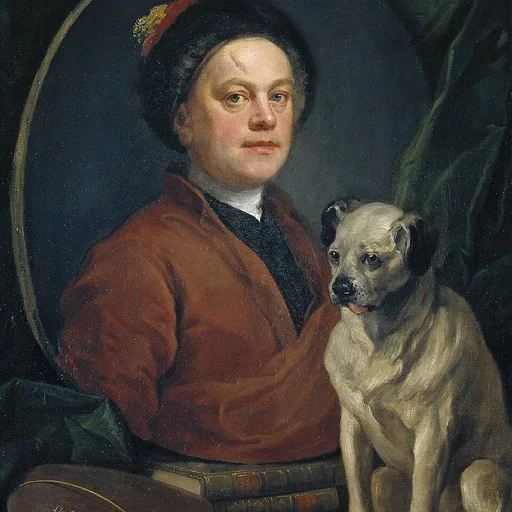
Artist
William Hogarth (; 10 November 1697 – 26 October 1764) was an English painter, engraver, satirist, cartoonist and writer.

 War (The Accusers of Theft, Adultery, Murder)
 Nine Heads
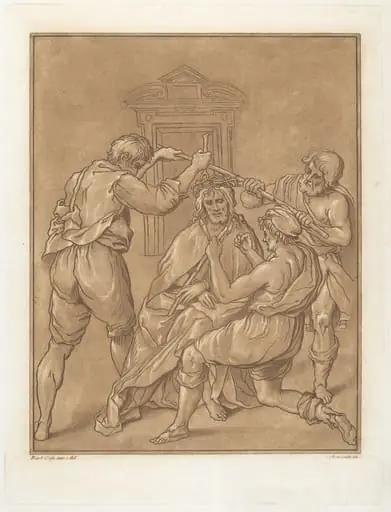 Christ Crowned with Thorns
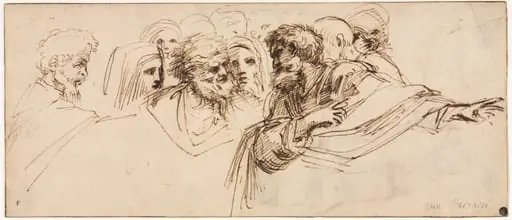 Study of Heads (recto)
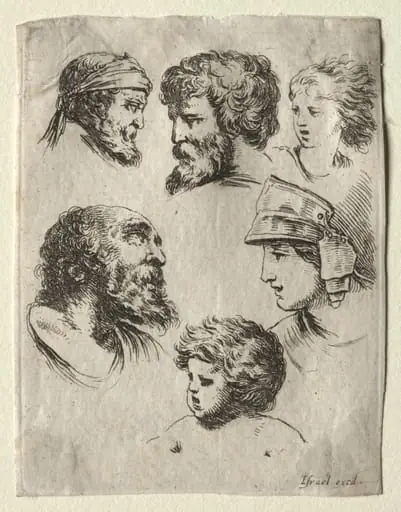 Book for Learning to Draw (Livre pour apprendre à dessiner): Six Portrait Heads
![Head of a Woman and Studies of a Male Nude [verso], by Francesco Fontebasso](https://artifactworldgallery.com/img/francesco-fontebasso--head-of-a-woman-and-studies-of-a-male-nude-verso--bba81b0c130c2863-w320.webp) Head of a Woman and Studies of a Male Nude [verso]
Head of a Woman and Studies of a Male Nude [verso]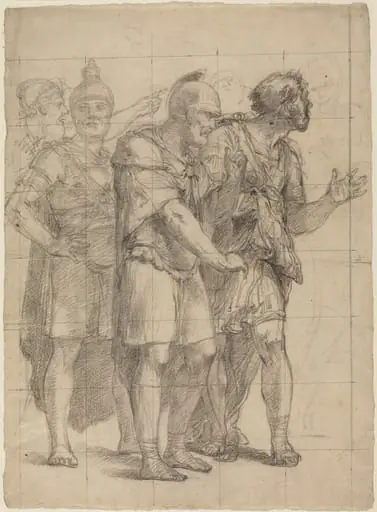 Four Standing Warriors
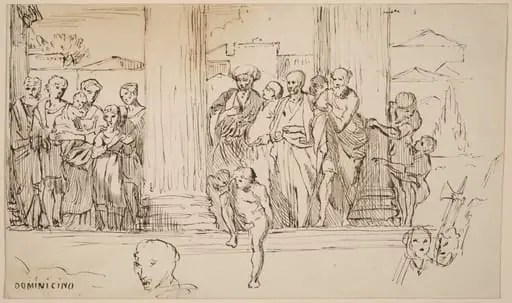 Study after Domenichino
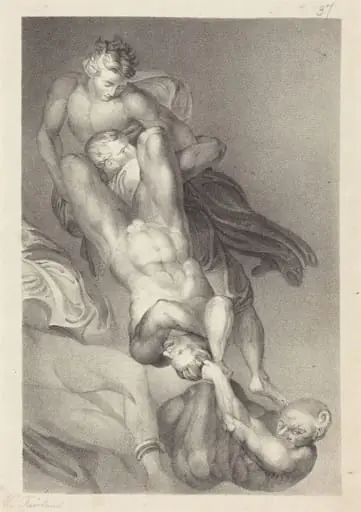 Part of the Last Judgment from Michael Angelo
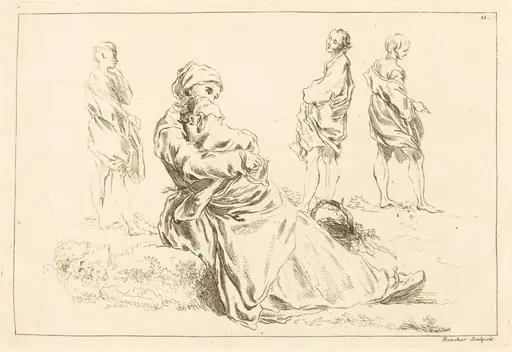 Figure Studies including Seated Mother and Child
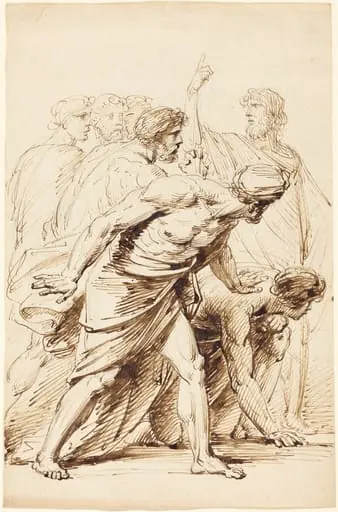 Seven Men in Antique Dress
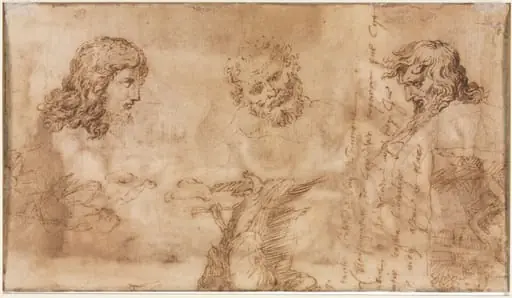 Three Heads and Other Sketches (verso)