Artwork
Morning
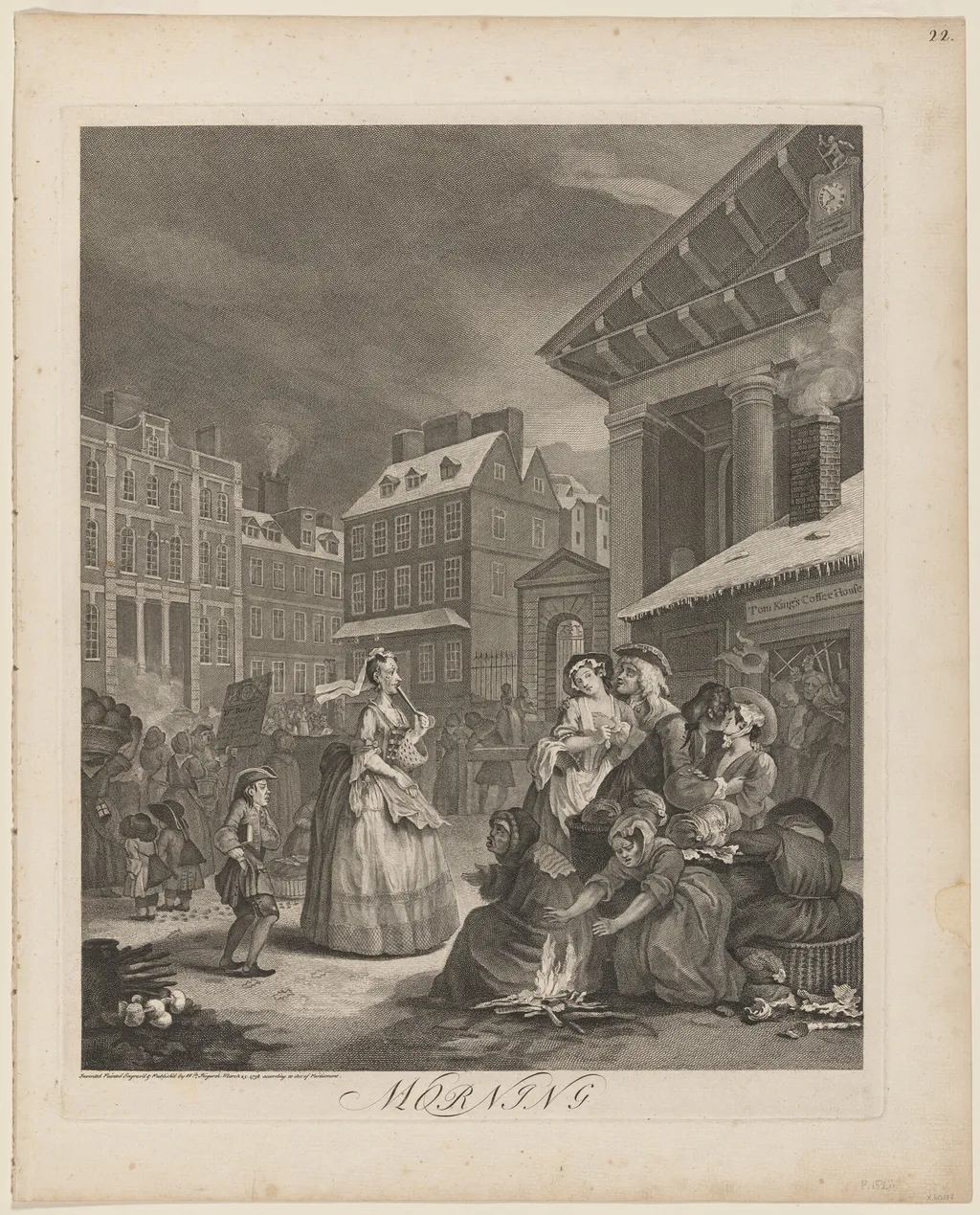
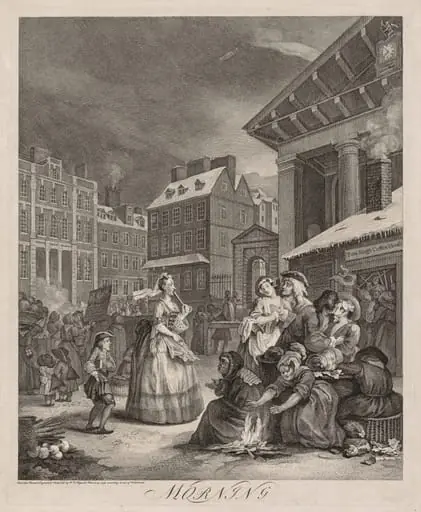
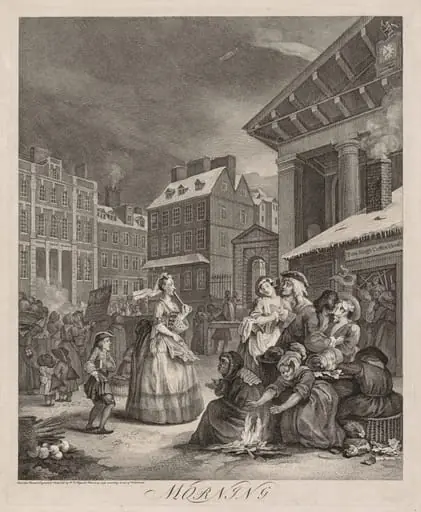
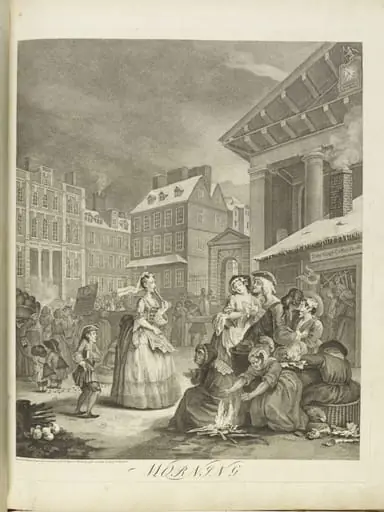
Morning is an ink print by the Baroque artist William Hogarth. It dates from 1738 and is held in the collection of the National Gallery of Art.
About this work
Overview
Morning, an etching with engraving on laid paper from 1738, presents a vivid depiction of a cold London dawn. The print captures the daily struggles and social interactions of urban life during harsh winters.
Subject & Meaning
The scene revolves around a communal fire, serving both as a warmth source and a social hub for neighbors before starting their day. A central figure, an elderly woman in black, walks towards a church, conveying a sense of quiet resilience or hope amidst the challenges of urban poverty.
Technique & Style
Executed in etching and engraving, the work showcases Hogarth's skill in capturing detailed textures and expressions. The interplay of light and shadow enhances the mood, drawing the viewer's eye through the composition.
History & Provenance
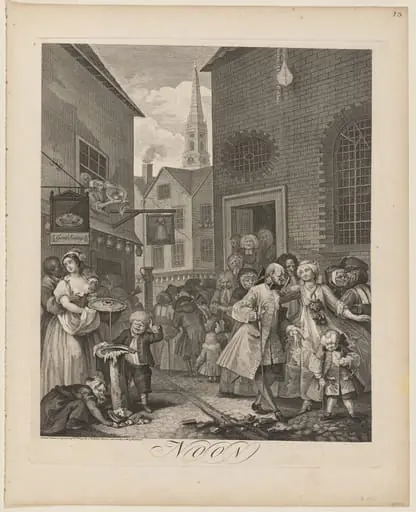
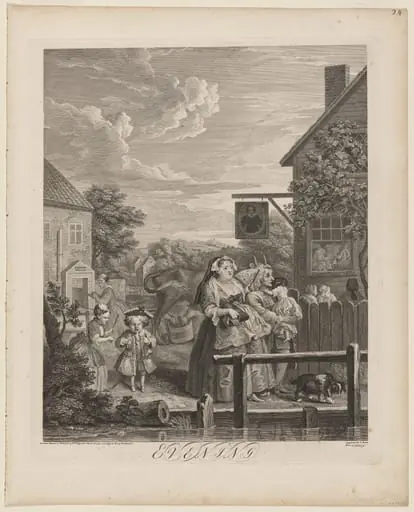
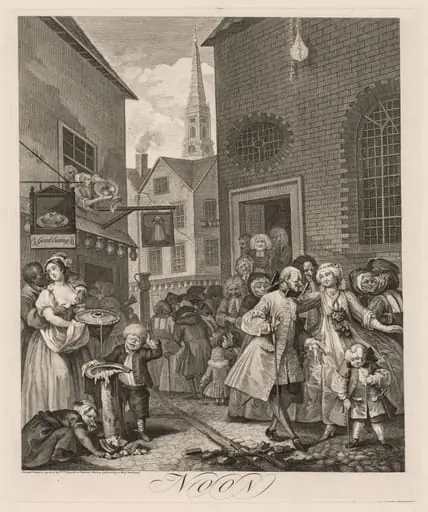
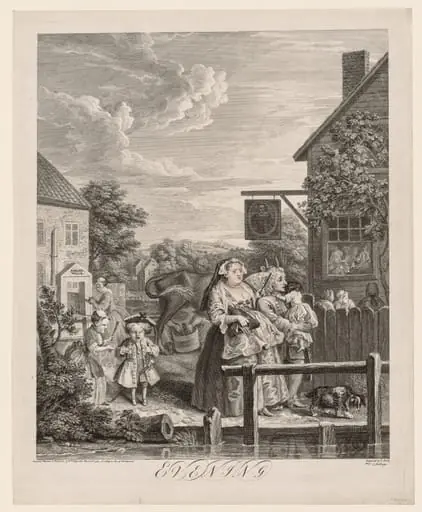
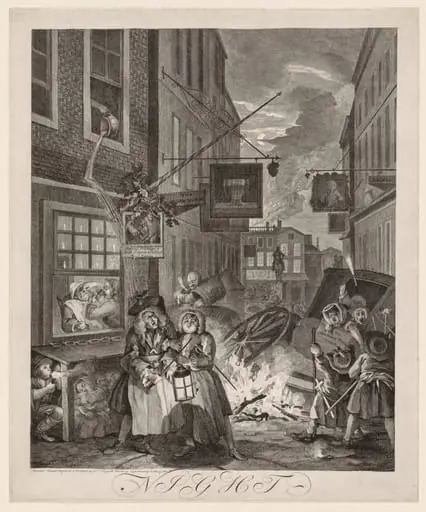
Created in 1738 as part of Hogarth's series 'The Four Times of Day', 'Morning' reflects the artist's interest in portraying the lives of the common people in 18th-century London. The series is characteristic of Hogarth's narrative and socially conscious approach to art.
Context
'Morning' is set against the backdrop of London's harsh winters and the socioeconomic realities of the time. Hogarth highlights the contrast between the cold, difficult living conditions and the warmth of community interactions.
Legacy
As part of 'The Four Times of Day', 'Morning' contributes to Hogarth's legacy as a pioneer in depicting everyday life with a mix of realism, humor, and social commentary, influencing subsequent generations of artists and printmakers.
Artist & collection
Artist
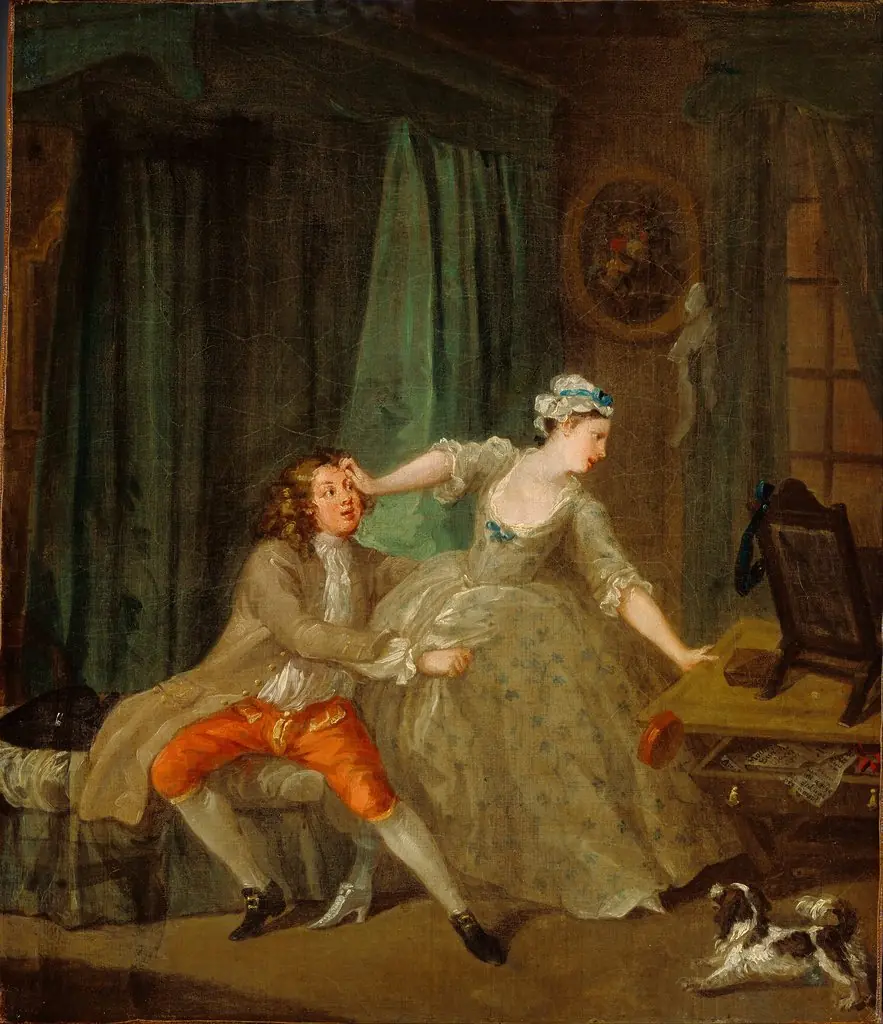
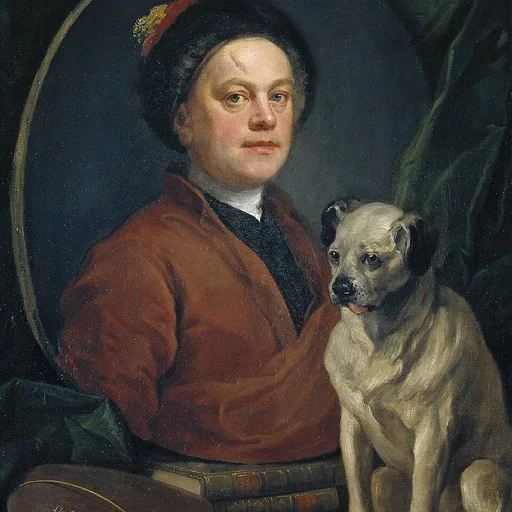
William Hogarth (; 10 November 1697 – 26 October 1764) was an English painter, engraver, satirist, cartoonist and writer.