Artwork
Groenendael Abbey
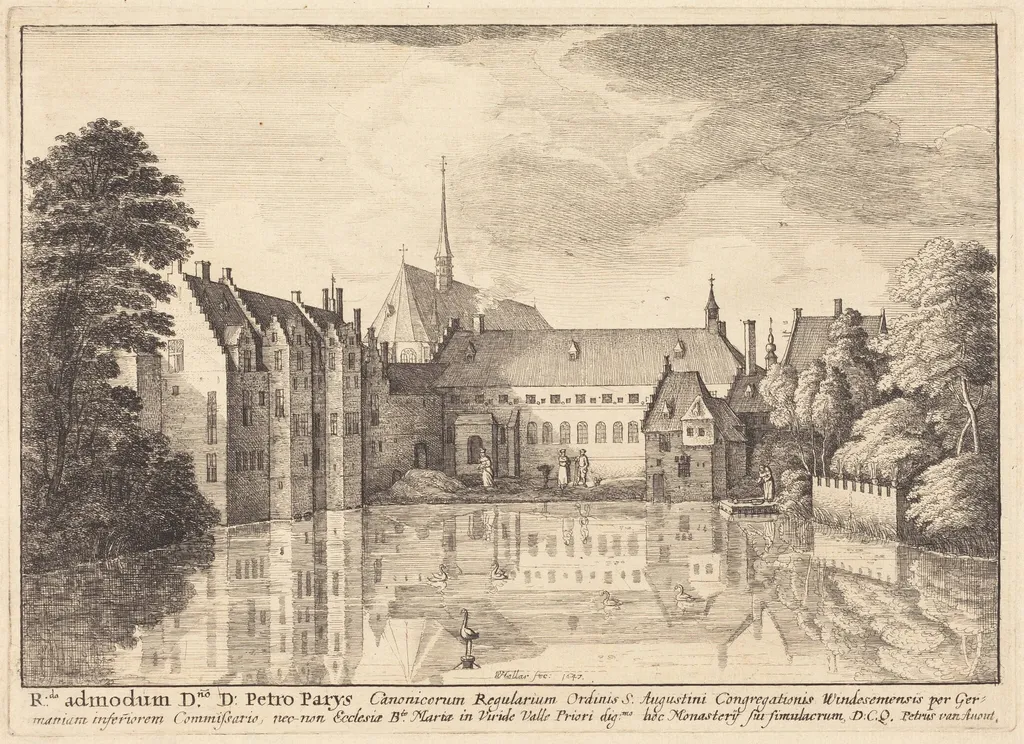
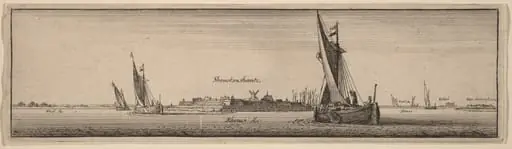
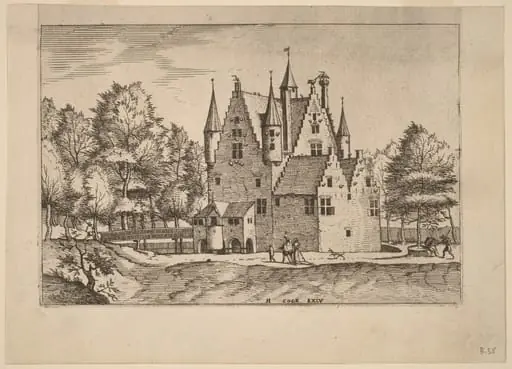
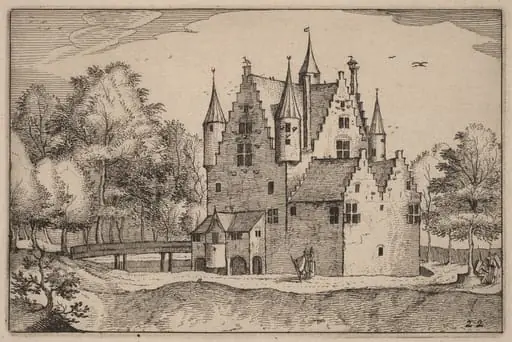
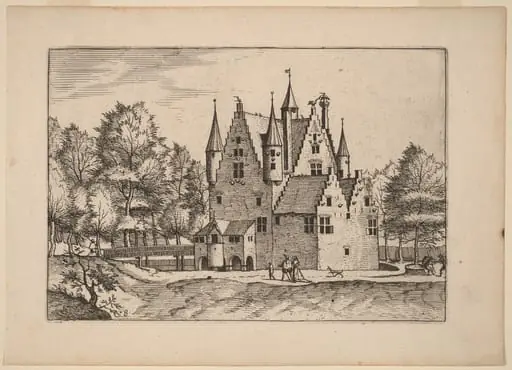
Groenendael Abbey is an ink print by the Baroque artist Wenceslaus Hollar. It dates from 1647 and is held in the collection of the National Gallery of Art.
About this work
Overview
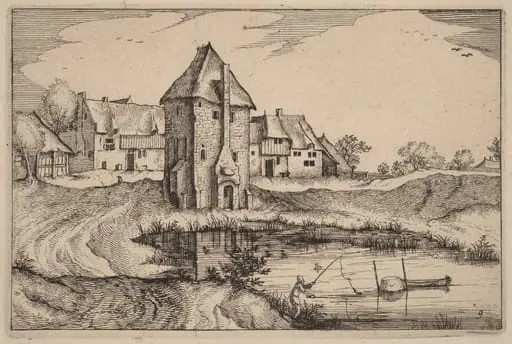
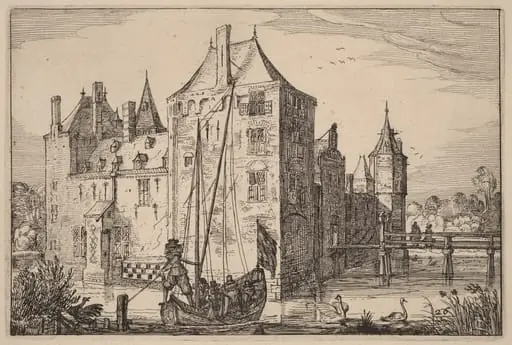
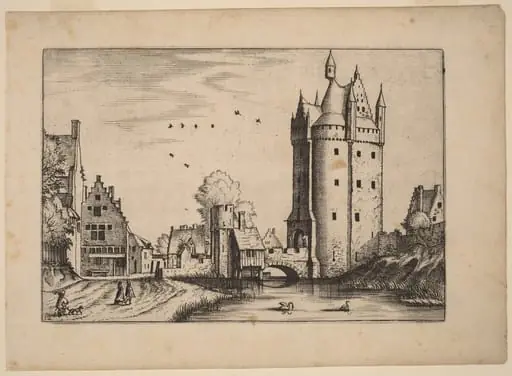
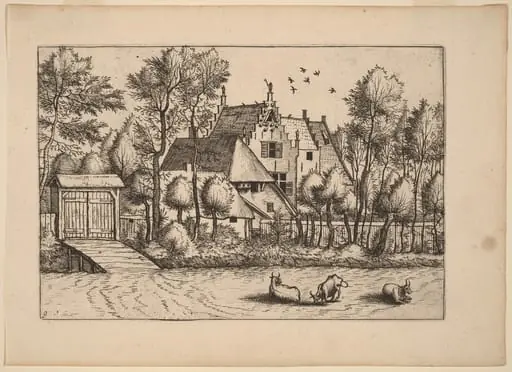
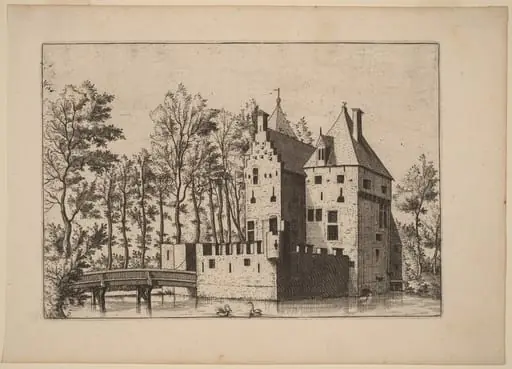
Created in 1647, this etching portrays Groenendael Abbey, a tranquil monastic complex set beside a pond. Rendered in black and white on laid paper, the image captures the orderly architecture, surrounding trees, and the calm activity of figures and wildlife along the water’s edge.
Subject & Meaning
The composition centers on the abbey’s steep‑roofed buildings and a central church spire, framed by foliage. Small groups of people stroll near the pond where ducks glide and fish surface, suggesting a harmonious relationship between the religious community and its natural environment.
Technique & Style
Wenceslaus Hollar employed the etching process, incising lines into a metal plate and transferring ink onto paper. His characteristic precision is evident in the fine linear detail, from the texture of the roofs to the delicate ripples across the water, reflecting the veduta tradition of meticulous urban and landscape representation.
History & Provenance
The Czech-born engraver, active chiefly in England, produced this work during his mid‑career, a period noted for extensive topographical prints. The print has survived on laid paper, a common support for 17th‑century etchings, and is documented as part of Hollar’s extensive series of architectural and landscape studies.
Context
In the mid‑17th century, European artists increasingly documented notable sites with scientific exactness. Hollar’s depiction of Groenendael Abbey aligns with this trend, offering a visual record that combines artistic observation with the era’s growing interest in cartography and architectural documentation.
Own this work as a print
Artist & collection
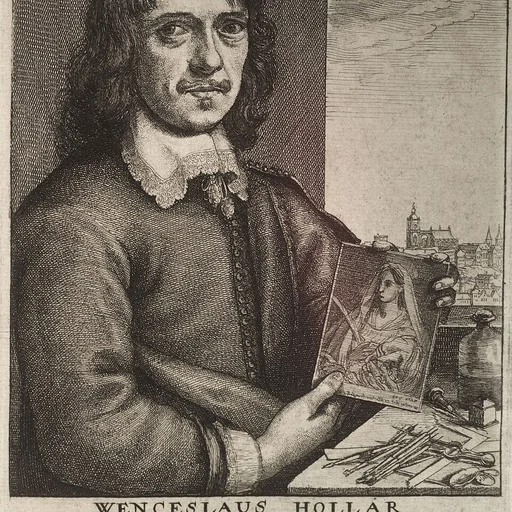
Artist
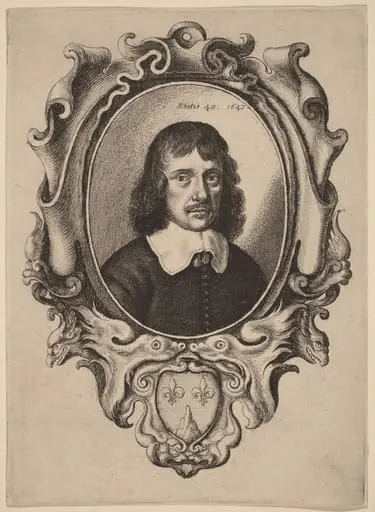
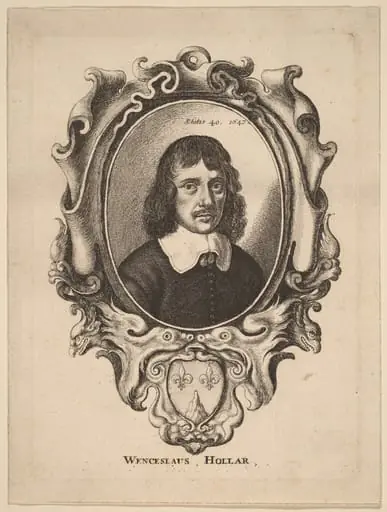
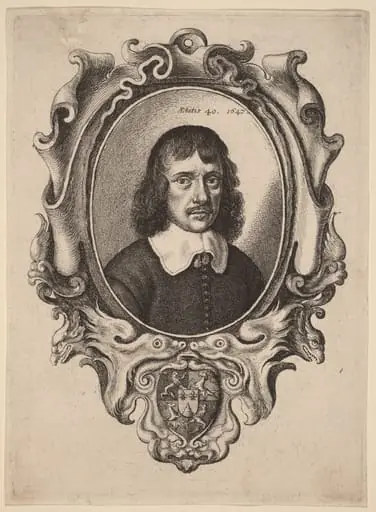
Wenceslaus Hollar (Czech: Václav Hollar (Czech pronunciation: ), German: Wenzel Hollar; 23 July 1607 – 25 March 1677) was a Czech engraver, etcher and painter.