Artwork
Self-Portrait
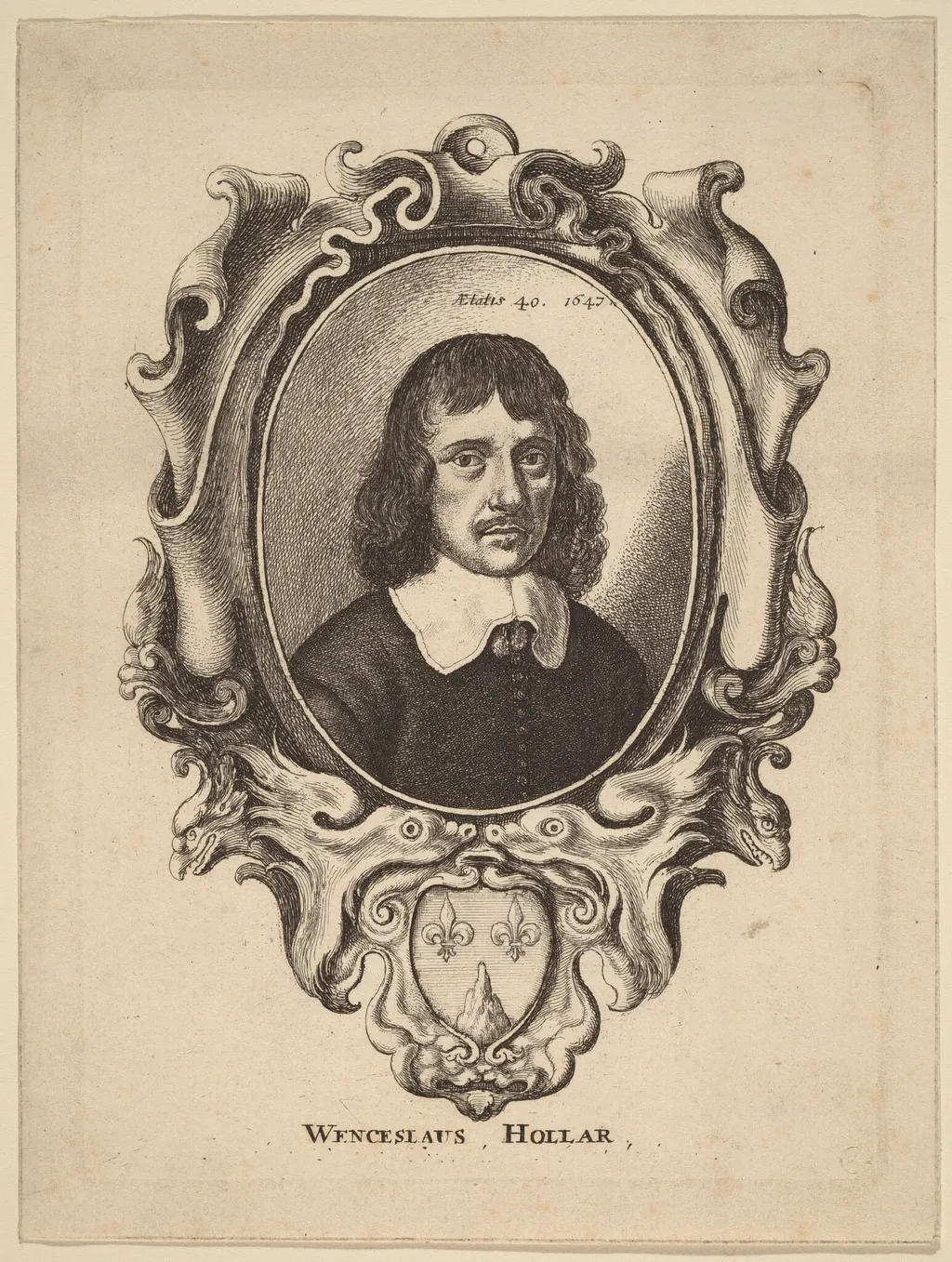
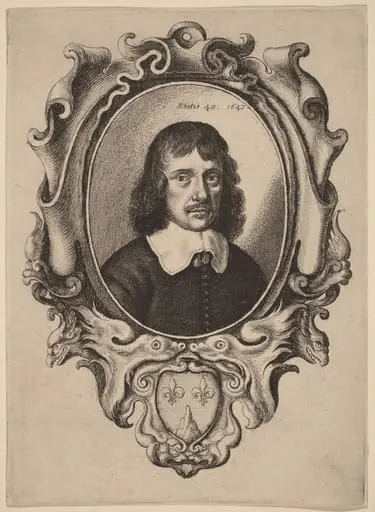
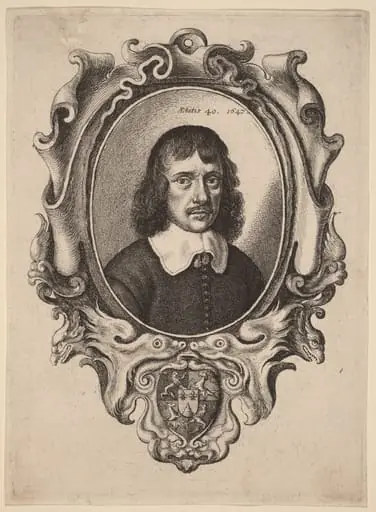
Self-Portrait is an ink print by the Baroque artist Wenceslaus Hollar. It dates from 1647 and is held in the collection of the National Gallery of Art.
About this work
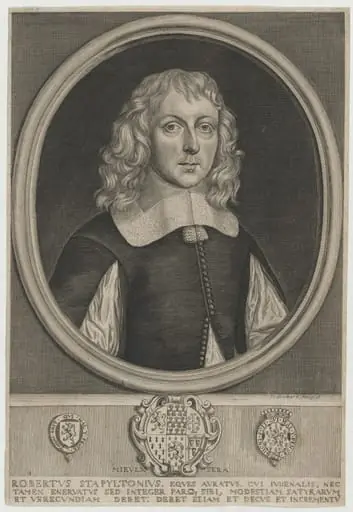
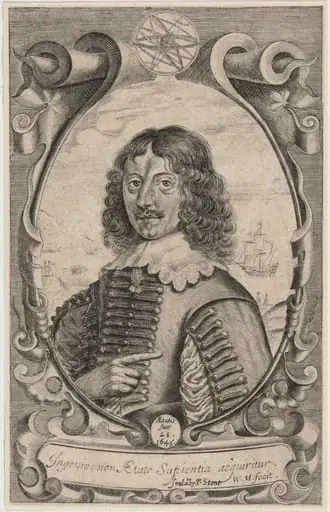
He’s framed inside a decorative oval border, with swirling lines and a crest below.
This is a black-and-white portrait of a man with a serious expression. He’s framed inside a decorative oval border, with swirling lines and a crest below. The background is plain, and the lines look like they were scratched into metal.
The name at the bottom reads *Wenceslaus Hollar*, and the top says *Aetatis 40. 1647*—meaning he was 40 years old in 1647. The style is simple but detailed, with sharp lines that make the face stand out.
Next, check out the technique: etching.
Overview
Created in 1647, this etching is a self-portrait by Wenceslaus Hollar, a Czech artist active in England. Executed in black ink on paper, the image presents the artist at age forty, rendered with precise linear control. The composition is contained within an ornate oval frame, emphasizing the formal nature of the portrait while contrasting with the plain background. The inscription confirms both his age and the year, anchoring the work in a specific moment of his life.
Subject & Meaning
Hollar portrays himself with a restrained, contemplative gaze, avoiding theatricality. The absence of symbolic attributes or elaborate attire suggests an emphasis on personal identity rather than social status. The inclusion of his age and name reinforces the work as a record of self-awareness, aligning with 17th-century printmakers’ practice of using etching to assert professional identity through direct, unadorned representation.
Technique & Style
The portrait was made using etching, a process involving acid-bitten lines on a metal plate. Hollar’s fine, controlled strokes define facial features with clarity, while the decorative border features intricate swirling patterns carved with equal precision. The contrast between the detailed face and the minimal background directs focus to the artist’s countenance. The medium’s capacity for fine detail suited Hollar’s meticulous approach to line and texture.
History & Provenance
Hollar produced this etching during his years in England, where he had settled after leaving continental Europe. It reflects his established reputation as a printmaker and his engagement with the growing market for artist self-representations. The work likely served both as a personal memento and a demonstration of technical skill to patrons and peers, though its early ownership remains undocumented.
Context
In mid-17th-century Europe, etched self-portraits were common among printmakers as a means of asserting authorship and artistic identity. Hollar’s work fits within this tradition, alongside contemporaries like Rembrandt. Unlike painted portraits, etchings allowed for wider dissemination, making them ideal for artists to circulate their image among collectors and fellow craftsmen across borders.
Legacy
This etching endures as a clear example of Hollar’s mastery in linear draftsmanship and his role in the printmaking culture of his time. It contributes to the broader understanding of how artists used print media to construct and preserve their public personas. Though not widely reproduced today, it remains a key reference in studies of 17th-century self-representation in print.
Artist & collection
Artist
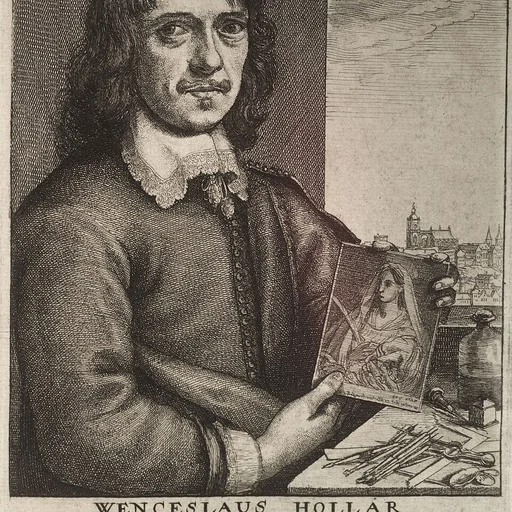
Wenceslaus Hollar (Czech: Václav Hollar (Czech pronunciation: ), German: Wenzel Hollar; 23 July 1607 – 25 March 1677) was a Czech engraver, etcher and painter.