Artwork
Soldiers and Cannon [verso]
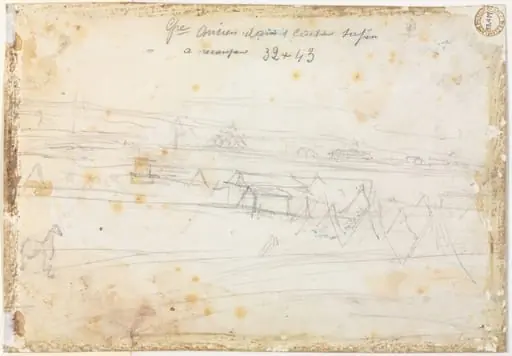
![Soldiers and Cannon [verso], by Winslow Homer, graphite, 1862](https://artifactworldgallery.com/img/winslow-homer--soldiers-and-cannon-verso--10871d9b29da5261-w1024.webp)
Soldiers and Cannon [verso] is a graphite drawing by the Impressionist artist Winslow Homer. It dates from 1862 and is held in the collection of the National Gallery of Art.
About this work
Overview
Created in 1862, this graphite drawing on wove paper is attributed to Winslow Homer. It serves as the reverse side of a sheet containing another sketch, reflecting the artist’s practice of reusing paper during his early career as a visual reporter. The work captures a moment of military preparation, likely from the American Civil War era.
Subject & Meaning
The drawing depicts a group of soldiers and artillery pieces, rendered with minimal detail but clear structural intent. It conveys the quiet anticipation preceding battle rather than active combat, emphasizing the mundane rhythms of wartime life. The focus on equipment and posture suggests an observational record, not a heroic narrative.
Technique & Style
Homer employed graphite with controlled pressure, using fine lines to define forms and subtle shading to suggest volume. The composition is uncluttered, with figures arranged in a loose, horizontal band. The sketch’s immediacy reflects its function as a field study, prioritizing accuracy over finish.
History & Provenance
The drawing originated during Homer’s time as a correspondent for Harper’s Weekly, embedded with Union troops. It remained in the artist’s possession until his death, later entering a private collection before being acquired by a public institution. Its verso side bears another sketch, indicating its use as a working surface.
Context
Made during Homer’s early career as a war illustrator, the piece aligns with his broader effort to document the Civil War from the front lines. Unlike formal battle paintings, this sketch captures the unglamorous reality of military life, reflecting a shift toward realism in American visual culture.
Legacy
This drawing exemplifies Homer’s transition from commercial illustration to fine art. Its unembellished approach influenced later generations of American realists. As a surviving fragment of his wartime sketchbooks, it offers insight into his method and the visual documentation of conflict in the 19th century.
Artist & collection
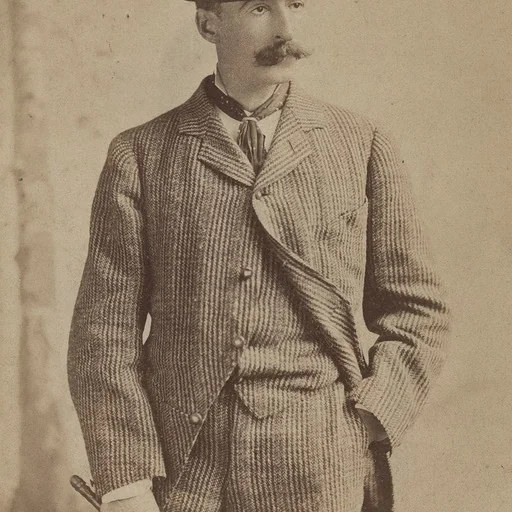
Artist
Winslow Homer (February 24, 1836 – September 29, 1910) was an American landscape painter and illustrator, best known for his marine subjects.

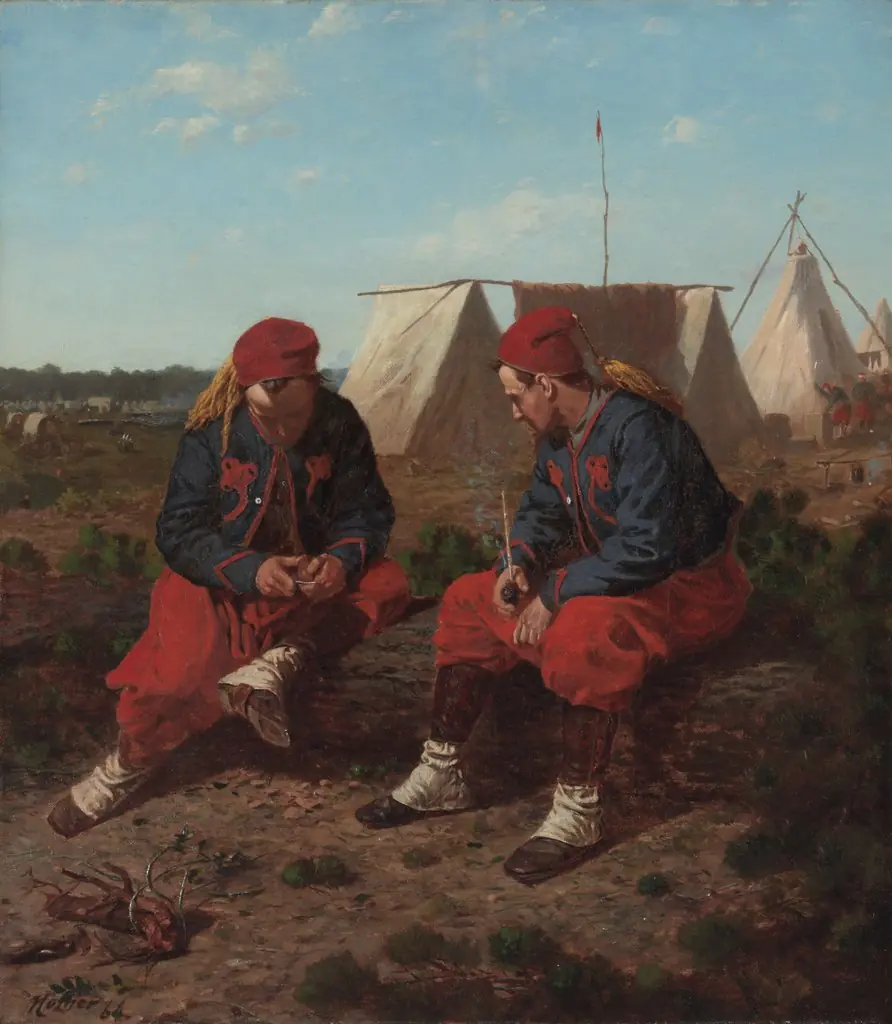
![Line-ups and Trenches [recto], by Winslow Homer](https://artifactworldgallery.com/img/winslow-homer--line-ups-and-trenches-recto--73ce0ffd9d54aa43-w320.webp) Line-ups and Trenches [recto]
Line-ups and Trenches [recto]![Skirmish Involving a Wagon Train [verso], by Winslow Homer](https://artifactworldgallery.com/img/winslow-homer--skirmish-involving-a-wagon-train-verso--6ee57b18fcbda7d4-w320.webp) Skirmish Involving a Wagon Train [verso]
Skirmish Involving a Wagon Train [verso]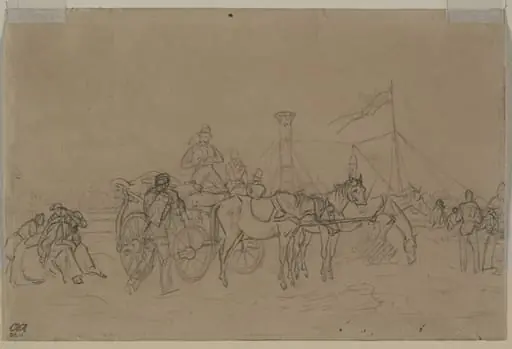 Passengers for Rhine Steamer (verso)
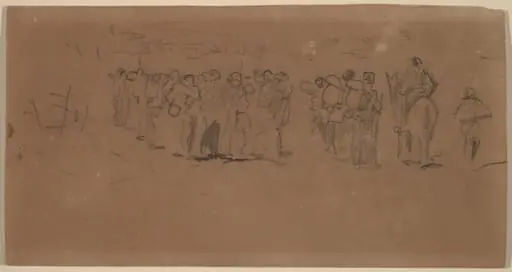 Preparing for the March
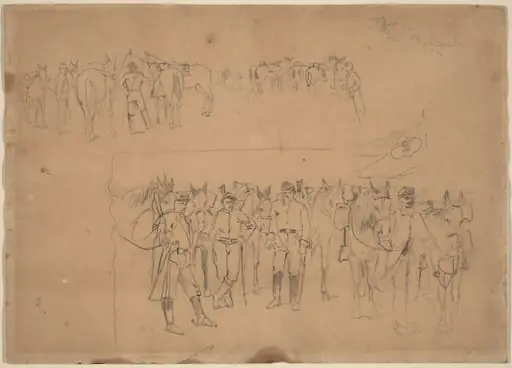 Officers and Horses at Rest
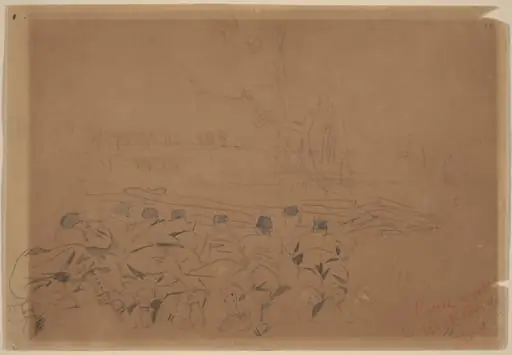 Rebel Works at Yorktown
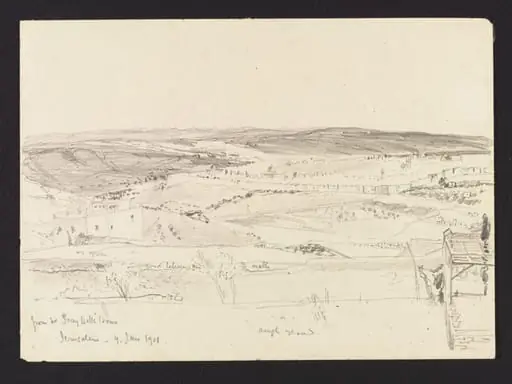 From Mr Gray Hill's House, Jerusalem
![Soldiers in a Devastated Landscape [recto], by John Singer Sargent](https://artifactworldgallery.com/img/john-singer-sargent--soldiers-in-a-devastated-landscape-recto--c8d14188d90fdc85-w320.webp) Soldiers in a Devastated Landscape [recto]
Soldiers in a Devastated Landscape [recto]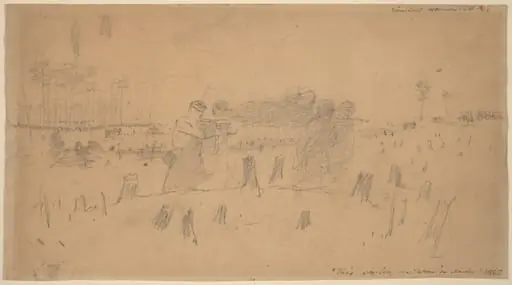 Carrying the Wounded
![End of the March [recto], by Winslow Homer](https://artifactworldgallery.com/img/winslow-homer--end-of-the-march-recto--32c10403cc86dd04-w320.webp) End of the March [recto]
End of the March [recto]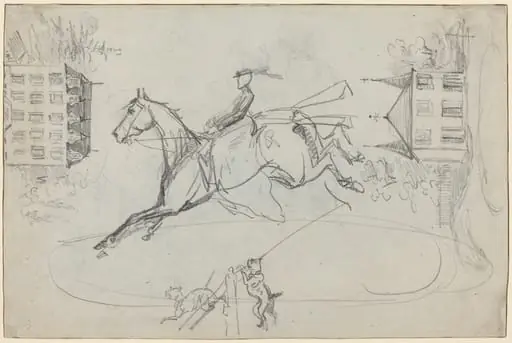 Sheet of Sketches
 War Encampment Scene (verso)