Artwork
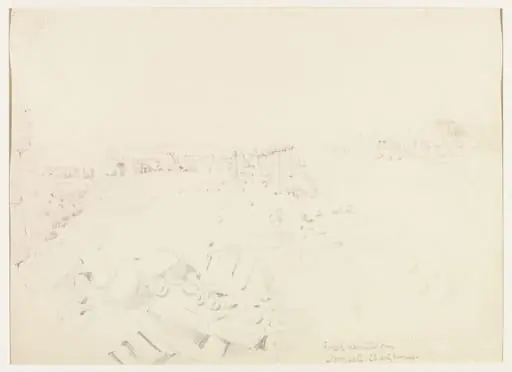
Soldiers in a Devastated Landscape [recto]
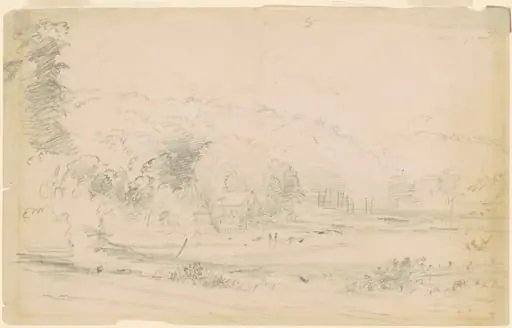
![Soldiers in a Devastated Landscape [recto], by John Singer Sargent, graphite, 1918](https://artifactworldgallery.com/img/john-singer-sargent--soldiers-in-a-devastated-landscape-recto--c8d14188d90fdc85-w1024.webp)
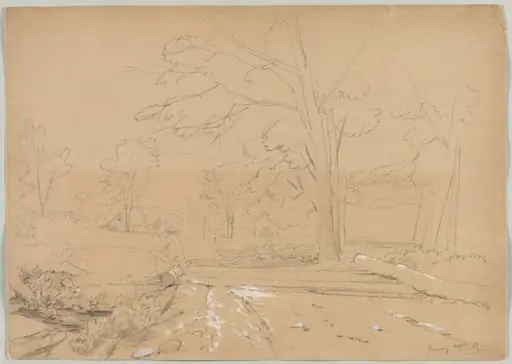
Soldiers in a Devastated Landscape [recto] is a graphite drawing by John Singer Sargent. It dates from 1918 and is held in the collection of the National Gallery of Art.
About this work
Overview
Rendered in subtle monochrome tones, the work captures a horse-drawn wagon moving slowly across an empty plain toward a distant settlement.
Created in 1918, this graphite drawing by John Singer Sargent depicts a quiet, post-battle scene in a war-torn countryside. Rendered in subtle monochrome tones, the work captures a horse-drawn wagon moving slowly across an empty plain toward a distant settlement. The absence of color and the restrained line work emphasize the weight of the moment, focusing attention on the landscape’s ruin and the figures’ weary progress.
Subject & Meaning
The drawing portrays soldiers or laborers in a wagon, traversing a landscape stripped of life—barren trees, cracked earth, and ruined structures suggest prolonged conflict. The figures are small against the vast desolation, underscoring human vulnerability. There is no action or drama, only movement toward an uncertain future, implying the lingering consequences of war beyond the battlefield.
Technique & Style
Sargent employed graphite with precision and restraint, using varied pressure to suggest texture in the soil, the skeletal trees, and the wagon’s wooden frame. Soft smudging creates atmospheric depth, while sharp lines define structural elements. The composition avoids dramatic contrast, favoring muted gradations that enhance the scene’s quiet melancholy and sense of stillness.
History & Provenance
Executed during Sargent’s time as an official war artist for Britain in World War I, the drawing stems from his field sketches made near the Western Front. Unlike his earlier portraits, this work reflects his engagement with the war’s physical and emotional toll. It entered a public collection shortly after its creation, preserved as part of his wartime documentation.
Context
Sargent produced this drawing amid widespread destruction in northern France, where he witnessed the aftermath of battles like Passchendaele. His role as a war artist required him to record conditions beyond combat, including civilian displacement and environmental decay. This piece aligns with a broader shift in wartime art toward documenting quiet endurance rather than heroic action.
Legacy
The drawing stands as a quiet testament to Sargent’s adaptability as an artist, moving from elite portraiture to unadorned wartime observation. It contributes to a lesser-known body of work that documents the war’s human and ecological cost. Today, it remains a reference point for how artists responded to modern conflict through understated, observational means.
Artist & collection
Artist
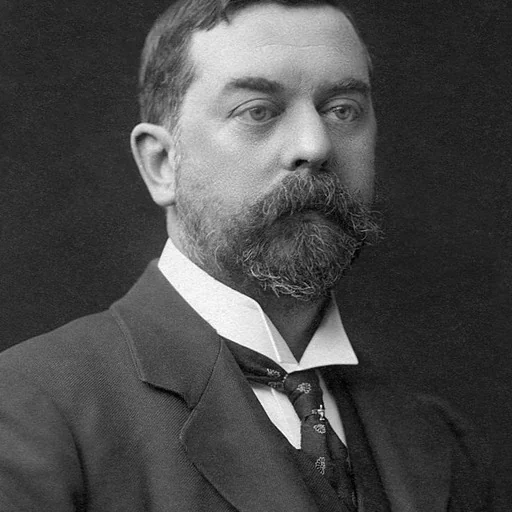
John Singer Sargent (; January 12, 1856 – April 15, 1925) was an American expatriate artist, considered the "leading portrait painter of his generation" for his evocations of Belle Époque and Edwardian-era luxury.

![Soldiers and Cannon [verso], by Winslow Homer](https://artifactworldgallery.com/img/winslow-homer--soldiers-and-cannon-verso--10871d9b29da5261-w320.webp)