Artwork
Supply Train
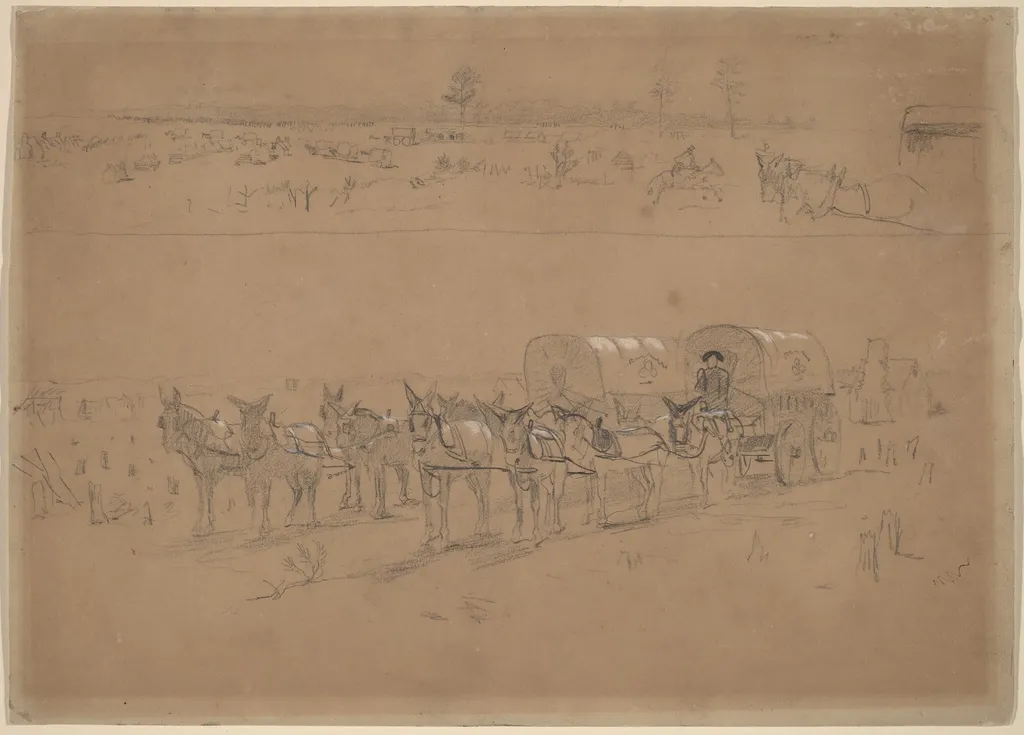
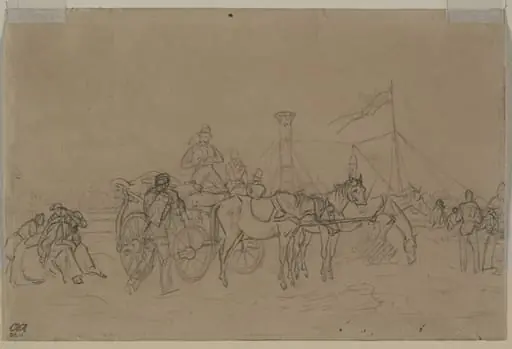
Supply Train is a graphite drawing by the Impressionist artist Winslow Homer. It dates from 1864 and is held in the collection of the National Gallery of Art.
About this work
Overview
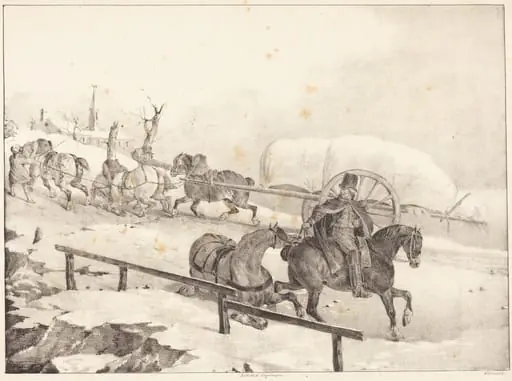
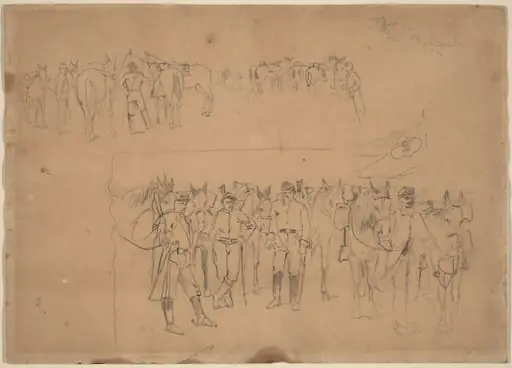
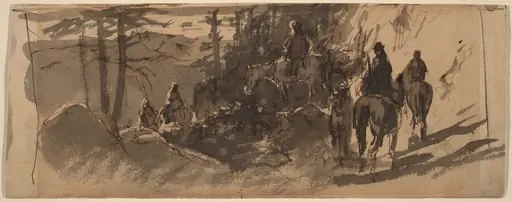
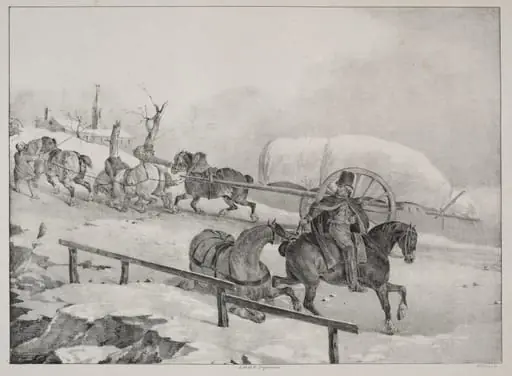
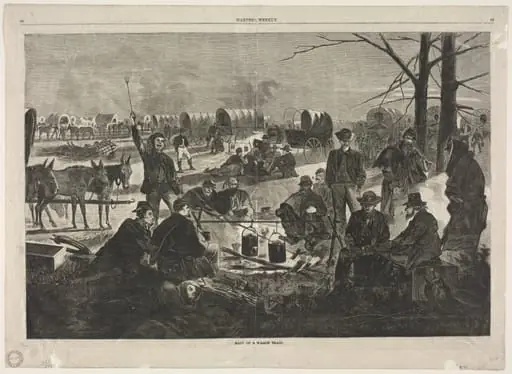
Winslow Homer’s 1864 drawing titled “Supply Train” is executed in graphite and white chalk on wove paper. The work presents a modestly sized composition that records a horse‑drawn wagon, its team of horses, and a solitary figure, likely the driver, set against a simple landscape of trees and a distant structure.
Subject & Meaning
The scene captures a logistical element of mid‑nineteenth‑century transport, emphasizing the functional relationship between animal power, human labor, and the movement of goods. By focusing on the ordinary activity of a supply wagon, the drawing reflects the everyday realities of the period rather than heroic or dramatic narratives.
Technique & Style
Homer employs a restrained yet precise drawing technique, using graphite for line and form while applying white chalk to highlight surfaces and create contrast. The interplay of dark and light areas produces a chiaroscuro effect that models the volume of the horses and wagon, lending the composition a sense of three‑dimensional presence.
History & Provenance
Created during the Civil War era, the work belongs to Homer’s early career when he was primarily a draftsman. The drawing has remained in the artist’s oeuvre as an example of his documentary approach to contemporary subjects, and it has been retained in institutional collections that document American art of the 1860s.
Artist & collection
Artist
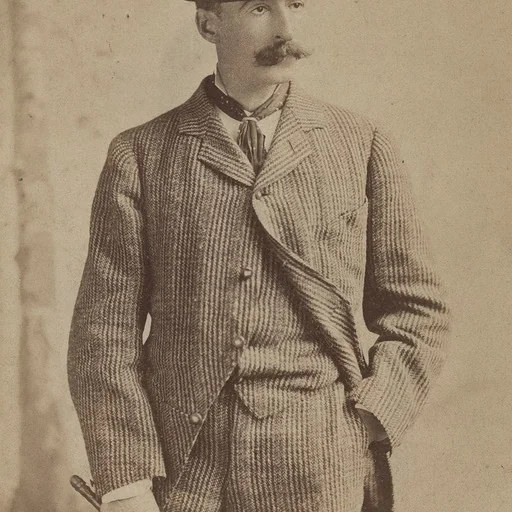
Winslow Homer (February 24, 1836 – September 29, 1910) was an American landscape painter and illustrator, best known for his marine subjects.