Artwork
Don Quixote and the Windmills
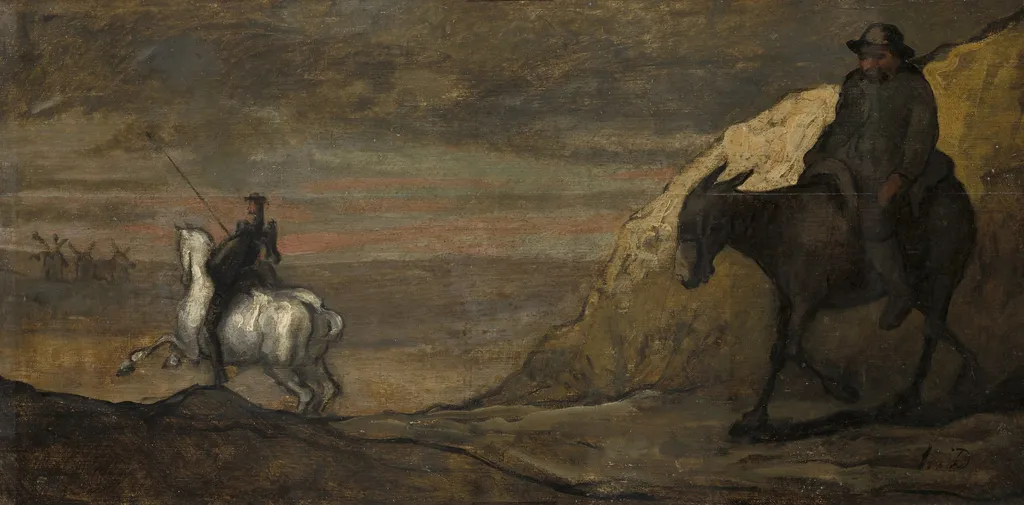
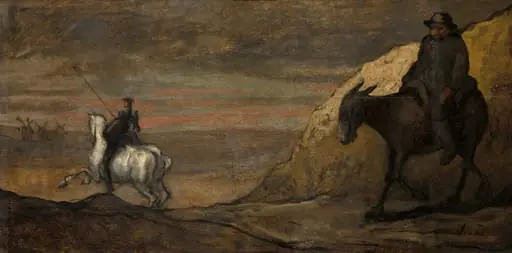
Don Quixote and the Windmills is an unspecified painting by the Realist artist Honoré Daumier. It dates from 1850 and is held in the collection of the Art Institute of Chicago.
About this work
Overview
Don Quixote and the Windmills, a painting by Honoré Daumier circa 1850, is part of the Art Institute of Chicago's collection. It visually interprets a pivotal scene from the renowned novel Don Quixote.
Subject & Meaning
The painting captures Don Quixote on a white horse, advancing towards distant windmills, while a spectator on a donkey looks on. This scene embodies the novel's themes of perception vs. reality and the hero's misguided chivalry.
Technique & Style
Daumier's use of muted colors and expressive, rough brushstrokes imbues the scene with dynamic energy. The contrast between the dark, cloudy sky and the lighter figures and windmills enhances depth and atmospheric tension.
History & Provenance
Created around 1850, the painting is now housed at the Art Institute of Chicago, though specific details of its creation or earlier ownership are not provided here.
Context
This work reflects 19th-century artistic interest in literary themes, particularly the enduring popularity of Miguel de Cervantes' Don Quixote. Daumier's interpretation brings a unique, visually expressive layer to the novel's exploration of reality and illusion.
Legacy
As part of Daumier's oeuvre, Don Quixote and the Windmills contributes to the artist's reputation for capturing the human condition through both social commentary and literary inspirations, though its individual impact within his body of work is not specifically highlighted.
Artist & collection
Artist
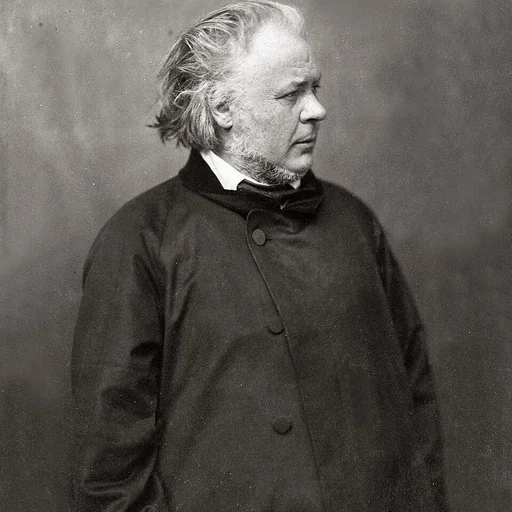
Honoré-Victorin Daumier was a French painter, sculptor, and printmaker, whose many works offer commentary on the social and political life in France, from the Revolution of 1830 to the fall of the Second French Empire in 1870.