Artwork
Aeneas and Dido
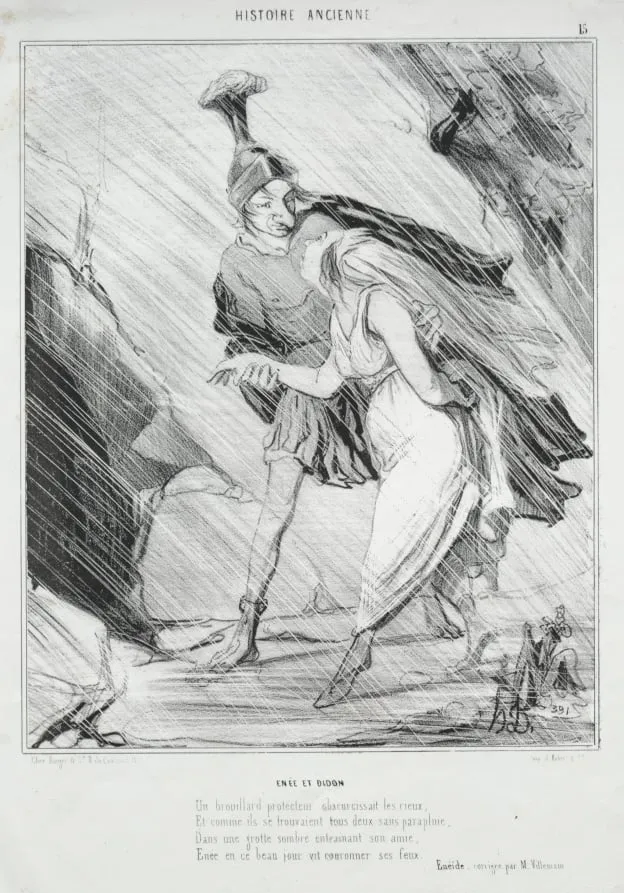
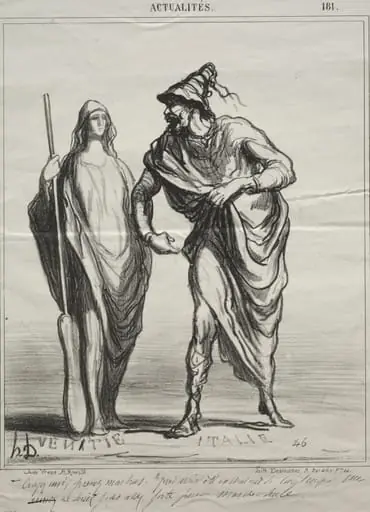
Aeneas and Dido is a print by the Romanticist artist Honoré Daumier. It dates from 1842 and is held in the collection of the Cleveland Museum of Art.
About this work
This painting shows Aeneas and Dido.
It was made by Daumier in 1842.
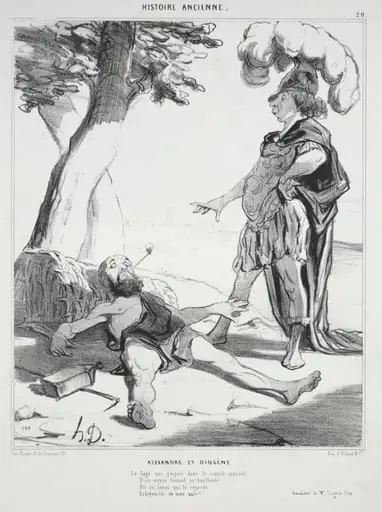
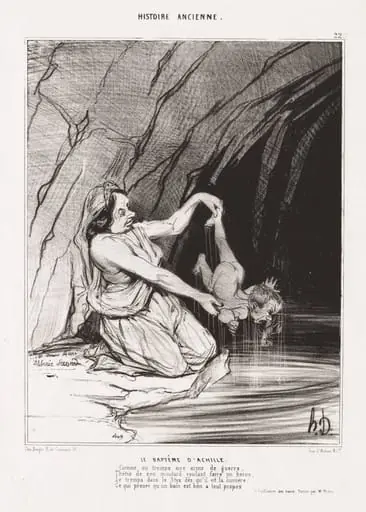
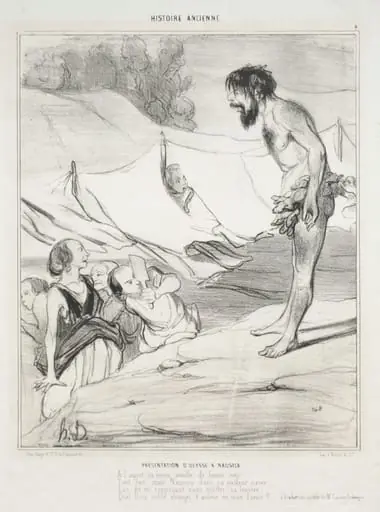
The print was published in a series called Ancient History, which is interesting because it was a way for Daumier to comment on current events by using stories from the past.
You can learn more about this style by looking at the work of artist: Honoré Daumier (French, 1808–1879).
Overview
Executed in 1842, the image presents a scene from Virgil’s Aeneid, focusing on the encounter between the Trojan hero Aeneas and the Carthaginian queen Dido.
Published on 3 July 1842 in the satirical newspaper Le Charivari, this lithographic print forms plate 15 of Honoré Daumier’s series titled Ancient History. Executed in 1842, the image presents a scene from Virgil’s Aeneid, focusing on the encounter between the Trojan hero Aeneas and the Carthaginian queen Dido. The work exemplifies Daumier’s practice of employing classical narratives to reflect on contemporary French society.
Subject & Meaning
The composition captures the moment of Aeneas’s departure from Dido, a pivotal episode that underscores themes of duty versus desire. By selecting this mythic episode, Daumier invites viewers to draw parallels between ancient political alliances and the shifting loyalties of his own era, suggesting a critique of leadership and personal ambition.
Technique & Style
Rendered as a lithograph, the print utilizes bold line work and stark contrasts characteristic of Daumier’s graphic approach. The figures are delineated with expressive contours, while the limited tonal range emphasizes dramatic tension. This method aligns with the newspaper’s need for reproducible imagery and Daumier’s skill in conveying narrative through economical visual means.
History & Provenance
Originally issued as part of the Ancient History series in Le Charivari, the print circulated among the paper’s readership before entering private collections. Subsequent catalogues of Daumier’s oeuvre have documented its appearance, and it now resides in several museum holdings that specialize in 19th‑century French graphic art.
Context
The Ancient History series allowed Daumier to comment on the political turbulence of post‑July Revolution France by recasting ancient stories in a contemporary light. By juxtaposing mythic events with current affairs, he provided a veiled commentary that could evade censorship while resonating with an audience attuned to both classical literature and modern politics.
Artist & collection
Artist
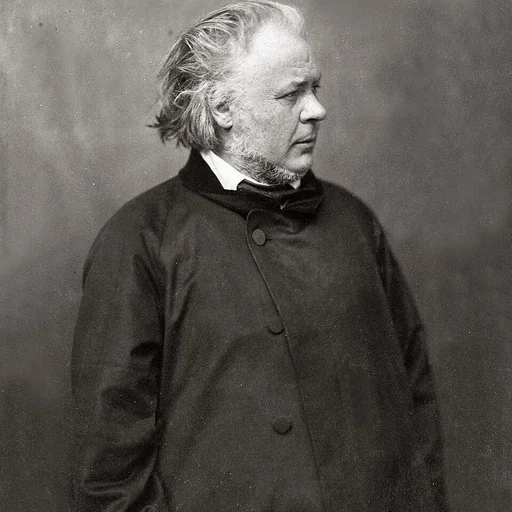
Honoré-Victorin Daumier was a French painter, sculptor, and printmaker, whose many works offer commentary on the social and political life in France, from the Revolution of 1830 to the fall of the Second French Empire in 1870.